Happy first day of summer, eh? Also, happy Father’s Day to all the dads.
Today is a rain day here on the prairies. Cold, breezy, and rainy…but! There is sunshine in the forecast for all of next week.
Here we are, the longest day of the year. I was heading for bed at 10pm the other day, thinking wow, it is so light outside still! Looking forward to summer like weather to come. Am kinda over this cold spring we have had ; )
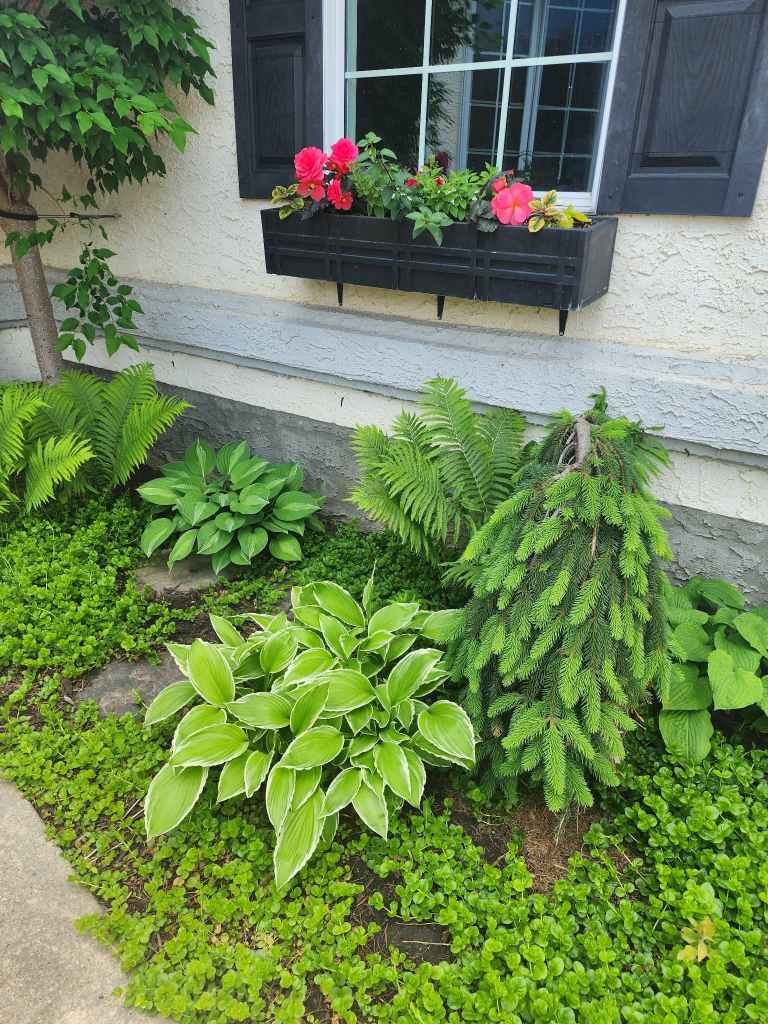
The garlic, hostas, ferns, raspberries, and perennials, are all thriving in the rain and cooler temps. What is not thriving are the spring sown or planted seedlings and the heat lovers. However, we are going to have one more day of rain and cold (tomorrow) and then 5 whole days of glorious sunshine.
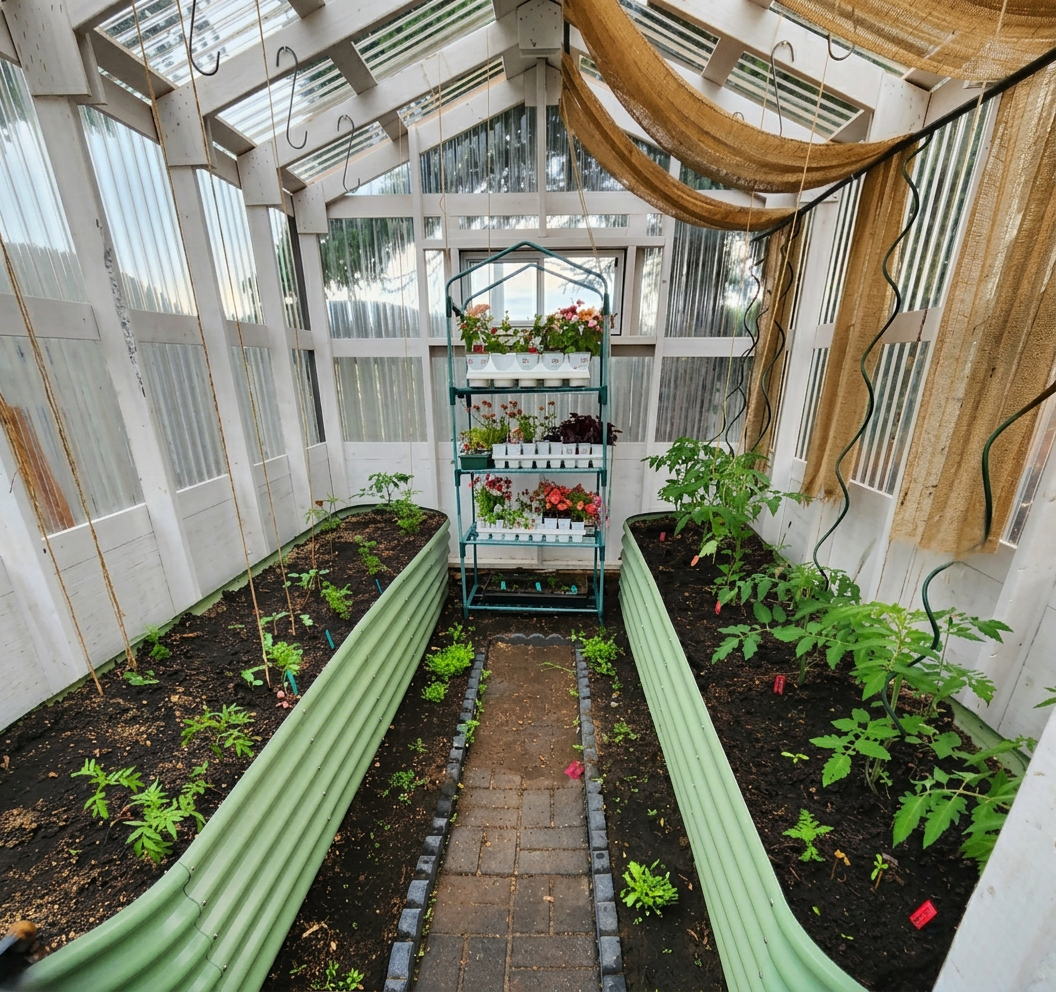
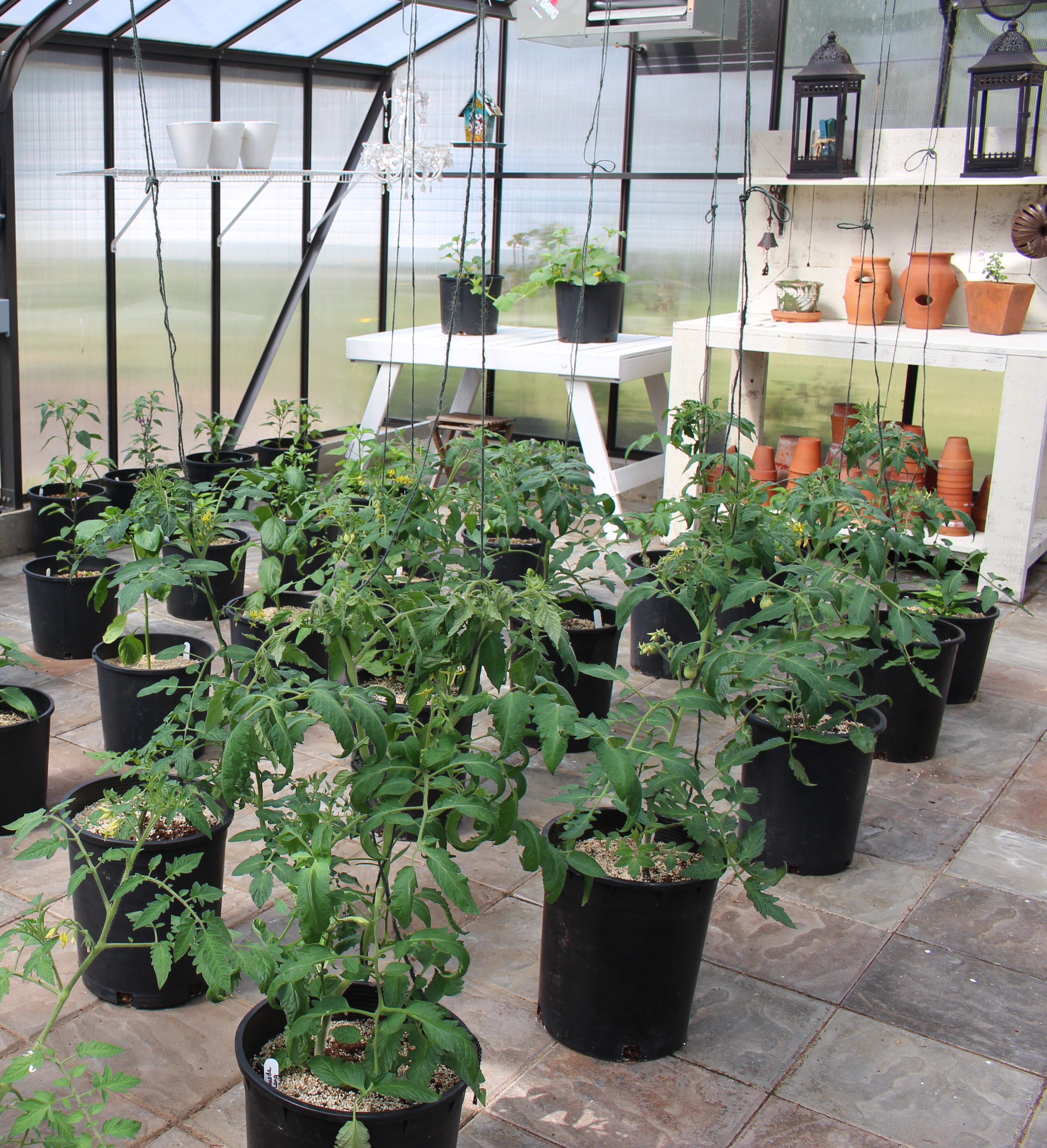
While my garden plants are all small and the tomatoes look sad (but are flowering!), the greenhouse plants are doing great. I am growing my eggplants and peppers in black grower pots outside, on the south side of the house instead of in the greenhouse, this year. In the greenhouse are the tomatoes, cucumbers (lots and lots), plus flowers.
My biggest issue has been getting stuff finished as I am being a fair weather gardener. I have spent so many years having to go out and work in the cold, in the rain, in the snow, that this year I just decided that I am too old and broken to do that. Or, rather, too old to want to do that, lol. So, hubby and I do as much as we possibly can on the warm, sunny days.
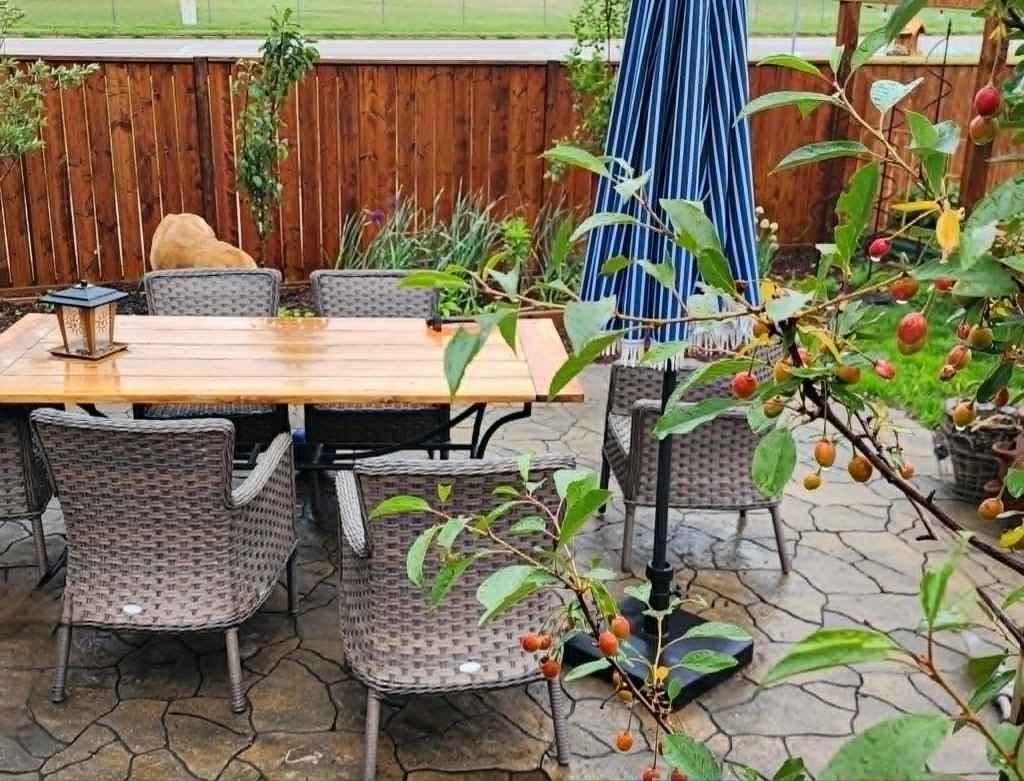
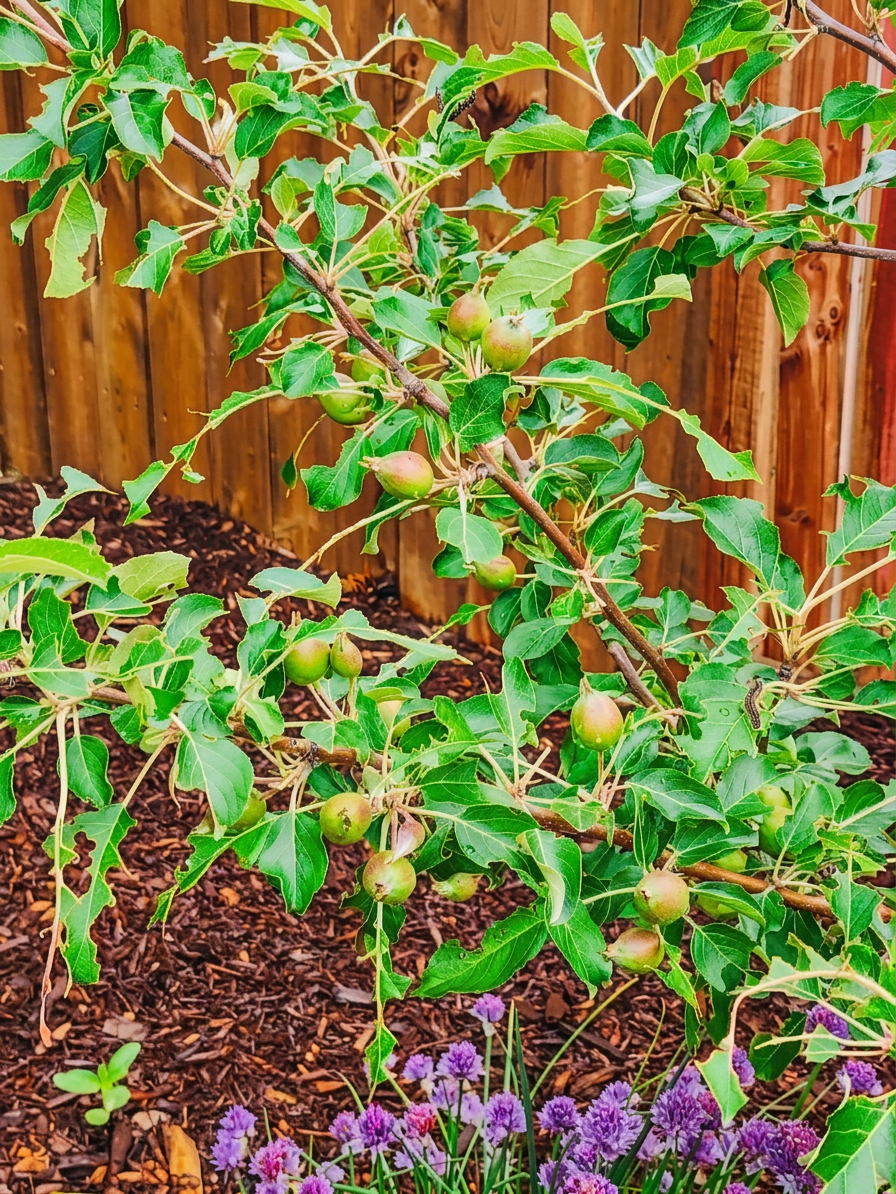
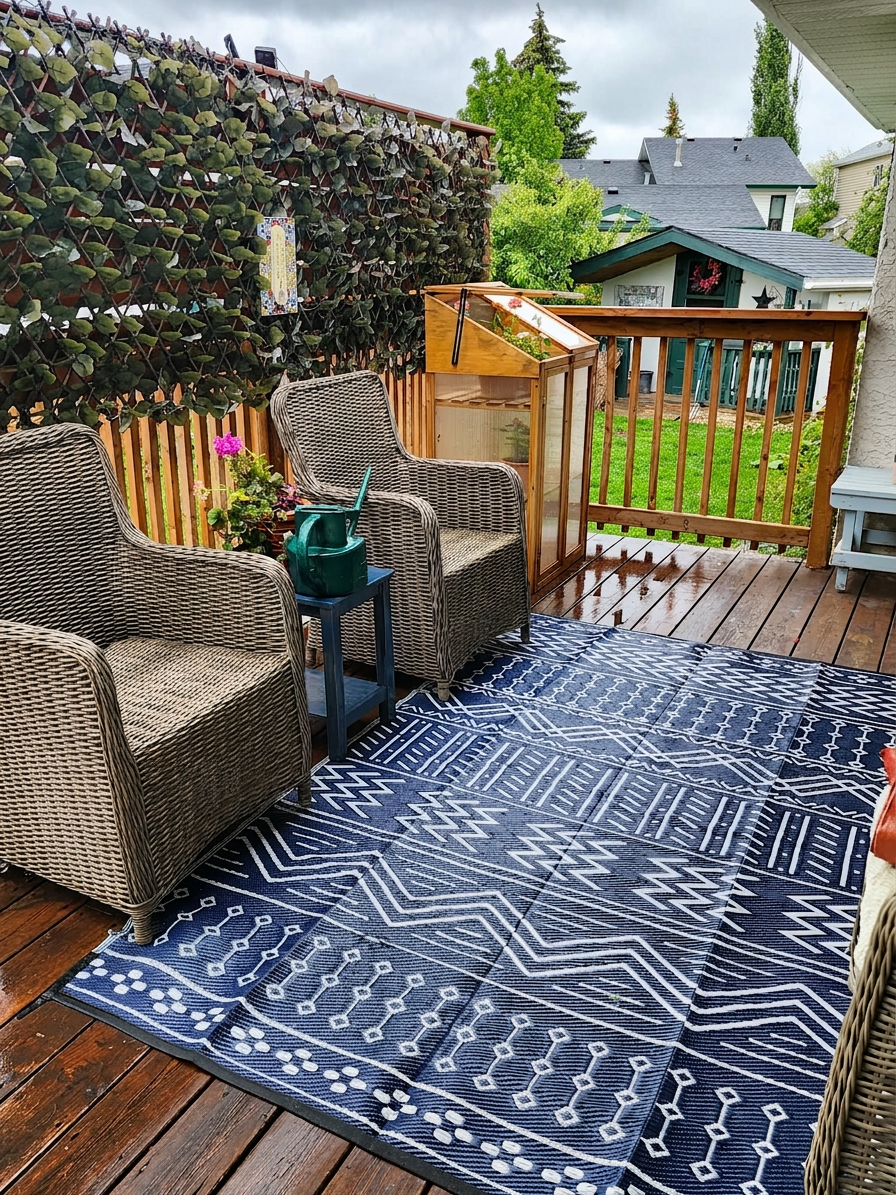
I really want to show you the patio as we have planted 3 more trees around it, this spring. But… there are bags of mulch on the patio, wheelbarrows, plants awaiting planting, stuff hanging about till we have a chance to finish our spring tasks. So, till then, just know that we now have 2 apricots, 2 apples, and 2 ornamental trees planted around the patio ; )
What To Sow/Grow Now
As my daughter is coming over later on today, for Father’s Day, I asked if she could bring me more sunflower seeds. She said… ‘is it not too late’? Nope! I told her that I just keep on sowing!
- Flowers To Sow Now
- Alyssum
- Baby’s Breath
- Bachelor’s Buttons
- Calendula
- Forget Me Nots
- Foxgloves
- Nasturtiums
- Phlox
- Sunflowers
- Tagetes (Gem Marigolds)
- Zinnias
- Veggies To Sow Now
- Beets
- Bush Beans
- Carrots
- Corn
- Cucumbers
- Fennel
- Greens (arugula, kale, spinach)
- Green Onions
- Kohlrabi
- Lettuce
- Peas
- Potatoes
- Rutabaga
- Swiss Chard
- Turnips
- Zucchini (all summer squash)
- Did you know that the next two weeks is the right time to start rutabagas? They like to start in a warm garden and finish in the cooler temps of fall, even if the weather is a bit frosty.
- Did you know that you only have 10 days left to sow carrots? Sow your seeds before or around July 1st.
- After all that rain, there is a lot of weeding to do. Stay on it. Try to run the hoe through a different garden bed each time you’re out there puttering.
- If the weeds are really bad, hoe them down, pull out the worst of them, cover with biodegradable weed barrier (heavy duty landscape paper that breaks down with time, is better than cardboard), and then either 4 inches of mulch over top or a layer of good garden soil to sow seeds into/plant seedlings into. You can also use newspapers, if you can still find some. Go 3 or 4 sheets thick.
- Succession sowing – the time is nigh : ) as you harvest your radishes, turnips, winter sown carrots, add another row of herbs, carrots, beets, bush beans, onions.
- Island growers will be harvesting their garlic soon and always wonder what to grow in the bed for the rest of the summer, till it is planting time again. I mean, flowers are always an option as they go on sale at all the shops this time of year, but for food crops, I love to grow bush beans.
All About Tomatoes
Did you know that your tomatoes can get too much heat? The best temp for tomatoes is 18 to 28C (65 to 85 F). They will flower, fruit, ripen, take up water nicely. All will be perfect.
When temps go over that for a few days in a row, flowers will go sterile in temps of 29 C (85 F), fruit will have a hard time taking up water, leaves will wilt, sunscald and hard green shoulders can happen, tomatoes seem to take forever to ripen.
What can you do?
- Water in the morning, before 11 am, or after 4 in the afternoon. Do not worry about leaves looking wilty, they will perk up again in the evenings. If you have good spacing and no humidity, you can hose down the foliage to cool it down, but you risk fungal issues if there is no air flow.
- Offer them shade. Use shade cloth, make temporary shade with sheets, grow tall flowers/crops on their sunniest side.
- Mulch the soil to help retain moisture.
- Use weeping hoses or drip systems to water deeply every third or fourth day. Do not water daily or you will end up with mealy, yucky tomatoes.
- Do not feed in a heat wave! Wait till it’s over and then feed with your favourite organic tomato fertiliser.
- Cal-Mag is another great fertiliser (Canadian product) to help you prevent Blossom End Rot (BER). My grower friend, on the island, swears by this product.
Heat has not been a problem here this year, instead we are having a Junuary and tomatoes are struggling to grow. You can feed them with this liquid fertiliser or this one (Canadian product) to help them take up more phosphorous, which is what they have a problem taking up in cool weather. These fertilisers will also help if your tomatoes and veggies are looking a bit peaky, unhappy, or simply not as thriving as you would like.
Indeterminate versus Determinate
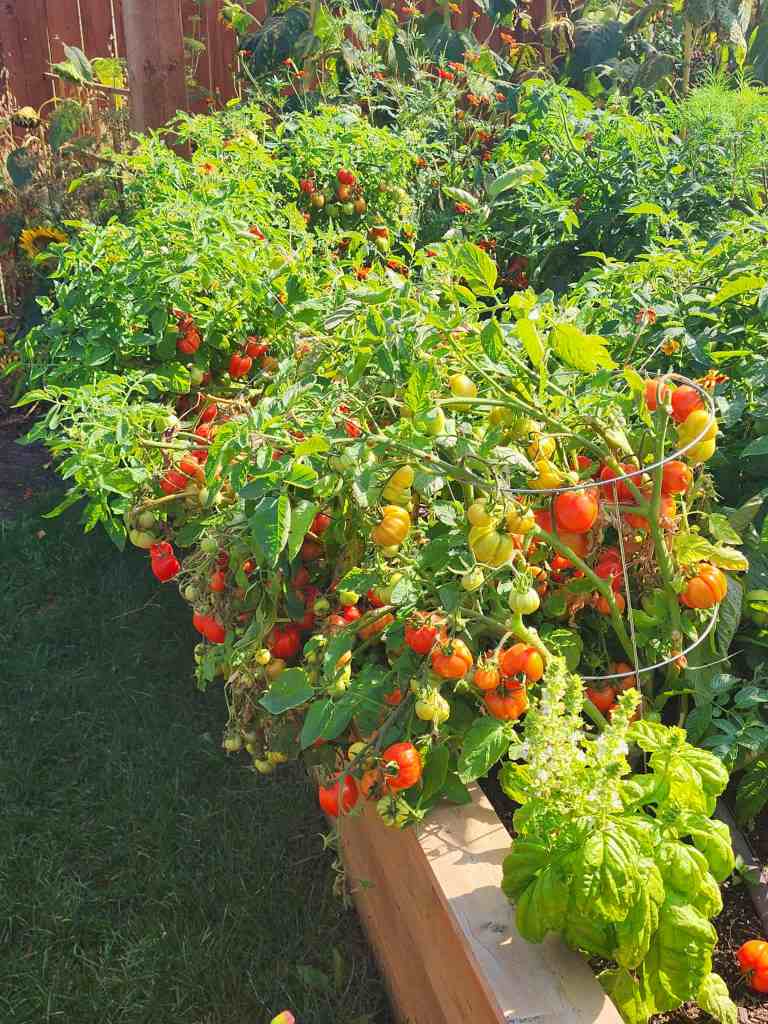
This determines how tomatoes grow. Indeterminate are also called vining types, they grow long stems, determinates are bush tomatoes that stay quite compact.
Determinates grow to a certain (determined) size, fruit all at once, and ripen all at once (meaning over a 2 week timeline, approximately). You do not need to prune these tomatoes unless you have such rich soil that you are need to thin out the leaves, in mid to late summer, to let the sun hit the fruits. They usually grow to just 2 -2.5 feet tall.
I like determinates for canning purposes as I can harvest all the tomatoes at once to make my sauces and salsas. My favourite determinate canning tomatoes are Ropreco, Bellstar, Heinz 2653, Heinz 1350, Martino’s Roma.
*Tip – I like to remove any leaves that are touching the soil (or mulch) to prevent disease. Also, anything touching the ground might get eaten by pillbugs or other insects that do the composting in your garden soil.
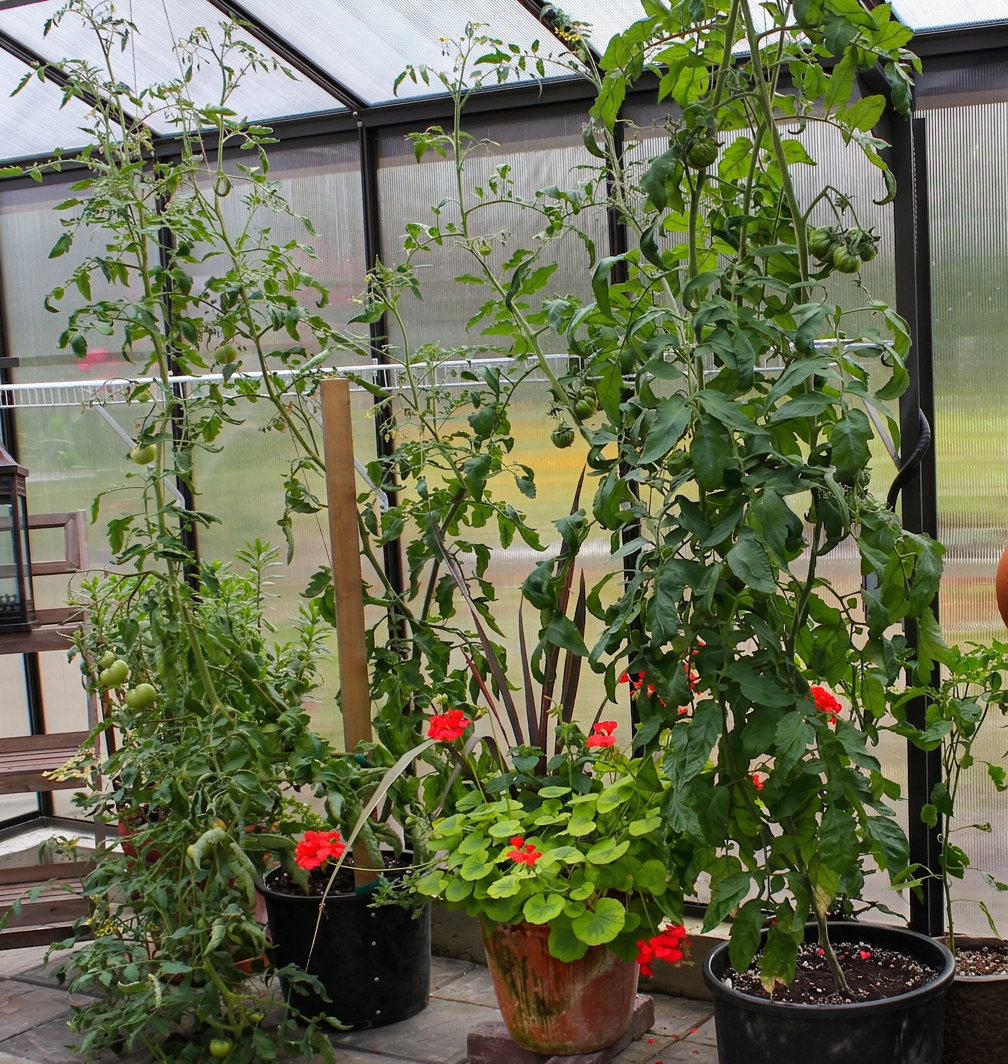
Indeterminates keep on growing and flowering throughout the season. They can grow from anywhere from 6 to 12 feet tall, if they have the time, space, (and good soil). There are two schools of thought for pruning these guys.
The first way is to just remove any leaves that are touching the soil (to prevent disease) but otherwise let it go wild. Note that it will get very large . Make sure to give it great support (large tomato cage or tower). Then snap off the tops at the end of the growing season to allow the plant to put it’s energy into ripening the fruits on the vine, rather than continue growing and flowering.
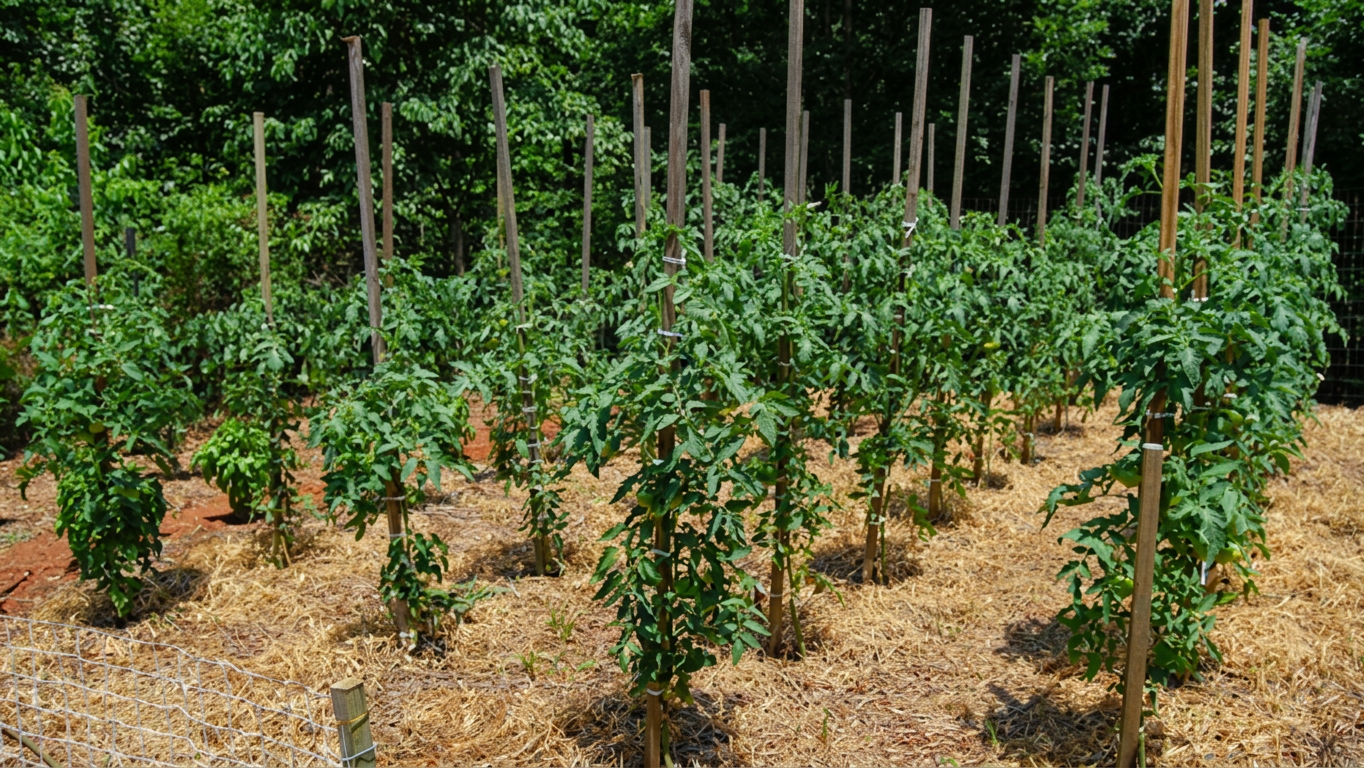
The second way (the most common way) is to remove leaves touching the soil, up to the first truss of flowers/fruits.
If you are growing the tomato up a stake, you will need to keep tying them up as they grow.
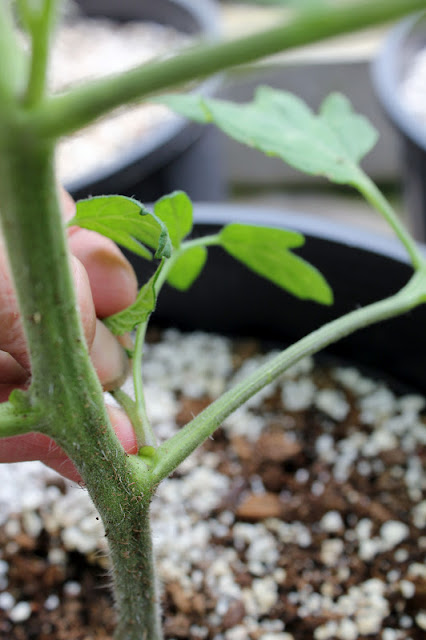
Remove all the suckers (the new stems that form in the vee of leaves growing from the main stem). This will be a weekly job through most of the summer.
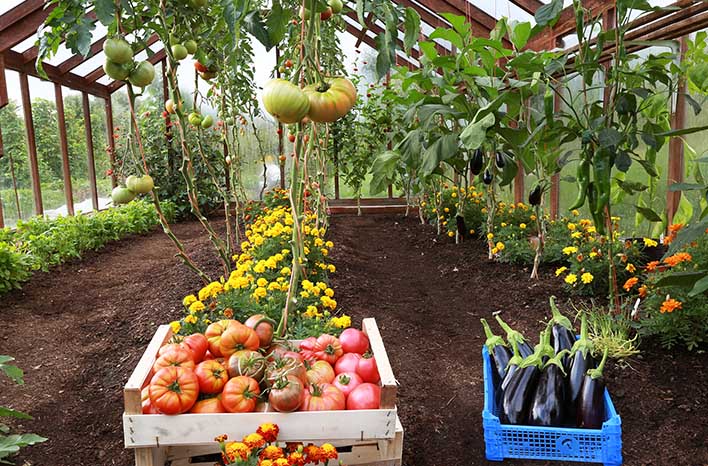
Remove bottom leaves as tomatoes ripen and/or the leaves yellow. The bottom leaves are the oldest ones, so they just get old. Remove them to keep your plant thriving. As the tomatoes ripen from the bottom up, remove leaves below each cluster of fruits as they ripen.
I do a bit of both styles, to be honest. If I am growing them up strings, I will only let one or two suckers grow. This keeps them from taking over the greenhouse.
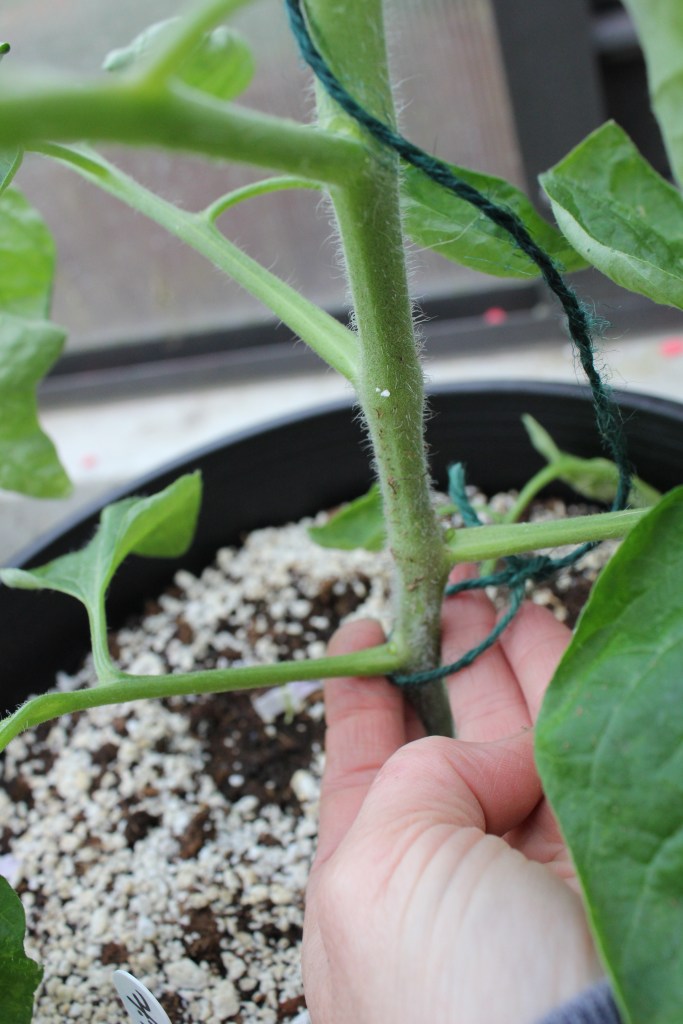
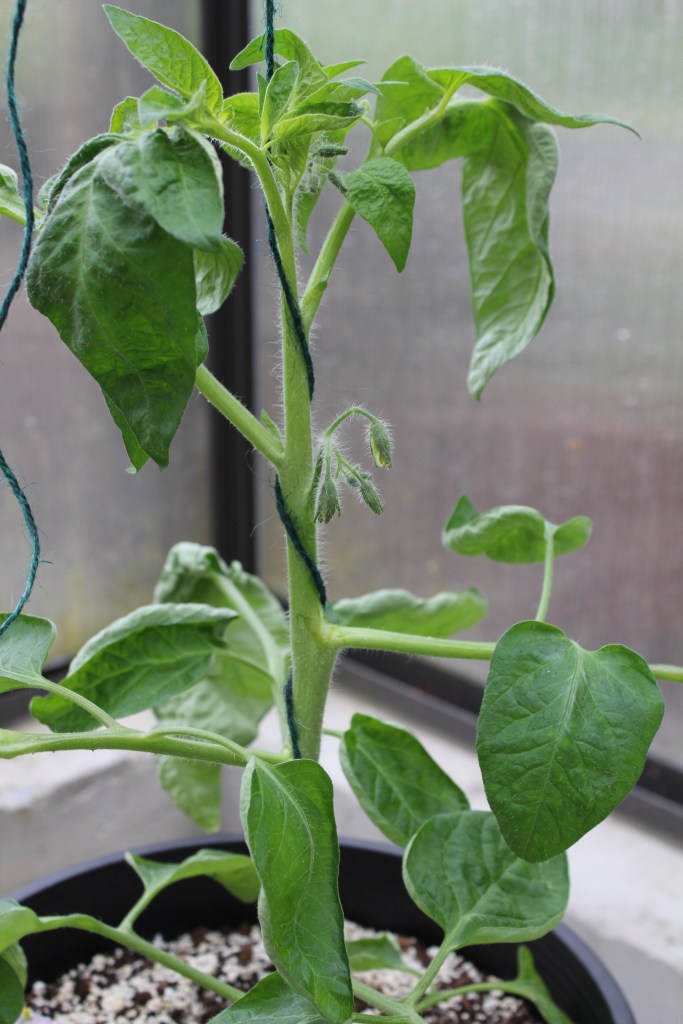
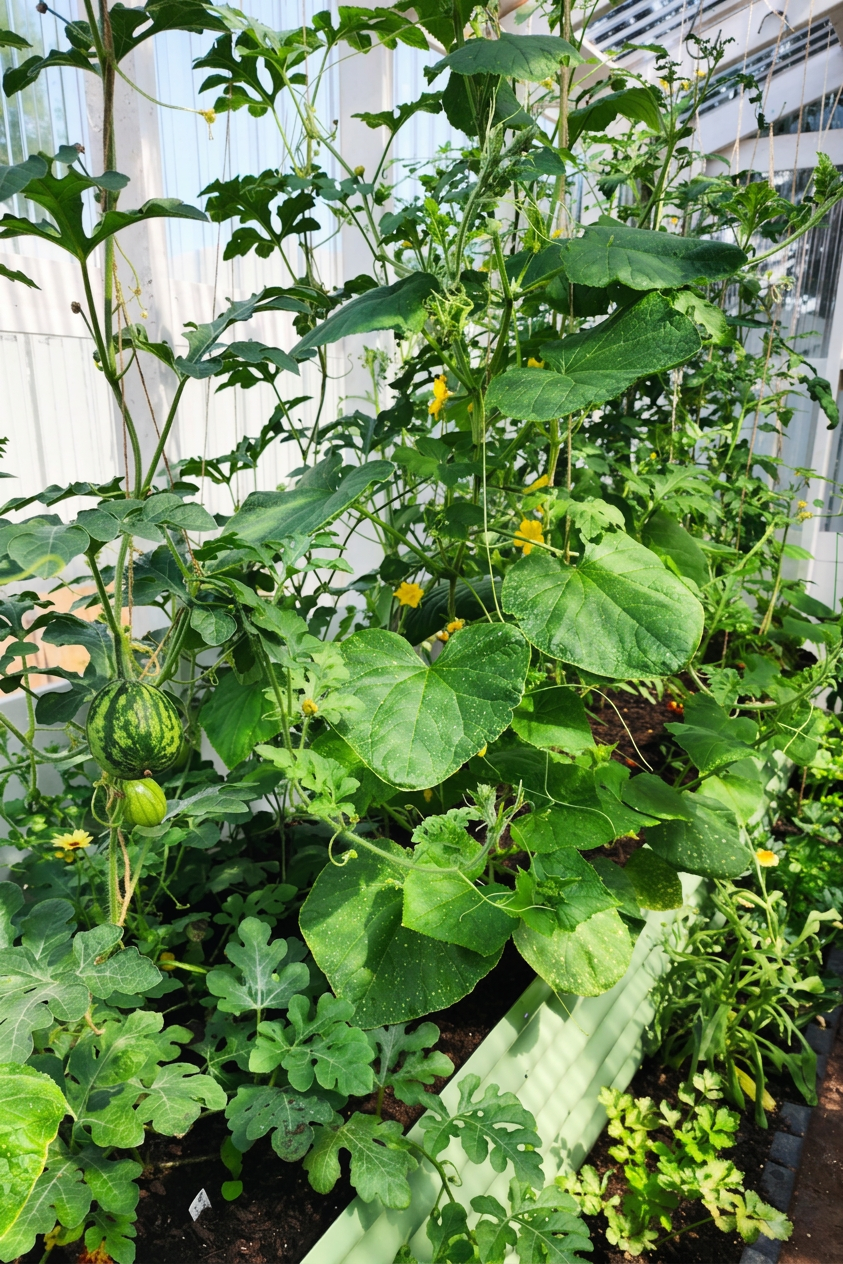
*Tip – you can grow cucumbers and melons up strings, too, to grow vertically and save on space. Plus it keeps them off the ground, gives more air flow, healthier plants.
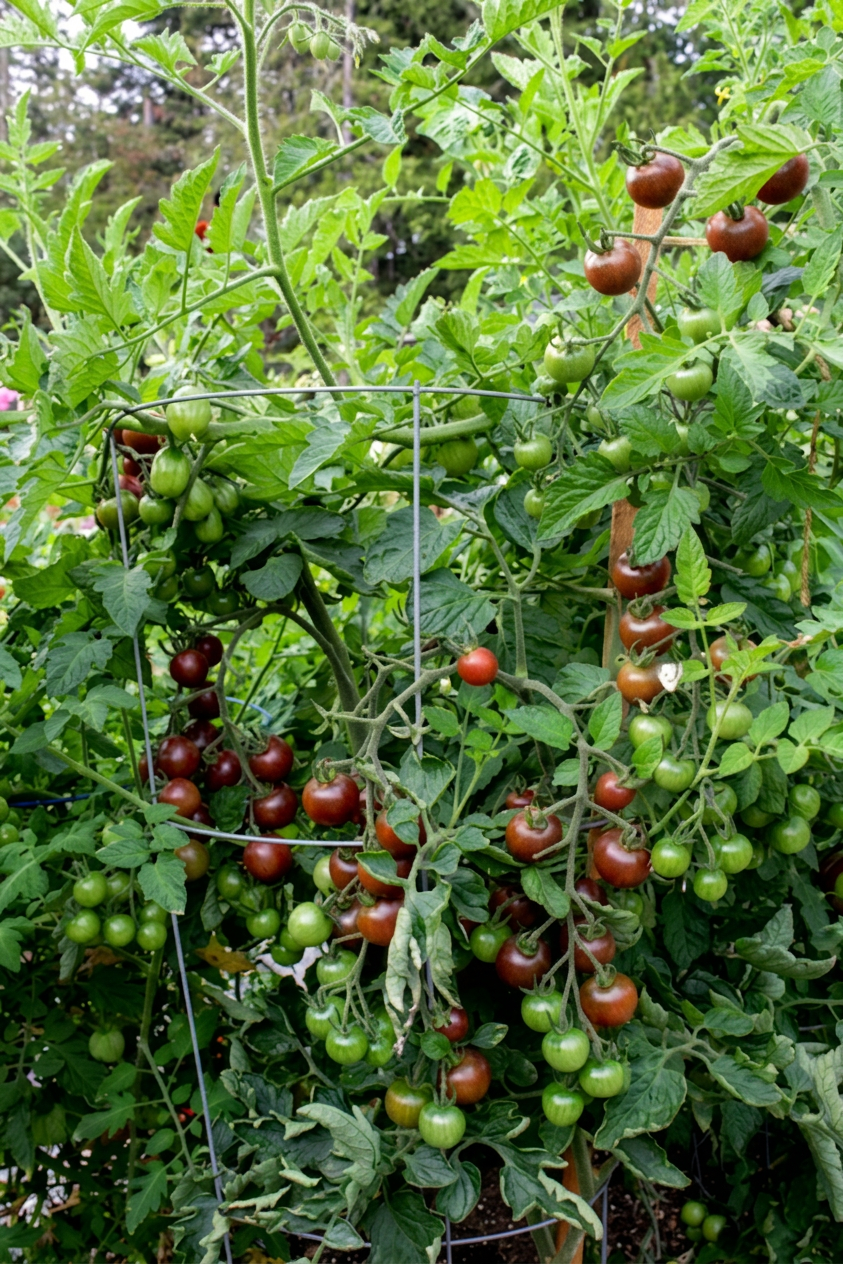
And sometimes, I just let them grow. I remove a few suckers in the beginning, but as they begin to fill up the cages, I let them be. If you decide to go this route, you need very large and strong tomato cages as the plants get enormous. The tomato cage in the photo is one of the enormous cages (get them at Buckerfields or Canadian Tire) and it is being held upright with two tall, wooden stakes. The square metal cages are stronger, less likely to tip.
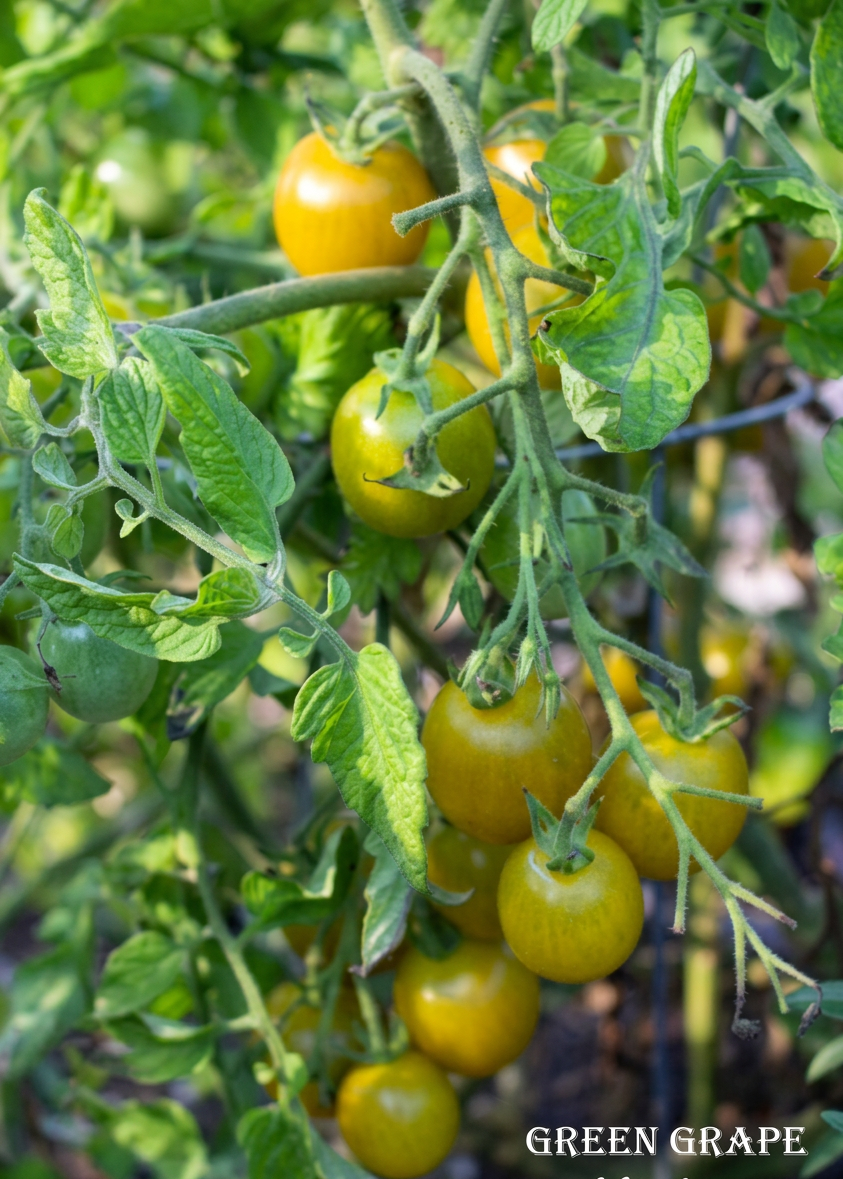
Semi-Determinate tomatoes are harder to find, more rare, but are kind of the best of both worlds. Though the stems are a bit longer (4 to 5 feet), they can still be grown in a sturdy tomato cage. They have one large flush of tomatoes, like the determinates do, but will also grow a few smaller flushes afterwards, continuing till frost. They do not need to be topped in late summer, will automatically just stop growing and producing. Paste semis tend to be bigger and meatier than determinates.
Grow them just like your determinate (bush) varieties.
My favourite varieties are Heidi, Speckled Roman, Stupice, Black Plum, Gill’s All-Purpose, Sasha’s Altai. Here are a bunch more to try (Canadian source). Green Grape.
Check out this Insta post from theyoungnonno to help you determine how many tomatoes you need to grow for a year’s worth of homemade sauce.

 The Marigold Potager - A Zone 3 Prairie Garden
Leave a comment