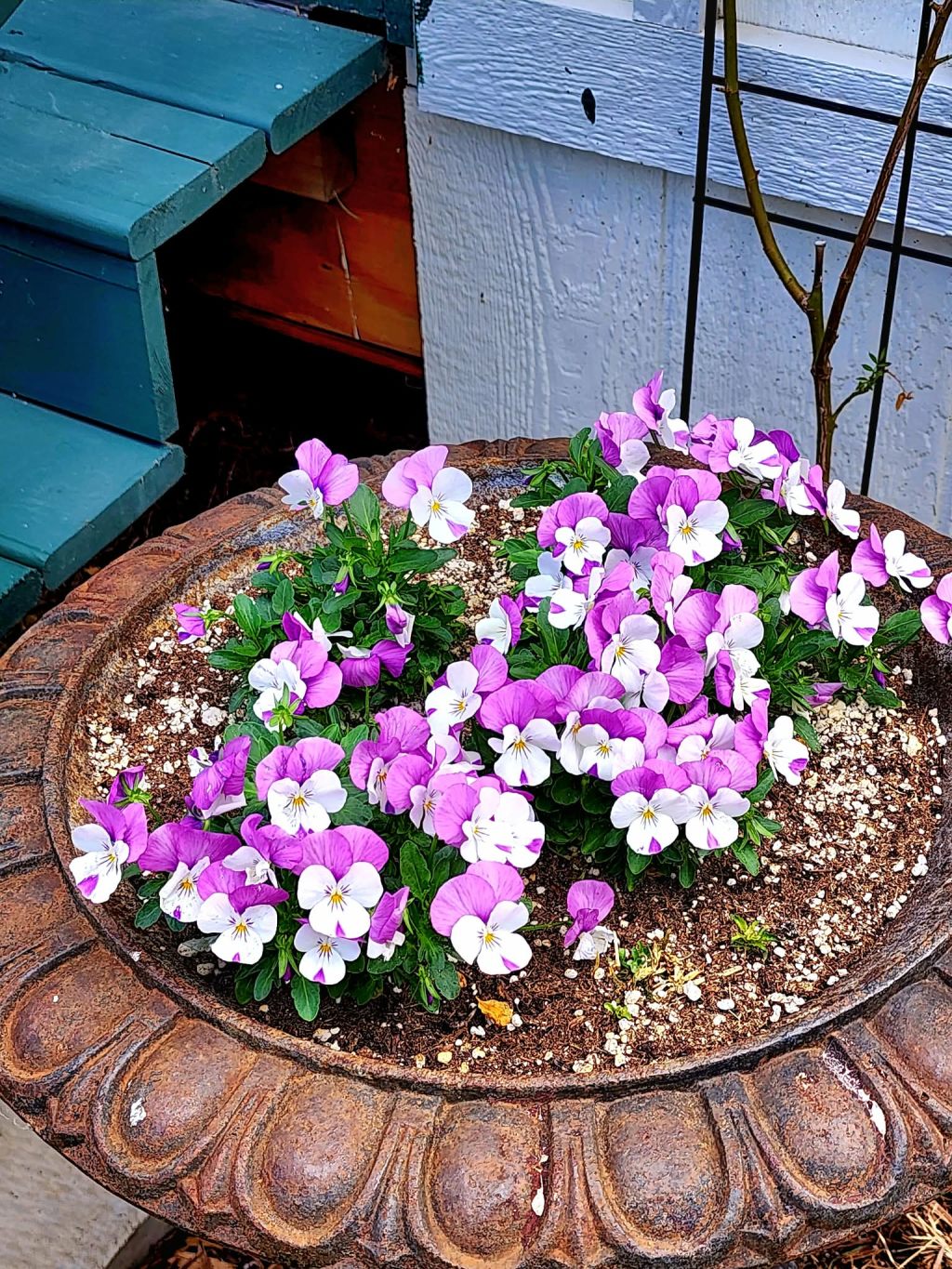
Well, we had about two weeks of absolutely stunning weather, broke records all over the place… and then Junuary happened.
It has been so cold for the past week. We have struggled to hit the high teens during the day and nighttime temps remain low. So low that I had to put the heater back in the greenhouse.
I was able to get just about everything planted last week, now I am wishing I had waited a few days. These are the tender plants that I wish I had waited with…
- Tomato bed with marigolds (they are showing purple leaves – a sign of being too cold). I may lose these guys.
- Squash seeds direct sown in the garden.
- Cucumber seeds direct sown in the greenhouse.
- Dahlias planted in the foundation beds.
- Flower boxes and planter pots planted up for the summer, including begonias. Eek.
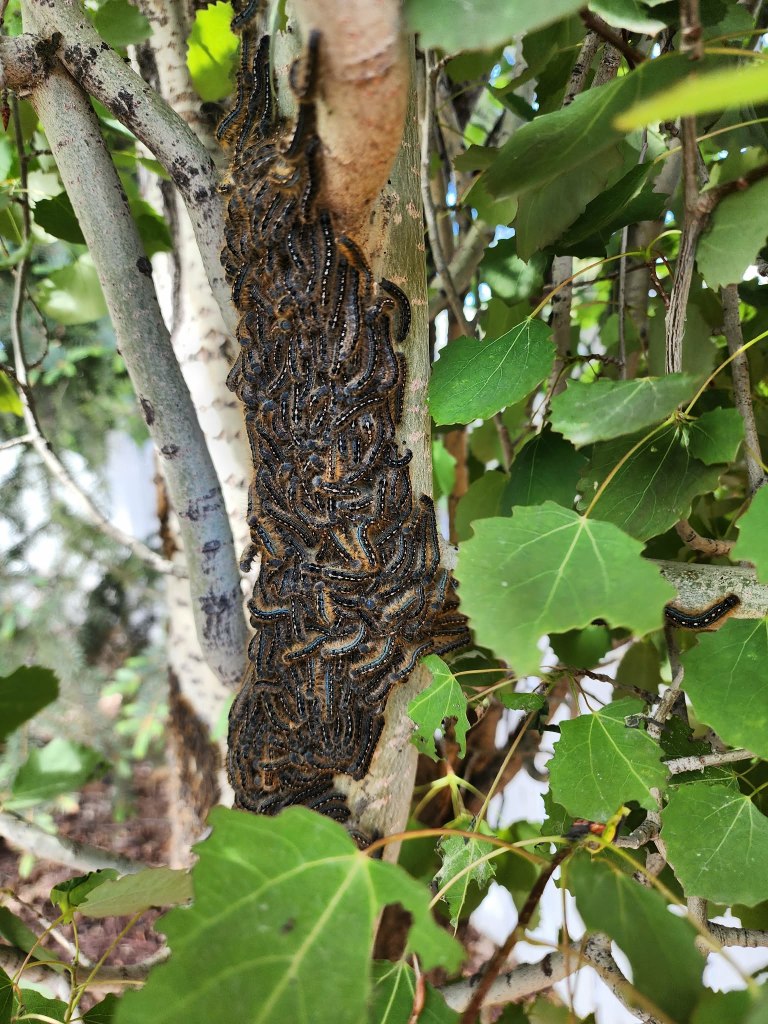
You may have heard about our tent caterpillar infestation? They ‘bloom’ about every 10th year, and I guess this is our year. They are everywhere. They are on stairs, on railings, dangling from buildings on strings, and on trees, of course.
If you have these guys, you do not have to do anything about them unless they are on newly planted, juvenile trees. If they are on mature trees, the trees will be fine. Yes, they will lose leaves, but they will be fine. On new trees, you want to scrape them off into a bucket of soapy water to drown them. Yes, it is gross.
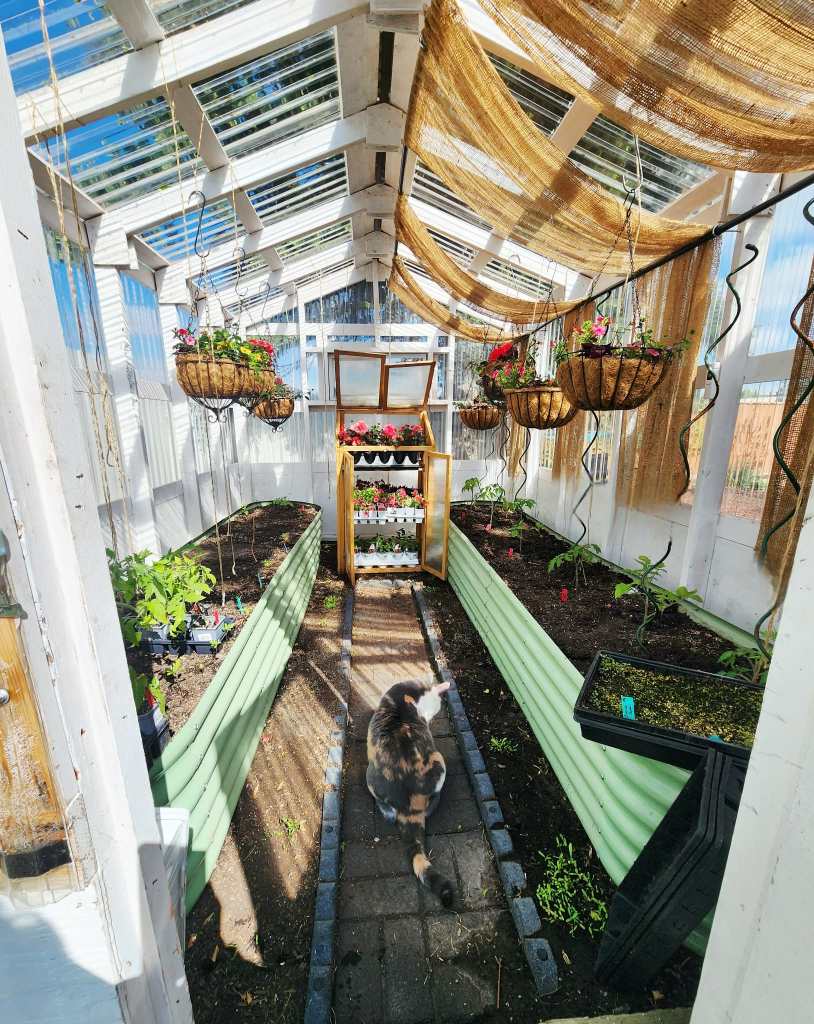
In The Greenhouse
Despite night time temps dipping down to 4 or 5 °C, everything is looking good in the greenhouse.. for now. The greenhouse keeps the wind off the plants, the cool air, and the soil in the raised beds is warm. The longer this cold snap holds on though, the harder it will be to keep things thriving.
- I have sown cucumber seeds where you see the strings hanging from the rafters. The cukes will climb up the strings, need no other supports.
- The tomatoes have both strings to climb and tomato spirals to help keep the indeterminate vines from falling/breaking. You can get them from Lee Valley, Home Hardware, or Amazon. I am sure other box stores will carry them, as well.
- This year, I am growing my peppers and eggplants in big black grower pots on the south side of the house, right beside the stucco wall to really soak up the heat.
Watering in the greenhouse – I do it on dry days, dry moments, about twice a week to keep my newly planted tomatoes and flowers happy, plus keep the seeds wet so that they germinate nicely.
Dealing with the heat – Later in the season, I will keep the door and the back window open for a cross draft and pull my burlap ‘curtains’ shut. My greenhouse does not get smoking hot though, so the burlap is enough.
If your greenhouse tends to get very hot, you will want to get some shade cloth, the burlap may not cut it unless you get a heavy weave and make a solid wall of them. You can get better quality burlap at fabric stores, oddly enough.
Get yourself a water barrel... or two. Most towns and cities (in Canada) encourage you to harvest your own water, use less town water, so they will offer a rebate through the town office. Check with your municipality.
Watering In The Garden
Watering pots and planters – Don’t assume that rainfall will water the plants in containers. Check them every few days by sticking your finger into the soil as the rain may not have penetrated far into the pot, hanging basket, or planter, especially if they are under the eaves or on a porch.
Garden beds and containers that are alongside the house, a building or fence, or under the dense canopy of a tree or shrub, they may not get any water even during heavier rainfall.
In the greenhouse biz, we refer to the beds under eaves as ‘dead zones’. It is hard to keep plants wet enough in these beds so many plants fail to thrive. If you have this problem, lay a weeping hose or drip system under the mulch to easily and thoroughly water your shrubs and flowers once /twice a week.
Don’t trust your eyes as wet foliage doesn’t guarantee damp soil. Just like dry soil on top after watering with weeping hoses does not mean the soil is dry. Stick your finger in the soil to check for moisture. That is the best moisture gauge of all.. and it’s free : )
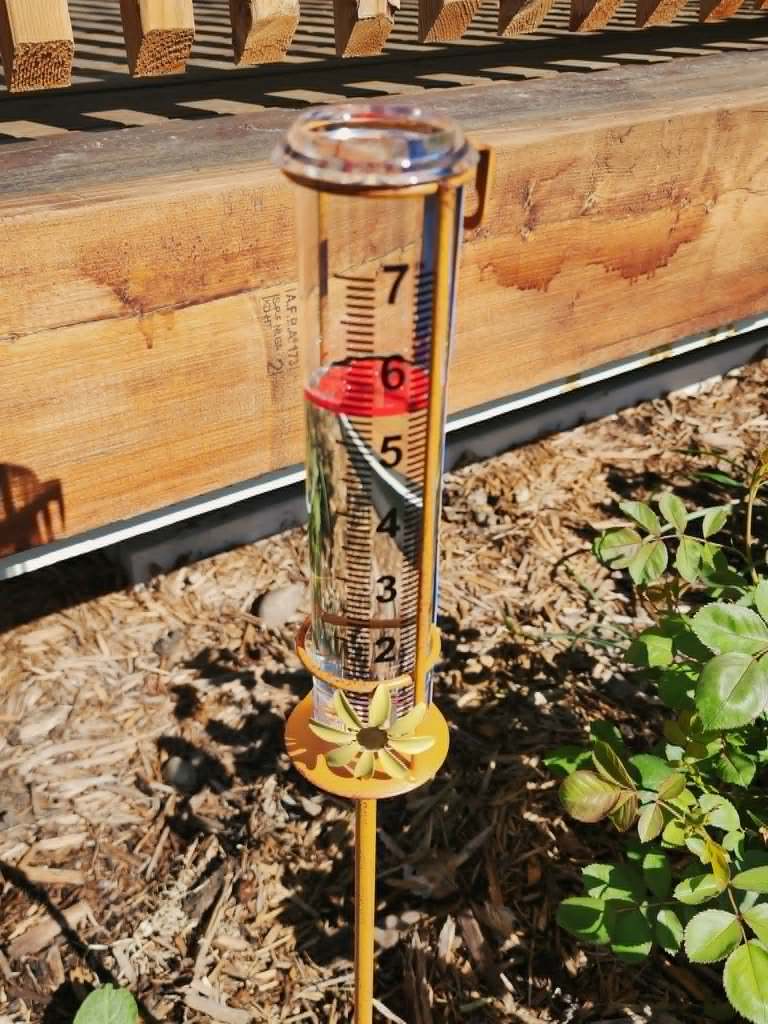
We had the driest May that I can remember, this year. To keep the newly leafing out trees happy, water the newly planted pots and baskets, water the veggie beds… I had to do a lot of watering. I’m afraid to look at my town water bill!
I used to think that it was an old fogie thing to use water gauges. Now, that I am an old fogie, I understand why people do it. Not only is it fun to see how much rain actually lands in your yard, it is also super helpful to find out how much rain falls, expecially in the dry zones.
- I bought this rain gauge as it says it is more accurate than most. I like that it is pretty, easy to read, and heck, best of all, affordable ; )
- This 10 pack of gauges is very affordable so you can check how much you are watering your lawn, keep track of rain in a bunch of different beds, check your water in many different garden zones.
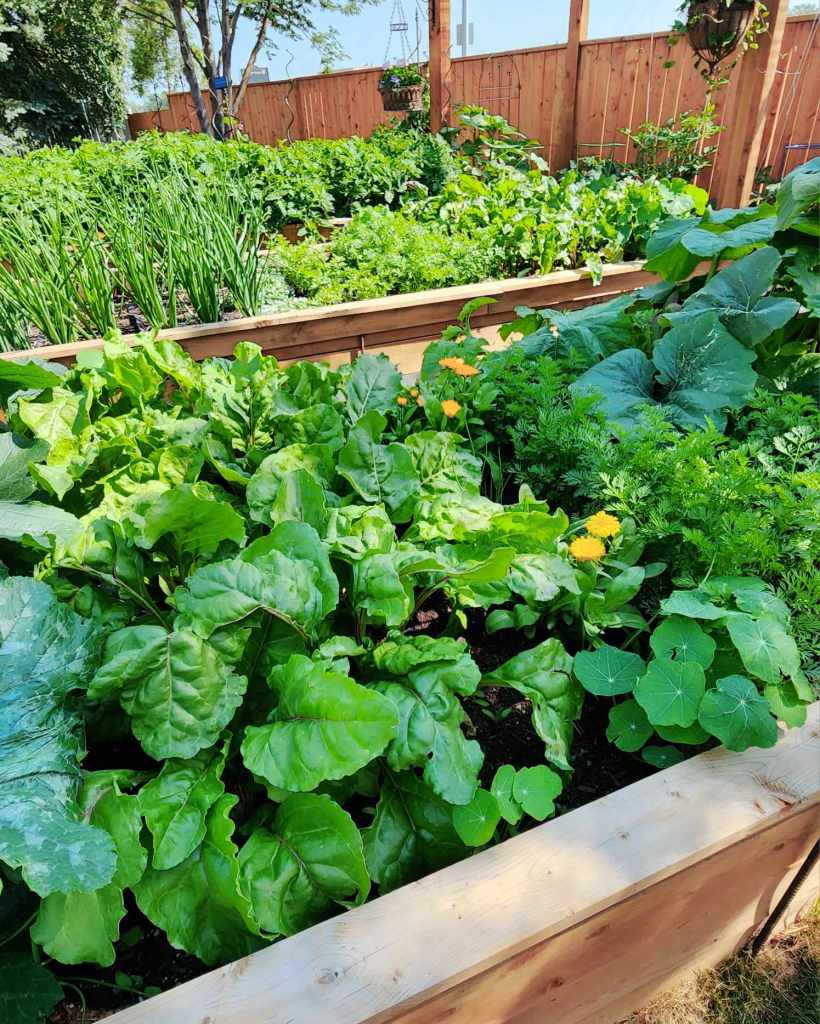
Deep watering less often rather than watering shallowly daily is the key to healthy gardens, especially in times of drought. Use drip systems or weeping hoses. And truly, it makes your veggies taste so much better when they are not bloated with water. They develop more flavour from the sun and warmth when they get less water.
Plant your veggies just a little bit closer together than listed on the package/tag to prevent evaporation. Make the rows a bit closer together, plant the veggies a bit closer, and/or plant some flowers between the veggie rows. This leaves less soil bare to the sun in summertime, keeps the soil moist longer, and bonus… keeps weed seeds from blowing in. We currently have a sea of dandelions in the fluff stage, at the school behind our house.
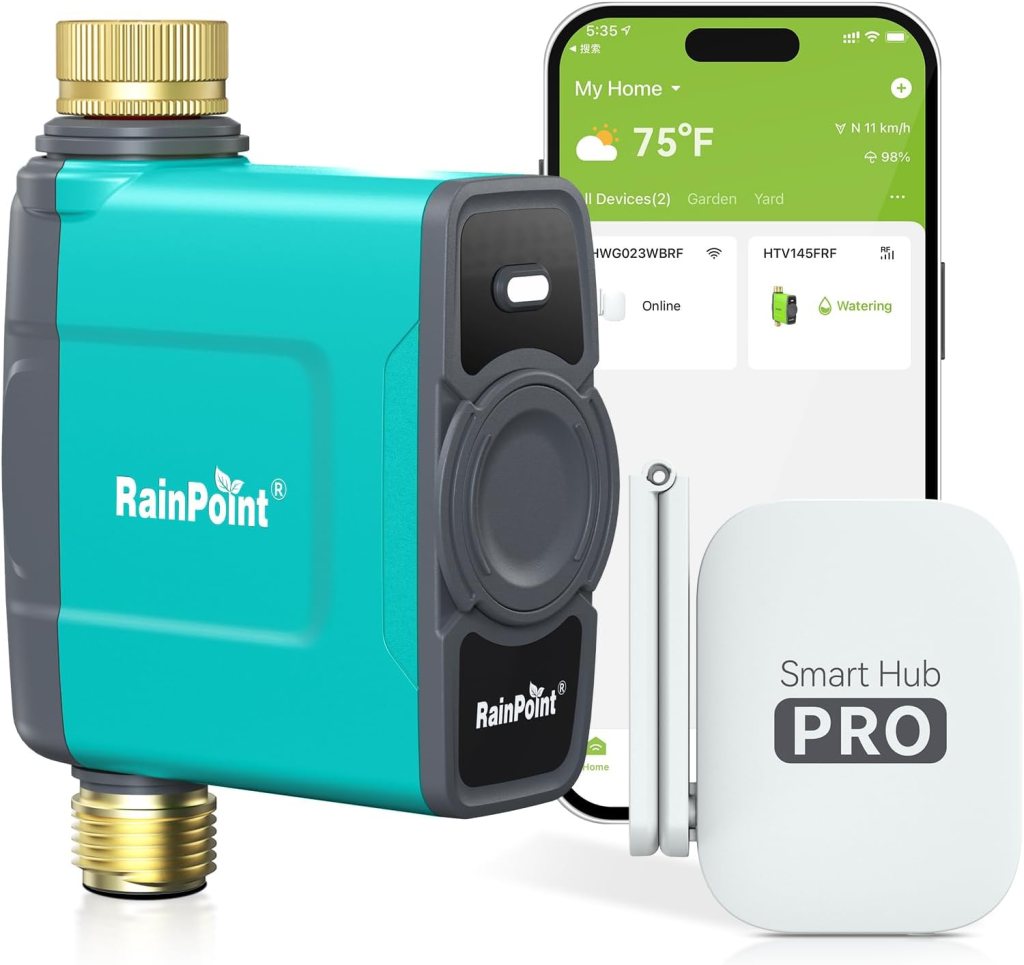
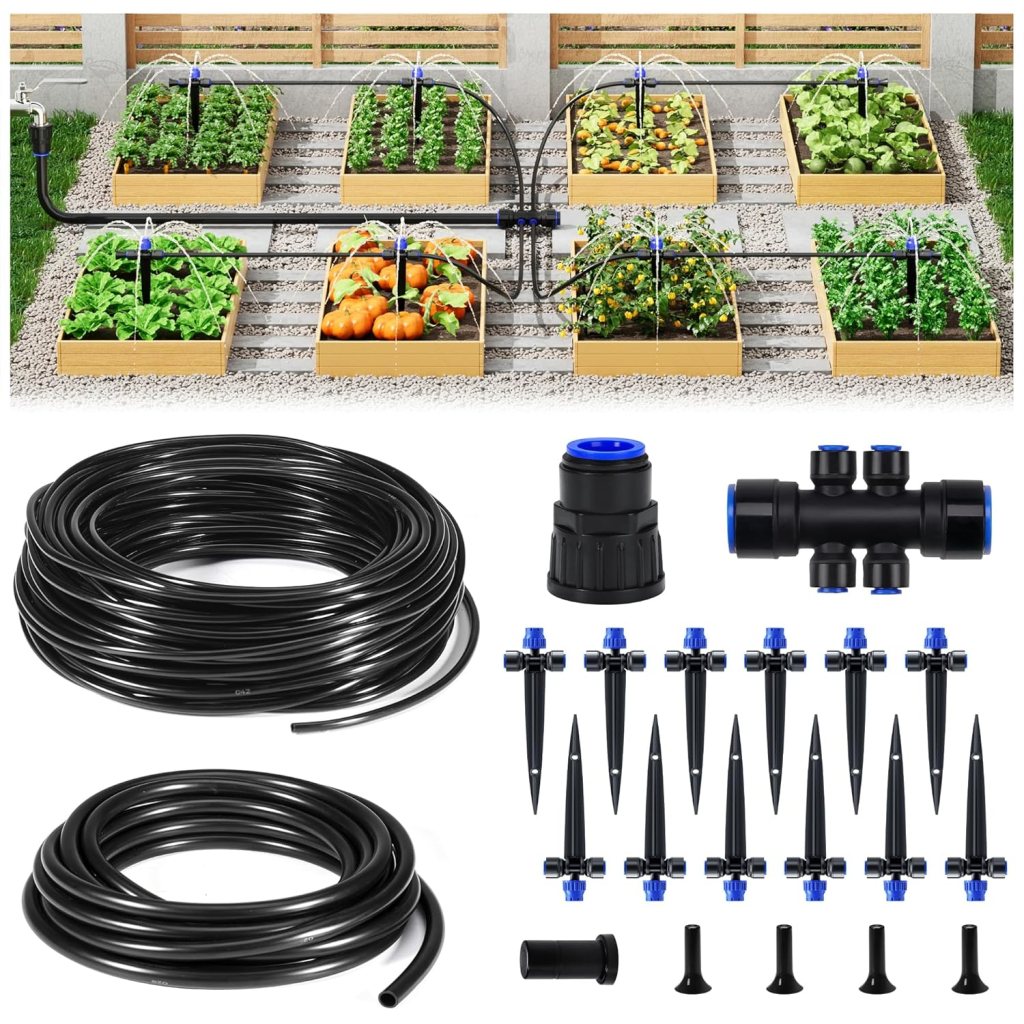
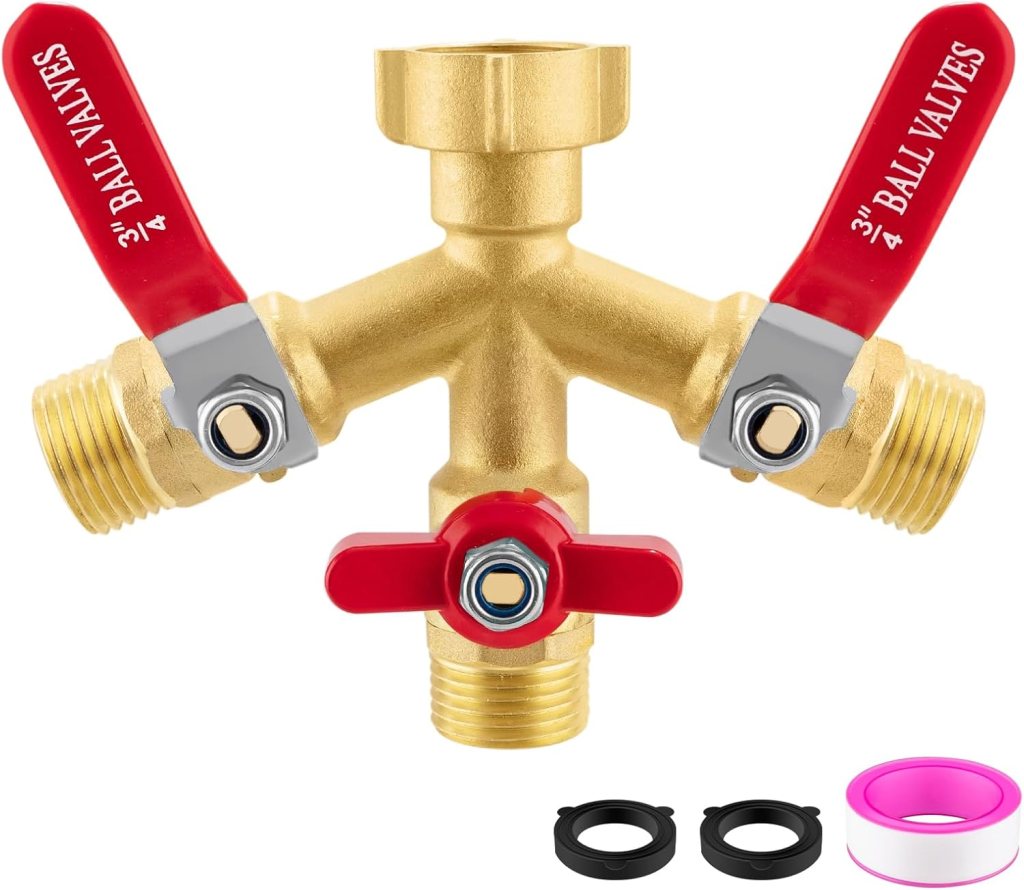
The best time to water your beds is in the morning, ideally around 4 or 5 am. This means a timer and a drip system, of course. I do not have a drip system so I am sharing links that got a very high rating on Amazon, from 4.8 to 5 stars.
I do know that the splitter with the handles is better for people with arthritis in their hands than the one with the little valve changers. Those small ones are super hard to move if your fingers are weak/hurt. Spend the extra few bucks and get the handles.
I use weeping hoses and the kitchen stove timer for my watering. I turn on the hose and set the timer for 15 to 20 minutes. When the timer goes off, I manually move the hose to the next bed. This works well for me as I like to keep an eye on things, but others (like my son) prefer the ease of the timers. You do you : )
Those of us without timers, the best time to water is in the morning, if you can, or before 6 pm at the latest. That will give the soil’s surface time to dry off so they do not go into the night with wet soil, which would promote fungal diseases.
If you tend to get powdery mildew on your plants, black spot on your flowers, or other fungal diseases, make sure to create good air flow between your plants, not wet the foliage, and do not go into the night with wet soil.
Fall mildew on cucumbers and squash is a whole other thing that has to do with dew points and stuff. Don’t worry about that, just worry about your summer crops.
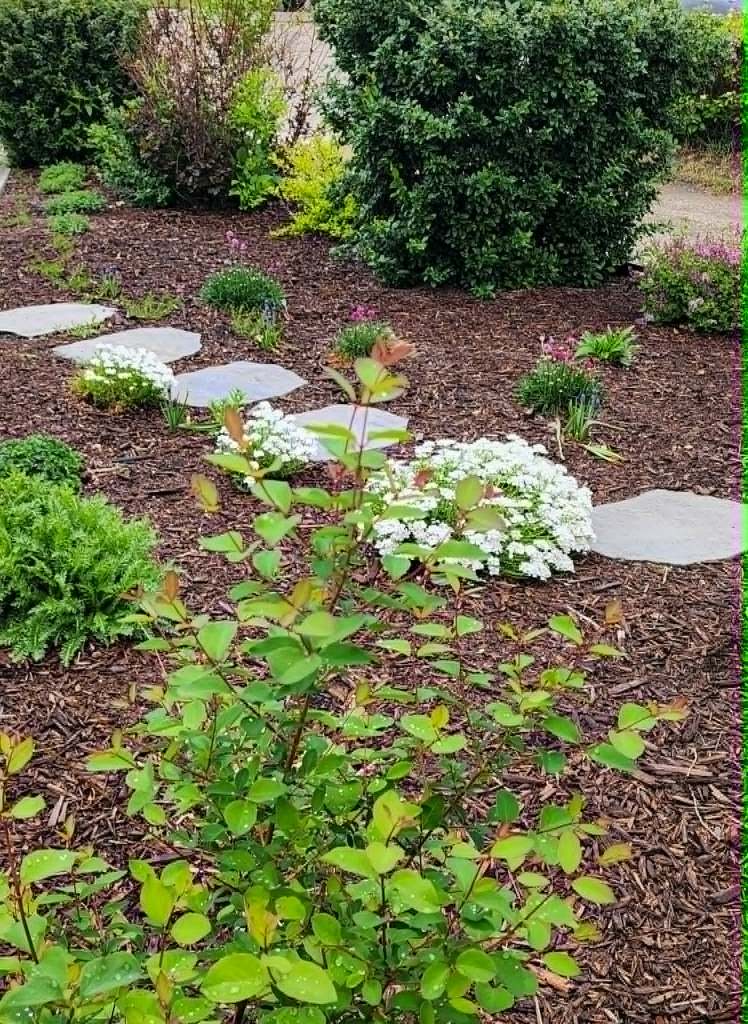
Front Yard
We removed all the grass from our front yard, last year, and replaced it with perennial flowers, mulch, and a pathway to the backgate.
The intent was to add more flowers and shrubs to it this year, to fill in the spots and make it more garden than mulch. With the weather this year, I think I will put planting new plants on hold till autumn.
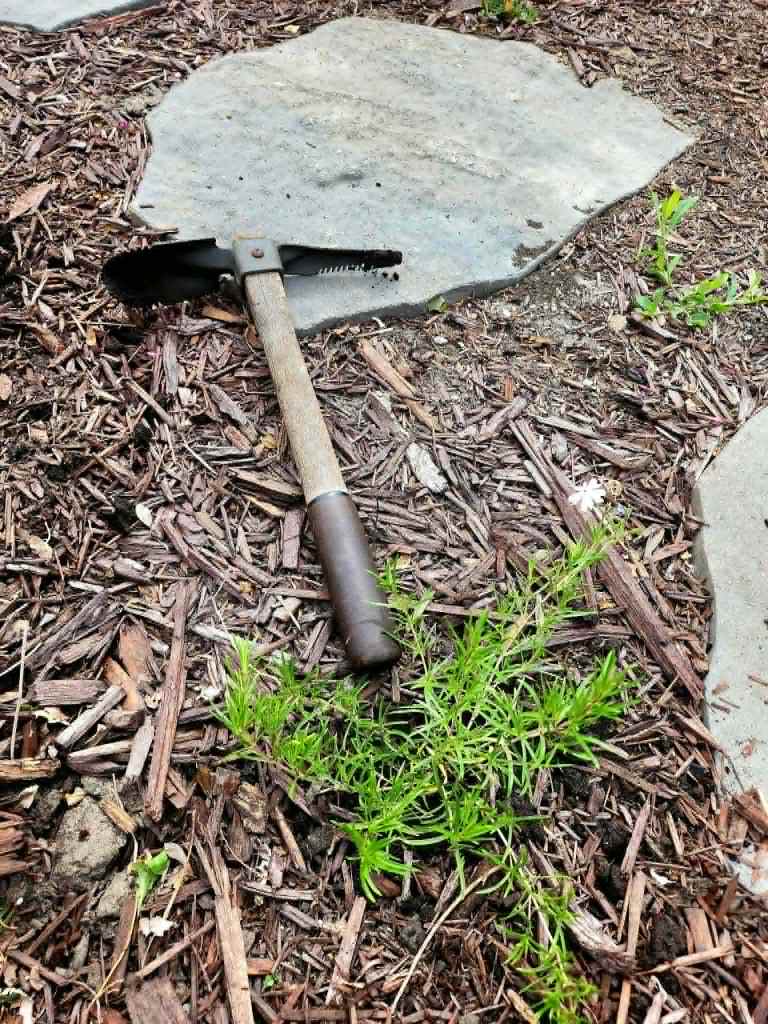
I did add some lovely phlox (sold in 6 packs at HD for $15) along the pathway. This will spread, add colour, feed the bees. I will look into adding coneflowers and rudbeckia in the late summer. See how this summer goes…. eek.
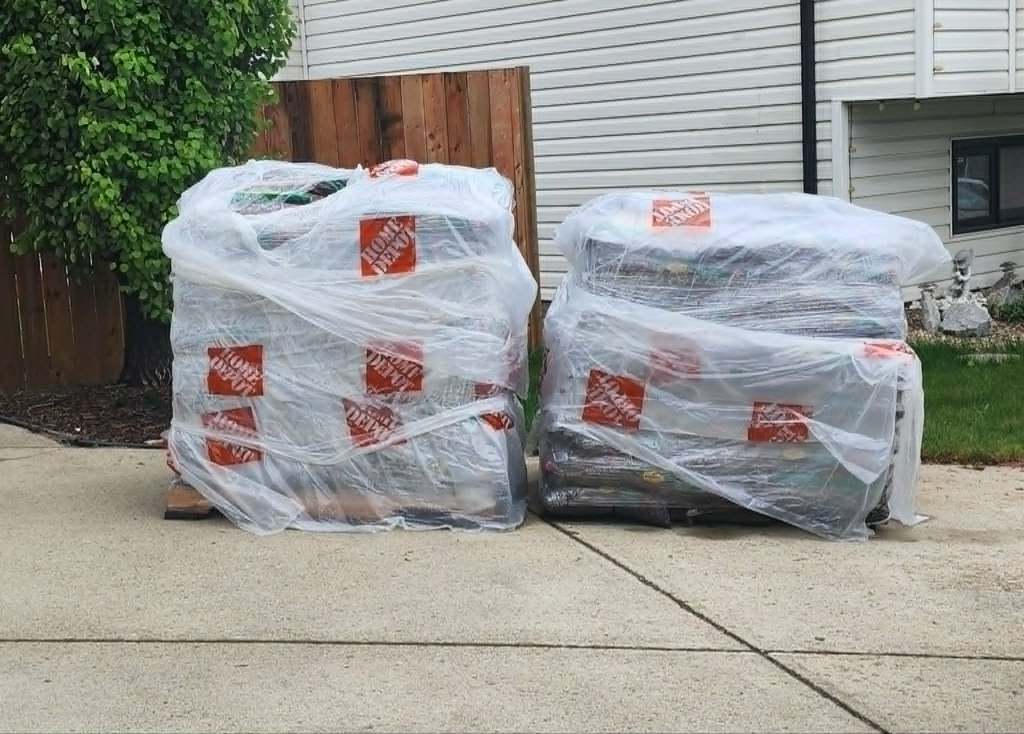
Btw, we have no landscape fabric under the mulch, just a thick layer of mulch that makes it harder for the weed seeds to germinate. As I want to keep adding plants to this yard, fabric makes even less sense than normally. Plants do not like the fabric as it holds in moisture and prevents air from getting to the roots of the plants. The plants literally rot in place. If you really want a barrier, try the landscape paper instead, and then add 4 inches of mulch on top of that.
This has been super easy to maintain. I weed once a month, or so. There has never been a tonne of weeds. We have 4 to 6 inches of mulch, though. Remember that mulch needs to be topped up every couple of years as it composts into the ground, feeding the soil life.
I may receive a small affiliate commission if you purchase something through one of my links, at no cost to you. Thank you for your support!
Back Yard/Food & Flower Gardens
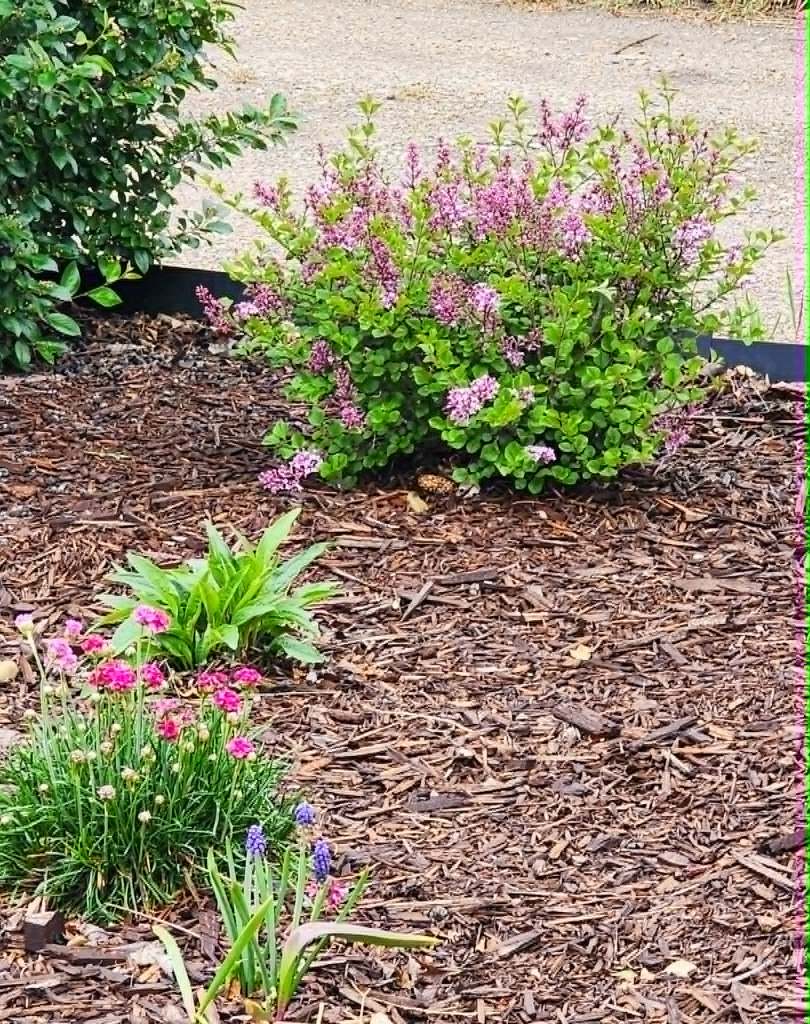
Our gardening season is just beginning with this brutal spring. We still have tulips and grape hyacinths blooming in some beds, done in others. My daffodils are just coming up now, not yet blooming. Peonies are coming up but not yet in bloom. Lilacs just starting to bloom now… what else can I say? It is a spring like no other. Sob!
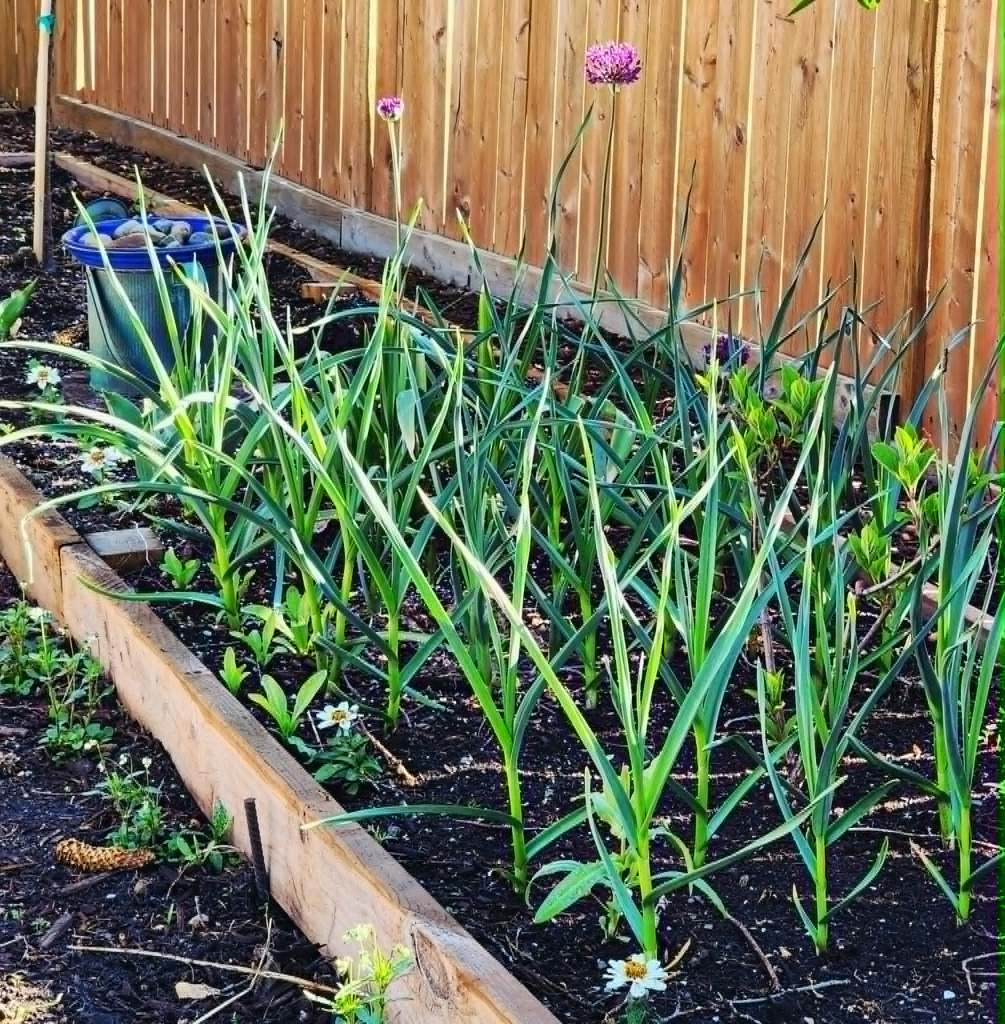
Garlic is thriving, thanks to the 5 or so inches of rain that we just got. Now I know why island garlic is ready so much earlier, lol. Not just the milder weather, but also all the winter rains. If you want to feed your garlic, just sprinkle some blood meal or hen pellets around the stalks. It will work itself down to the roots with the rains and waterings.
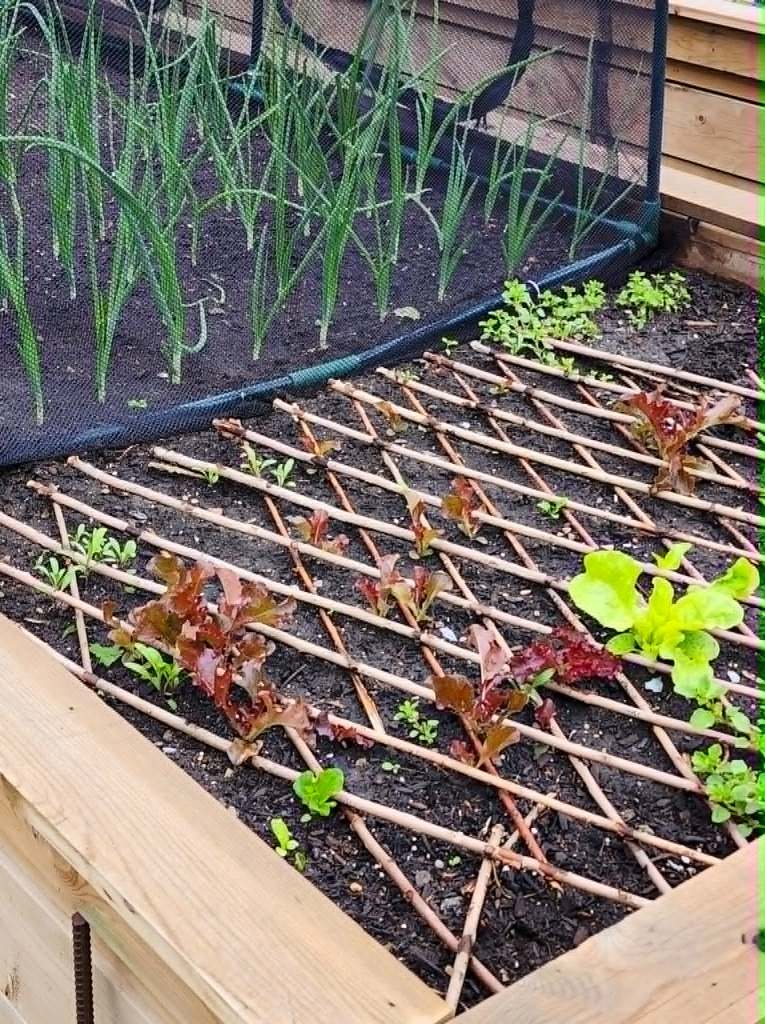
Onions are doing great. Lettuces, brassicas, and other cool season crops that usually take off like mad in early spring, are also struggling with the on again off again weather.
Do some additional sowings. These lettuces that are up now, were sown a long time ago. I added another sowing yesterday, for succession sowings and lettuce for many weeks.
We are in that weird season where we can succession sow cool season crops, while also sowing summer crops.
- Peas. Start another row or two of peas.
- Beans. Grow both pole beans, that take longer to mature, and bush beans for earlier picking.
- Onions. I am sure you still have time to start from sets, if you would like. They will take off in no time with these cool temps.
- Lettuces. Keep sowing.
- Kale, cabbage, broccoli, cauliflower – I know the weather can turn on a dime, but sow the seeds/plant the starter plants anyway, take the chance.
- Spinach. Don’t do it. It’s too late.
- Kohlrabi – yes, go for it.
- Rutabagas – maybe. They like a summer sowing to finish in the cooler temps of fall, so are usually sown in July.
- Carrots, beets – yep, go for it. Do a second sowing. Or a first one. Is all good.
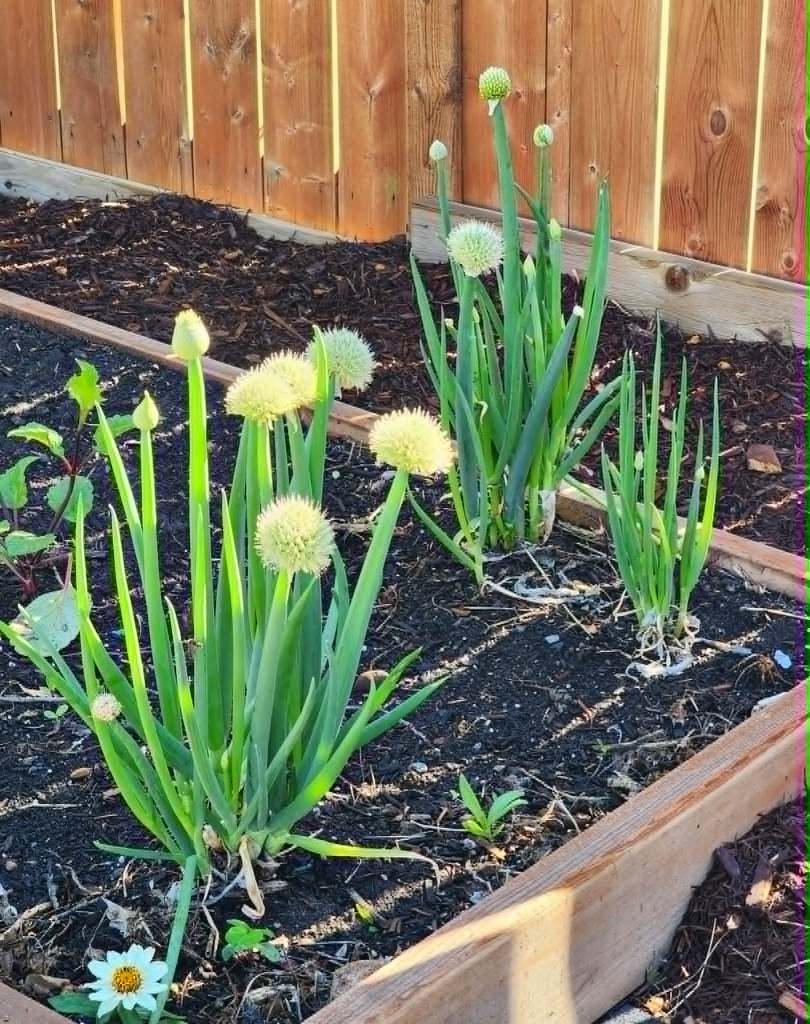
Okay.. anyone know what these are? I am thinking some kind of perennial onion? I have no recollection of planting anything like that, but that is what it looks like and it has now come back for the second or third year in a row?
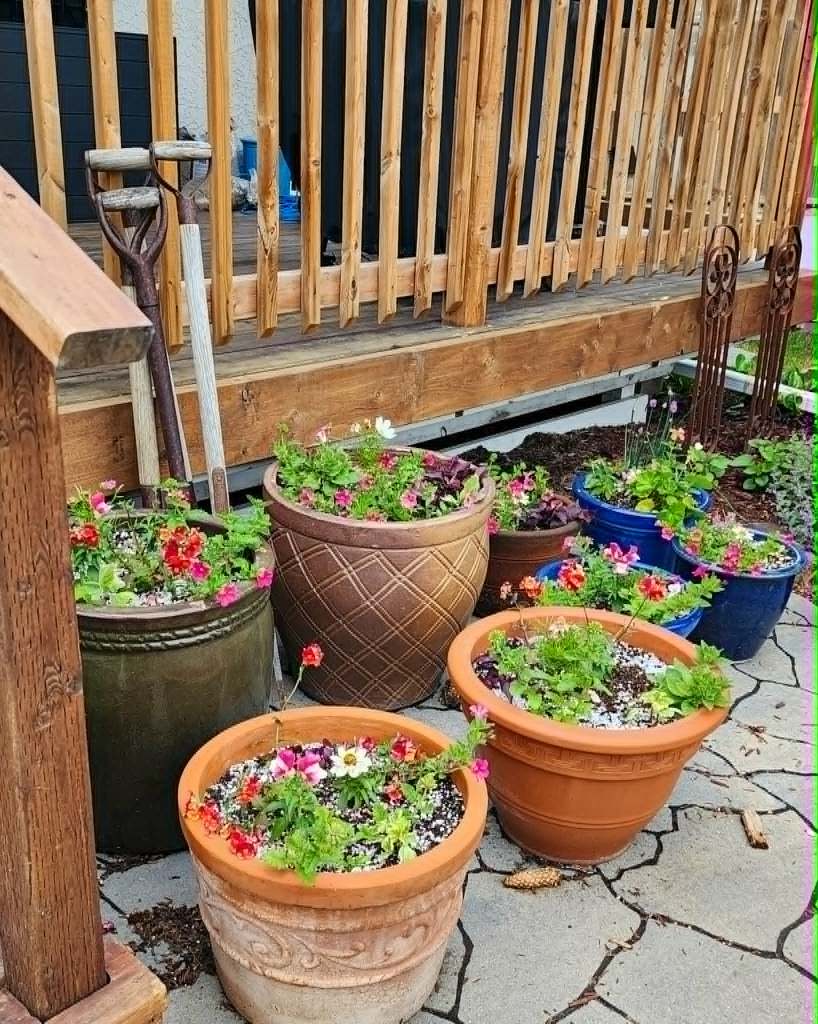
This is what my pots look like today : (
They are not growing, not doing anything, as it is stinking cold outside. I know they will grow, will fill out, but it is still sad. My hanging baskets are still in the greenhouse!
Anyway… that is kind of where we are at right now. Cover your tomatoes, if you can, here in Alberta. Pray for sunshine and heat. Be thankful for the rain, capture what you can.. you never know when it will just end, lol.
For my island readers… I am so thankful for you. I hear that you are having lots of rain right now. Yay! Not a usual occurrence on the island this time of year. I hear that your gardens are jungle like. Enjoy! and be grateful that you are not here, freezing your buns off, hahaha.

 The Marigold Potager - A Zone 3 Prairie Garden
Leave a comment