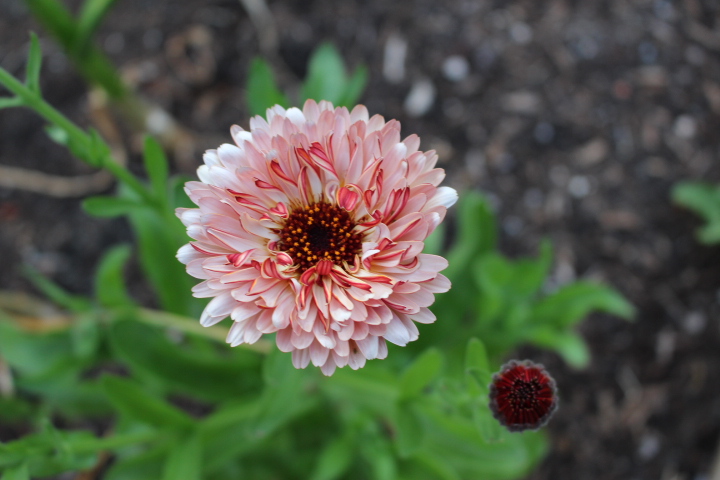
I love nothing more that adding flowers to my yard and potager. Perennial flowers have their moments, but annual flowers (the kind you plant each year) are my real favourites.
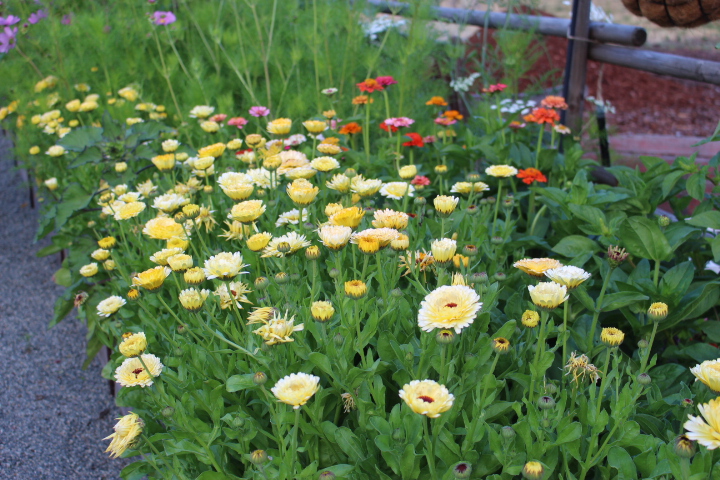
Calendula will bloom from early spring through till frost, well into November. In mild winter zones, I have seen it blooming in pots when I was on my way to a Christmas party!
They attract and feed the pollinators and add colour and beauty to the potager garden for the entire growing season. Easy to grow, can also be used as a cut flower.
Calendula is one of the very best flowers to grow in your food garden, or rose garden, for pest control, too. They will get rid of aphids, whiteflies, and caterpillars by attracting beneficial insects like parasitic wasps and hoverflies that love to eat the pesky bugs.
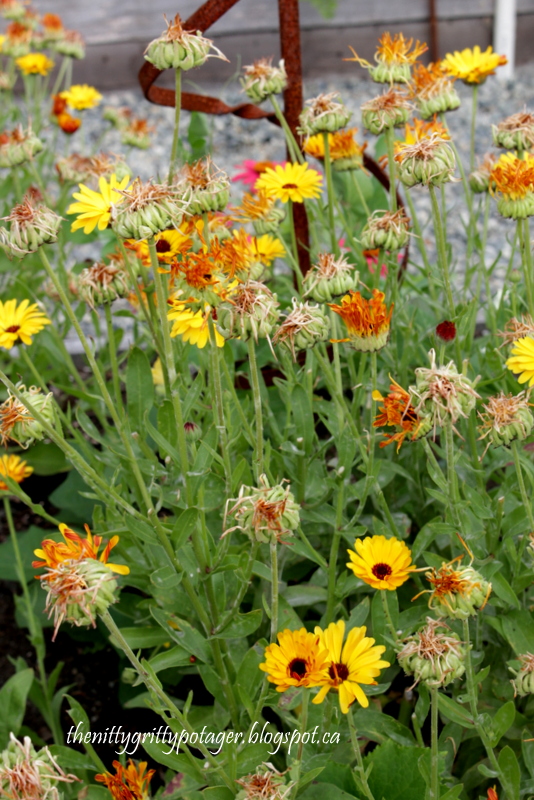
Did you know that the regular deadheading and harvesting calendula flowers for your vases, will keep them blooming profusely all summer. When you stop deadheading, they stop blooming and instead begin to ripen their seeds, assuming that their job is done for the year.
Collect these seeds for next year’s flowers, or allow them to self sow.
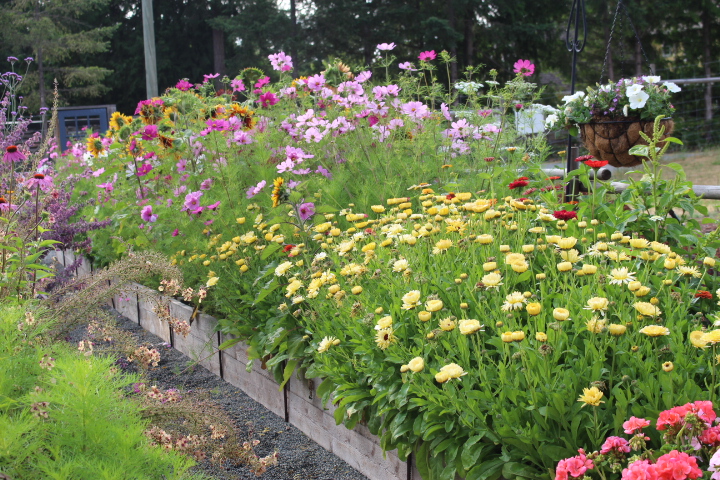
- Sow calendula in early spring, the seeds can handle a bit of frost, or in autumn if you live in a warmer garden zone.
- Sow directly in the garden bed in April/May. In zones 5 and up, can also be sown in October/November.
- They prefer moderately fertile soil that has good drainage, in sun or semi-shade.
- Sow seeds 1/2 inch deep and 6 to 12 inches apart.
- Plant in rows or blocks to attract the parasitoids, and for harvesting from your cutting garden.
- Can be started indoors in late winter to plant out after the last frost.
Water regularly until rooted in, or till you see germination, and then once or twice a week thereafter. They do not want constantly moist soil. Also, they do not like rich soil and do not want to be fertilised. Other than regular deadheading, they prefer to be neglected. Such an easy flower to grow!
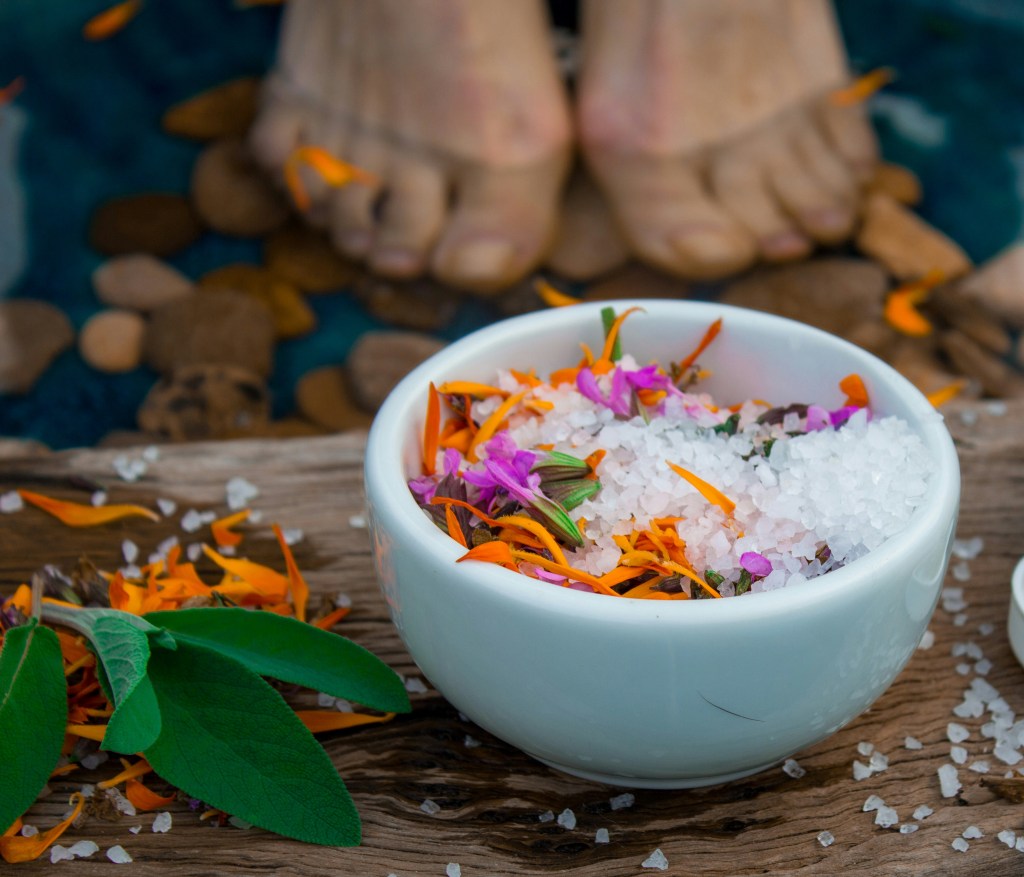
Many herbalists will grow calendula to make into salves, lotions, teas, tinctures, and more as it is known for being anti-inflammatory, anti-bacterial, and promoting the healing of wounds and rashes. Years ago, I grew swaths of calendula annually for a local soap maker. She made the prettiest soaps!
The calendula 6-packs at retail greenhouses are usually always just a mixed yellow and orange blend. If you can get really simple ones with an open centre, those are the best for feeding the bees and pollinators, plus attracting the beneficials.
The others you can get from seed… Renee’s Garden Seeds has a lovely mix called Flashback, with all sorts of lovely colours of calendula in one package. Easy to sow and grow.
- Water well until established and in hot, dry weather.
- Full sun is best for marigolds, but Calendula will grow in semi-shade.
- Soil should not be too rich or waterlogged.
- Harvest regularly for the vase (or deadhead) to encourage more flowers.
- Feeding the plants is not necessary.
- Protect from slugs, especially when young.
- Use as companion plants in the greenhouse or vegetable patch.
Do marigolds grow better in pots or in the ground?
Calendula and Tagetes are easy to grow in both containers and in borders.
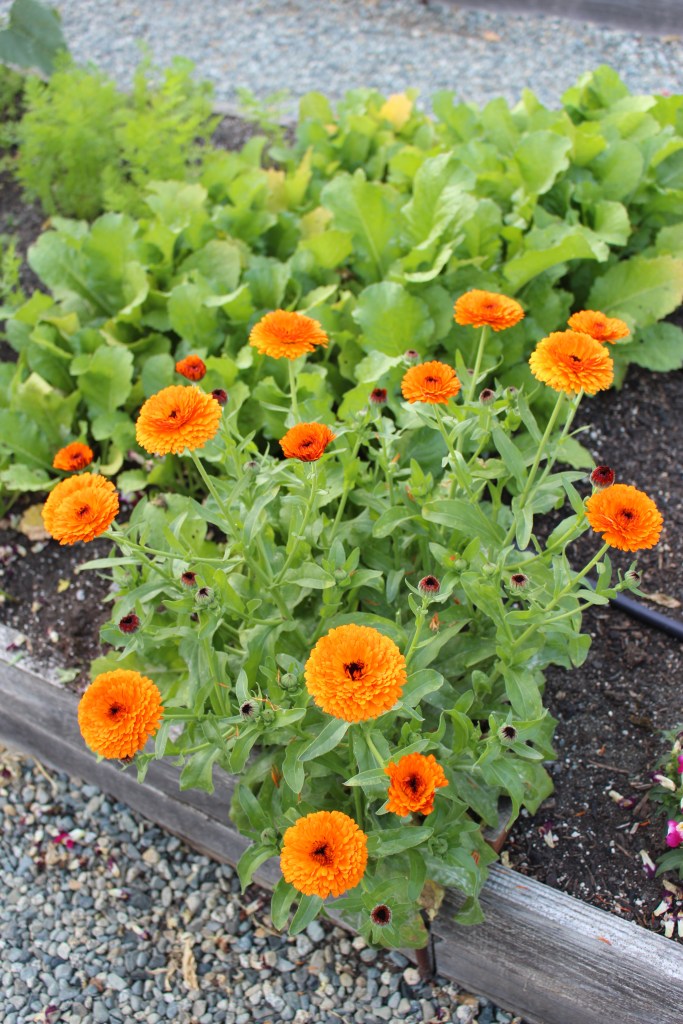
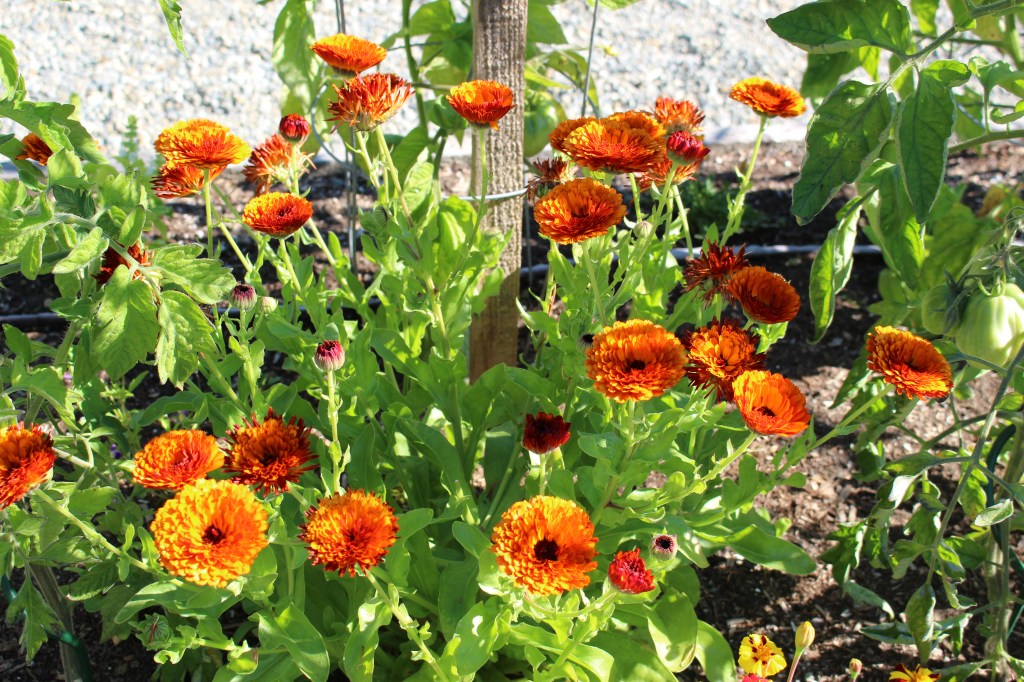
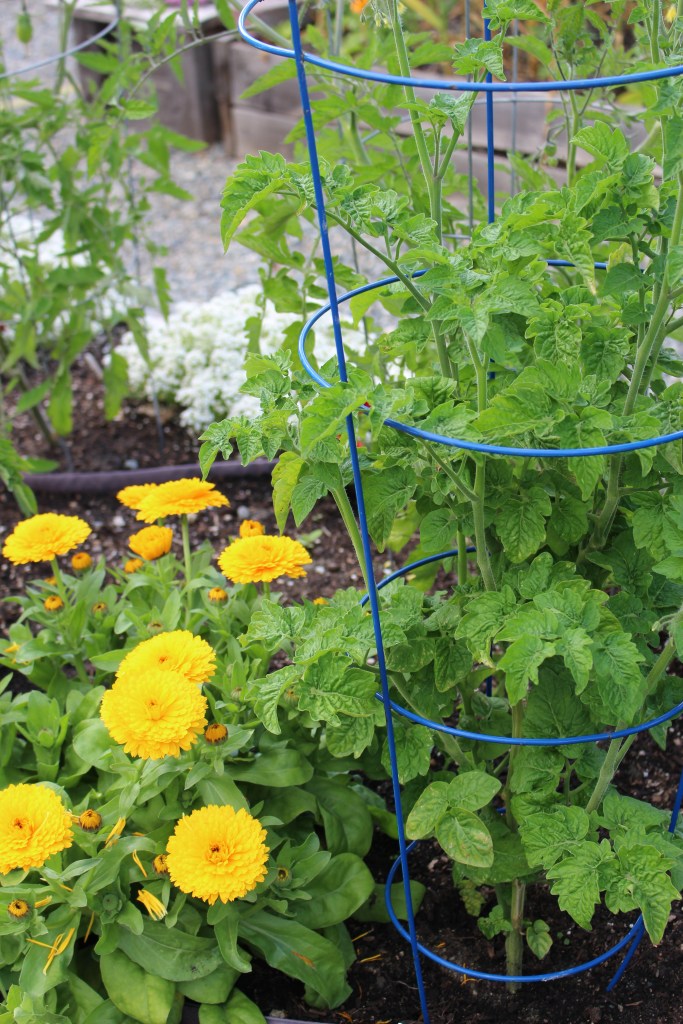
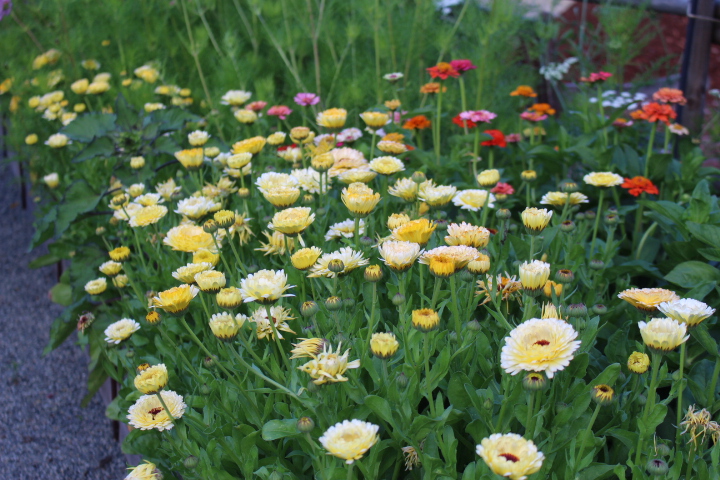
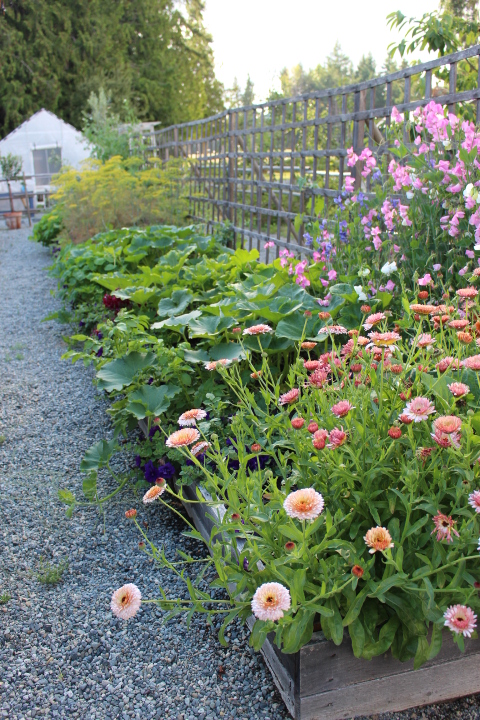
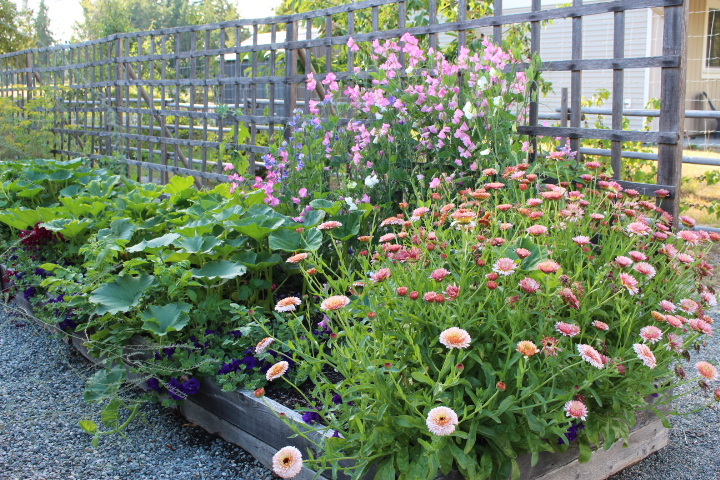
Find fun calendula varieties from these Canadian Seed Houses.


 The Marigold Potager - A Zone 3 Prairie Garden
Leave a comment