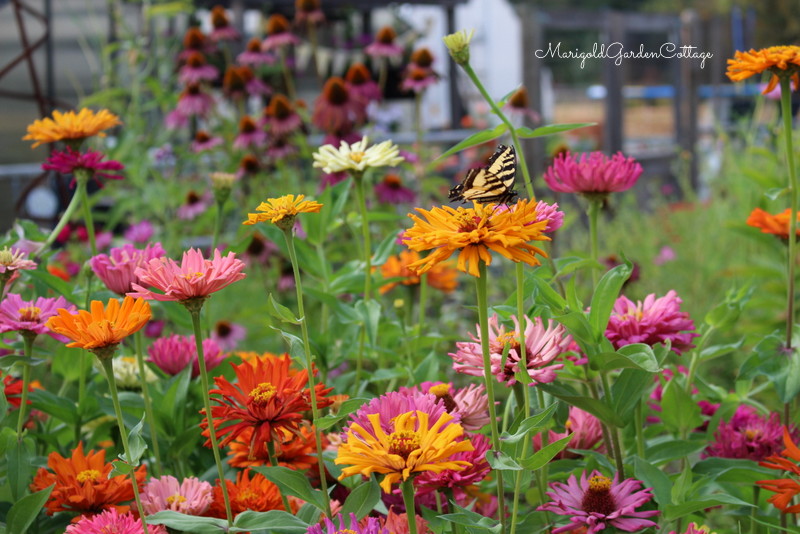
I absolutely adore zinnias! They are the easiest flower to grow and care for, the blooms last forever, need very little care to be awesome, and the pollinators love them. My kind of flowers – big impact with little fuss.
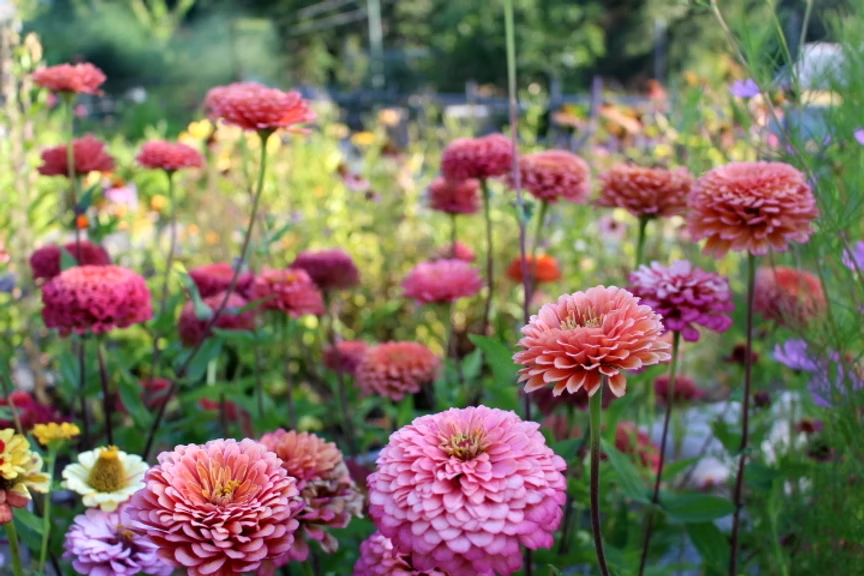
I’ve been growing zinnias pretty much as long as I’ve been gardening. As soon as I figured out how easy it is grow them and add all that colour… well, I was hooked.
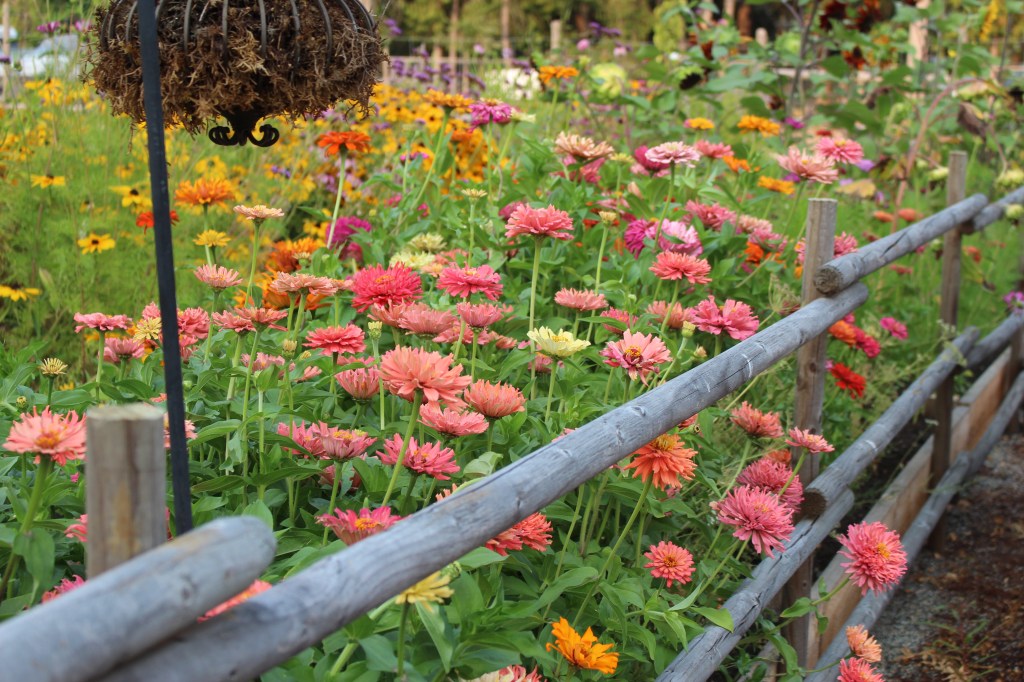
They bloom from spring through till frost, requiring very little deadheading. Can you believe it? Yet you can also harvest them for bouquets and they will just make more amazing branches full of blooms! Zinnias are super drought tolerant, work great in hot, sunny areas, and make the bees very happy. Butterflies and hummingbirds also love them.
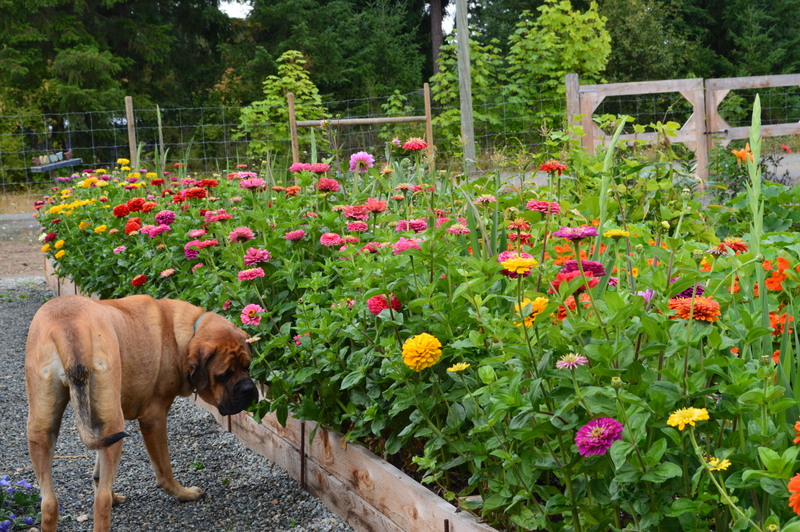
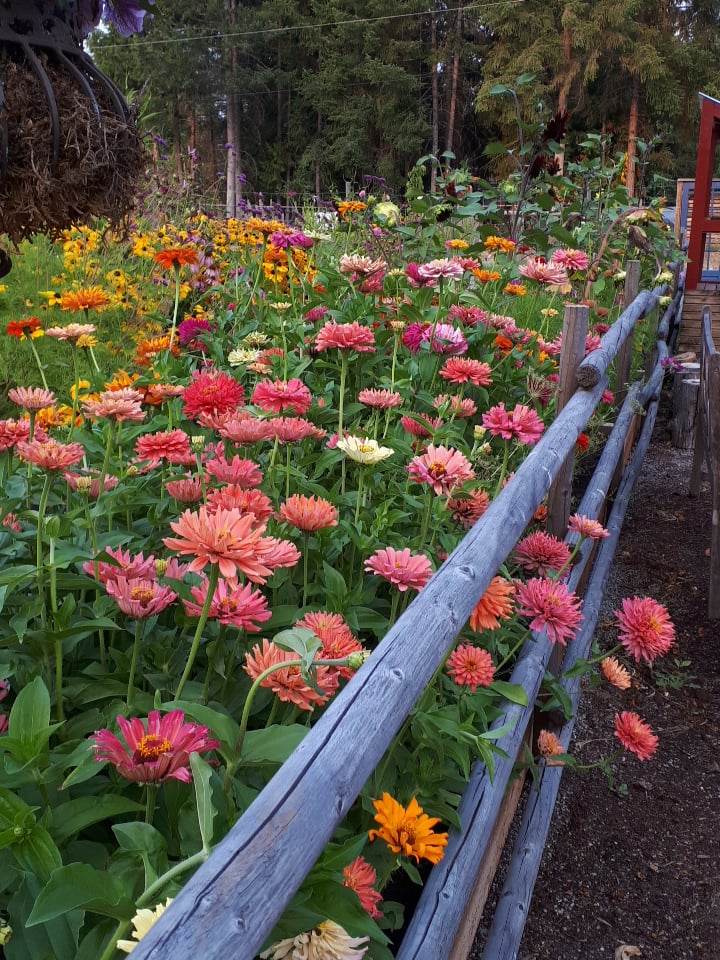
My favourite way to grow zinnias is en masse in the potager, or a flower bed. In great big blocks or long rows. The flowers are casual, colourful, kinda old-fashioned, maybe even granny-ish ; ) but they are always amazing. Each year, I grow many packets of seeds in all colours and kinds, and each year I fall in love with them all over again.
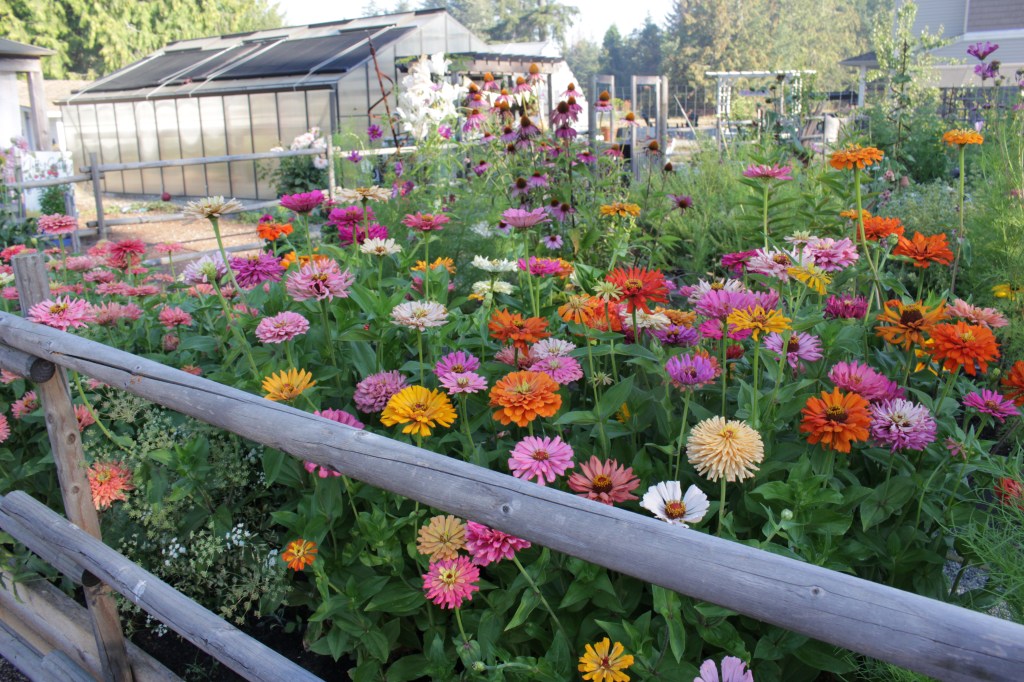
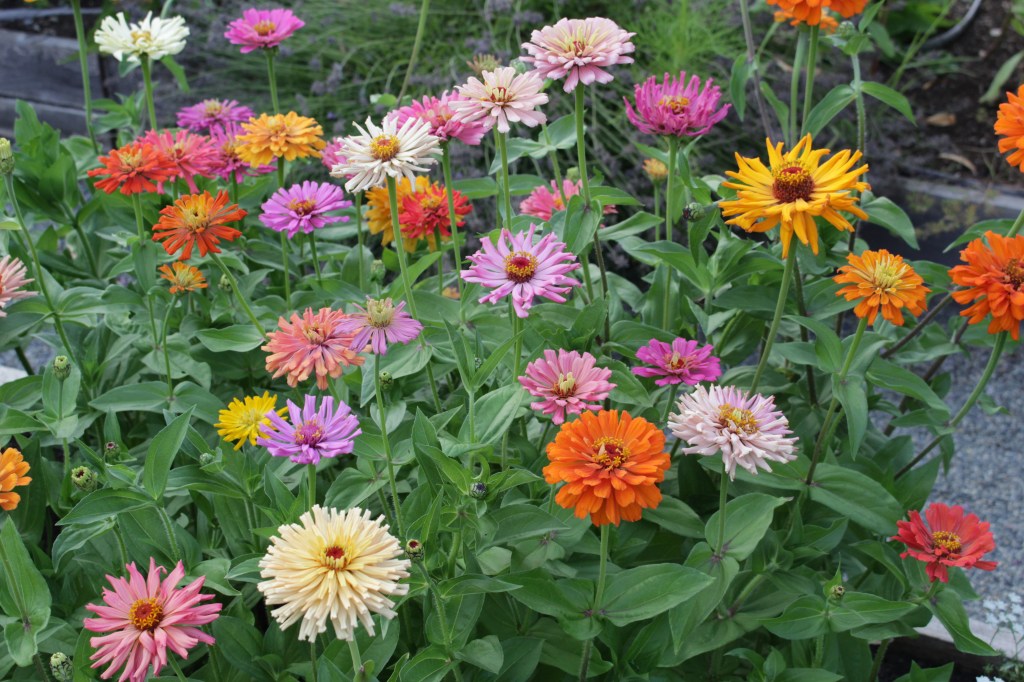
Zinnias come in tall and dwarf varieties. The ones I grow the most are the tall ones that go from 3 to 4 feet high. Sow the seeds close together for no empty pockets, just a dense patch of blooms.
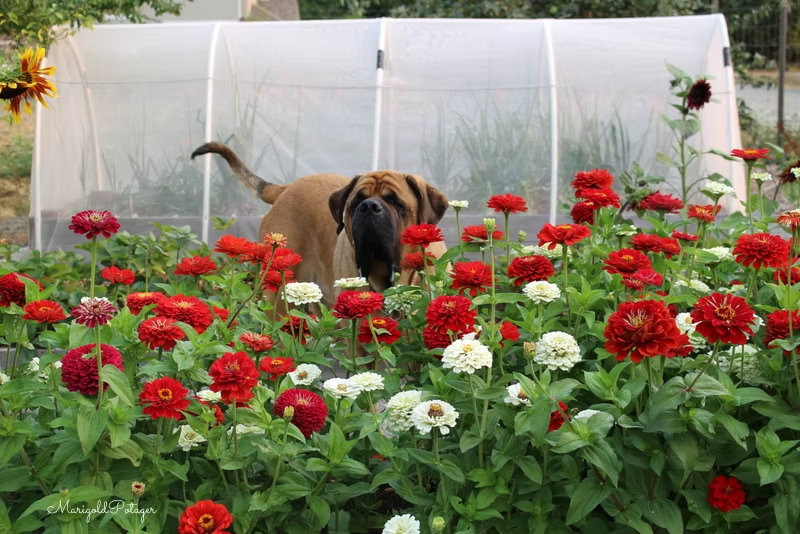
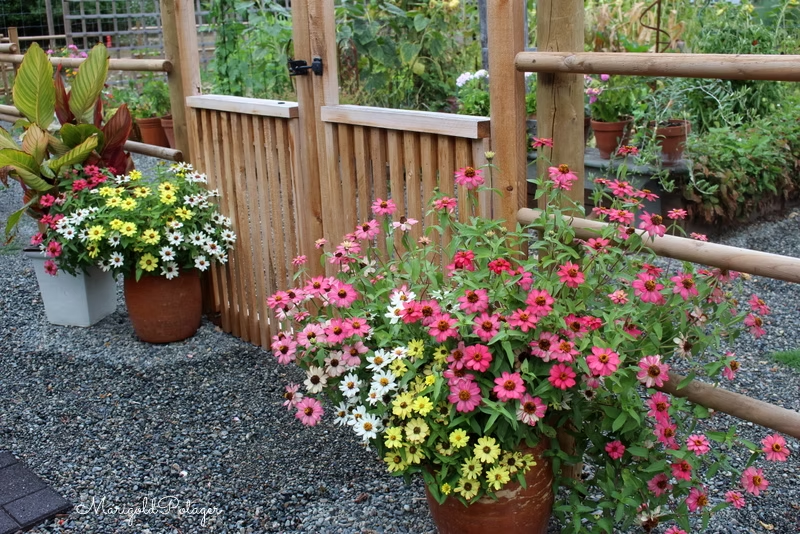
For flower pots and small planters, the dwarf zinnias are perfect. They stay at about 10 inches tall and really fill out the planters. You can find them in seed or sold in 6 packs at most nurseries in late spring.
Dwarf Zahara series comes in singles or doubles and in all sorts of colours from white, to rose, pink, red, orange, and yellow.
The new Profusion Dwarf Zinnias are also amazing – I just bought myself a package of cherry-bi-colours! Great big pretty pink blooms on dwarf plants.
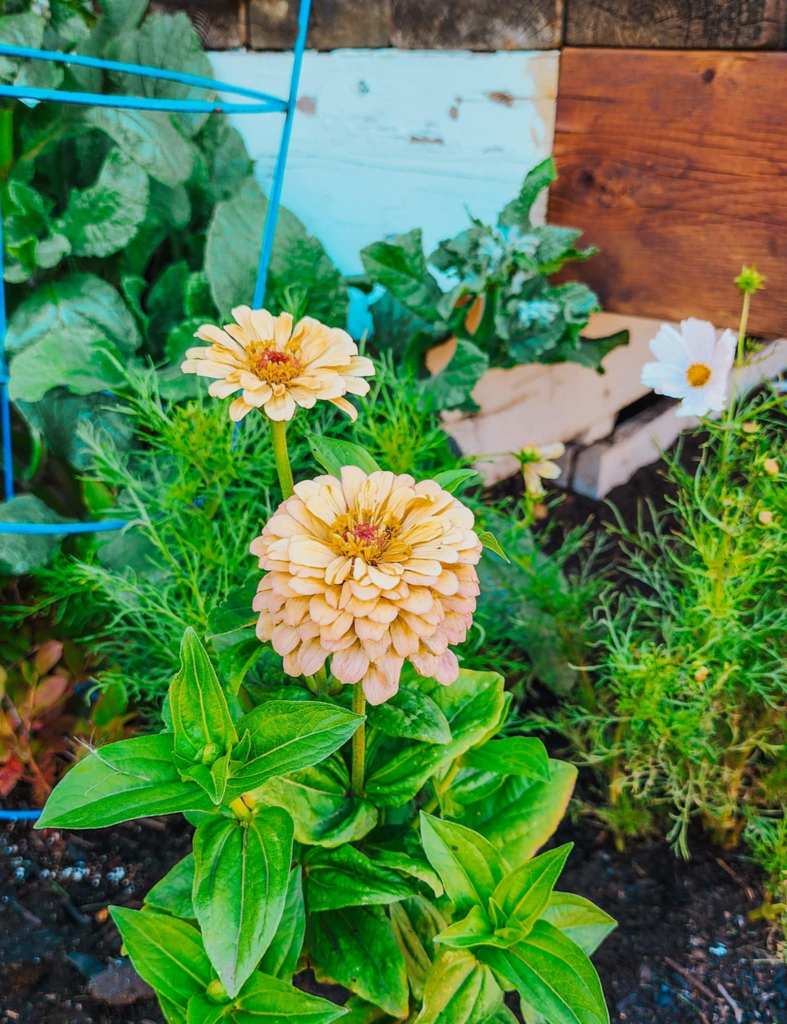
Your zinnias will bloom from mid-summer all the way through till frost.
How To Grow…
You need a sunny spot that gets 6 to 8 hours of sunshine. They like heat and sun.
Plant where they will get good air flow or you risk getting powdery mildew. Always water them at soil level, never ever on the foliage. Water deeply once or twice a week.
Zinnias can be a bit tricky to start earlier indoors as they are prone to fungal issues. Some nurseries won’t even grow them, they are that problematic. I prestart the dwarf ones for containers but direct sow the tall ones.
If you want to try … To start indoors, plant seeds 1/2 inch deep in pots or six packs, keep soil moist and warm till you have germination and then be careful with watering, water only when soil is starting to go dry and never wet the foliage. Keep them on the dry side rather than moist, with good air flow and bright light. Having a fan blowing over them is a great idea.
These annual flowers do not like frost so most directions always say to sow after all risk of frost is gone, but I do mine a just a wee bit earlier. I sow a week or 2 before last frost and always have terrific luck with them. Mid April on the island, in a zone 7, and early May here on the prairies.
Sow the seeds 3 to 6 inches apart and 1/2 inch deep in well-draining, friable soil. I loosen up the soil with a bow rake, scratching through the top inch or so of soil with the tines of the rake to make it nice and loose.
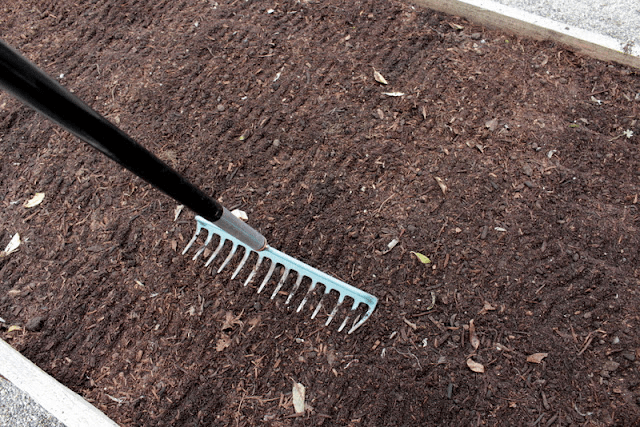
I then scatter the seeds on top of the soil and run the rake through the bed again so that the seeds are all covered. You can sift some soil on top of them, if you prefer, to make sure that they are all evenly covered. Use the back of the rake to tamp down the soil to firm it up so they do not float away when you water.
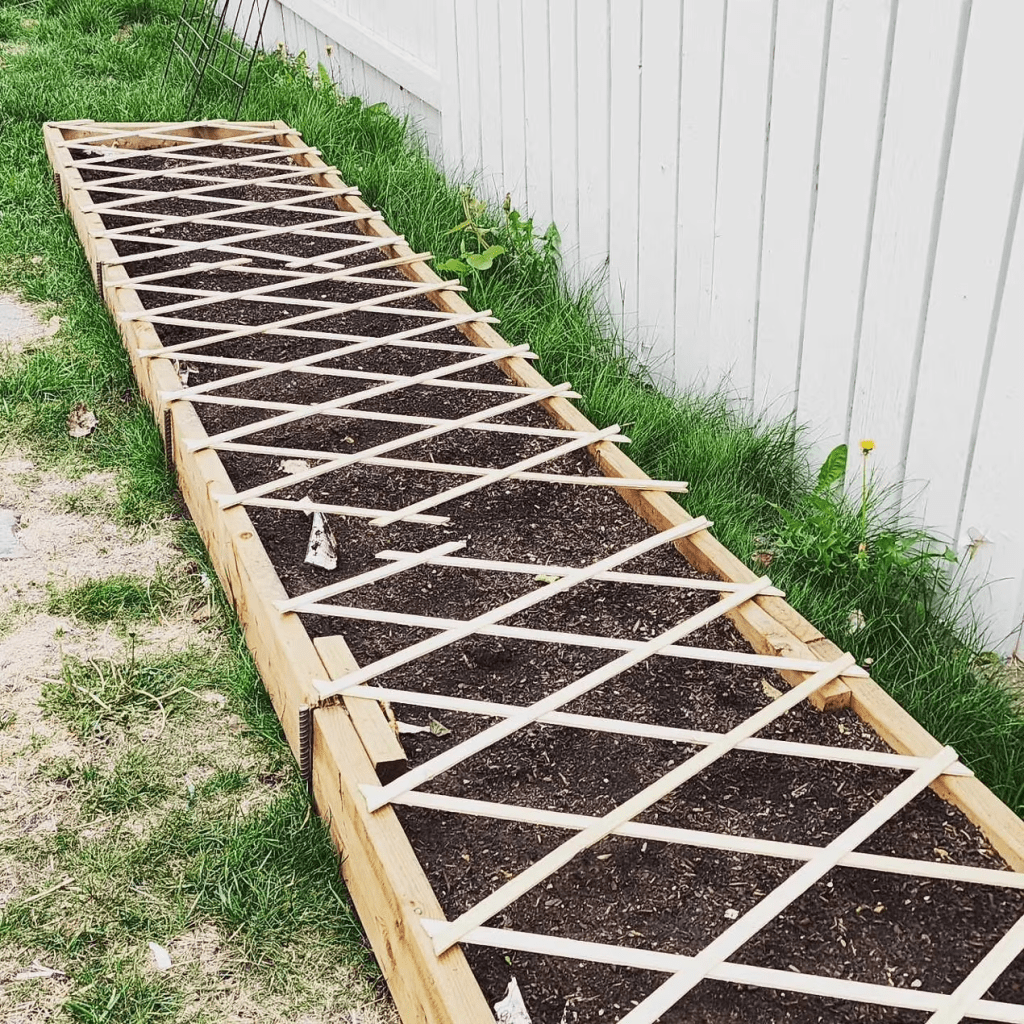
Keep soil moist until the seeds germinate, in 5 to 10 days. I water daily till they sprout. If you sow the seeds before you are supposed to get a few days of rain, you are golden. Sow the seeds and walk away, let mother nature do the work for you. Once they are up, you can cut back the watering to a couple times a week.
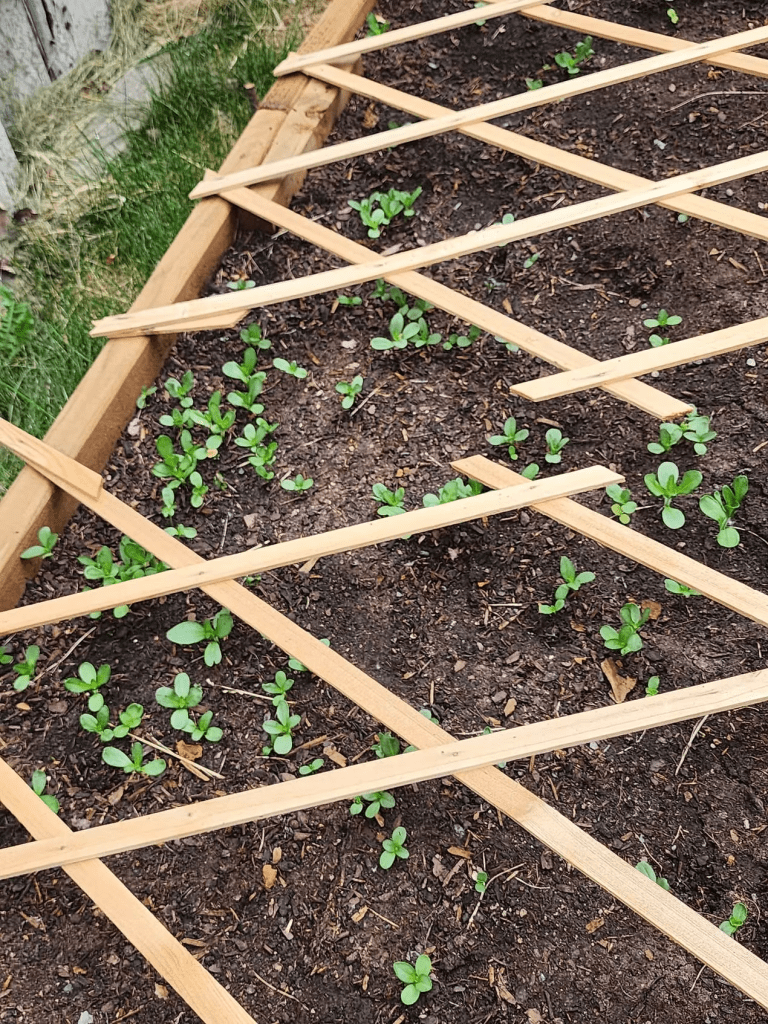
e too close together.
If the seedlings are too close together, they are easily moved, they transplant super well. Scoop up the seedling and pop it into the hole where you want it to go and water it in well. Do not do this during the heat of the day, ideally.
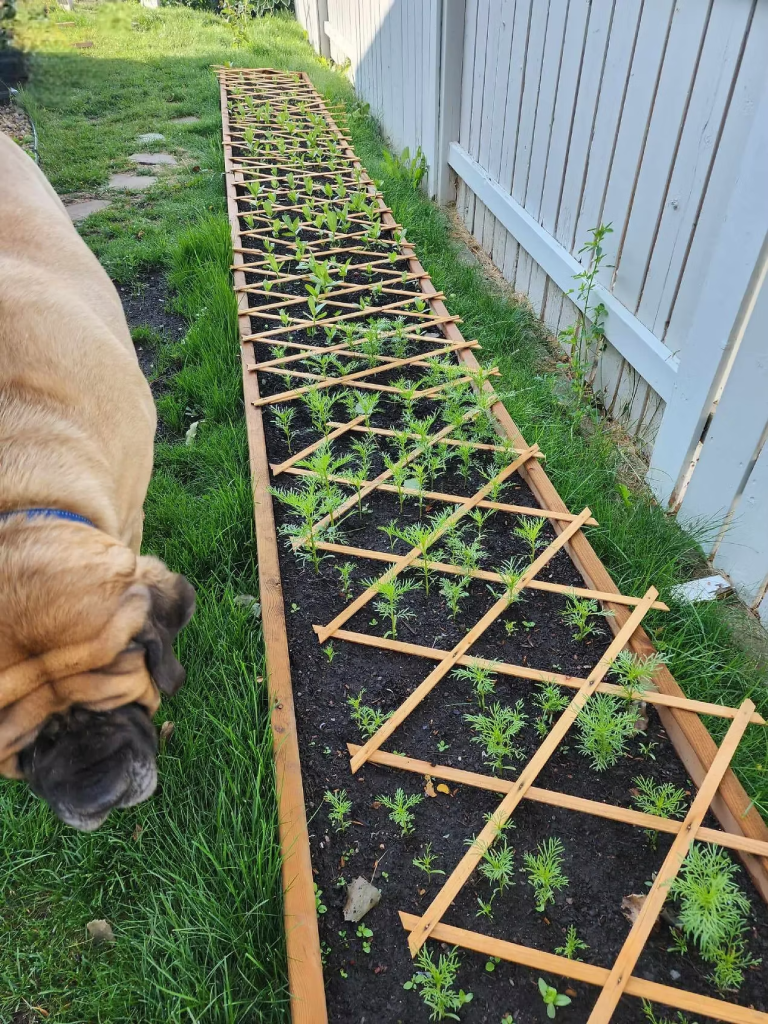
If you remember, pinch back the plant when it is 6 inches tall for a bushier plant with more flowers. They will branch out even if you do not do this, so not to fret if you forget, and will also branch out more each time you harvest flowers for the vase, or do some deadheading.
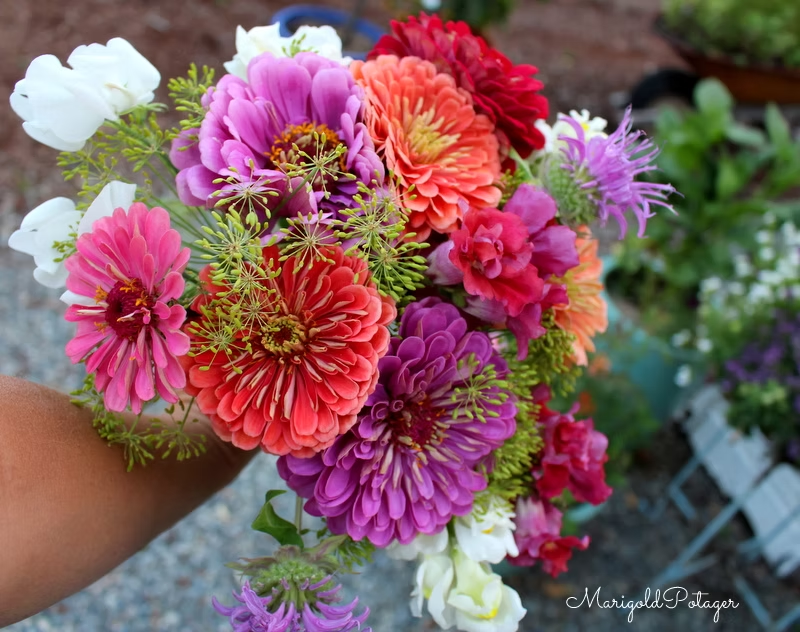
My favourite zinnia seed supplier is Renee’s Garden Seeds. They have the prettiest colour combinations, the fastest germination, and the best quality seeds and blooms. I have grown them all over the past 20 years, but my favourites are Raspberry Sorbet, Berry Basket, Granny’s Bouquet, Apricot Blush, and Cool Crayon Colours. I also love Raggedy Anne, the one you see in the topmost picture with the shaggy blossoms.
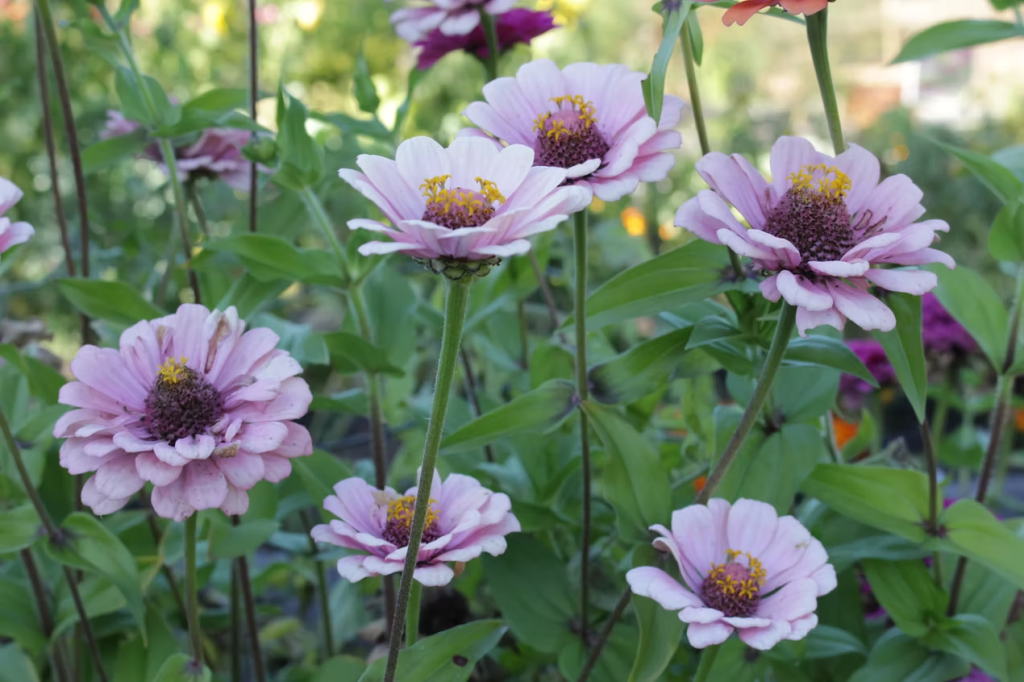
See how to save the seeds from your own zinnias here. Grow flowers for free!
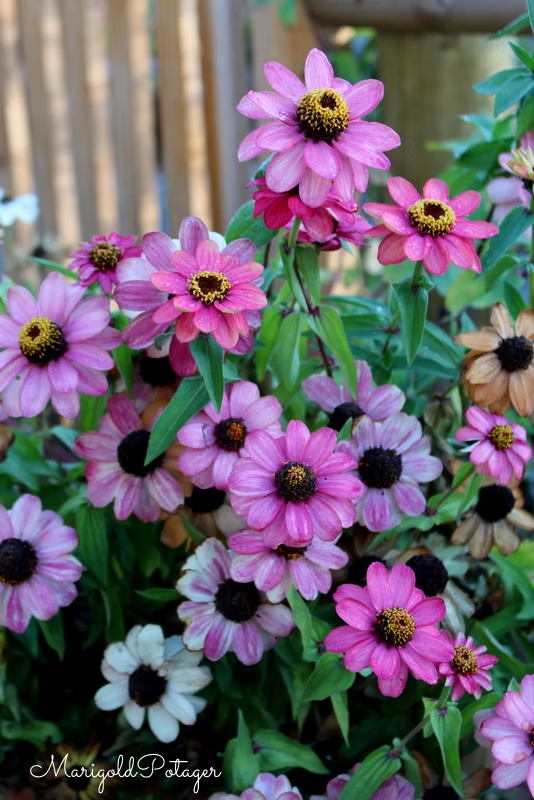
Even when the zinnias start to fade in the fall, they still look so good, continue to charm.



 The Marigold Potager - A Zone 3 Prairie Garden
Leave a reply to The Marigold Potager Cancel reply