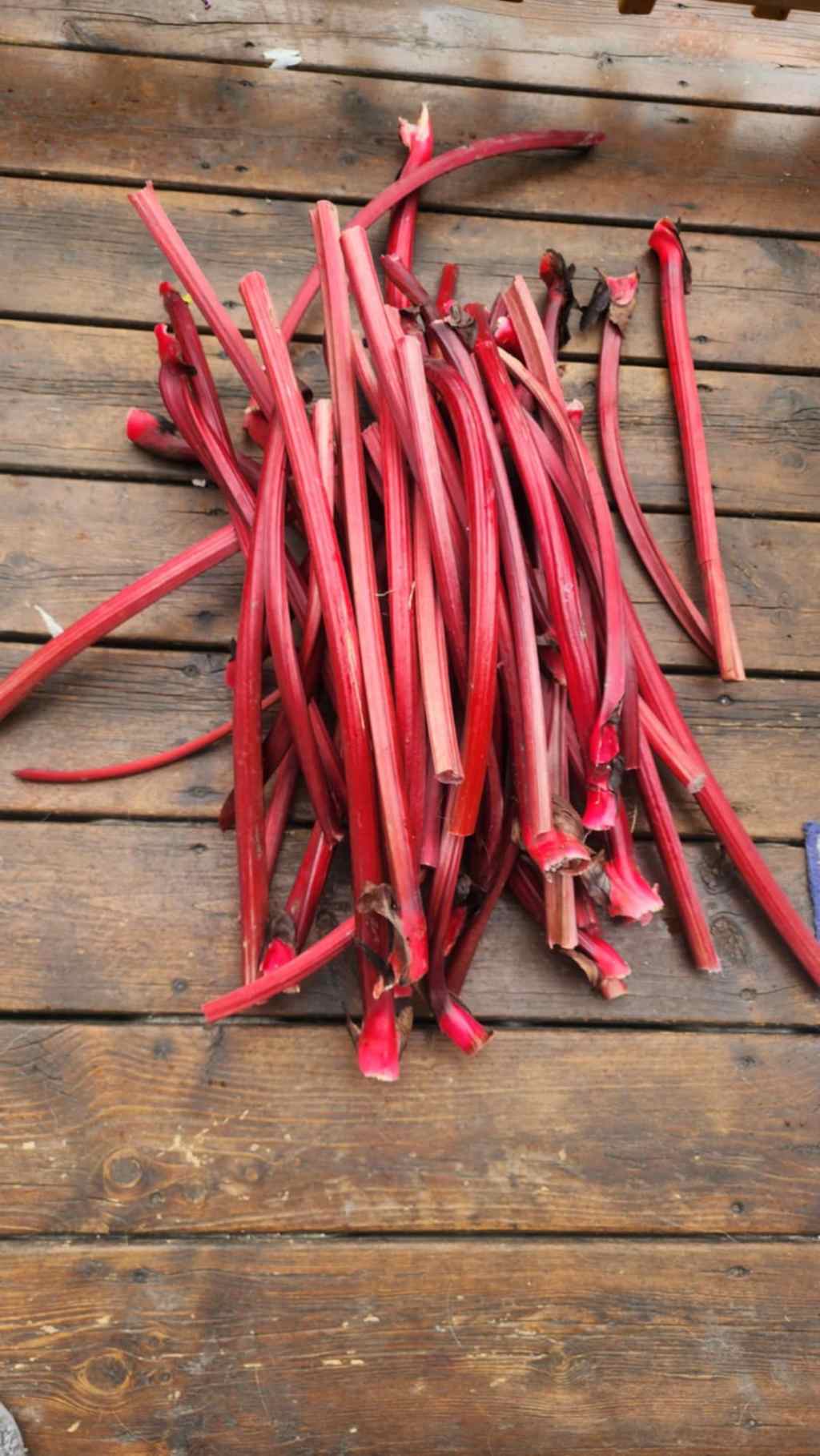
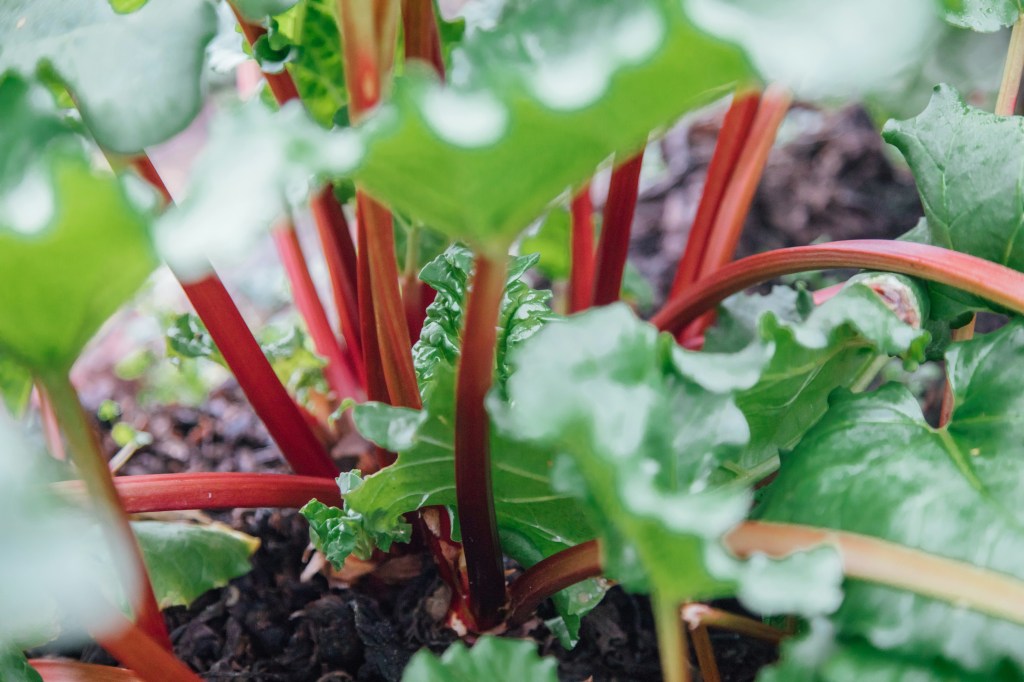
Rhubarb – spring’s most favourite dessert, especially when paired with strawberries.
There is something just magical about rhubarb. The way it grows, the memories it evokes. Here are a whole lot of really lovely pictures, some are mine and others are from unsplash. They just make one think of spring!
Where to plant it …..
Choose a location where you want it to be for several decades. If you try to move it, or remove it, it will often keep coming up regardless, so choose wisely.
At the edge of your kitchen garden is a great place for it, or even in the middle of your perennial flower bed, as the leaves look spectacular in contrast with flowering plants.
Light – To grow rhubarb, you want a nice sunny spot with a good 8 hours of sunshine. Rhubarb will grow in part shade, as well, if you are growing it more for the big leaves and showiness, but the stalks will be more sour, a whole lot tangier when it gets less heat and sunshine.
My rhubarb is in the worst spot. It is by the corner of the house, but sticking out into the yard. As we renovated the yard last summer, we worked around it, leaving it where it was…. I was not about to lose my lovely rhubarb plant. I inherited the plant when we bought the house. It is thriving and happy, and has the yummiest red stalks.
Soil – The soil should be well draining and have lots of organic matter.
While rhubarb is quite tolerant of sandy soils, or even clay soil, it prefers nice, loamy soil. Add a few shovelfuls of compost or well-composted manure at planting time for a healthy, thriving plant.
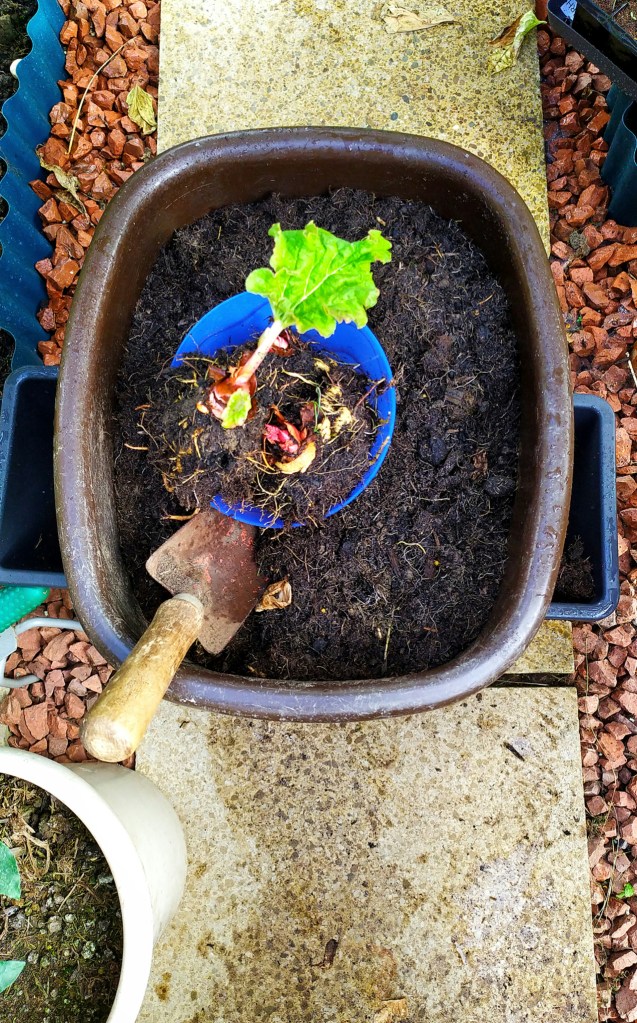
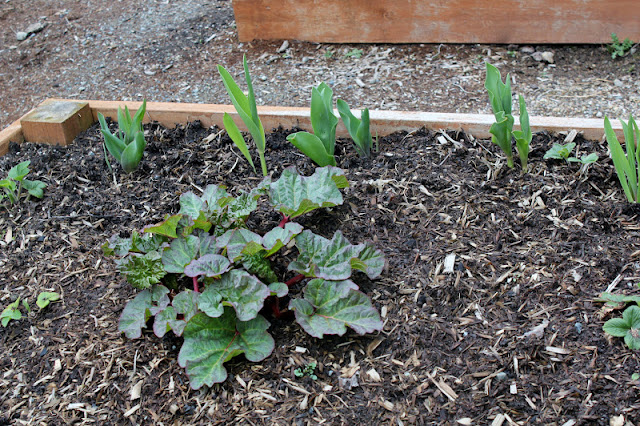
Planting New Plants – Plant crowns 2 to 3 inches deep. Remember that your plant will be large, it will grow to about 3 x 3 feet at maturity.
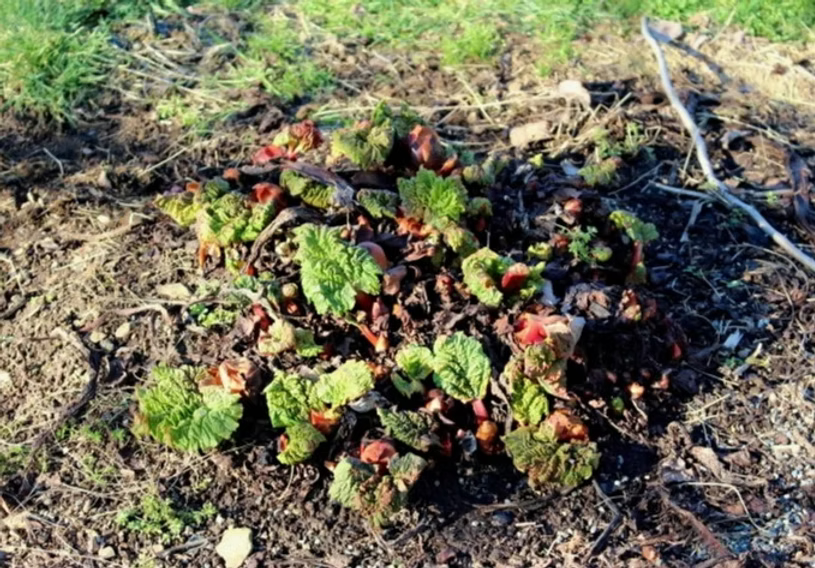
Watering – Water once a week in summer. You can also mulch around the plant to discourage weeds, warm the soil, and help retain moisture so that less water is required.
If your rhubarb is in heavier clay soil, you may need to water less in order for it to not get root rot, for it to thrive. It loves the nutrients in clay, just needs great drainage, too.
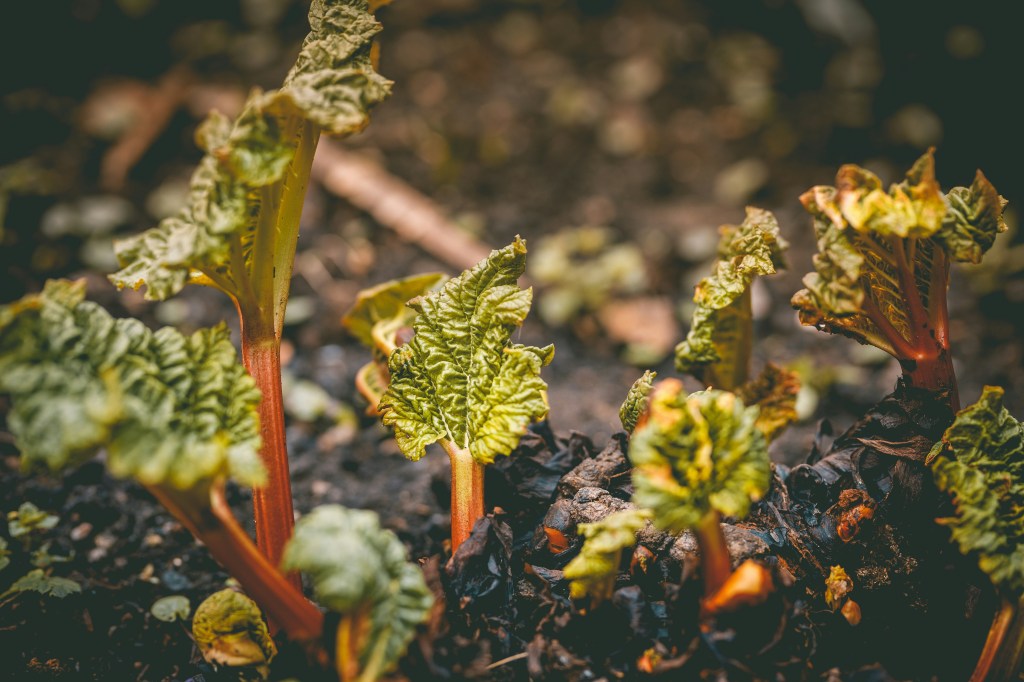
Fertilising – to feed your rhubarb plant, take a few shovelfuls (half a bag) of compost or well composted manure in spring and spread over the emerging plant in spring. Can also be done in fall when you do your garden clean up.
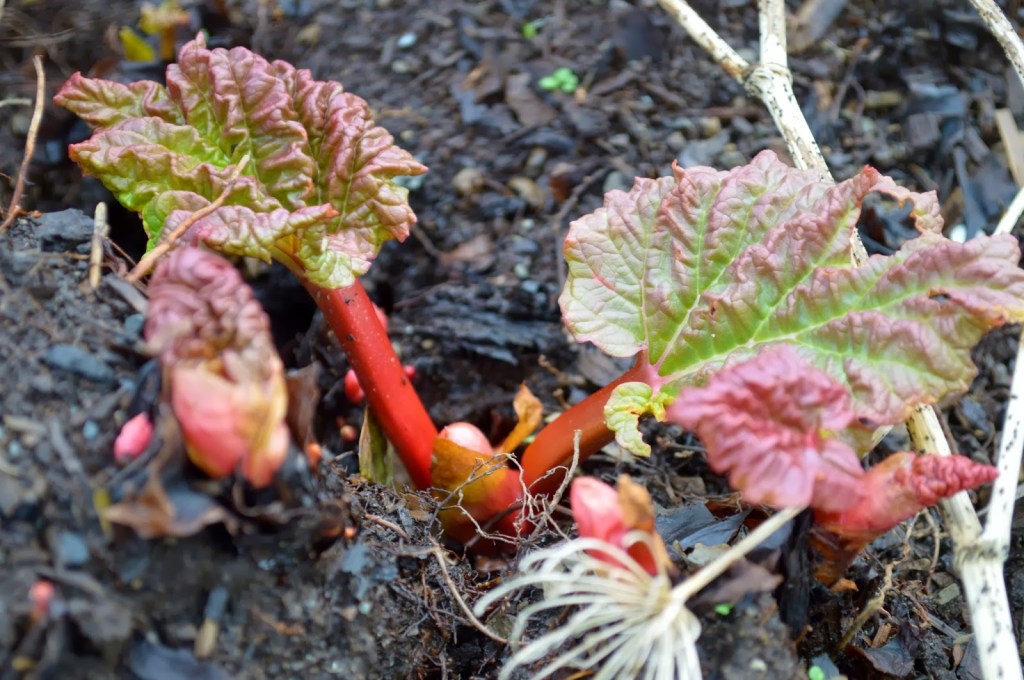
Pests/Diseases – Rhubarb is not prone to getting pests or diseases, however it can succumb to root rot if planted in an area with poor drainage. If your plant comes up in spring and the stalks soon turn soft and floppy, or get spotted, you need to rescue it to immediately relocate it before it rots away.
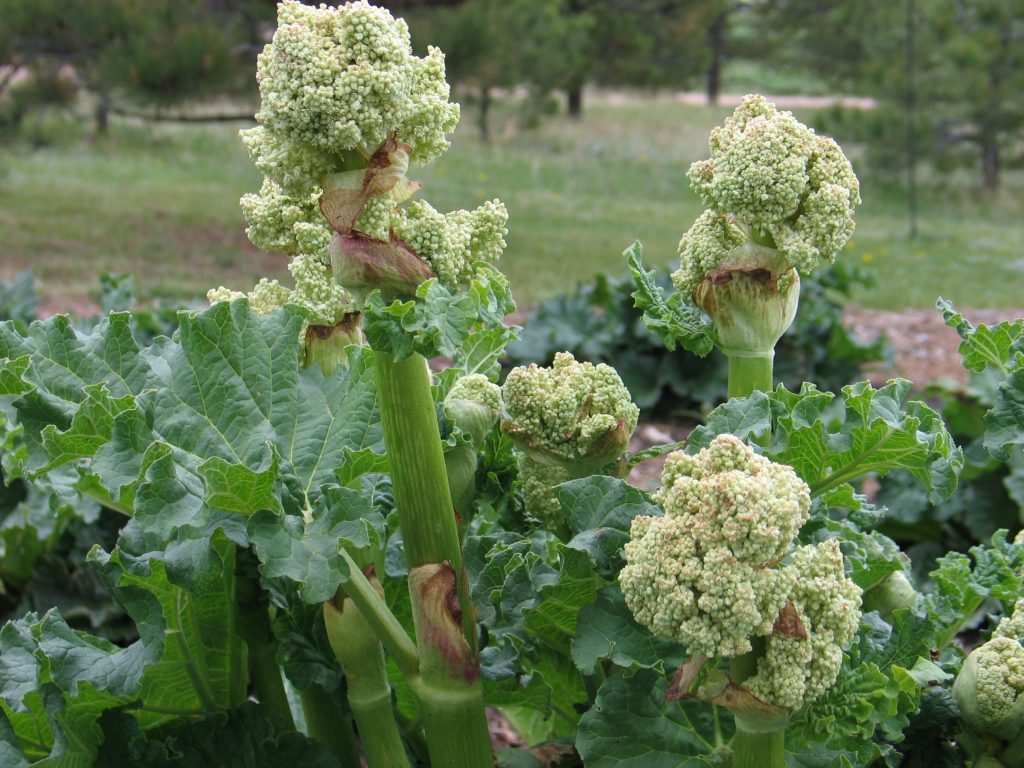
Pruning – You do not need to prune your rhubarb, except to remove flower stalks. These flower stalks take away from the energy of the plant.
To share your rhubarb plant, it can be divided into 2 or 3 chunks in spring.
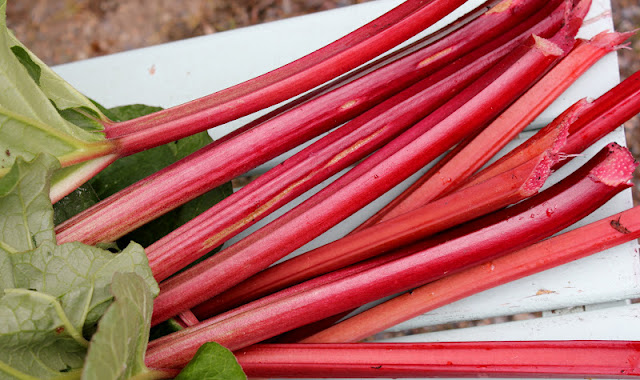
Harvesting Rhubarb – Do not harvest in the first year, wait till there is enough growing that you can take enough to eat while leaving half the stalks in place.
To harvest, grip the stalk near the bottom and give it a twist. This should help to harvest the entire stalk, right from where it begins. Despite the myths that abound on the internet, you can also use a knife to harvest them.
Can be harvested from spring till fall, however, it is common to harvest heavier in spring, allow it to recoup and make more stalks in summer, and then harvest more in late summer, early fall.
Leave half of the leaves in place in fall.
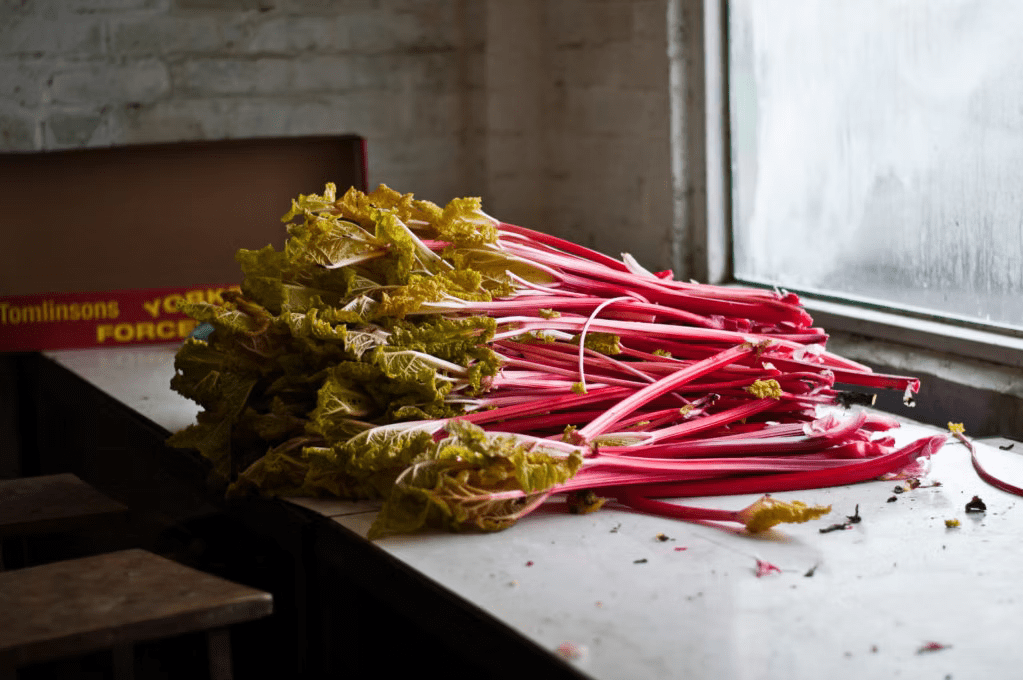
For fun… Forcing Rhubarb
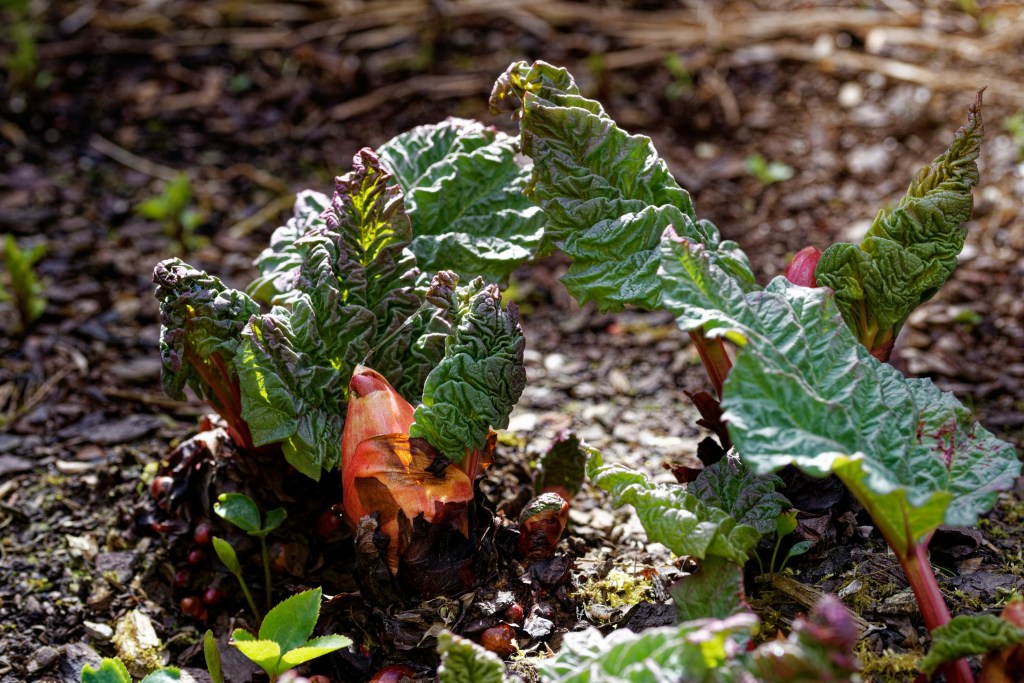
If you want earlier rhubarb, when you see the pink nubs beginning to poke through the ground, cover the crown with a flower pot, garbage can, or other dark container. If it has holes in it, fill them in so that no light gets through to the rhubarb. Even the smallest bit of light will foil your attempts at sweeter, tender stalks.
You will be able to harvest your rhubarb much earlier, it will be sweet and less stringy. Do not force the same plant year after year though, or it will die. Have two plants and alternate forcing them annually.
FYI’s
- Rhubarb leaves are toxic so deer, bunnies, and other pests will not usually give it more than a quick nibble. It does not taste good. It will give them a tummy ache.
- The leaves, stringy bits, ends can all be safely composted, the toxin does not remain active in compost.
- Rhubarb can be harvested from spring till frost, though you never want to take all the leaves.
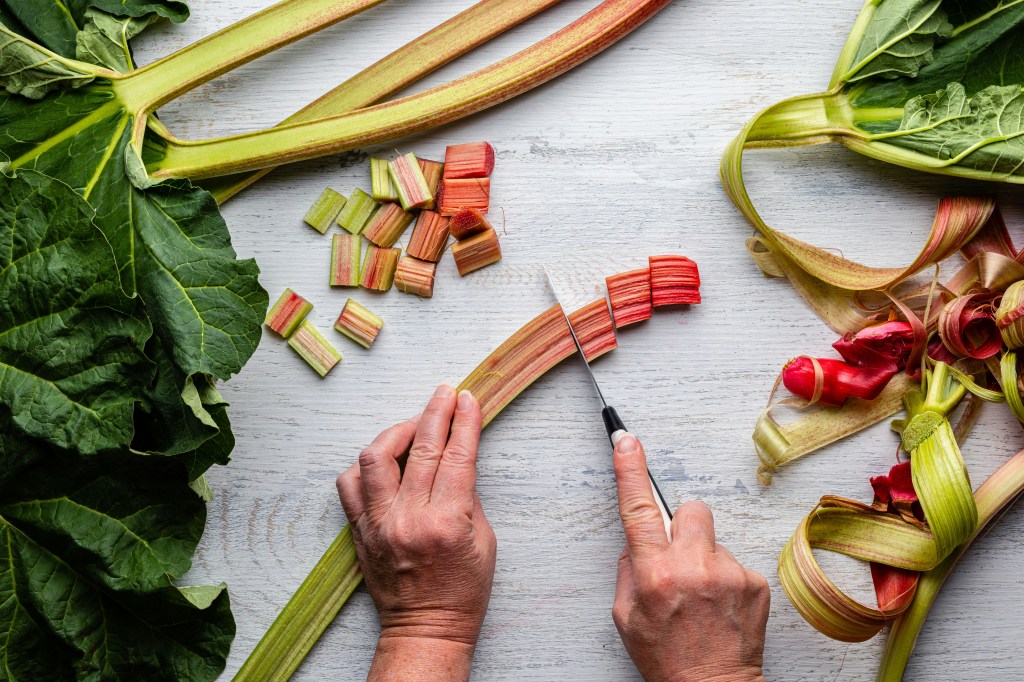
- Rhubarb freezes really well. Harvest, clean, remove leaves and strings, chop into small pieces, freeze.
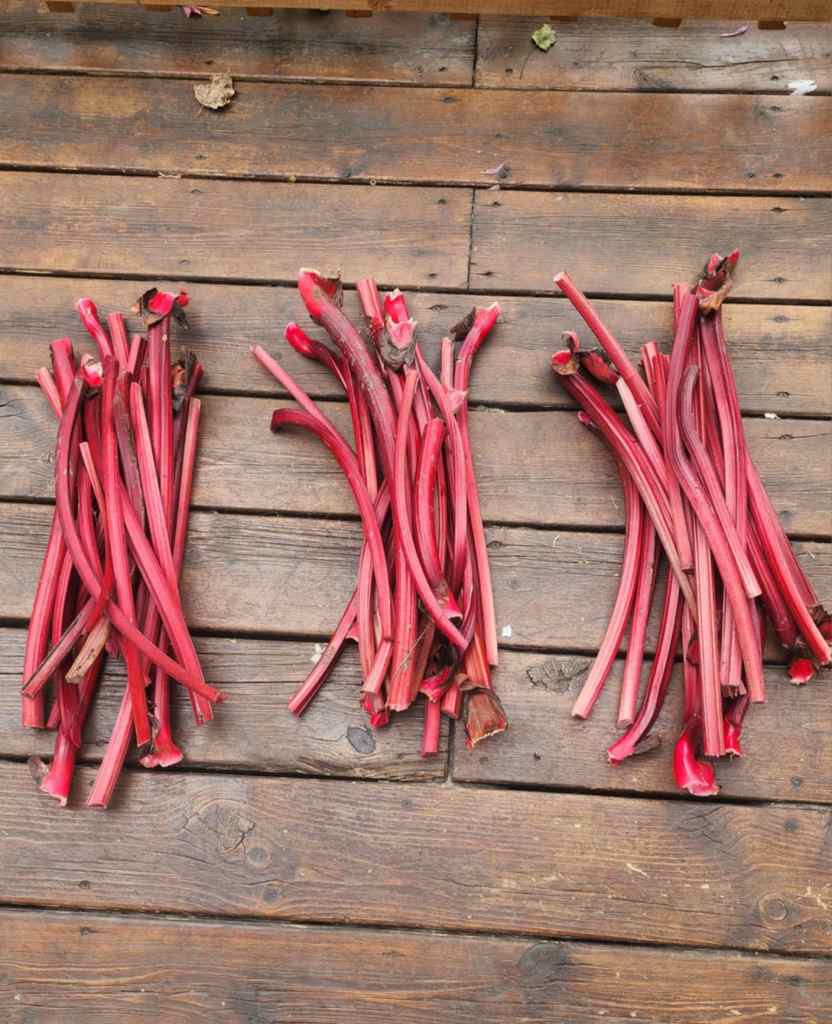
- I like to put them in 2 cup portions, or in rhubarb pie portions. Check your favourite recipe for amounts.



 The Marigold Potager - A Zone 3 Prairie Garden
Leave a reply to The Marigold Potager Cancel reply