
While I have never had a flower farm, sold bouquets, I must admit that I have always kind of wanted to.
I love flowers, and I love growing them. If we were still on the acreage, I believe that I would have built more beds to grow flowers to sell as either a u-pick, or as premade bouquets.
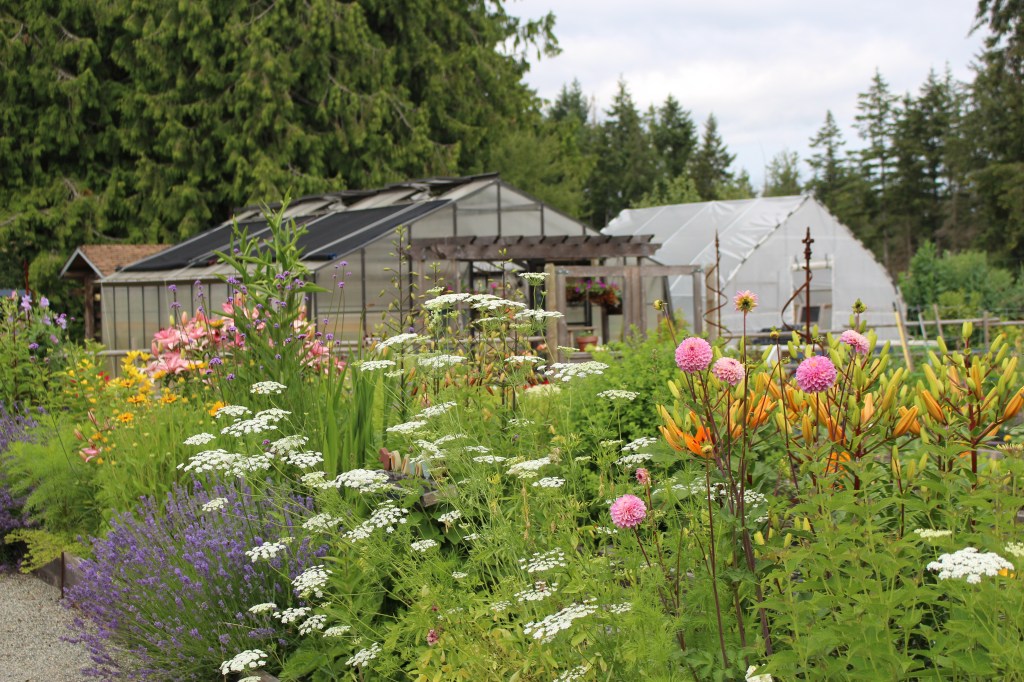
Though never a flower farmer, I have indeed always grown tons of flowers. Companion flowers in the veggie beds, perennial and cutting flowers in the potager, and perennial flowers throughout the acreage.
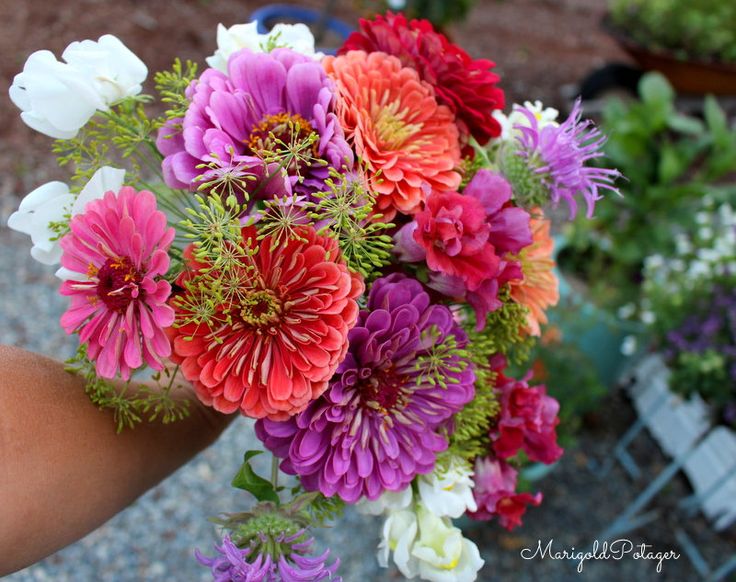
I love to bring in fresh flowers in from the garden to fill vases and make little bouquets (posies / tussie mussies) for gifting. Flowers add colour and interest to the landscape.
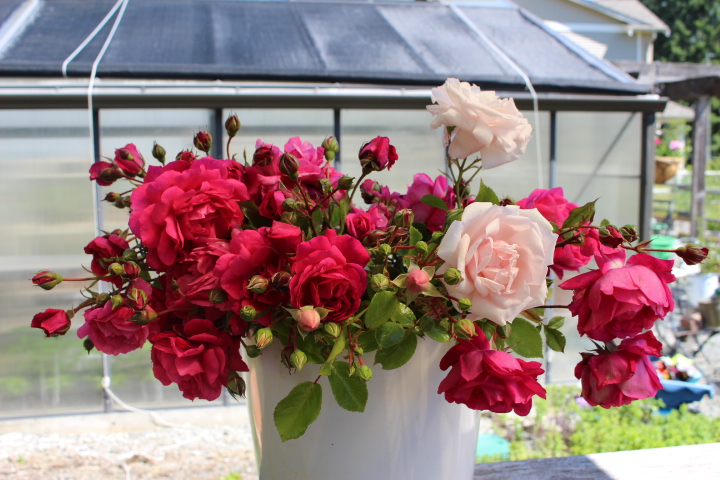
While I reap the benefits of having all these flowers, the main reason I grow flowers is to feed pollinators and attract beneficial insects and birds to the yard.
Pollinators because, well, we all know how important they are to a productive food garden. Beneficial insects keep the pest insects away (eat them in egg, larval, and adult form), and birds will eat the ‘bad’ bugs and feed them to their young, too. Plus, we all just really need more baby birds and song birds. Try to have flowers available spring through fall.

I plant flowers for the birds rather than putting out feeders. Plus, I am kind of lazy. I don’t like cleaning the hummingbird feeder once or twice a week needed in our summer heat.. or dealing with the ants and wasps that also like the sugar water.
We are adding a large new flower bed in the front yard this summer, plus added 3 new perennial beds to the backyard last year. Tucking in annuals will fill those beds up and add colour till the shrubs and perennial flowers fill out. Remember the saying about planting new shrubs and things? First year they sleep, 2nd year they creep, and 3rd year they leap. There will not be a huge amount of growth on them this summer, but they will be putting in a nice strong root system. Crossing my fingers for one good, deep rainfall a week this spring and summer. A girl can dream, eh?

Growing a cut flower garden may seem a bit intimidating at first, but once you start doing it, I truly think you will want to grow more and more flowers!
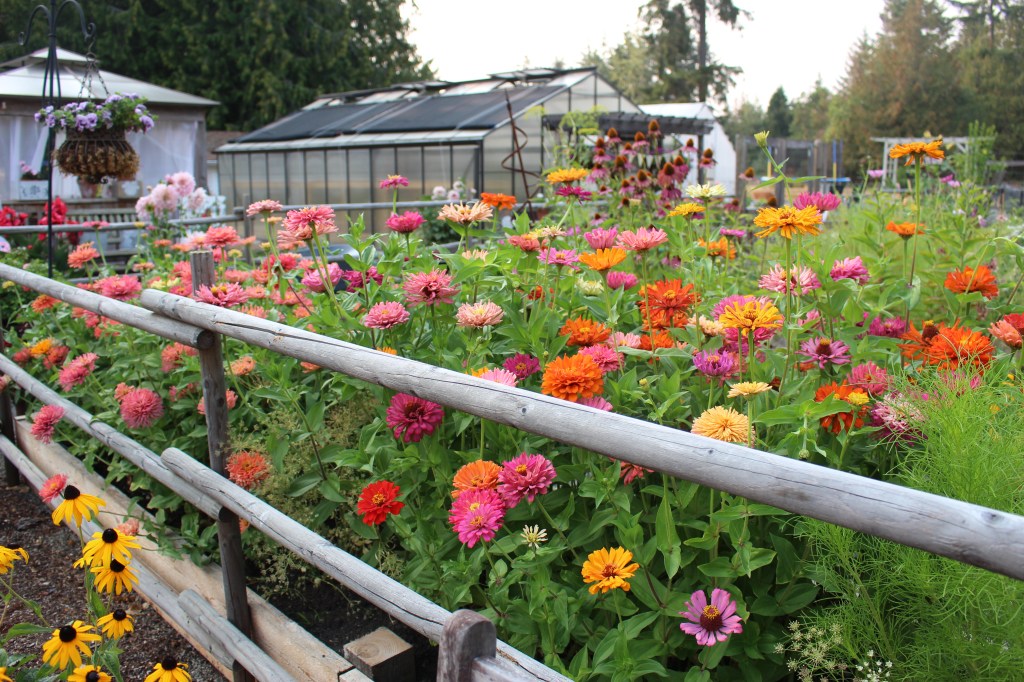
These are my top favourite flowers to grow from seeds. They are super simple to grow and most can be directly sown into the garden bed, no pre-starting required. Not in the least bit fussy.
#1 – Buying Seeds. Picking a colour scheme makes it easier to order seeds, and make selections, as there are so many beautiful flowers to choose from. My colour scheme this year is white and pastel shades of peaches, pinks, and purples.
You may just want to make your colour scheme cool shades or warm shades. That narrows down the choices, as well, plus ties all your beds together.
#2 – Seed Sources. Here is a list of some of my most favourite seed companies that I ordered from this year, plus some of the seeds that caught my eye.

#3 – Sowing & Growing. As most of these can be directly sown into the garden bed, no special supplies are needed. There are a couple that need to be started indoors a bit earlier. If that intimidates you, just leave those ones off the list this year and grow them in a year or two when you have your sea legs.
With direct sowing
- Rake the soil smooth
- Sprinkle your seeds on top of the soil.
- Sift some soil over the seeds (about 1/4 inch)
- Tamp the covered seeds down with the back of a rake to keep them from floating away when you water
- Water.
- You want to water the seeds lightly daily till they germinate.
- After germination, cut back to watering twice a week to start, and then just once a week when they get to be 4 to 6 inches tall.
- Water deeply in the heat of summer, soaker hoses are great for this.
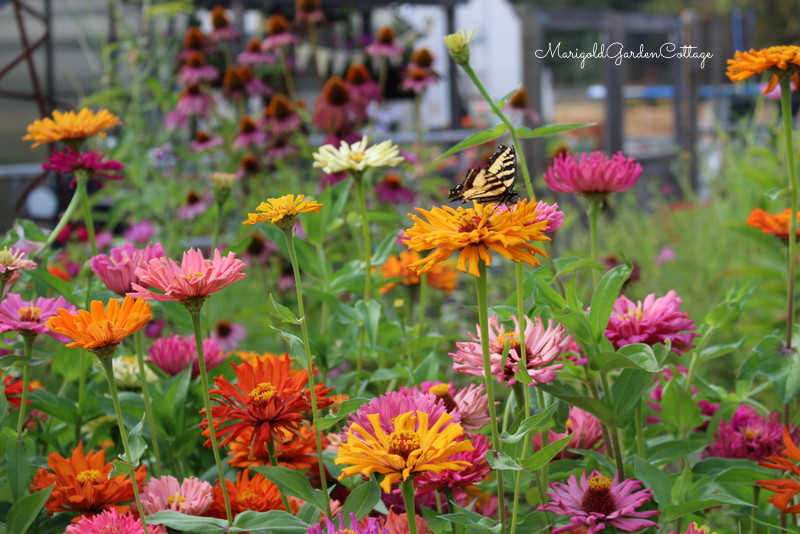
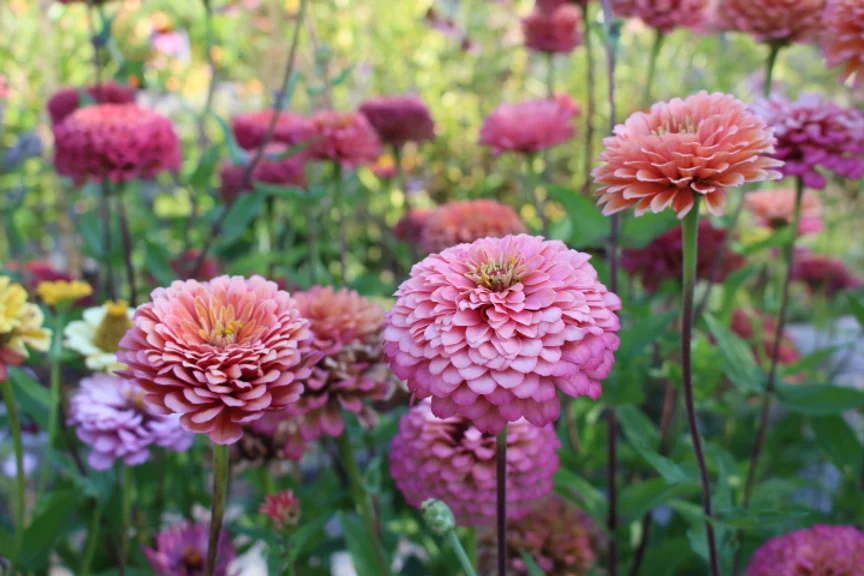
#1- Zinnias are my all time favourite flower to grow, bar none. I’ve been growing them pretty much as long as I’ve been gardening. As soon as I figured out how easy it is grow them and add all that colour… well, I was hooked.
They bloom from early summer through till frost, requiring very little deadheading. Can you believe it? Yet you can also harvest them for bouquets and they will just make more amazing branches full of blooms! Zinnias are super drought tolerant, work great in hot, sunny areas, and make the bees very happy. Butterflies and hummingbirds also love them.
Direct sow them about 2 weeks before your last frost date. (Mid-April on the island and west coast, Mid-May here on the prairies).
The Raggedy Anne Zinnias above are as amazing as they are unusual. They are heirlooms that the butterflies and bees really loved due to those flat, open blooms.
This year, I am growing Queeny Lime, Oklahoma Salmon, Oklahoma Pink, Key Lime Pie, and a couple of small flowering salmon and pink zinnias.

2. Cosmos are my next best. Absolutely love them. They are later to flower, but boy, when they take off, they really make a big splash. They come in so many pretty colours, are super drought tolerant, do not want fertiliser (thrive in poor soils).
I have ordered Apricotta, Cupcake Mix (as in the picture above), Double Click Mix. These are pale pinks, darker pinks, and whites, except the peach hued Apricottas, of course.
To direct sow cosmos, the directions always say to sow after your average last frost date. This is probably sound advice though I have always sown mine a week or two before. On Vancouver Island, in a zone 7, my last frost date was April 28th but I would sow the seeds on any dry day from mid to late April, whenever the garden soil was workable.
Here on the prairies, in a zone 3 with a last frost date of May 20 ish, I sow anytime in May that we have conducive weather.
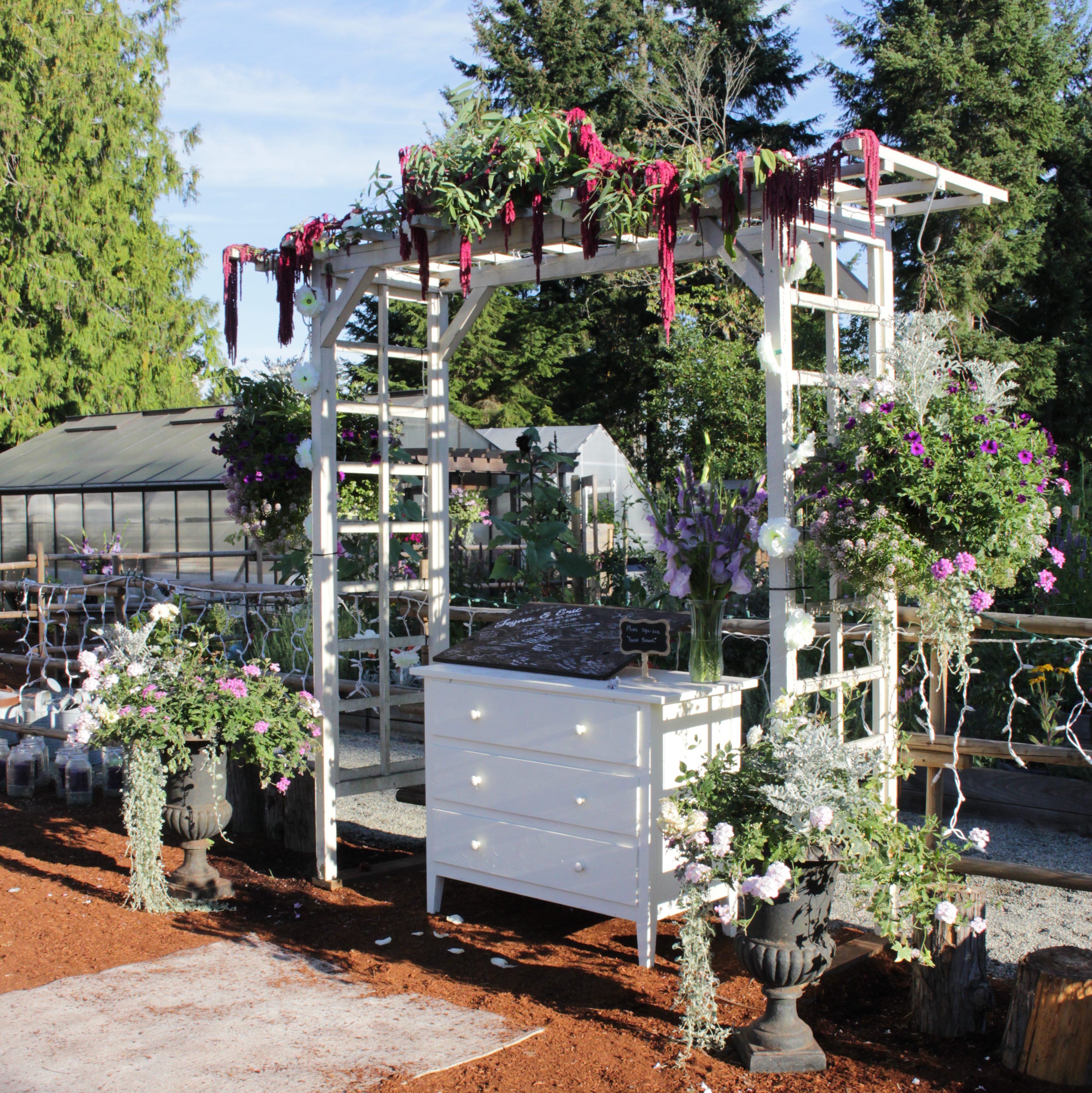
#3 – Amaranthus. Also called ‘Love Lies Bleeding’. The traditional red one is draping down from the wedding arbour, though I am growing it in peach and purple this year, with Coral Fountains and Mira.
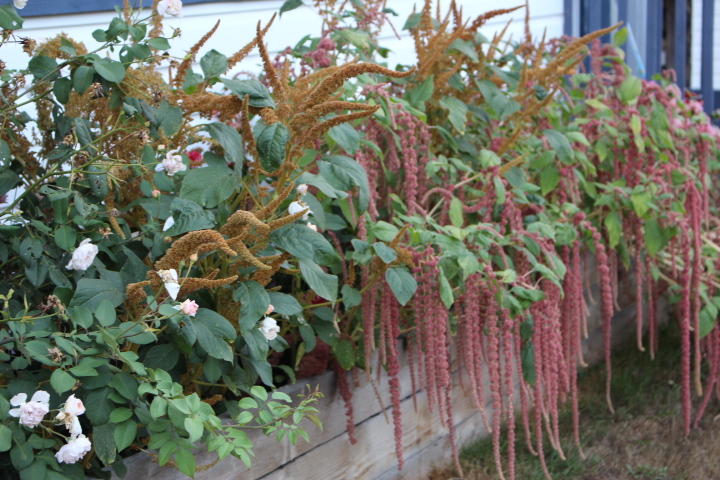
Aren’t they fun looking? I love these tall plants with draping flowers that look amazing in pots, foundation plantings, even in raised flower beds. You can also get upright varieties in assorted colours, as seen in the picture with the bronze flowers. They really make a statement!
Amaranth can be direct sown a couple of weeks after the last frost, into nice, warm soil. Alternately, start indoors in April and plant out when all threat of frost is gone.

#4 – Calendula aka Pot Marigold. This lovely flower is a bee magnet, attracts beneficial insects to eat up your bad bugs, plus looks amazing in bouquets, too. It comes in quite a wide array of colours if you buy it from seed. If you buy it pre-started, you will only find yellow or orange, as below. I like the open daisy like blossoms you see in the picture of the Strawberry Blonde above, as bees love the open centers.
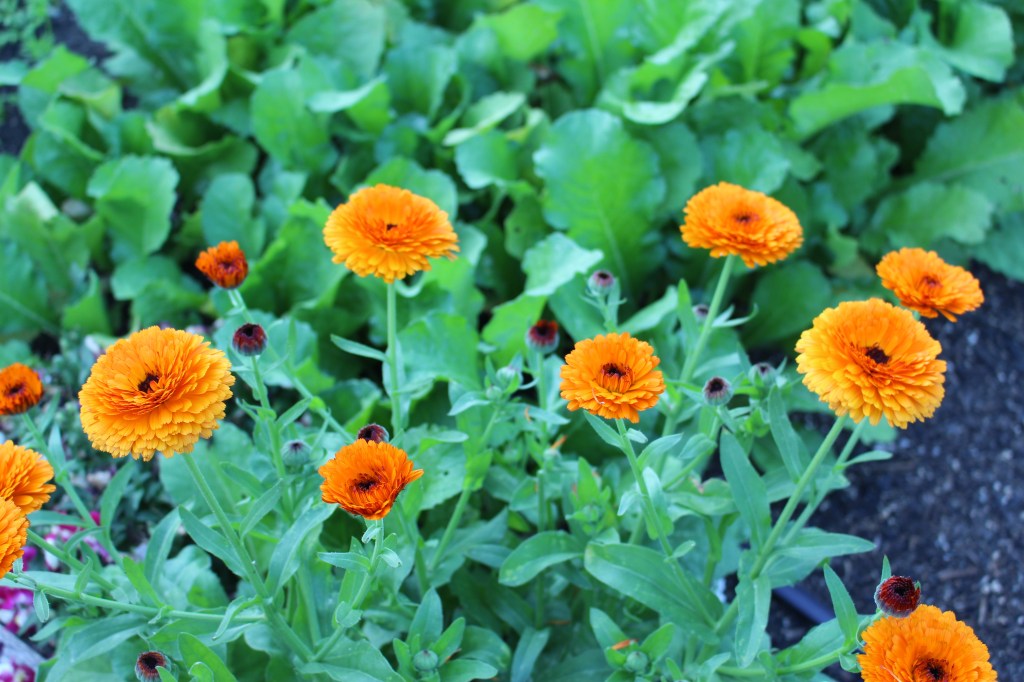
Calendula has antiseptic and antibacterial properties, plus is soothing for your skin, making it one of the most used flowers for bath and body products. The flower petals are used for making salves, soaps, and balms.
The more you deadhead these lovely blossoms, the more flowers it will make, so keep on harvesting!
Calendula comes in so many wonderful hues of orange and yellow, plus creams and pinks, too. They are proficient self seeders in warmer climates. Sadly, not so much here on the prairies, so we need to resow annually.

#5 – Snapdragons. From the flower farms that I follow on TikTok or Instagram, I have learned that there are different snaps that like to be started at different times. So, to make it easy for us home gardeners that just want to grow some lovely snaps for our bouquets, we want to look for Potomac, Madame Butterfly, or Rocket. They will grow tall and look lovely in bouquets.
These guys need to be pre-started in February or March. Sprinkle them on top of your potting soil in the cell packs, do not cover with soil. Instead just press them in so that they stay in place, mist and water.
They are fairly frost/cold hardy, will often overwinter.

#6 – Statice. Comes in so many lovely hues and are amazing in bouquets. Will keep on making more stems of flowers when you cut. Cutting encourages more flowers!
I am growing an Apricot Mix this year, with peaches, pinks, whites. It is very pastel. The lovely lilacs, purples and whites in the garden above are also some of my favourites. These were flowers I grew for my daughter’s wedding – her colour scheme was white, silver, shades of purple and the occasional pop of pink.
Statice also needs to be pre-started. Sow in cells in late March/early April (6 weeks before last frost). As with the snapdragons, do not cover with soil. They need to be very lightly covered, or just pressed into moist potting soil.
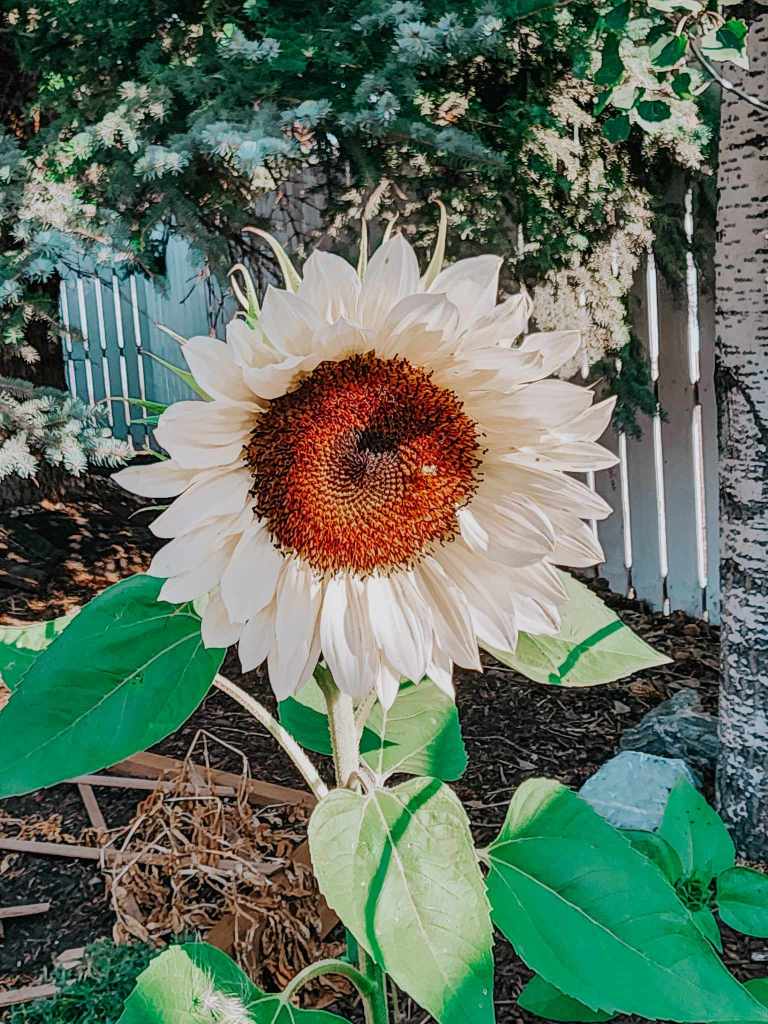
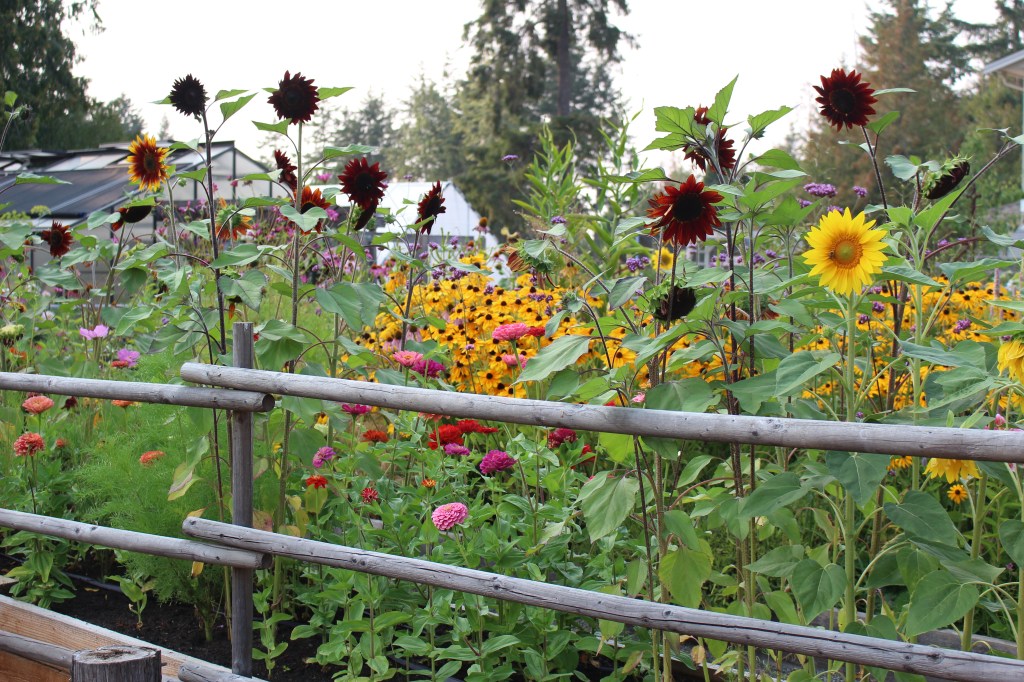
#7 – Sunflowers. Those of you who have followed me for some time know that I am not really a fan of yellow. I will grow yellow sunflowers for the birds and the bees, but for me… I prefer something else. Sunflowers now come in so many other colours that it is pretty easy to do – reds, whites, creams, purples, mahogany. Be careful though, there are a whole lot of scams out there and photoshopped flowers. If it looks too out of this world to be true, it probably is.

You can get sunflowers in all sizes from compact dwarfs to massive 12 (or more) footers. Some sunflowers are multi-stemmed, will make many flowers that off shoot from the main stem, like this ‘pink’ one above. Birds and bees alike really love these. Mine were always covered. I left the flowers standing as long into the fall as I could so the little birds could fill their bellies.
Sunflowers are best direct sown right after last frost. They germinate and grow quickly in warm soil, not to worry. They do not like their roots disturbed, will often remain stunted if started indoors.

#8 – Yarrow. This perennial flower is super easy to grow. Perhaps too easy, sometimes, as it is quite the spreader.
I have my yarrow, that you see in this picture, planted in the most difficult area of my yard. It is surrounded by concrete, bakes in this west facing spot, gets water from me like hardly ever as there is no hose nearby, is under the eaves so does not get rain either, and yet it thrives.
The flowers live for many weeks, add such great colour to the yard, and the bees love it so much. Bees love to visit flowers that have clusters of blossoms, so yarrow is a veritable feast for them.
As a cut flower it is a lovely filler plant in bouquets. I have ordered myself a blend called Love Parade, a mix of pinks and whites, but comes in shades of peach, pink, purple, red, white, yellow, cream, purple.

#9- Monarda aka Bee Balm. This is a bit of an unusual one for a cut flower, but it is super pretty, a bee and pollinator magnet, and makes a great filler plant in bouquets.
The Lambada (in the picture above) is not winter hardy in my zone, but if you are in a zone 7 and better, you can totally overwinter this one. There are many perennial bee balms that we can grow here, too, that come in so many different colours. I may pick one up from the nursery in summer and pop it into the cut flower garden, but wanted to start with this one this year as the colour just grabbed me.
Easy to grow. Sow in March, plant out after last frost.

#10 – Marigolds. This is also an unusual cut flower, but is a fantastic companion plant for your potager. If you choose one of the taller stemmed varieties, like this one above called ‘Burning Embers’, you can use it for both. Many of the flower growers grow them for bouquets. You can also stick to the tall African varieties, like Kilimanjaro White, which looks a bit like a chrysanthemum.
I am doing a whole bed of just marigolds this summer. To help repel pests and to use as cut flowers. Will see what I think. It is my first time using them for anything other than a companion to make my tomatoes grow better.

#11 – China Asters. These guys are like the chrysanthemums of summertime. They work in all bouquets, look great in the garden, can be poofy, or spiky, or buttony. They are kind of the stars in a bouquet.
Start early, in March, plant out after last frost. Can also be direct sown but not sure we would have enough time to enjoy them here on the prairies with our shorter summers.

#12 – Sweet Peas. Sweet Peas are dead easy to grow, smell amazing, and add a lovely wispy look to your bouquets.
The more you pick them, the more flowers they make. If you stop picking, they stop flowering, and begin to shut down for the season. Make sure to deadhead the finished blossoms, the little ‘pea pods’ to keep them blooming. Keep them well watered.
Sow sweet peas in the fall, in October or November for earlier flowers, or in early spring. Can be sown as early as February in warmer zones/early April in zone 3, 4, and 5.
I did not find any sweet peas that I wanted (some were already sold out by the time I put in my order) so I will be checking out the garden centres for something that works with my colour scheme. Thinking pale pink or maybe a raspberry pink. I love some of the Renee’s Garden Seeds sweet pea colours, like April in Paris, Raspberry Twirl, or Watermelon.

#13 – Larkspur. This lovely grey lilac hued larkspur has different names, depending on what company you buy it from. They are called Earl Grey at Renee’s Garden Seeds (above), but Misty Lavender at Antonio Valente Seeds. Wherever you get it from, it is beautiful, it is amazing, it is a must have. It does come in other colours, deep blues and vibrant pinks, but this one is my favourite.
This delphinium relative is an annual, rarely comes back even in warmer zones. It has ferny foliage and tall flower spikes, making it just lovely to use as spikes in your bouquets.
Though this one is dead simple to grow on the mild west coast, it takes a bit more work here in the colder gardening zones. In a zone 6, 7, 8, just toss the seeds in the garden in early spring, or even in the fall for blooms next year. It needs a chilling period in order to germinate. I used to sow my seeds in Feb/March or November.
Here on the prairies, you can try sowing the seeds in early spring out in the garden, or indoors by sowing them 1/4 inch deep in moist potting soil and pop the cell pack into the fridge for a couple of weeks. You know me, I am going to try the direct sowing method.



 The Marigold Potager - A Zone 3 Prairie Garden
Leave a reply to The Marigold Potager Cancel reply