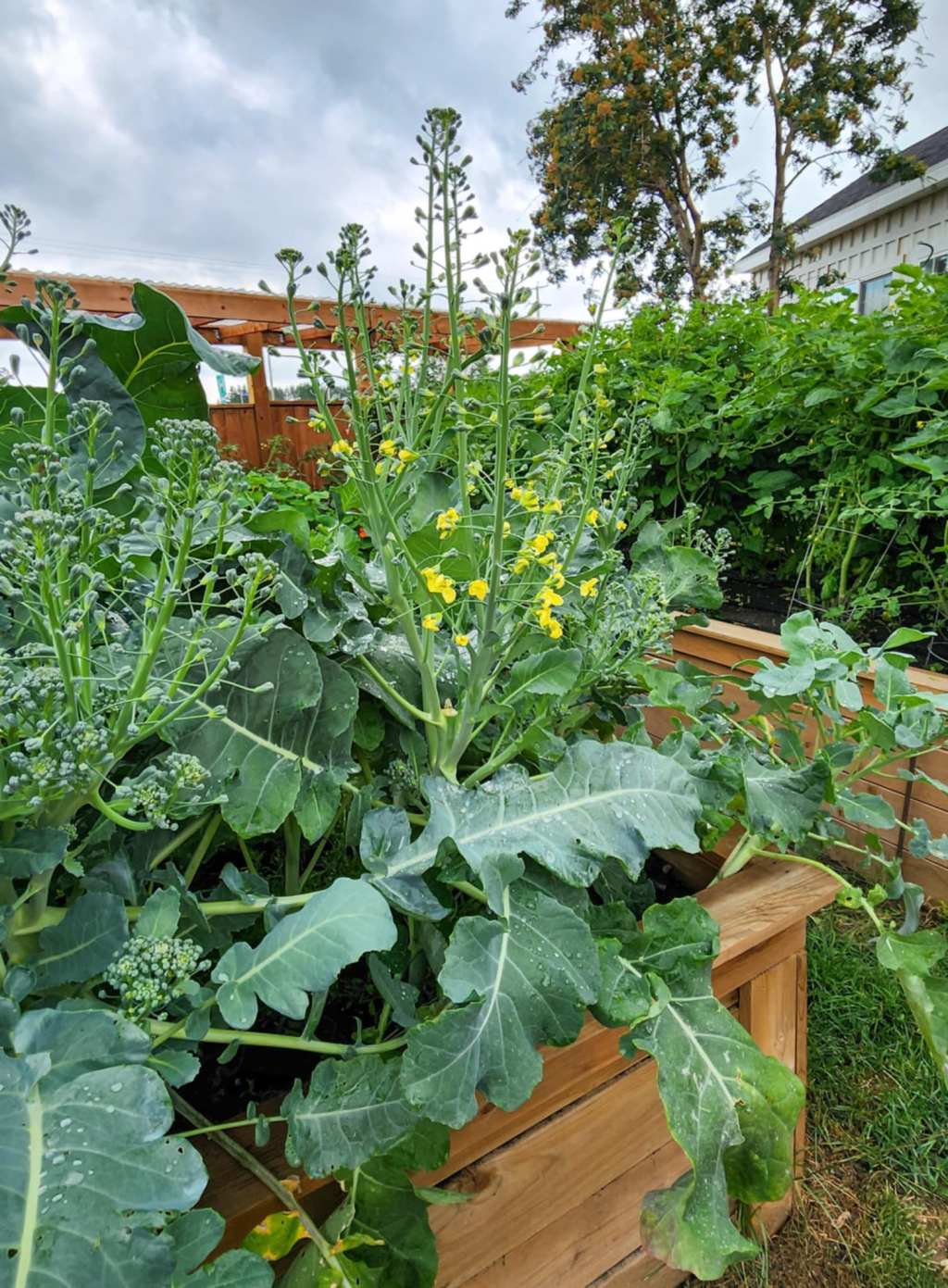
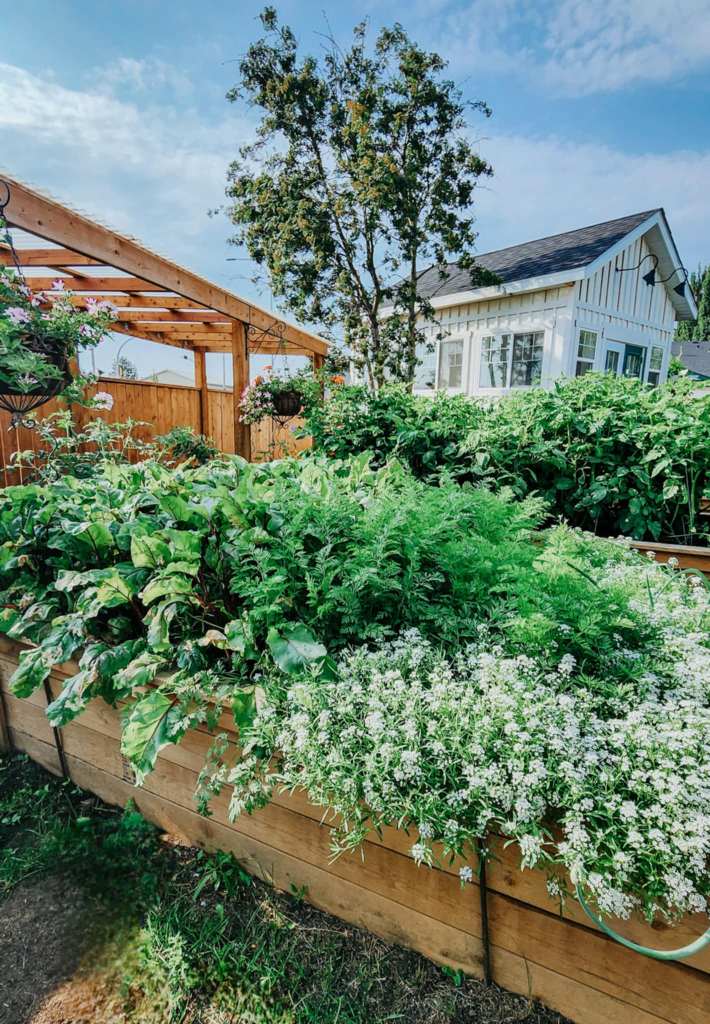
Creating a potager garden marries the beauty and grace of a French garden with the practicality of home vegetable gardening.
A potager is a fancy kitchen garden, one might even say that it is a bougie food vegetable garden… one that is pretty and functional. While the term potager may sound fancy, it is simply the French word for a kitchen garden. One grows flowers, herbs, fruits, and vegetables all together for a garden that looks elevated, a step above the rest. The best thing about potagers is that they appeal to the bees.. for better pollination, more fruits and vegetables.
Here’s how to begin in five simple steps.
Step 1: Find Your Garden’s Location. Vegetable gardens need good sun, with 8 hours of sunshine each day, and close to the kitchen for easy harvests. It does not all have to be at once. It might be 3 hours in the morning and 5 hours in the evening. The key is a lot of sunshine. All fruits and vegetables, even rhubarb, taste sweeter when they get lots of sun.
Choose a spot with six to eight hours of sunlight, close to the kitchen for easy access to fresh herbs and vegetables.

Step 2: Design Your Layout. Once you have determined where the best sunny spot is in your yard, you’ll need to decide how you are going to lay out the potager. Is it going to be the back half of your backyard? A corner? A long one along the side fence?
Is it going to be a fancy design like a knot or circle garden. Maybe a formal one with four beds, one in each corner and a fountain in the middle, or a small apple tree, maybe? This is a very popular potager layout. Back in the day, potagers tended to be ornate and a bit formal, but casual and carefree cottage garden style is becoming more of a thing. Maybe it is a blended garden concept as we learn more and more about permaculture?
Fences, borders, pathways, strip gardens are potager hallmarks, giving them a bit of distinction. Brick pathways, pots to make a border. Local stone, wood, slate, tiles, bricks, are usually easier to access and add a bit of local flair.
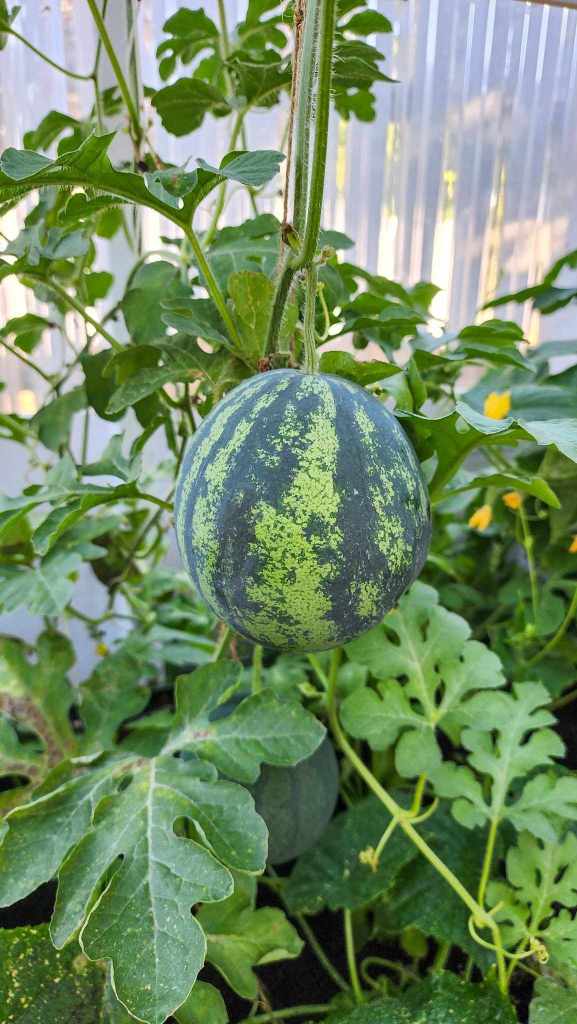
Step 3: Select Your Plants. Combine vegetables, herbs, edible flowers, and fruit-bearing shrubs for variety. Think about colors, textures, and seasons while planning.

Fruits – strawberries, raspberries, blueberries, dwarf cherry bushes, saskatoons, haskaps, and dwarf fruit trees are all perfect for your potager. Plant what you like to eat.
If you are planting a fruit tree, keep in mind where it will cast shade. Apple trees now come as small dwarf varieties, so are easy to fit into your yard. Yes, they need a cross pollinator, but it need not be in your yard. As long as a neighbour within a block, or two, has an apple, bees will pollinate your apple.

Step 4: Prepare the Soil. Enrich your soil with compost and ensure proper drainage, crucial for healthy growth. Top with shredded leaves to feed soil life.
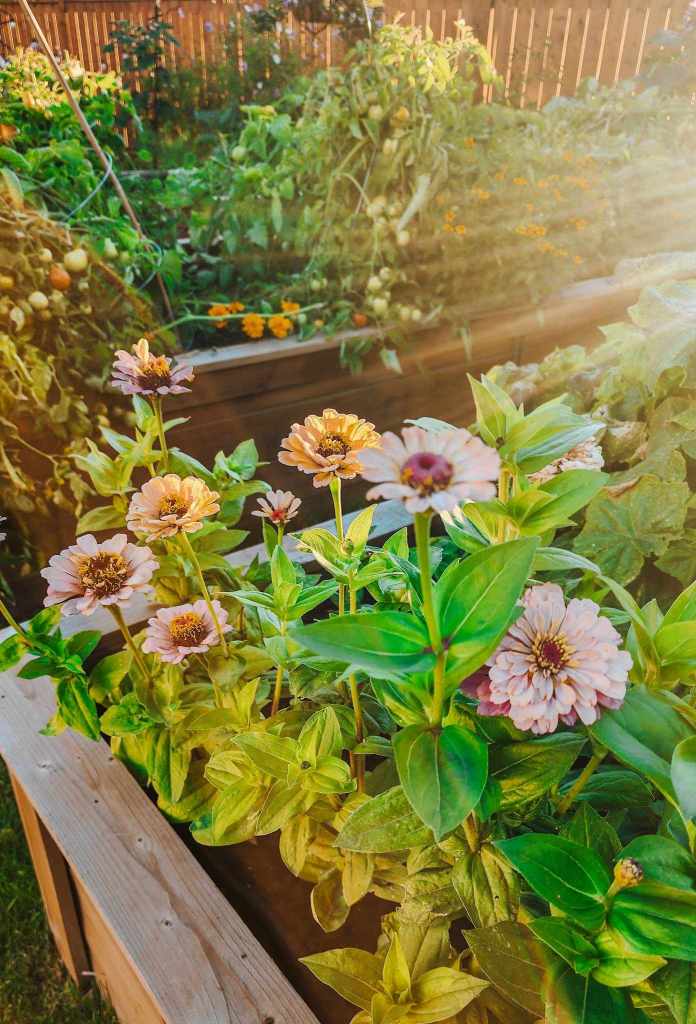
Step 5: Implement Companion Planting. Pair plants that benefit each other, like tomatoes with basil, to naturally deter pests and enhance flavors. With these steps, you’re on your way to enjoying the beauty and bounty of a potager garden.
Happy Organic Gardening ~ Tanja







 The Marigold Potager - A Zone 3 Prairie Garden
Leave a comment