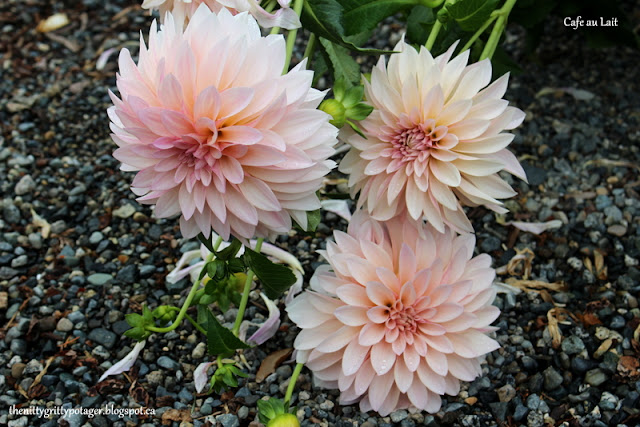
When you are searching for dahlias or other summer blooming bulbs, unless you go to a specialty grower, the supplier will be the same one for all the box stores and greenhouses. Greenhouses tend to carry a larger selection than box stores, but they will be from the exact same wholesaler(s). This applies to fall bulbs, also.
I thought I would just mention that as I get questions asking if they are worth getting at this box store or another. Larger mail order seed companies (Vesey’s/West Coast Seeds/T&T) also use the exact same supplier(s) here in Canada.
Regarding the quality. They are not prime bulbs, but I would (and do) absolutely buy them. Grow them, lift them, save them, take cutting, divide them. They will get better and better with each year.
However… the biggest worry with everyone is dahlia gall. Gall is becoming a big worry in dahlias, just as blight was in some regions ( a few years ago) with tulip bulbs. I cannot promise you that you will not get dahlia gall from these store purchased bulbs, just as the private grower cannot promise you that you will not get it. You can even have gall on seed dahlias (insert an exploding head emoji here).
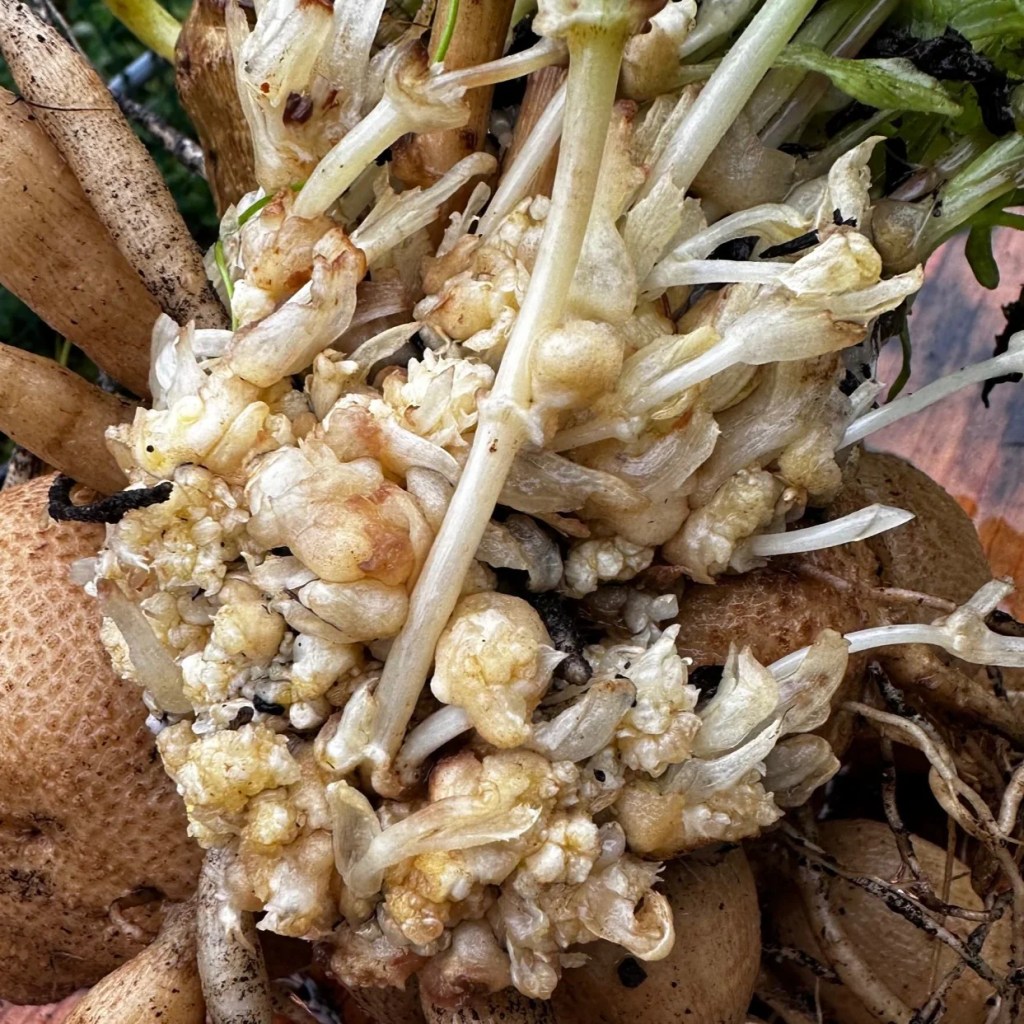
To do your best to prevent gall, the main thing is to not damage the tuber and cleanliness really is next to godliness when it comes to these tubers.
- Do not plant in wet, cold soil.
- Do not damage it with the trowel when planting. If you do, lift it, dry it, let the would scab over before you plant it. I would even sprinkle cinnamon on the wound to help prevent disease.
- Try not to damage the stem of the dahlia, as well. Gall can start anywhere.
- Keep your garden tools clean when digging the hole, pruning, etc.. Use the same 10% bleach solution that you use when pruning your fruit trees. Spray on your tools before using, and in between each use.
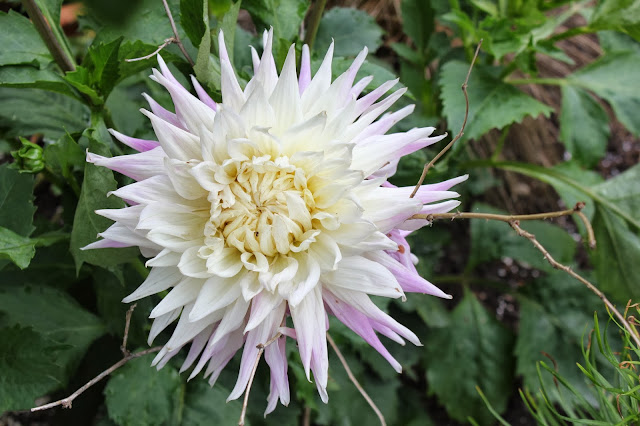
How To Grow Dahlias In Short Summer Areas
Getting to enjoy dahlias in bloom, here on the prairies, can be challenging. They are late summer bloomers and are very frost sensitive. If you don’t start early, you may not get to enjoy your blooms for very long.
- When you pull them out of storage, or buy them from the shops, usually sometime in March, put them on a table or a bright windowsill, etc.. into the sunshine. Lights also work, if you are using grow lights. This will start waking them up.
- Place them in a tray. No soil is required, no water.
- Start misting them once you see green growth or buds.
- You can leave them just like that, if you want, till you pop them in the garden around the May long weekend.
- Or, you can separate the tubers into several tubers once you see green growth. Each green bit is an eye. Or, you can take cuttings to get more dahlias for free.
- You can also pop them into a pot till the long weekend, when you transfer them outdoors.
Starting Gladiolas
It is early yet, but I am mentioning this now so that you can start sourcing out your gladiola corms.
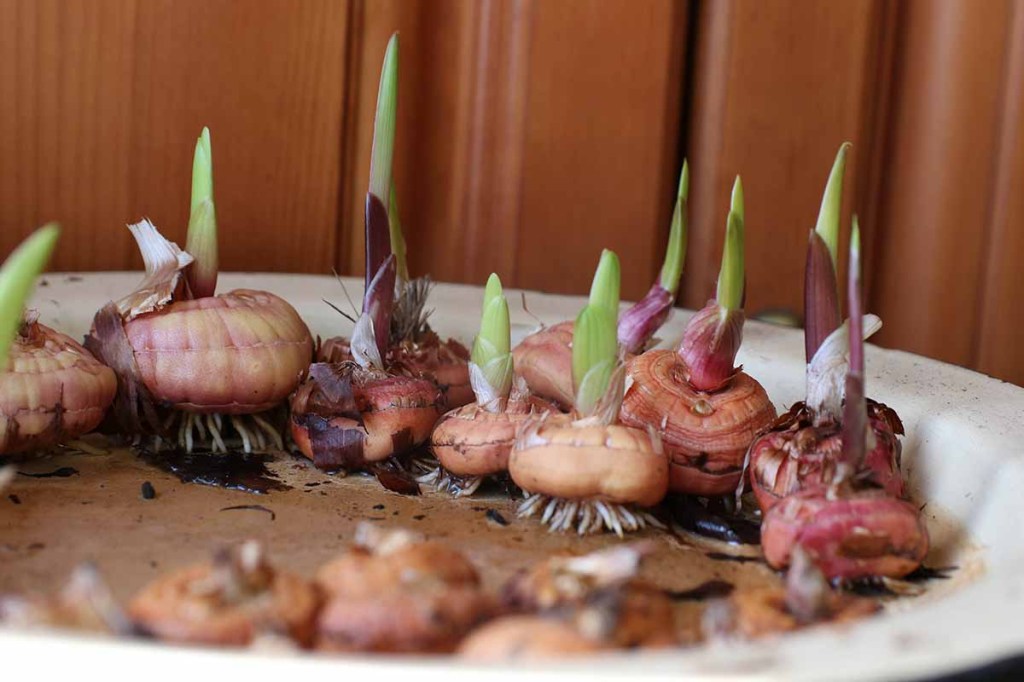
To enjoy earlier gladiola blooms, you can prestart them indoors 4 to 6 weeks before your last frost. This is in April here on the prairies, in a zone 3. (For my zone 7 readers, you will start them in March)
- Place them in a tray or pie pan with a little bit of water to form roots.
- If it is not yet time to pop them outdoors once they have roots on them, place them in a tray with at least 3 inches of potting soil for them to root into.
- Transfer them to the garden, or a pot, once all threat of frost is gone.
You can also pot up cannas and callas for earlier blooms, eucomis (the pineapple plant), or any other tuber, corm, or bulb.
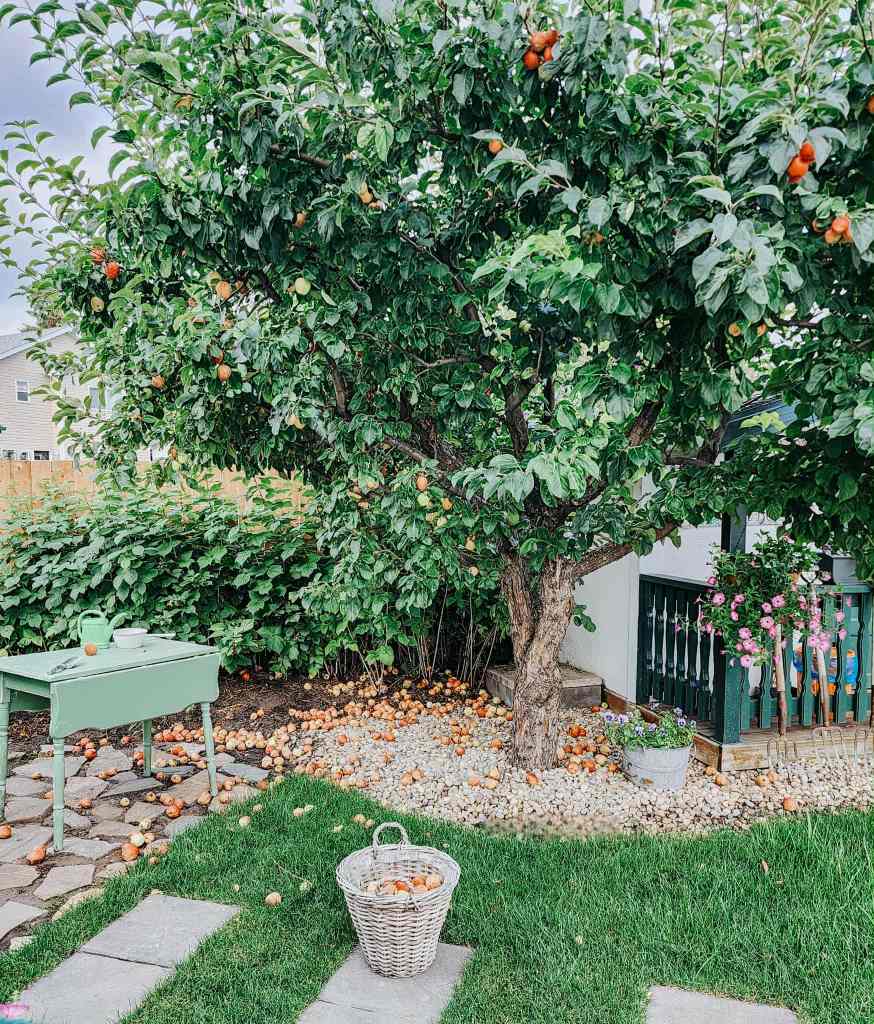
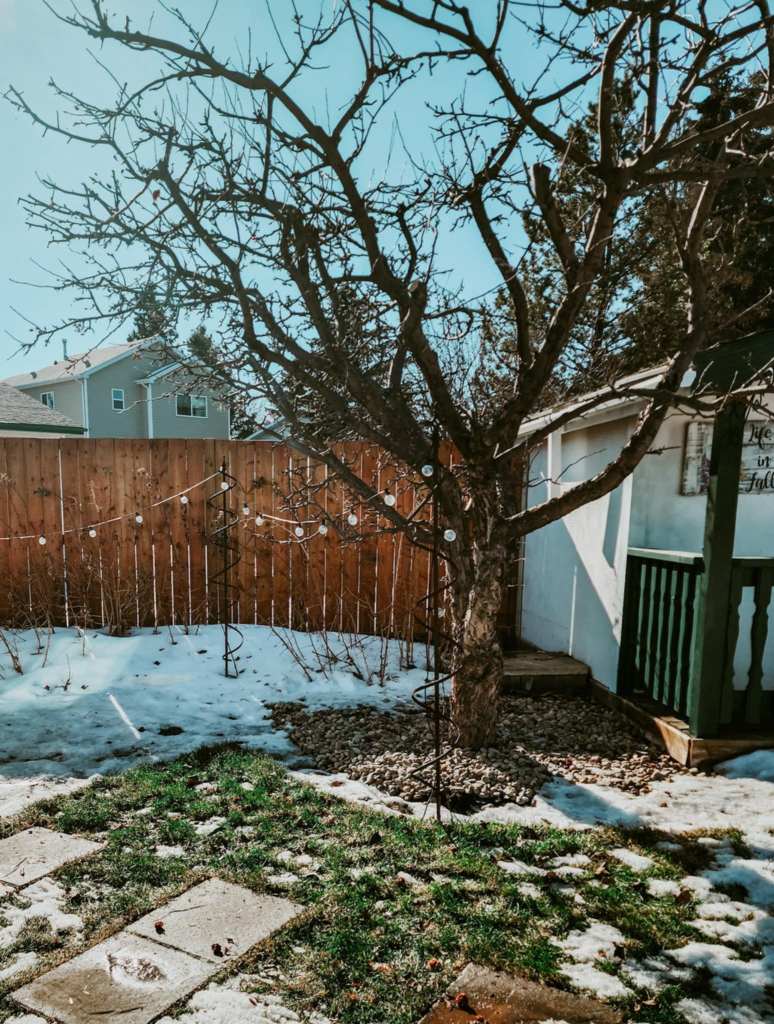
Pruning
This lovely weather makes for a great time to do some pruning. Pruning fruit trees (apples and pears), can be done now.
- Use clean tools and clean between each cut. This prevents diseases.
- Prune on a dry, sunny day. Never in the rain.
- Use hand pruners for anything under 3/4 inch, loppers or a pruning saw for anything bigger.
- Prune off any suckers growing straight up.
- Prune off any branches growing inwards, towards the center of the tree.
- Prune back any branches that are too long.
- Never prune off more than 1/3 of the overall size in one year, as that would stress out the tree and promote more suckering.
- If you have a very overgrown tree, it will take a few years to get it back to thriving.
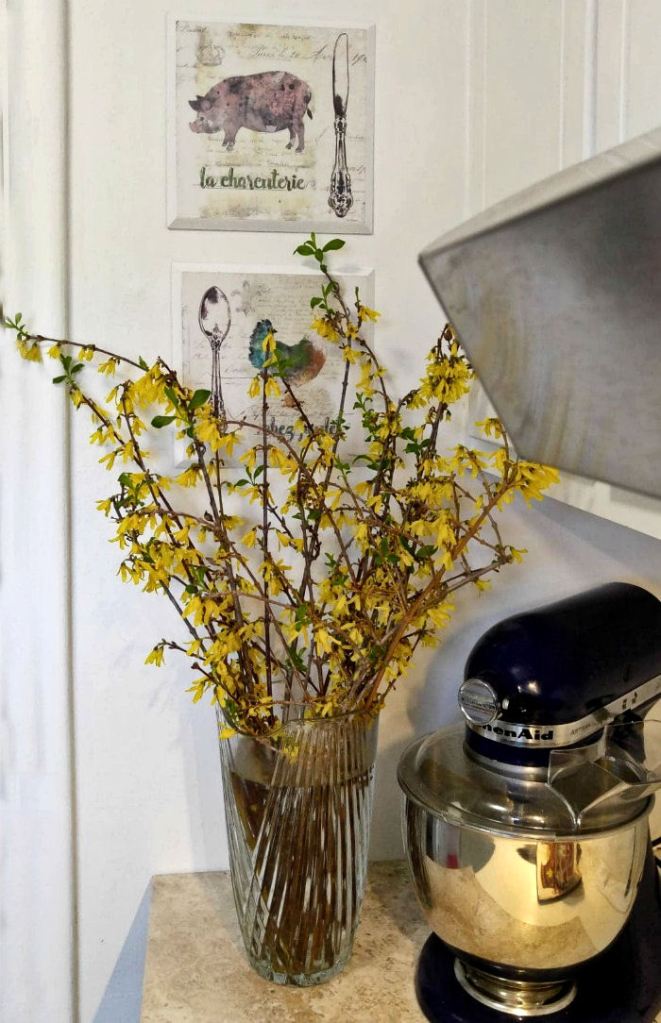
Don’t forget to take in some of the cuttings to put in a vase.. forsythia, mockorange, apple, pear, etc… will bloom nicely for Easter.
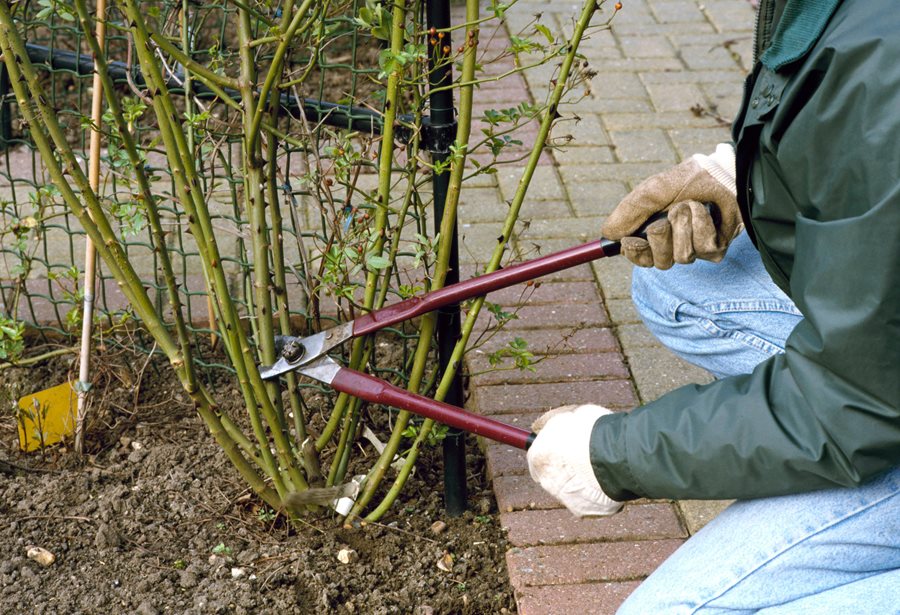
It is a a bit early for roses, but here is what you need to know…
- Wait till you see a wee bit of green growth so that you know which branches are live, which are not.
- The colour of the stems means nothing. It can be grey and look dead, but in a few weeks, start putting on new growth.
- Take out any branches growing inwards, towards the center of the bush.
- Take off any really spindly growth. Those skinny bits will not support blooms.
- Always cut to an outward facing bud, where you see the new growth growing outwards.
- Cut at an angle, away from the bud (so the rain drips away from the bud, not onto it).
- Remove any really thick, old canes.
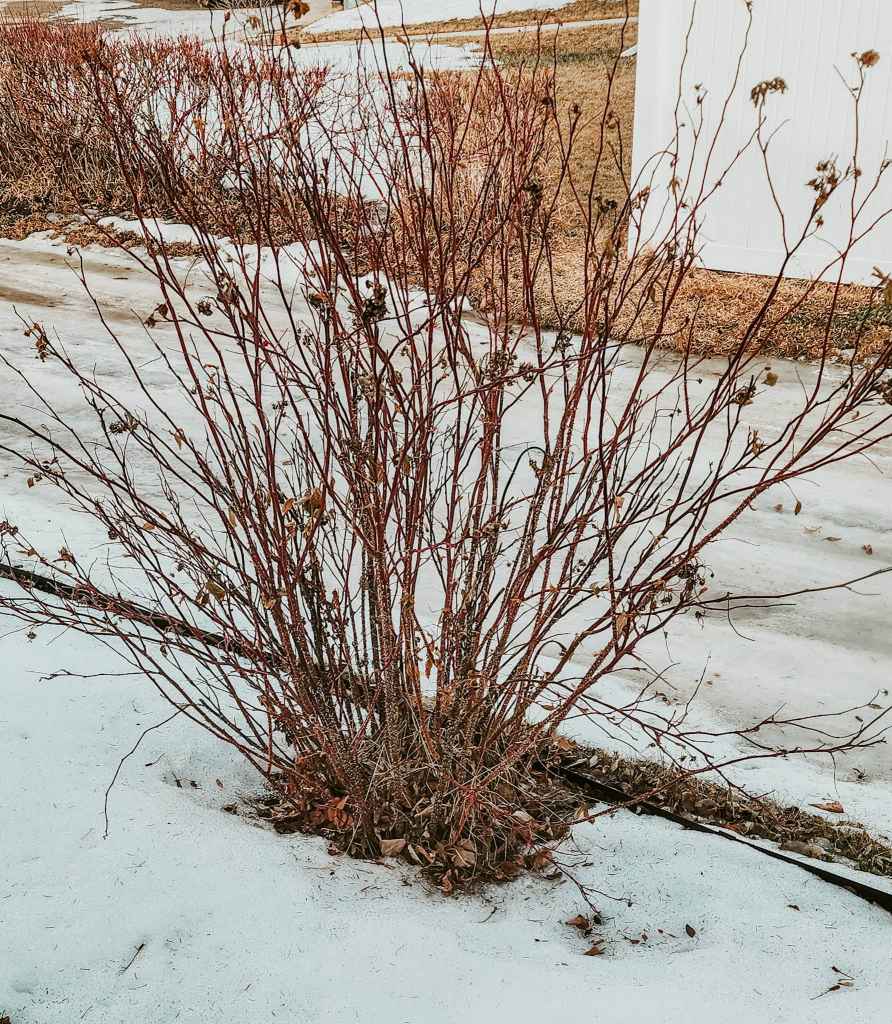
For rejuvenation pruning… cut your rose bush back hard.
I have a very happy Therese Bugnet shrub rose. She grows many feet tall each summer. She is also growing very close to the edge of our front yard (I did not plant her, I inherited her) so can impede into the back alley.
- I will be taking her down by a lot this spring. Like, down to 2 feet tall.
- I will then take out any of the old, peeling, thick canes.
- I will also take out any really spindly branches/stems as they will not bloom.
This summer, she will bloom beautifully… at a reasonable height and width. No grabbing people as they walk down the alley.
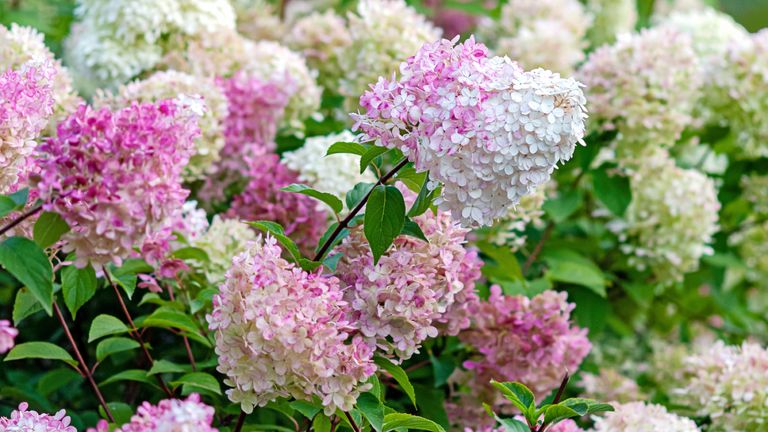
Hydrangeas – most are trimmed back in spring, when dormant (panicle and smooth). Give them a pruning for shape.
- Panicle types (Limelight, Pinky Winky, Vanilla Strawberry, Fire Light, Quick Fire…) usually just need a light pruning, shaping. This promotes bigger flowers.
- Smooth types ( Annabelle, Incrediball Blush) flower on new wood, so are often cut back hard. You can take them right down to 6 inches in early spring, late winter)
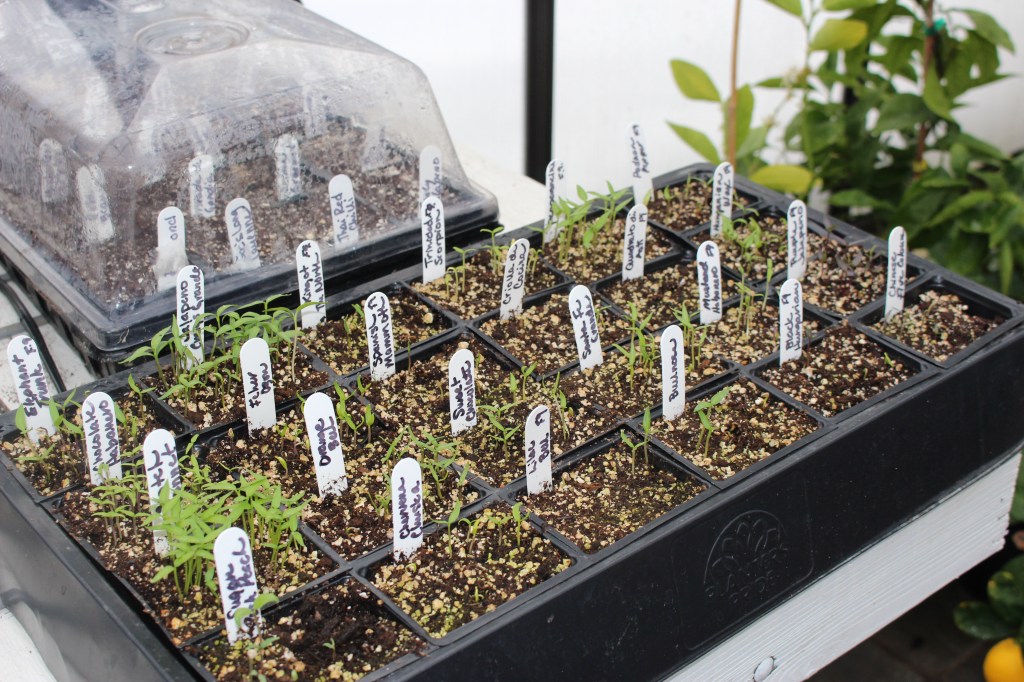
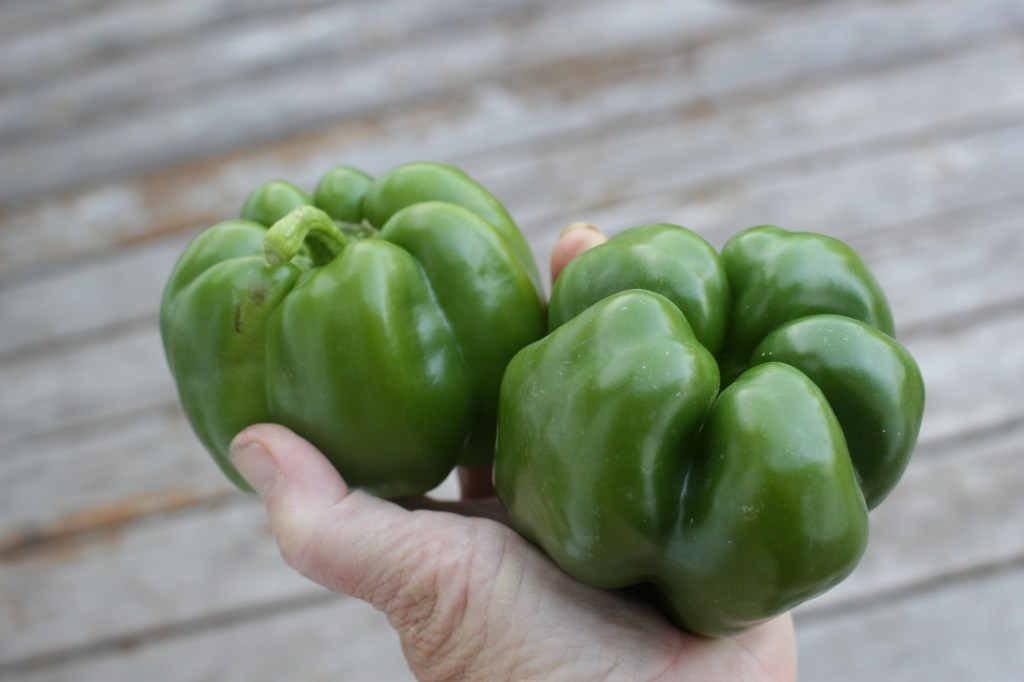
Start Peppers Now- both hot and sweet
A few tips about growing peppers from seed.
- Sow 2 or 3 seeds of the same variety of pepper per cell in your 6 pack/seed starter tray.
- Grow them on bottom heat. Hot peppers can take up to 3 weeks to germinate. Bottom heat will help them germinate faster, help prevent damping off disease.
- Put the humidity dome on to keep the soil moist, keep the air humid, until you see germination.
- Remove it as soon as you see them poking through the soil. After that, you want to keep the soil on the drier side to prevent damping off. Some will have a fan blowing over their seedlings.
- I do not use extra lighting. I just grow them by a bright window. Use lights if you are starting them inside the house, do not have a really bright south or west facing window.
- Do not prune them. We do not have a long enough growing season.
- Do NOT separate them when you go to transplant them. Plant the two or three seedlings together in a larger pot, and then in the garden bed or planter. They will support each other as they grow, will produce better, too.
- They want to grow in your hottest and sunniest spot, and prefer to be grown on the dry side.
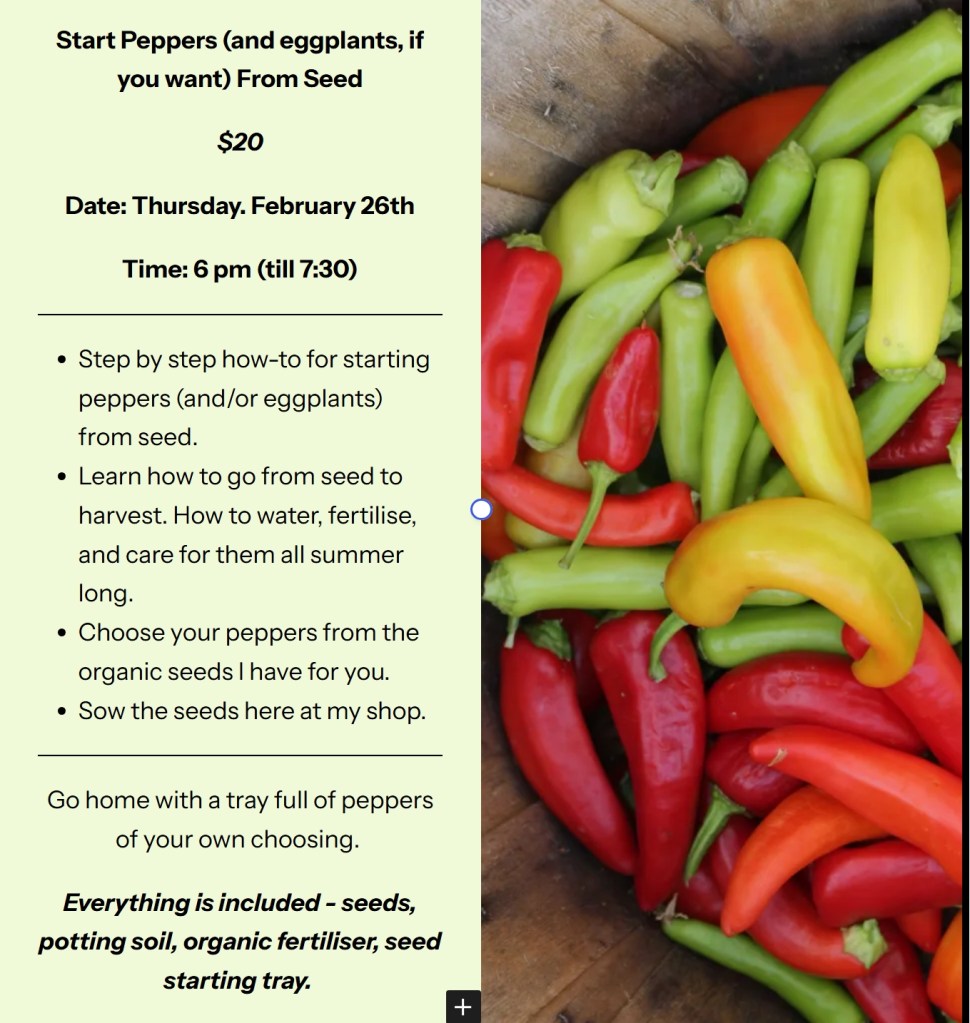
Are you local? Come start peppers with me. You will go home with 12 peppers of your own choosing. No mess at home, no fuss. I provide you with everything. No need to buy all sorts of seeds, pay for shipping, soil, and all the things.
What Else To Do Now…
I am still journaling, planning, dreaming, and ordering. I will probably be doing this till May ; )
Check these posts from the past two weeks notes for what to start now.
- Notes From The Potting Shed (Early February)
- Notes From The Potting Shed – Week #5 (January 26th – February 1st)
If you are local to the central Alberta region, I have posted my late winter workshops. These workshops are all about sowing and growing. More workshops to come.
I supply everything – the seeds, the soil, the worm castings, the ferts (if applicable), the seed trays, the labels, and the how-to. You go home feeling confident in your ability to grow these seeds on all the way till harvest.
Leave the mess here at my place, no shipping fees, lots of varieties to choose from so you don’t need to buy all those packets.


 The Marigold Potager - A Zone 3 Prairie Garden
Leave a comment