
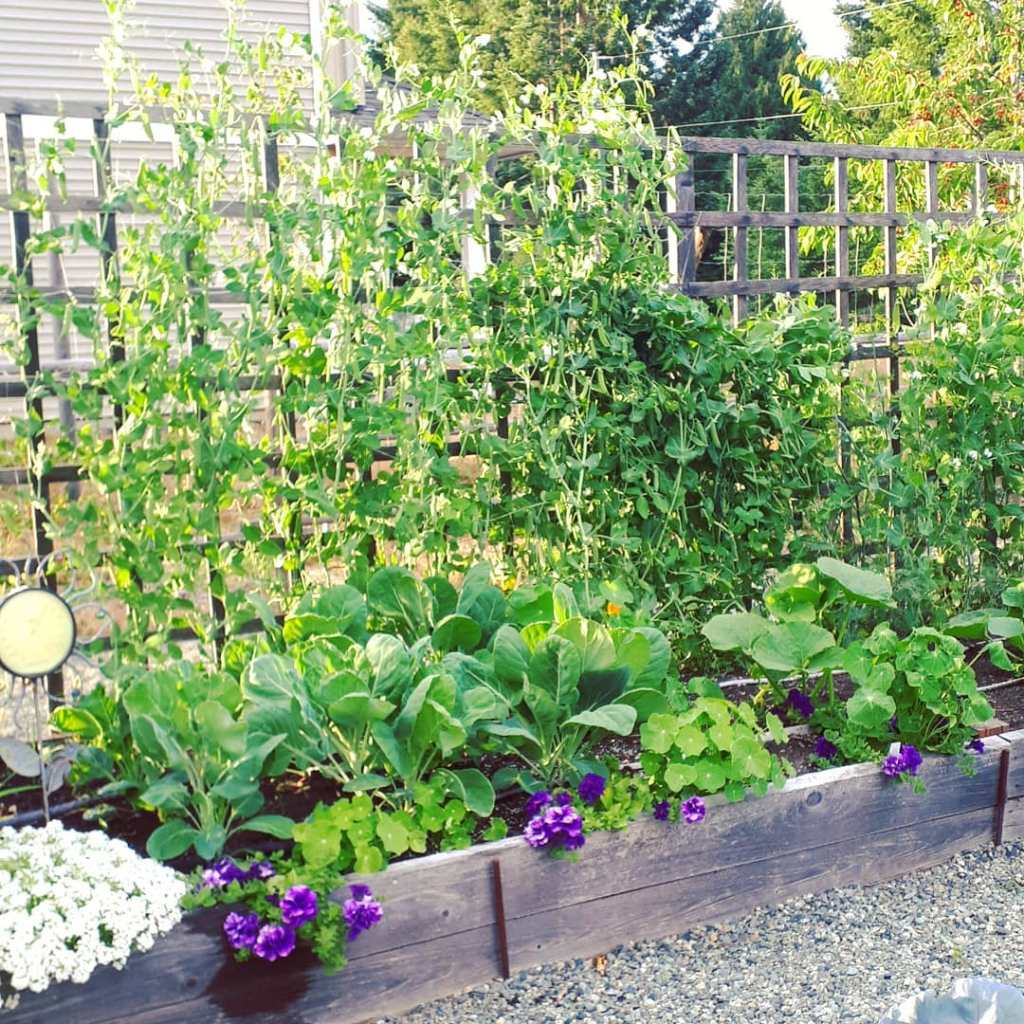
A potager garden is a pretty food garden. A garden that grows vegetables but is also pretty to look at with beauty and colour.
It’s a garden with beauty, flowers, and thriving food crops all in one place, in all four seasons.
They are often fairly formal, with borders and structure, but usually also have some kind of pretty focal points to draw your eye.
As you are growing a variety of vegetables, fruits, herbs, and flowers all together, they tend to be thriving, healthy, and buzzing with pollinators.
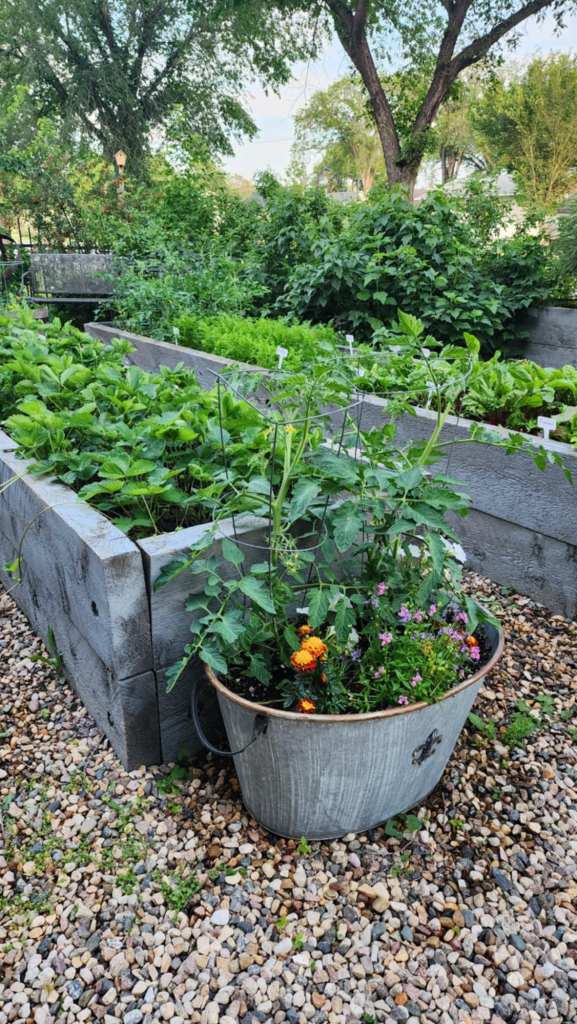
1. Design Your Layout
A potager will require full sunlight to grow great flowers and vegetables. Choose the spot with the best light for your raised beds.
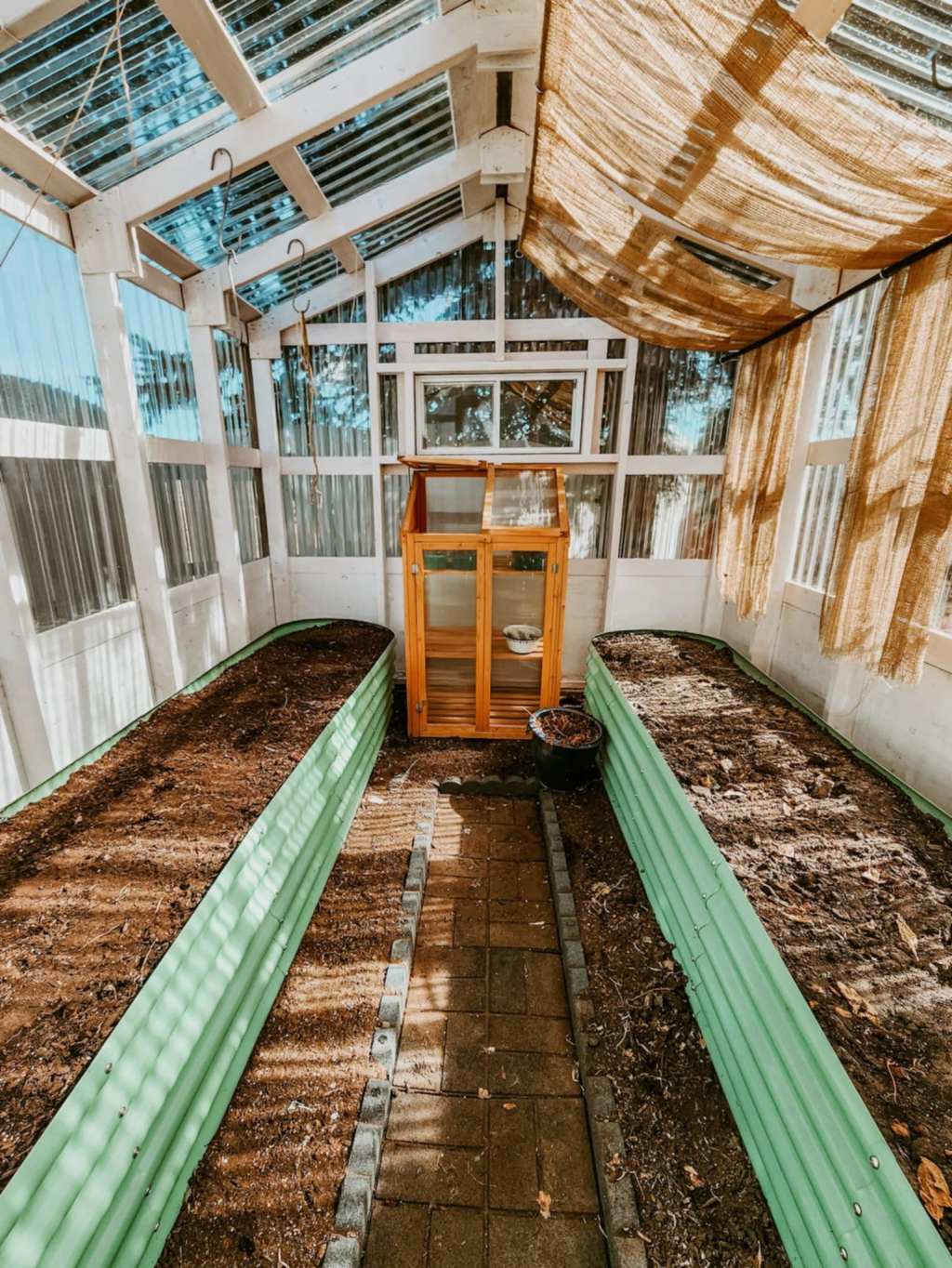
Raised beds are not a necessity but they make it much easier to be weed free, have great soil with good drainage. They also add to the tidy, formal look, which is a big part of the charm of potager gardens.
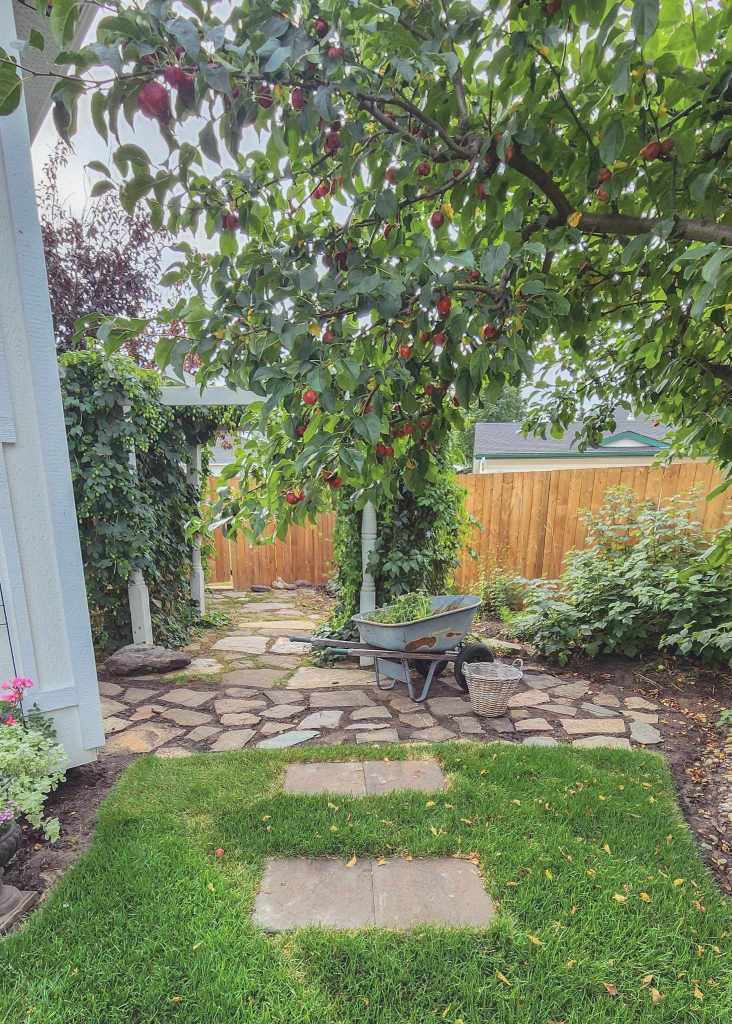
Make pathways wide enough for a wheelbarrow to help amend your soil and harvest your crops. Use natural materials for the pathways, like woodchips or gravel.
Fences and walls give a natural backdrop and border to your garden. Trellises can be added to grow food up them. Hedges and hedgerows can also be used to add that definitive border that offers protection from cold winds and the elements.
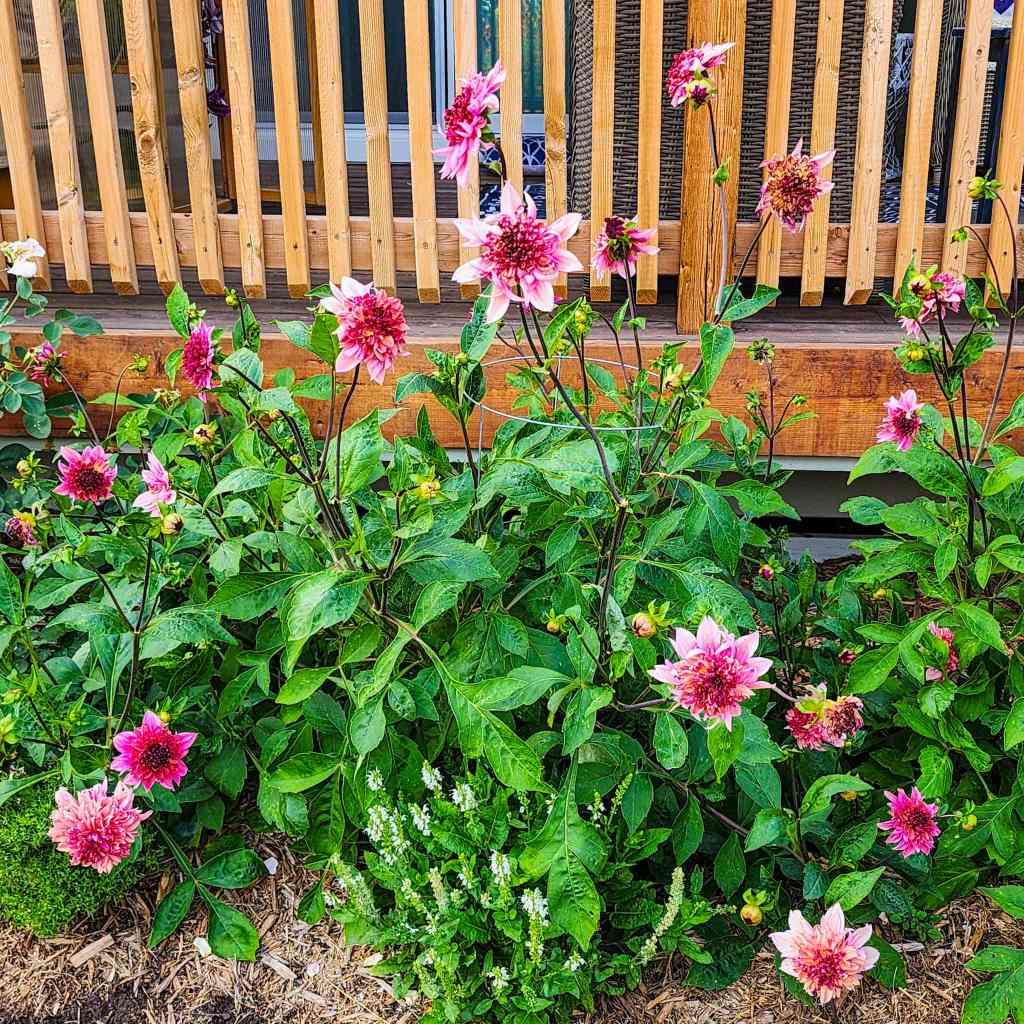
2. Add Flowers
The key to a thriving cottage style food is to add flowers and then add even more flowers.
- Flowers to attract the bees and pollinators for better food production.
- Flowers for a cutting garden.
- Flowers to attract beneficial insects.
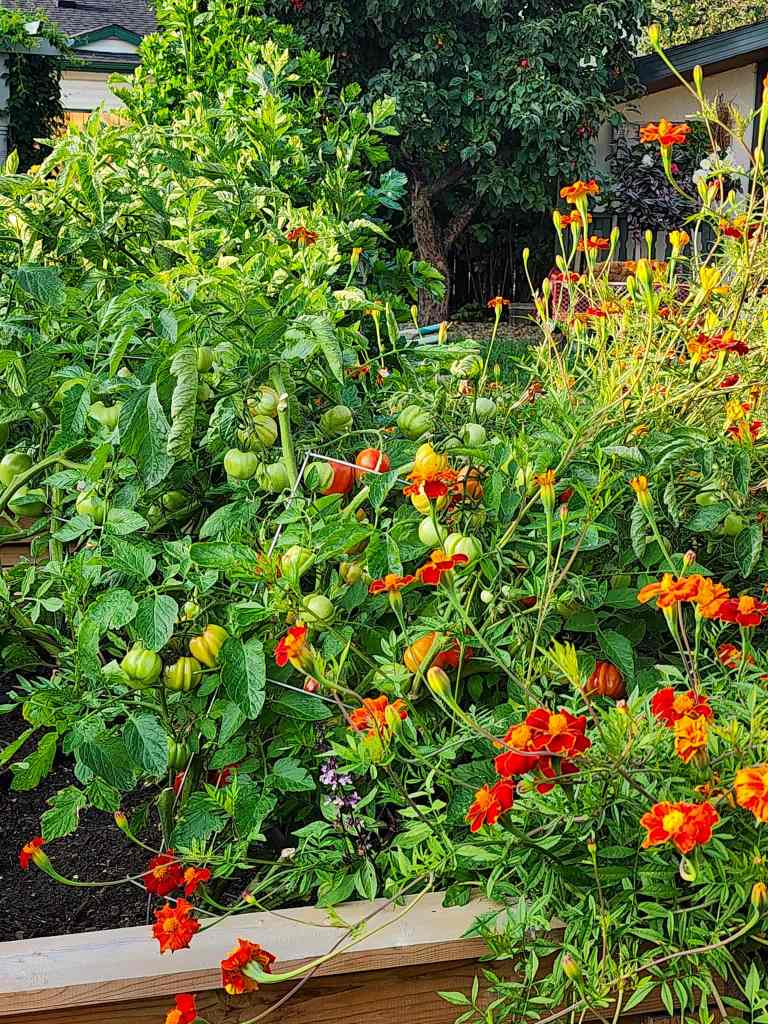
Add Flowers to The Vegetable Beds
Adding a few rows of flowers to your actual veggie plot will attract more bees, more pollinators, and the beneficial insects that eat aphids and caterpillars.
- Marigolds
- Sweet Alyssum
- Calendula
- Sunflowers
- Zinnias
- Nasturtiums
- Petunias
- Nicotiana
- Snapdragons
- Cosmos
The first 3 are the most efficient at attracting good bugs and repelling bad ones. The rest are other ideas that have many pros. I always say… ‘If you plant it, they will come’. Meaning that any flowers you add will attract some beneficial insect.
Birds, especially hummingbirds, and moths are also fantastic for helping with pollination.
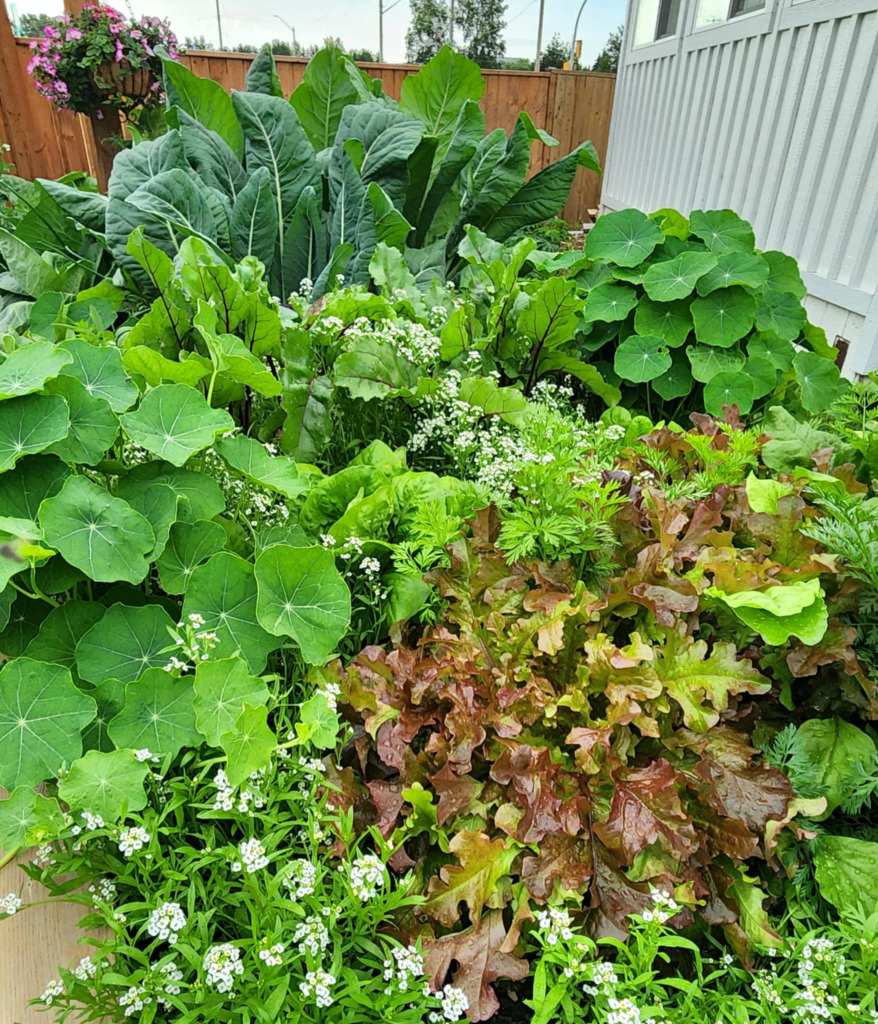
How To Add Flowers To Your Actual Veggie Beds?
Add a row at each end of the same flower. You always want either a block of the same flower, or a full row with at least 3 plants of the same flower. Do not mix your rows with a variety of flowers or you will massively decrease the amount of beneficial insects that make your garden a home. Beneficials will land in your garden 3 times before deciding to lay their eggs there. If each time the land is a different flower, they will not stay as they will assume there is not enough food for their babies.
Add a row in between your blocks of veggies. Add more rows by planting flowers in between your crops, to delineate each block. This gives more rows for babies, plus the scent of the flowers will deter pests like carrot rust flies, as the scent of the flowers masks the scent of the veggies. (also, do not run your hand across the tops of the carrots and try to sow with regular spacing so that you do not have to disturb the carrots by thinning. Each time you touch those tops, you risk the carrot rust fly getting a whiff.)
Plant flowers along all 4 sides of your raised beds. Plant marigolds around the sides of tomato beds, sweet alyssum around the sides of the brassica bed (cabbages, broccoli, cauliflower), calendula around the carrot patch.
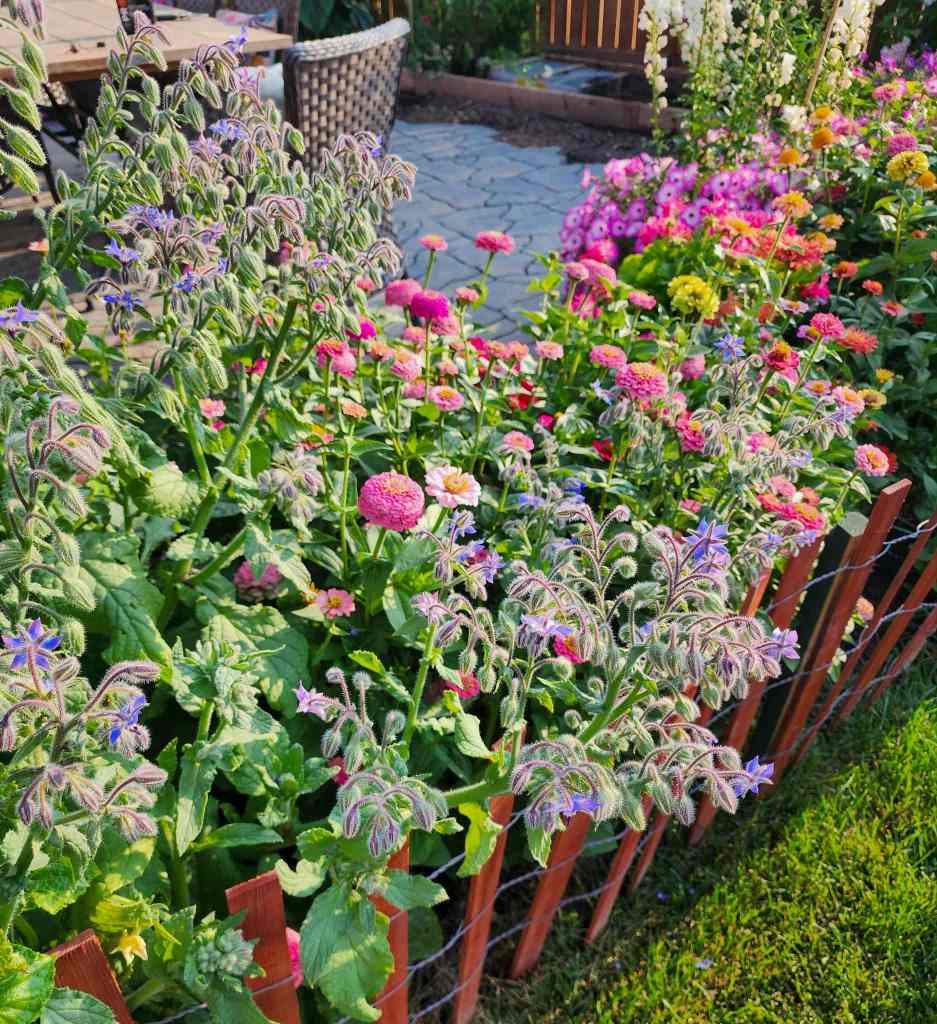
Grow A Cutting Garden
Grow a strip of flowers for cutting and to feed the bees. I call the cutting garden my pollinator strip. It can be a garden bed, a strip along the patio (as mine was this summer), the hellstrip between the sidewalk and the street, a meadow, any place at all…
Fill this bed with your favourite flowers for bringing in to fill your vases, or for gifting. Can be all annuals, or a mix of both perennial and annual flowers.
- Zinnias
- Cosmos
- Dahlias
- Roses
- Hyssop
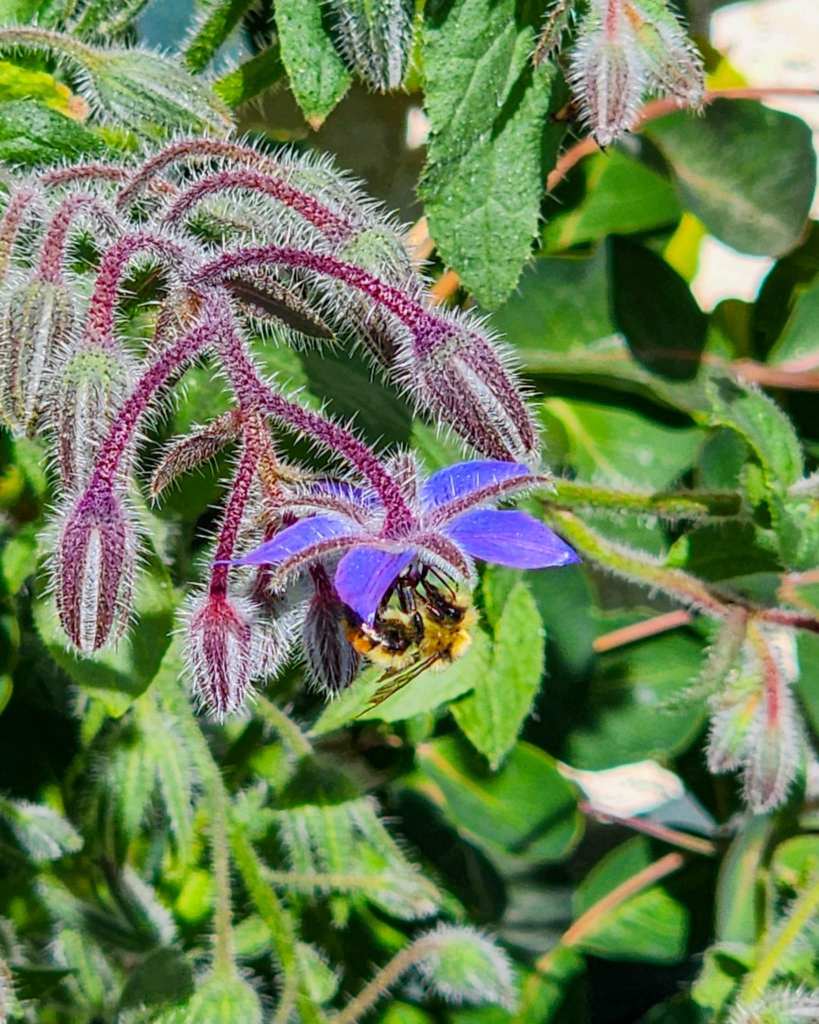
- Borage
- Larkspur
- Lilies
- Monkshood
- Tickseed
- Sweet Peas
- Sunflowers
- Yarrow
3. Add Herbs
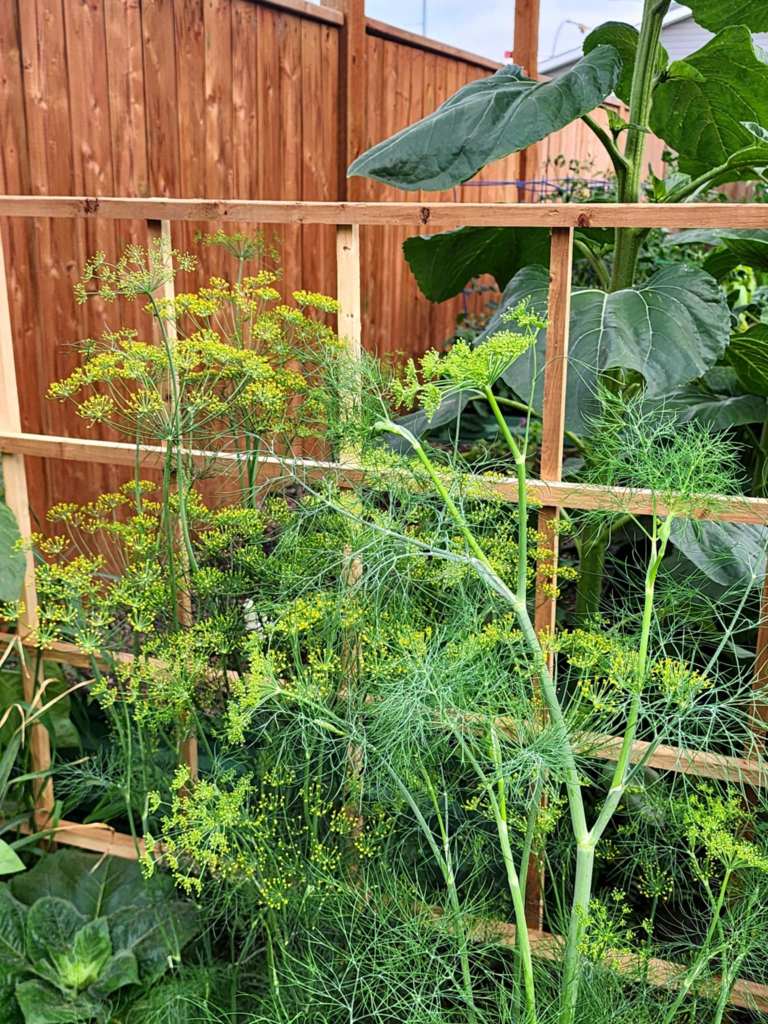
Pollinators love herbs, especially white and blue/purple flowering herbs. They also love herbs with umbel flowers (a flat cluster of many small flowers) like that of dill, cilantro, fennel, parsley.
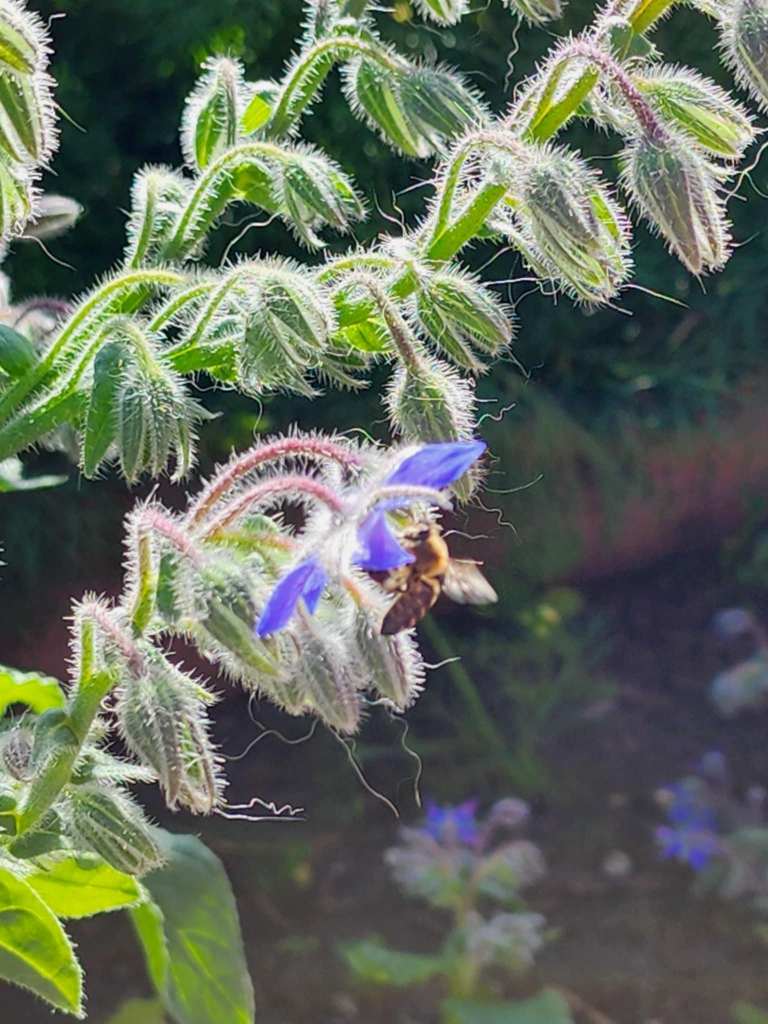
Some bee and pollinator favourite herbs…
- Borage (bees love to forage for borage)
- Dill
- Cilantro
- Marjoram
- Basil
- Oregano
- Thyme
- Rosemary
4. Grow Up with Ornamental Structures
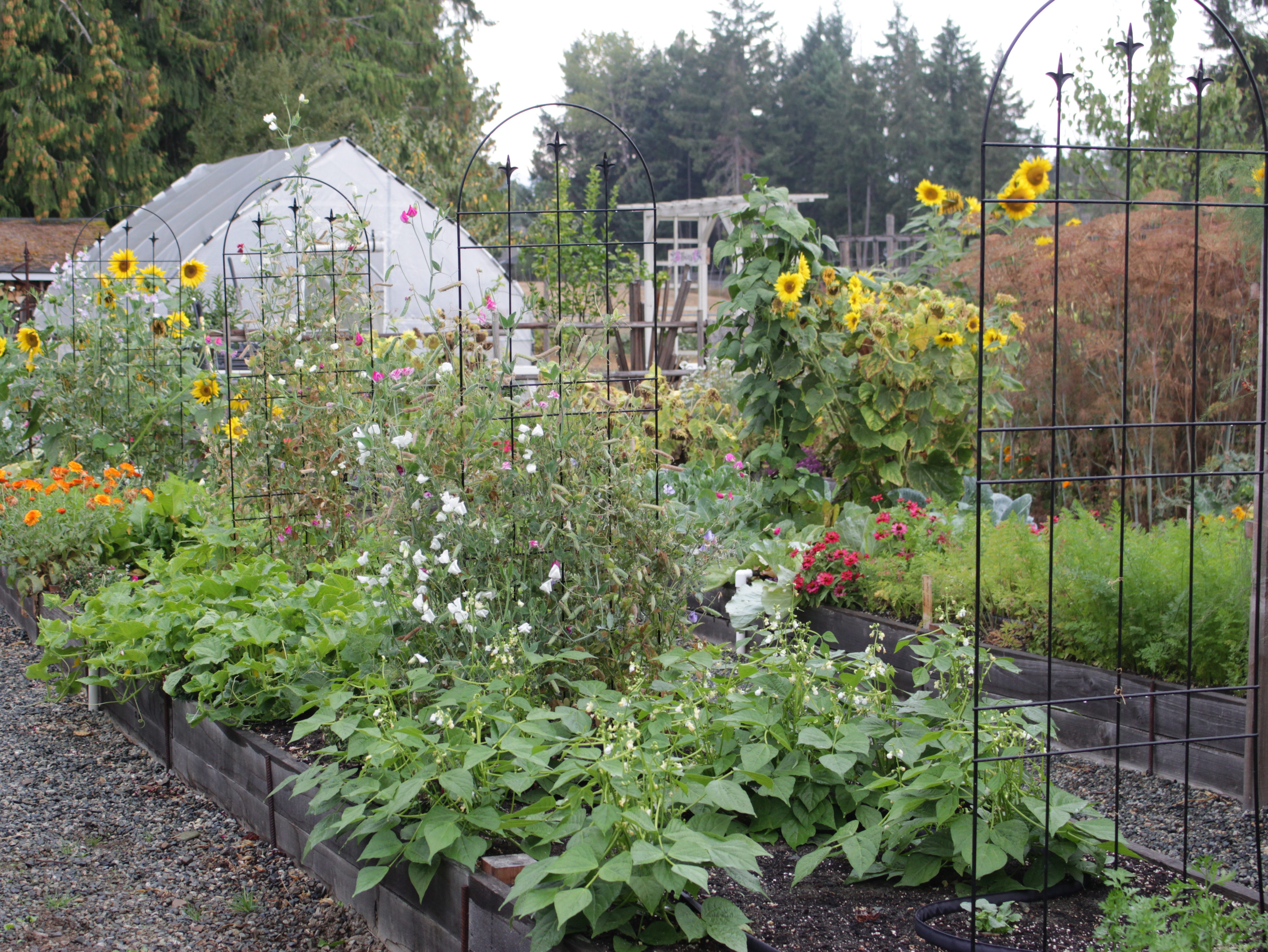
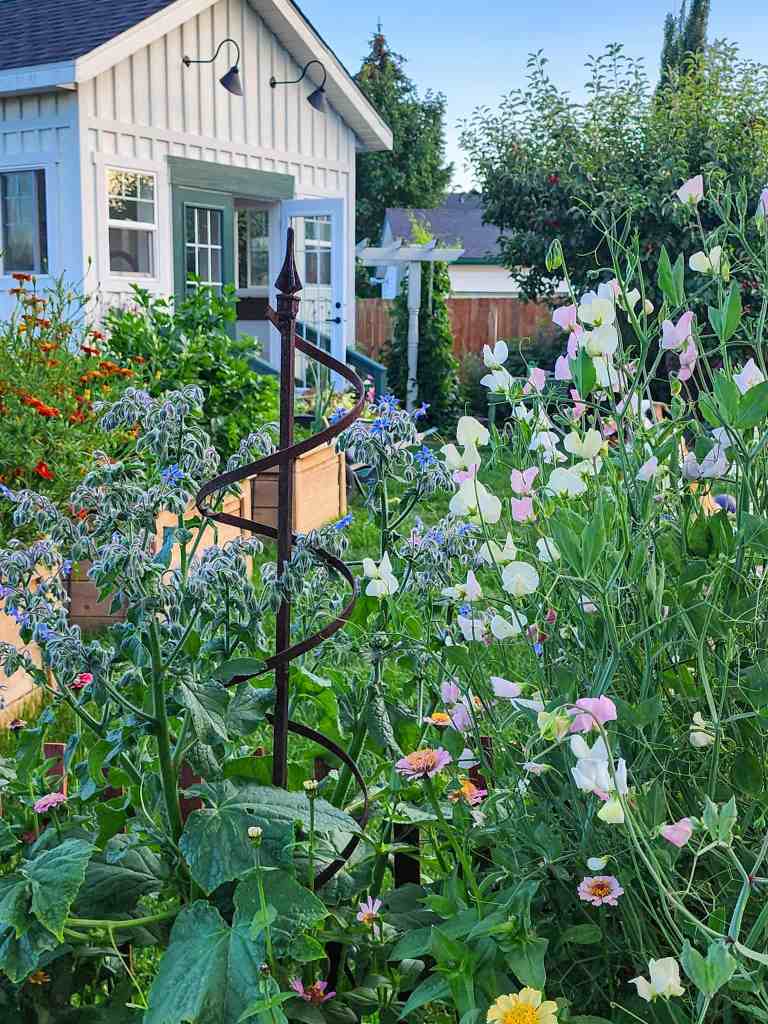
Create height and interest and more by growing up, going vertical with decorative yet functional structures. Add trellises, teepees, tuteurs, obelisks, cattle panel arches… to support your peas, beans, squash, tomatoes.
This gives you more growing space to grow more foods/flowers, and creates visual interest in your garden. Makes it a pretty and effective growing space.
Arches and pergolas add height, support for flowers or vegetables, and help draw the eye upwards and around the potager.
5. Add Visual Interest
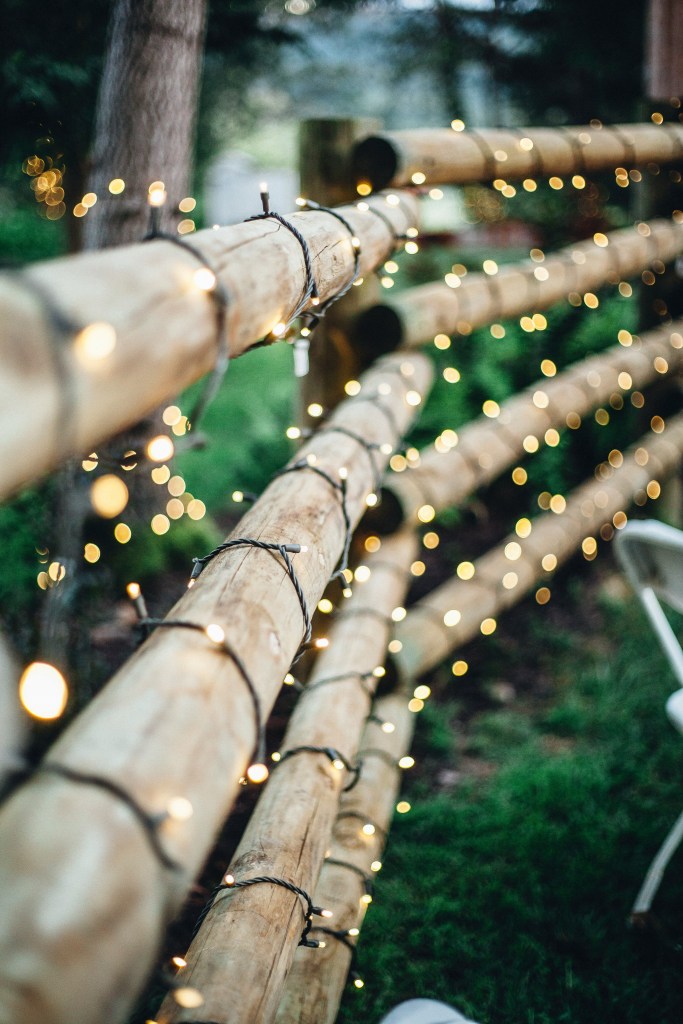
- Add string lights or mini lights.
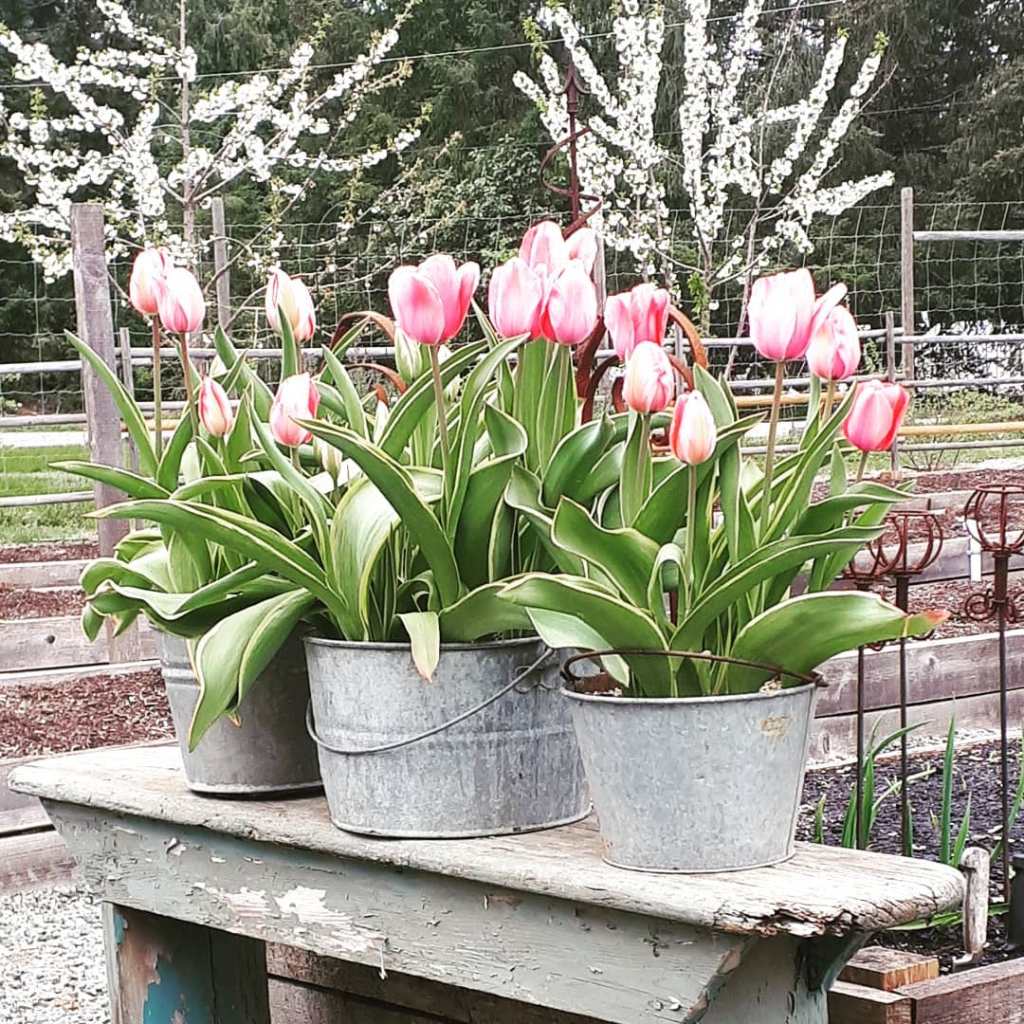
- Pots and baskets overflowing with flowers.
- Create a colour scheme with your flowers or your accent pieces.
- Add a feature plant – a tree with colourful foliage, flowers, or berries(Shubert chokecherry, maple, mountain ash), a plant with distinct flowers or foliage that can be seen from several vantage points in the garden (gunnera, calla lilies, Baby Blue spruce, large clump of rudbeckias, tall hollyhocks, climbing rose…)
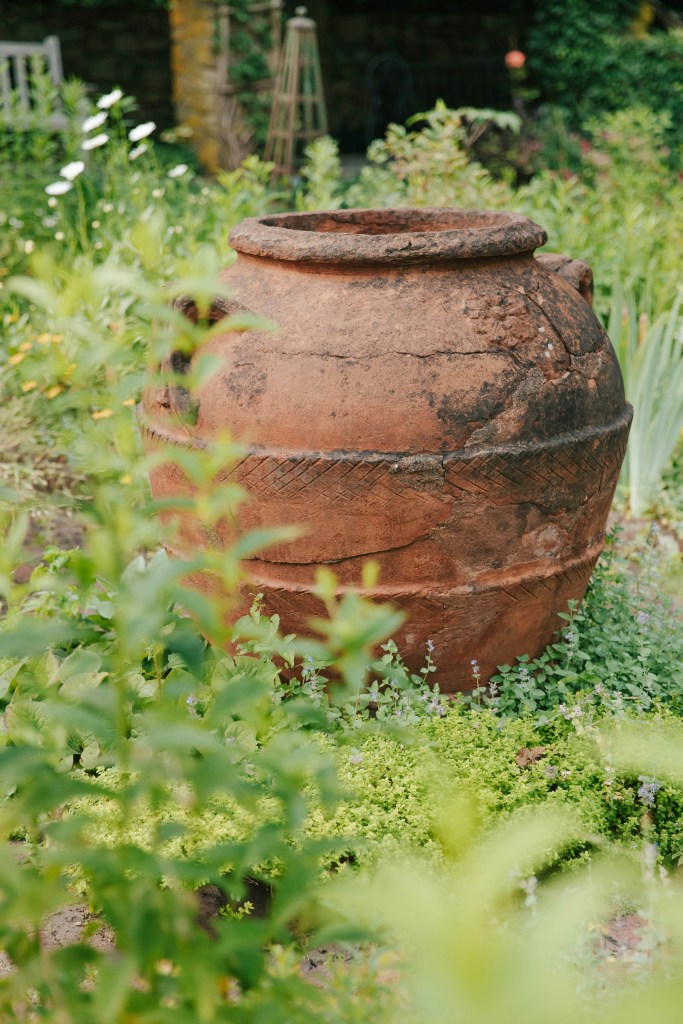
- Add a garden feature – statues, large interesting flower pot, pond, waterfall, birdbath, pottery, bench.
- Pathways with pretty border plants, pathways with edible border plants, clean edges on garden beds, metal raised beds, rusty metal garden edging,
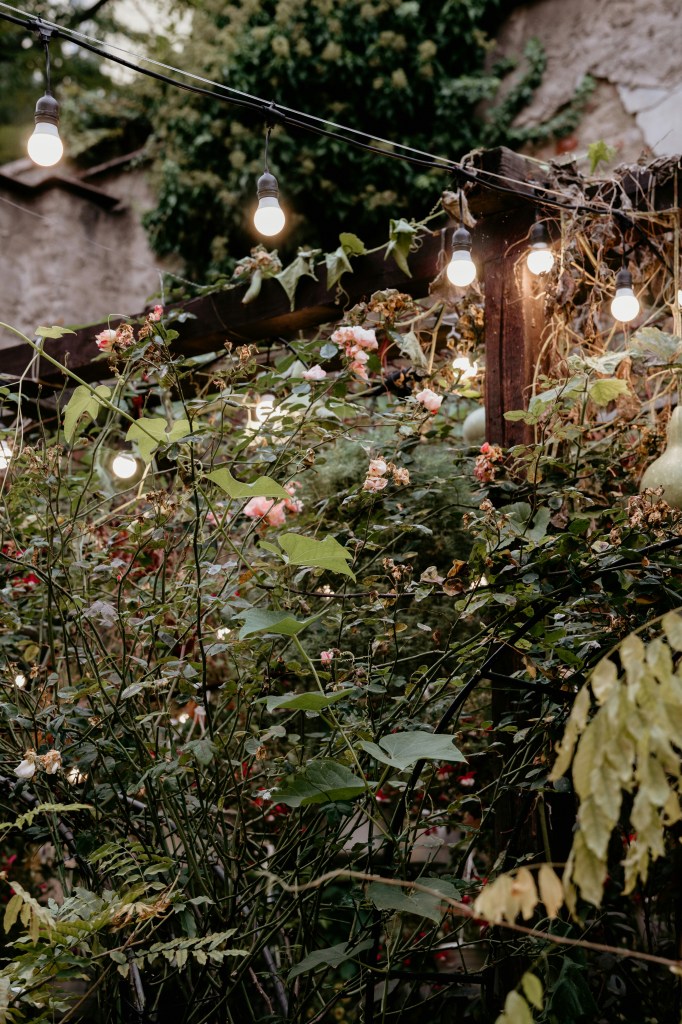
Add lights… ideally, on a timer to prevent light pollution for wildlife. This is becoming more pervasive in our urban areas. Read about ‘Dark Sky’ for more information.
Fall is the perfect time to start a new potager, if you have the planning done. Start lasagna beds now so they are ready to plant up in spring.


 The Marigold Potager - A Zone 3 Prairie Garden
Leave a comment