
We recently lost two mature Mountain Ash trees from our backyard, taking away all our privacy from the fairly busy road behind us.
That had us looking for nice, small trees to offer privacy in summer and pretty flowers in spring. Here are my favourite, top 10 favourite small trees ideas.

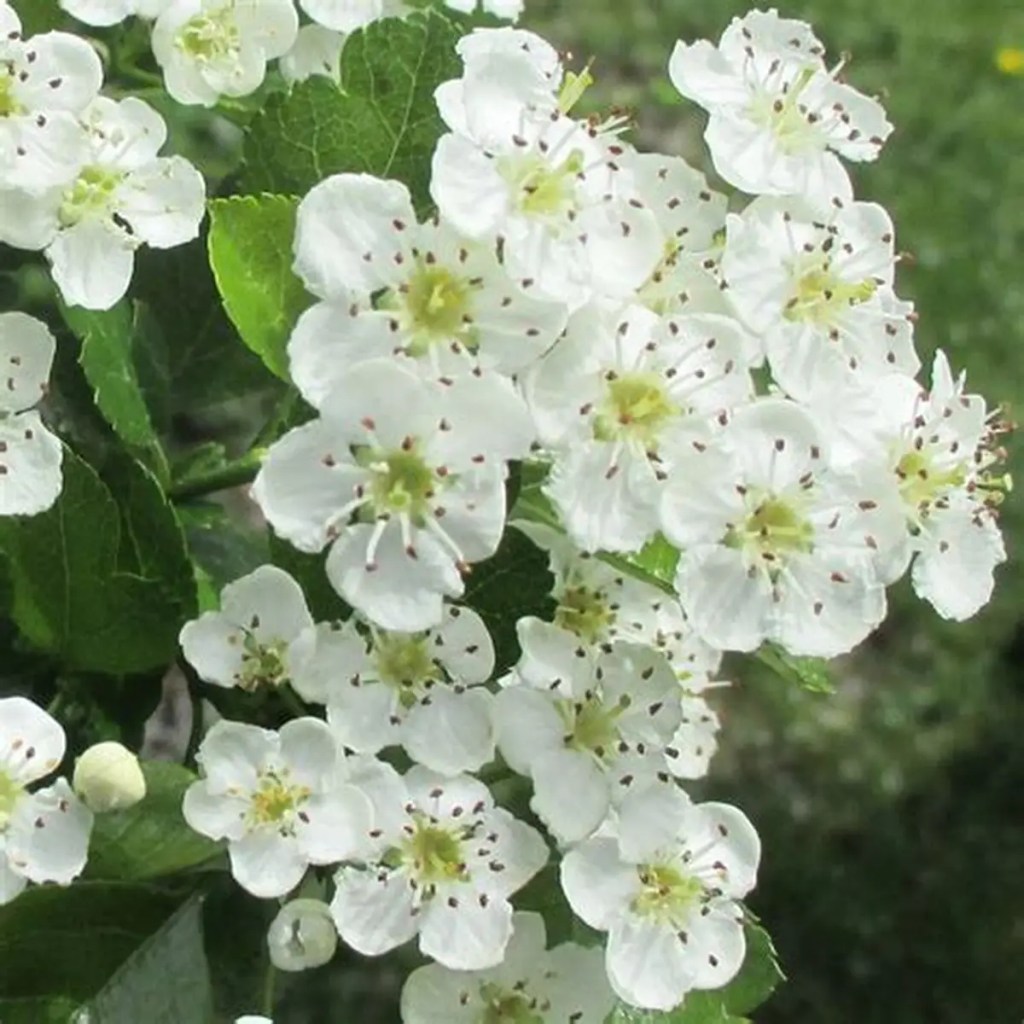
1. Snowbird Hawthorn
This tree will grow to be about 18 ft at maturity, with a spread of 12 ft. It has a low canopy. It grows at a medium rate. It is very adaptable to both dry and moist. It is hardy to Zone 3.
Snowbird Hawthorn is draped in stunning clusters of double white flowers held atop the branches in mid spring. It has forest green deciduous foliage. The serrated lobed leaves do not develop any appreciable fall colour.
- Ornamental Appeal: The stunning flowers and vibrant berries of the Snowbird Hawthorn enhance the aesthetics of your garden, providing year-round visual interest.
- Wildlife Support: This plant serves as a vital food source and habitat for birds and beneficial insects, promoting biodiversity in your garden.
- Low Maintenance: With its natural resistance to many pests and diseases, the Snowbird Hawthorn requires minimal upkeep, making it ideal for busy gardeners.
- Erosion Control: Its robust root system helps stabilize soil, preventing erosion and contributing to a healthier ecosystem.
- Cultural Significance: Beyond its physical attributes, the Snowbird Hawthorn symbolizes protection and strength in various cultures, adding a layer of meaning to your garden.
I really, really wanted this tree, but the last, lonely tree at the nursery was in super rough shape, with hardly any branches… so no hawthorn… yet.
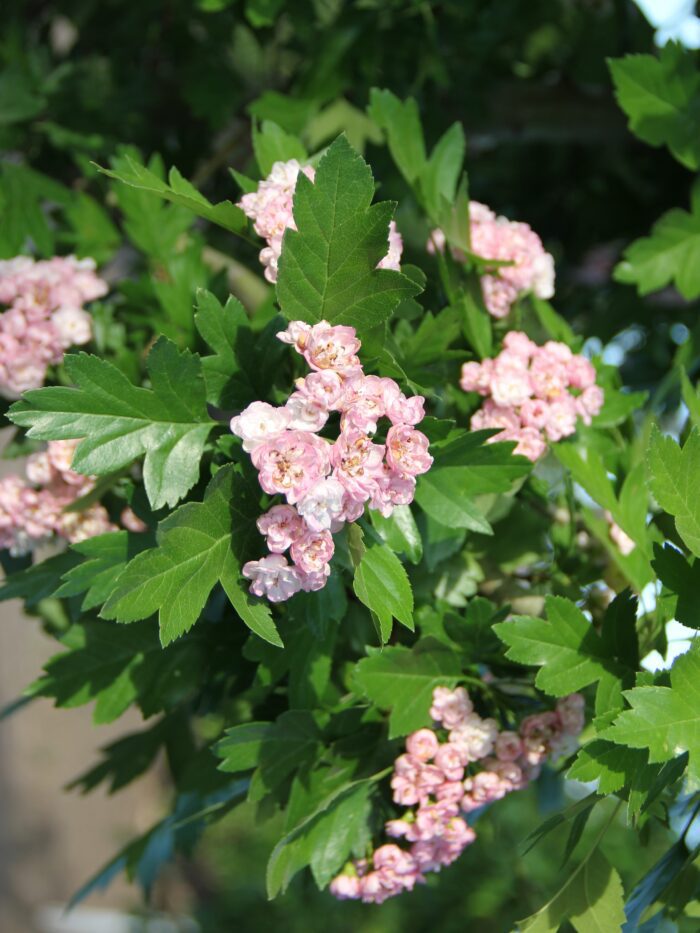
If you are looking for pink flowers, the Toba Hawthorn will fit the bill perfectly.
A smaller tree with dark green, glossy leaves with fragrant, double pink flowers in late spring that turn to white, and are followed by red haws in the fall. Attracts birds.

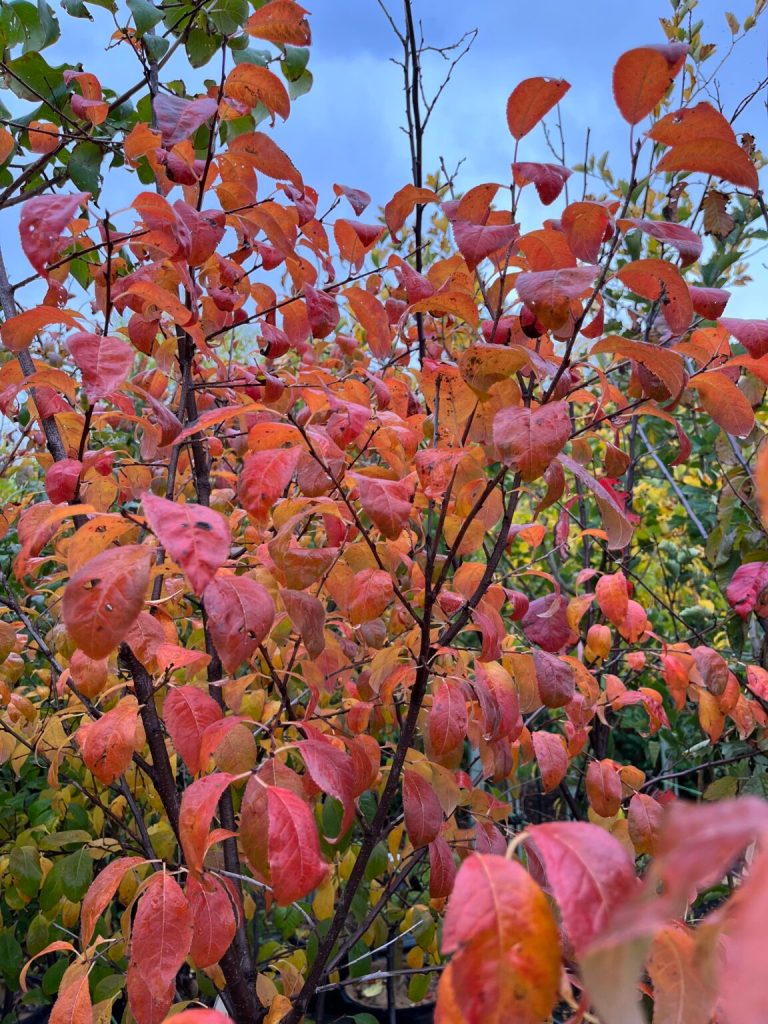
2. Muckle Plum
This small tree gets 12 feet tall and 9 feet wide, hardy to a Zone 3. The Muckle Plum is an excellent option for gardeners looking to create a year-round visual interest in their landscapes. It is particularly suited for planting in visible areas where its seasonal changes can be appreciated.
An enchanting small accent tree, celebrated for its show-stopping rose pink blooms that burst forth from vibrant red buds before the leaves appear. As the seasons change, this tree continues to captivate with its dark green glossy leaves that transition to a striking orange-red in fall, providing a colorful display that enhances any landscape.
- Ornamental Appeal – Muckle Plum is covered in stunning clusters of lightly-scented hot pink flowers along the branches in early spring, which emerge from distinctive cherry red flower buds before the leaves. It has dark green deciduous foliage. The pointy leaves turn an outstanding orange in the fall. The smooth black bark adds an interesting dimension to the landscape.
- Low Maintenance – This is a sterile tree that never has fruit.
- Conditions – This tree should only be grown in full sunlight. It does best in average to evenly moist conditions, but will not tolerate standing water. It is not particular as to soil type or pH. It is highly tolerant of urban pollution and will even thrive in inner city environments.
This was my personal number one pick, had to have it. Got one! It was more mature than we wanted to pay for, but was the last one at all three nurseries.


3. Gladiator Ornamental Crabapple
The Gladiator Crabapple is a striking columnar tree that packs dramatic flair into tight spaces. This vertical standout boasts glossy bronze-purple foliage that maintains its rich hue all season, forming the perfect backdrop for its spectacular spring performance.
It has an upright form, is 18 feet tall and 8 feet wide at maturity. Ideal for narrow spaces. Hardy to a Zone 2
When spring arrives, watch as rose-pink buds erupt into fragrant soft pink blossoms that smother every branch. The floral show gives way to a bounty of deep purple fruits that persist into winter, creating eye-catching contrast against the snow while feeding hungry birds.
- Exceptional disease resistance, somewhat drought tolerant once established.
- Four-season visual impact – Fragrant pink flowers in spring, bronze purple foliage in summer, fall coloured foliage in autumn, small reddish purple fruits in fall and winter.
- Wildlife-sustaining fruits in fall and winter.
- Low maintenance.
I wanted the white one below, hubby wanted this one, so we got this one. Both are beautiful, both are amazing. Cannot say that I do not compromise ; )


4. Spring Snow Ornamental Crabapple
Spring Snow will grow to 25 feet tall and 15 feet wide at maturity. It is hardy to a Zone 3.
Spring Snow Crabapple explodes with fragrant, white flowers in early to mid-spring, accenting pretty, shiny emerald-green leaves. Fruitless, this cultivar is perfect for those who want the beauty of a crabapple without the mess of fallen fruit.
Spring Snow Flowering Crab is a deciduous tree with a narrowly upright and columnar growth habit.
- Ornamental – white flowers in spring, deep green leaves in summer that turn yellow in fall. It does not make fruits.
- It is highly tolerant of urban pollution and will even thrive in inner city environments.
- Has excellent resistance to fire blight.
I really wanted this one, hubby did not. Though it has no fruits, it does not have the lovely summer and fall foliage that he loves.
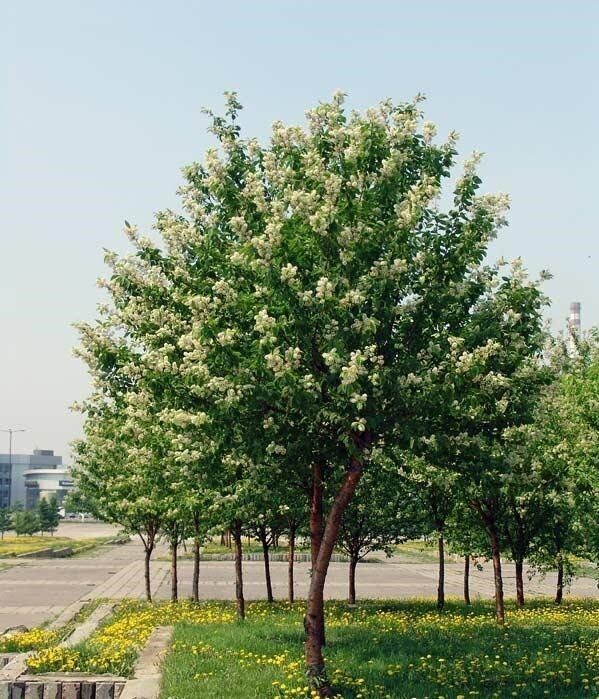
5. Ming Amur Cherry
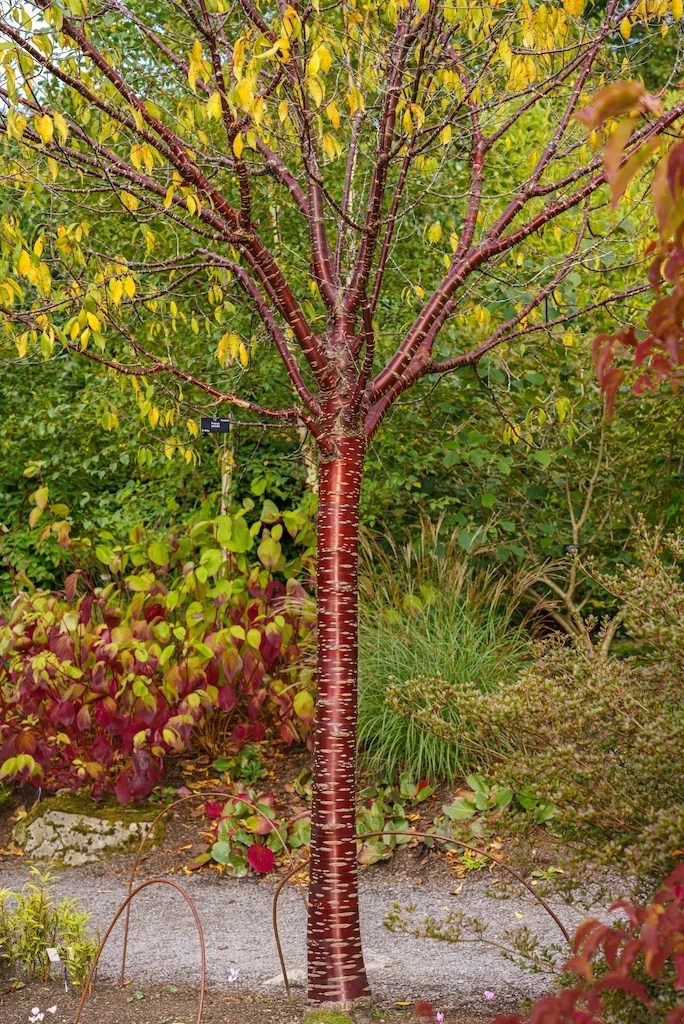
The Ming Amur Cherry is just a bit bigger than the others at 25 feet tall and 15 feet wide. Still a smaller tree, will fit well into most yardscapes. Is hardy to a Zone 2.
A spectacular dwarf accent Ming Amur Cherry tree with a uniformly upright growth habit; panicles of white flowers in spring, good fall color, and radiant reddish-bronze bark, very showy in winter; best in full sun and well-drained soil; resistant to frost cracking
Ming Amur Cherry is a landscape gem, featuring a strong central leader and evenly spaced branching that creates a handsome silhouette. This tree boasts limited fruit, putting the focus on its overall aesthetic charm.
Adding to its appeal, Ming showcases exfoliating bark, adding a unique texture to its visual allure. Notably, Ming is resistant to frost cracking, ensuring both durability and enduring beauty.
- Amur cherries have long been one of the most popular, most wanted trees in our cold winter yardscapes. That gorgeous copper bark is as desirable as the peeling bark of some of the best maples.
- It is a great tree for attracting birds to your yard.
- White flowers in spring, small black cherries in summer to attract and feed the birds.
I had not even thought of this tree, but am so glad that I saw it, found it, and we now have it. The bark is the main feature of this tree. It is gorgeous! I am so excited to see it grow.
6. Korean Maple
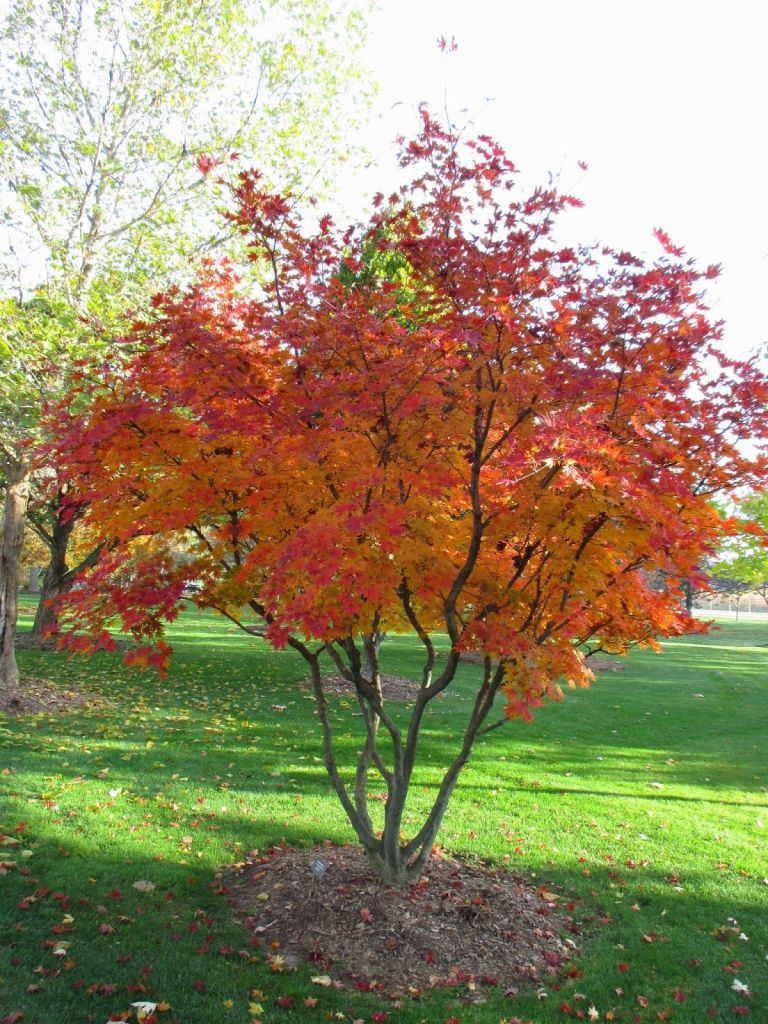

Do you love the delicate exotic look of the classic Japanese maple trees? Were you also bummed to learn they can’t survive Alberta winters? Well we have great news… There’s now a cold hardy maple variety with all the charm of the coveted Japanese maple. Hailing from the Korean mountain ranges this distinctive little beauty sports delicate textured leaves, striking fall foliage, and the character exotic shape and size we all know and love.
This maple grows 15-20 feet both tall and wide. It has inconspicuous reddish-purple flowers appear in clusters in early spring, followed by winged seeds that mature in fall, adding winter texture.
It is so beautiful. When I worked at Hole’s Greenhouses, in St. Albert, we would tell people to expect some tip damage after winter. This will not kill or damage the tree itself, but you would have to (likely) do a bit of pruning in spring, to get rid of the dead tips that did not survive our harsh winters.
Small tree with uniquely dissected leaves. Foliage emerges red in spring, changing to green for the growing season. Purple samaras in summer. Fall foliage is stunning mix of yellows, oranges and reds. Slow grower.
- A Resilient Survivor – Native to northeastern China, Korea, and the Russian Far East, the Korean Maple has adapted to survive cold winters and harsh conditions.
- More Than Just Fall Color – While known for its fall foliage, the Korean Maple also boasts attractive peeling bark that adds winter interest to your garden. The bark exfoliates in thin, papery strips, revealing a cinnamon-colored inner layer.
- Natural Bonsai Appeal – The Korean Maple’s smaller stature and delicate branching make it a popular choice for bonsai enthusiasts. With proper care and pruning techniques, it can be trained into a miniature masterpiece.
I want this tree. That is all.
7. Green Wall Spire Flowering Crab
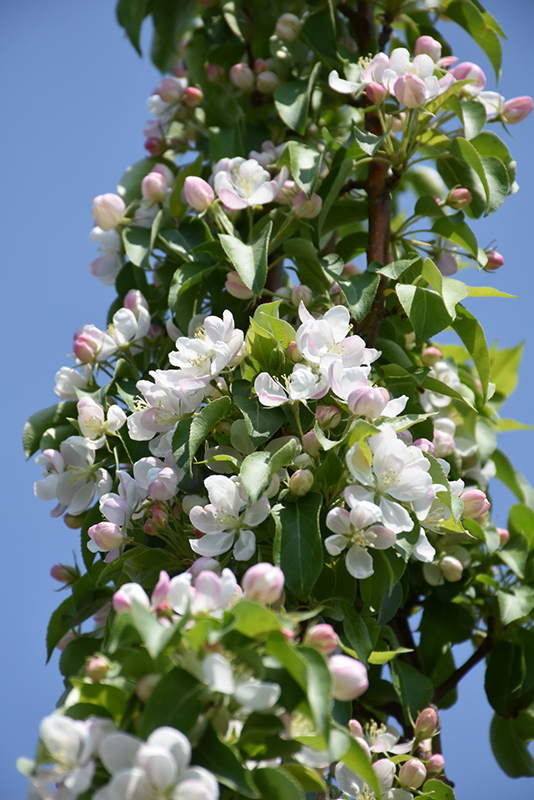
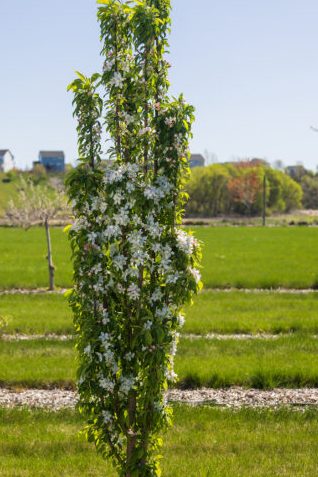
Very columnar at 20 feet tall but only 6 feet wide. Like a Swedish Columnar Aspen, but way better. Hardy to a Zone 3.
Upright columnar form with glossy green foliage. Produces fragrant white flowers in spring followed by small red fruit. Great as a screening tree or for small yards.
A beautiful and hardy cultivar with a narrow columnar habit; covered with abundant white blooms in spring; tiny red fruit is small, persistent, and adds ornamental value for fall and winter; an excellent vertical landscape accent; disease resistant.
- Green Wall Spire Crabapple is a columnar tree that forms a beautiful multi-seasonal structural element as a specimen or tall privacy hedge when planted en masse.
- In spring, pink buds transform into white flowers, later becoming red fruit that accents the green foliage in late summer before turning bronze in fall.
- The fruit remains on the tree, adding color and interest when the leaves drop for the winter months.
I was super close to getting this tree. We ended up getting the Ming instead, but I really love this tree. It may still happen…
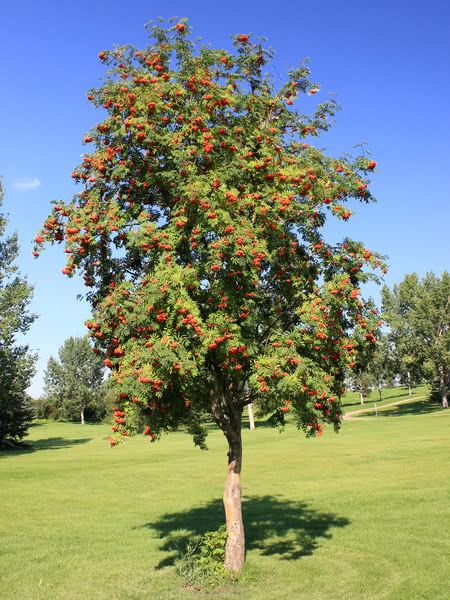

8. Showy Mountain Ash
A hardy, slow growing ornamental tree with nice uniform round shape. It grows to 15 feet tall and 10 feet wide at maturity. Hardy to a Zone 3.
After the attractive white blossoms fade in the Spring the red-orange fruit forms and hangs on through the Fall and Winter for extra interest through those cold prairie winters. It is native to many parts of North America. The dark green leaves turn red and orange in the fall.
I have a love of Mountain Ash trees. They were my dad’s favourite trees, so they always make me think of him and are thus also favourites of mine.
9. Pyramidal Mountain Ash
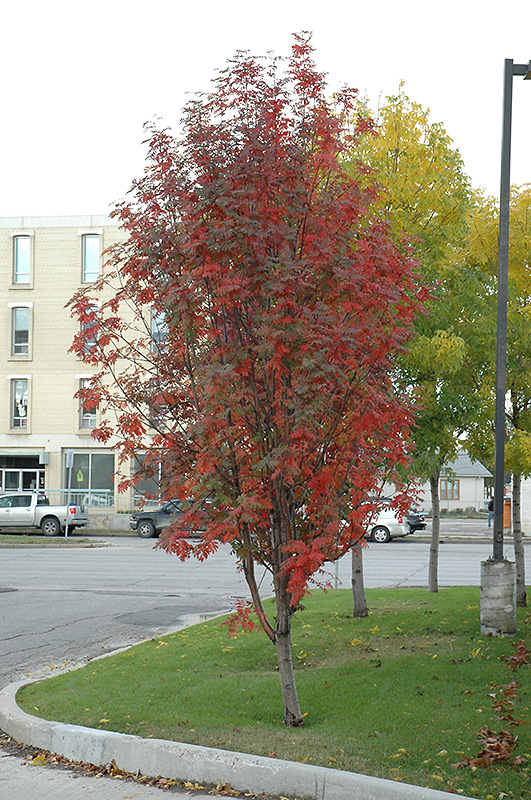
This Mountain Ash tree is slimmer, more columnar than the Showy. It ss 20 feet tall by 7 feet wide. Hardy to a Zone 3.
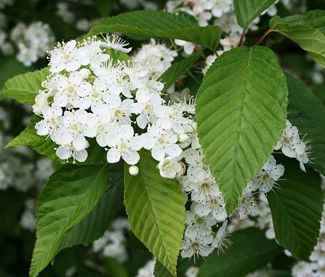
- Pyramidal Mountain Ash features showy clusters of white flowers held atop the branches in mid spring.
- The orange fruits are held in abundance in spectacular clusters from early fall to late winter. It has dark green deciduous foliage.
- The oval compound leaves turn an outstanding orange in the fall.
- The smooth olive green bark adds an interesting dimension to the landscape.


10. Midnight Shubert Chokecherry
Midnight is a superior chokecherry selection when compared to Bailey’s Select. It has a larger, more ornamental leaf and it suckers less. It grows to 25 feet tall by 20 feet wide. Is hardy to a Zone 2.
Rounded canopy of green leaves that mature to deep purple and turns red in fall. Showy, fragrant white flowers in spring followed by small black chokecherries in summer that attracts birds. Can be used for jams, jellies or wine. This variety does not sucker as much as the regular Schubert.
- An accent tree with green leaves turning a dark purple in late Spring.
- Produces panicles of small white fragrant flowers in spring followed by small black edible fruit that are loved by birds. Fruit can be used for jams or jellies.
- This is a fast growing tree and one of the few trees that offer Red/Purple leaves during the summer.
I have this tree and absolutely love it. I have never ever noticed a mess from the berries, so the birds must love it a lot.


 The Marigold Potager - A Zone 3 Prairie Garden
Leave a comment