Prepping your garden for a heat wave… or a droughty summer.
- Water – in the morning. If you have a timer, set it to go off at 4 or 5 in the morning.
- Water – the soil, not the plants. Give water at the base of plants, not on the foliage. This is especially important for squash and cucumbers to prevent powdery mildew and fungal issues. Use weeping hoses, drip systems, or water with a long spouted watering can right at the base of the plants.
- Mulch – a thick layer (3 to 6 inches) of organic mulch (bark, straw, compost) will keep moisture in and weeds out. Do not put the mulch right up to the base of trees, shrubs, plants, leave an air pocket to prevent fungal issues.
- Shade – provide shade, temporary or from a structure, from the afternoon sun for sensitive plants (for example, tomatoes will not fruit if temps are too high )
- Nutrients/Soil Health – Feed the soil, feed the plants, with a layer of compost or well-rotted manure before the heatwave hits. This will feed the plants each time you water, or when it rains. Do not fertilise during a heatwave, while plants are already stressed from dealing with the heat.
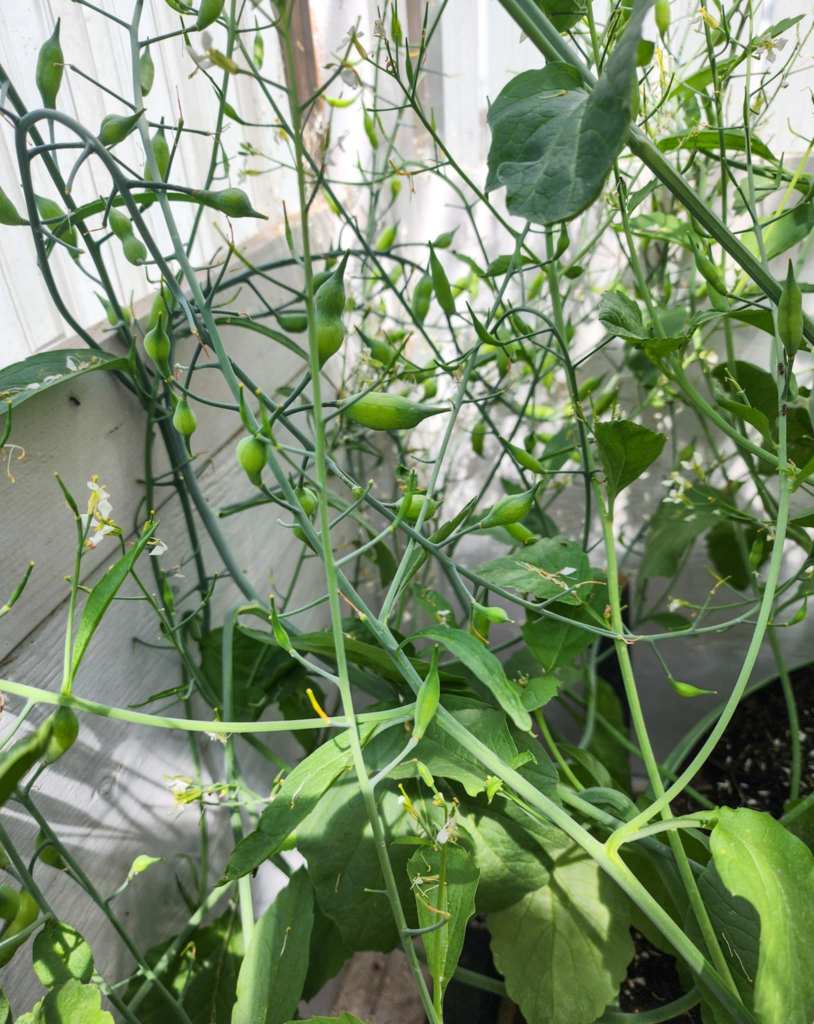
Sow some fall veggies…
- Greens like arugula, lettuce, kale, mustard, spinach
- Brassicas like broccolini, short season cabbages.
- Spring and winter radishes.
- Baby beets.
- Kohlrabi
- Turnips
- Cucumbers – if you sow the seeds asap, you can still get cucumbers this year. When we moved here almost exactly 3 years ago now (got here on July 17th), a few days after being here, I decided that I would take a chance and sow cukes in pots and see what happened. I was still eating those cukes in early October! I started 3 pots with a different variety in each. 2 of them did super well, the 3rd one was a bust. Glad I went with more than one variety ; )
- Bush Beans – most are 60 ish days so can still be sown and harvested if we have a long, lovely fall. I say go for it!
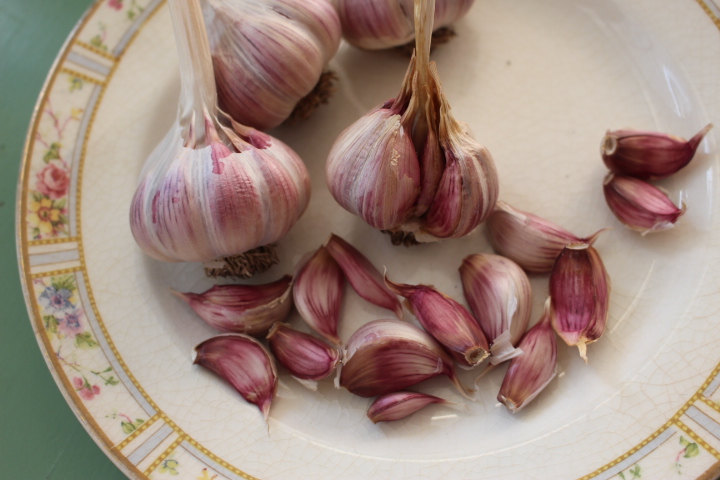
Start looking for where to get your planting garlic from! I mentioned in an earlier post that I only had about 1/3 of my garlic come up nicely this year (think they were planted too deep – will plant less deep and in a different bed this fall). So, I have already ordered extra planting garlic from a local garlic farm. Start looking now though as they tend to sell out fast.
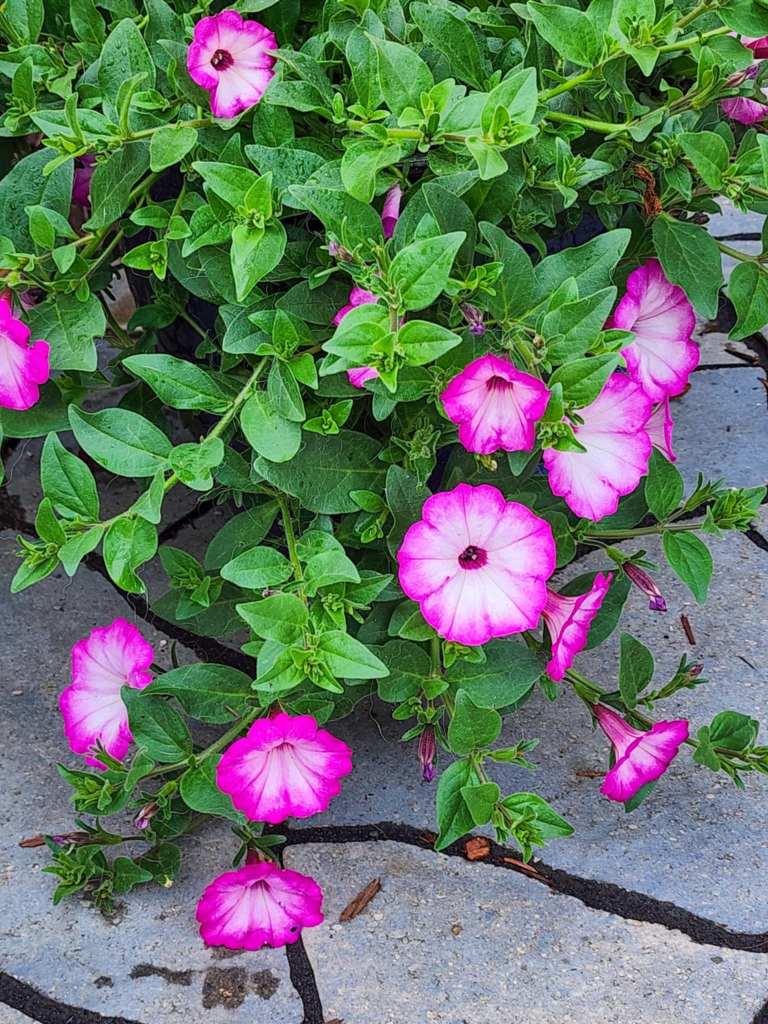
Feed your flower pots and hanging baskets weekly with a water soluble fertiliser. You can also sprinkle a bit more of slow release fertiliser on top of the soil to keep them healthy through till late summer.
Feed your gardens with a light layer of compost before you sow more seeds.
Feed your veggies with a water soluble vegetable fertiliser, liquid seaweed, or homemade ‘teas’. Foliar spray is most effective for the teas and seaweed, but you can also water the plants with these ferts.
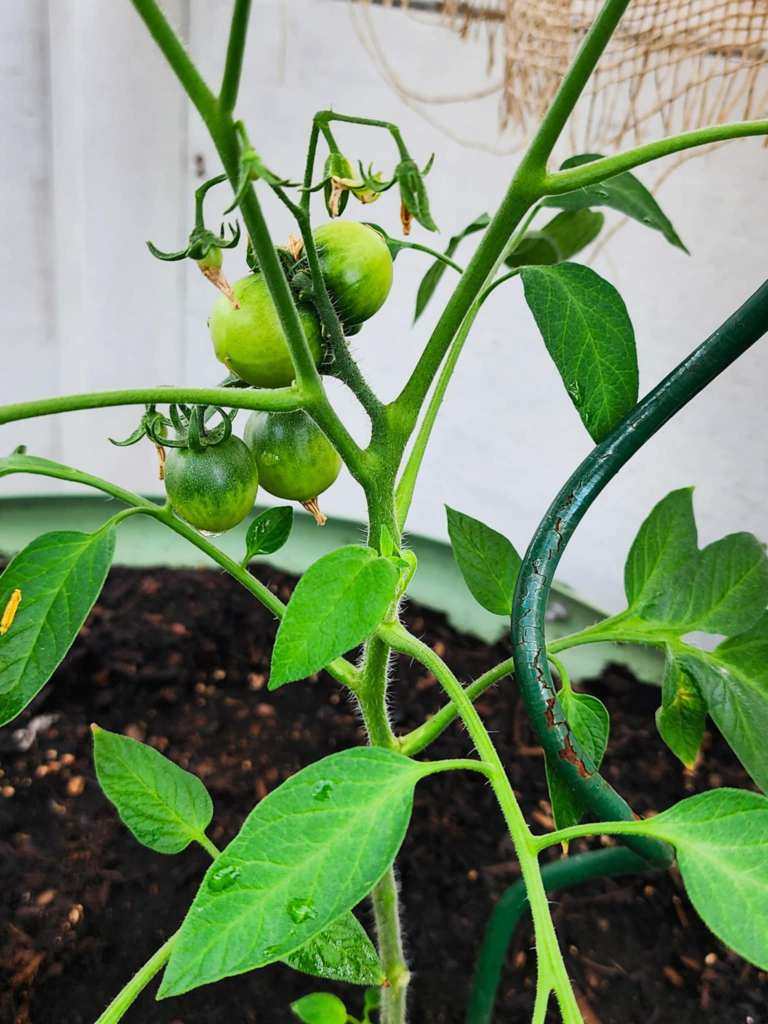
- Prune your tomatoes if they are getting too bushy.
- Give the cage or string a shake when you go by them to help pollinate the flowers.
Each year is so different in the garden. Some crops thrive one year and flop the next. You just never know which way it is going to go.
If you are new to gardening, do not be discouraged, as this is completely normal. Last year, I was eating tons of lettuce, carrots, and beets from my garden in mid July. The lettuce lasted well into August before it bolted. This year, all my lettuce has bolted already, is bitter and had to be pulled. I have sown new seeds every few weeks so will have baby greens to eat, but nowhere near as much or as prolific as last year.
Keep succession sowing going! We have months of growing yet to go : )

Sunflowers
A few years back, I had a conversation with a young man (9-ish years old) who has been growing and studying how to grow really great sunflowers. Here are some of his tips.
- Don’t waste your money on little packets of seeds, grab the ones that are in birdseed mixes and plant those instead. They grow great and make seeds that the birds actually love.
- The bigger the cup or pot that you pre-start them in, the bigger your sunflower will grow. This is a super great and useful tip. Applies to other plants, too. If your tomato (or whatever) starts are small or stunted, pot them into something bigger for their roots to have room to grow and the plant will get bigger and better in a matter of days.
- If you plant them out into poor soil, very well draining (sandy, gravelly soil) you will get big, fat, sturdy stems on your sunflowers that are really well rooted in the ground. Good soil tends to make them wimpy.
- Feed them with bunny poop for a great, organic fertiliser. They love it.
These tips are bang on! What a smart young man.

Here is a short video about how to save veggie seeds from your own vegetables. Really good video by Charles Dowding.

Christmas in July
Christmas in July for me means a bit of prepping, snipping, and drying. No crafting right now while you are busy watering, weeding, growing, and harvesting. No decorating or shopping, just a wee bit of time in your garden, deadheading and pinching, which you are doing anyways.
July is the perfect time to gather flowers and herbs for your Christmas crafting later on in the year, when the garden has been put to bed for winter.
Calendula – The more you deadhead these lovely blossoms, the more flowers it will make. Keep on harvesting!
Calendula has antiseptic and antibacterial properties, plus is soothing for your skin, which makes it one of the most used flowers for bath and body products. The flower petals are used for making salves, soaps, and balms.
Lavender – Beautiful in the garden, easy to care for, deer and bunny resistant, drought resistant, too… but best of all, lavender has that lovely soothing fragrance that makes it perfect for crafting. I love the English lavenders best for harvesting flower stems, either Hidcote or Munstead.
Use lavender flower buds to maker soap, sachets. bath salts, candles, wands, body butter, salves… So many things you can do with those super pretty, scented lavender blooms.
The very best time to harvest lavender is when it is still in the tight bud stage, before the blossoms open up.

Other than roses, the thing that I miss most from my zone 7 garden, is the rosemary. I had a 4 foot tall rosemary that was ripe for the picking at any time.
This year, I have 4 rosemary plants as I am hoping to make my neighbours all a rosemary wreath for a Christmas gift, or a mixed herbal wreath if I don’t have enough. They will be baby-sized wreaths, nothing like the ones I made before (in the picture above). Add some home grown garlic instead of a bow, a bit of sweet bay leaves or lavender sprigs, and you have a beautiful homegrown herbal gift to give.

Not enough herbs? Grow herbs to make small bundles of herbs, little ‘bouquet garni’.
- The classic French recipe is made with parsley, thyme, and sweet bay leaves. Chervil and tarragon can also be added.
- To make a bundle of Herbs of Provence, you would bundle up some sprigs of thyme, oregano, and savory.
- An Italian seasoning bouquet would contain basil, oregano, and rosemary, perhaps a bit of thyme and marjoram.
One more thing to make with herbs and flowers is a smudge stick. Here is a how-to for making a fall inspired smudge. Here is a spring smudge how-to, and a summer smudge, too.
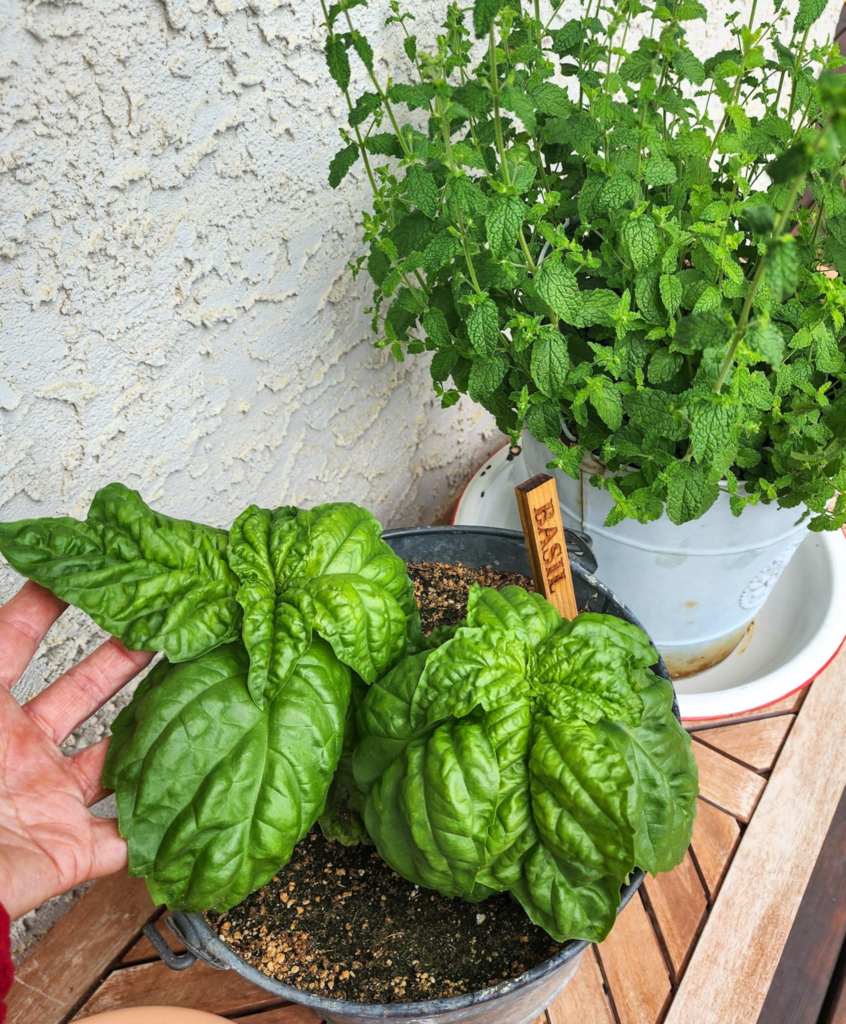
I just have to show you why lettuce leaf basil is my most favourite basil of all. Check out the size of these leaves. eh? Huge!

My mojito in training is actually not a mojito mint, but rather a strawberry mint. I swear, it actually smells like strawberries. Going to muddle this into my ‘bubbly water’ this evening.

Weeding. With all this rain, also comes the weeds. I try to run my hoe through the beds once a week to keep them from overtaking the world.
If you have a really weedy bed, sucking up all your time, you need to smother those weeds.
Knock the weeds down first and lay down a couple of sheets of newsprint (worry not, they use vegetable based dyes so are completely safe to use). Weight down the paper with grass clippings, straw, manure, or other organic material. This is all great material that breaks down throughout the season, feeding the soil while keeping weeds at bay.


 The Marigold Potager - A Zone 3 Prairie Garden
Leave a comment