
Did you know that pollinators are responsible for 1 out of every 3 bites that we eat on the daily. That is kind of mind blowing. They pollinate the flowers to make more fruits and vegetables. Without pollinators our food supply would collapse!
So, if you are adding flowers to your yard to attract and feed the pollinators, thank you!
A pollinator is a bird, animal, or insect that spreads pollen from male flowers to female flowers. Generally, they come to the flowers to collect pollen or nectar for food and while they are crawling about and going from flower to flower, the pollen is also getting moved from flower to flower.
Common pollinators are not just honeybees, bumblebees, or other native bees, but also hummingbirds, birds, butterflies, moths, hoverflies, bats, and even beetles, wasps and ants.
Feeding the pollinators couldn’t be easier… and gives you more flowers to look at!
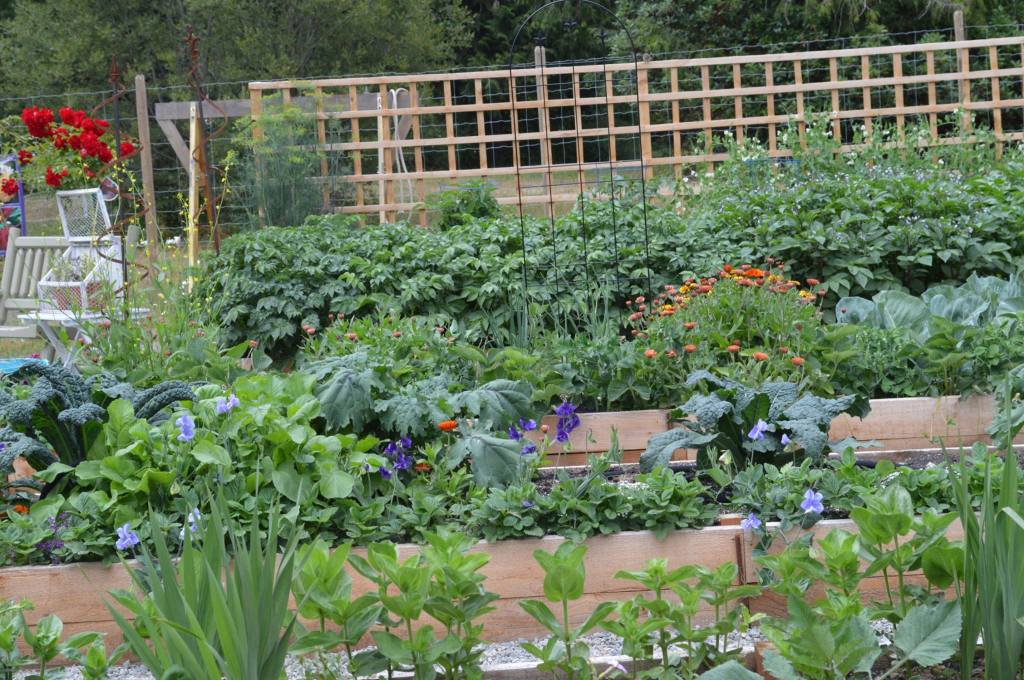
- Pop annuals into raised garden beds, in and amongst your vegetables.
- Grow plants for pollinators in pots, planters, and hanging baskets… on the patio, deck, around the garden.
- Make a pollinator strip garden where flowers bloom from spring till frost. Adding bulbs, annuals, and perennial flowers.
- Remove your grass and replace it with a meadow garden or flowering lawn seeds.
- Replace sod with perennials that are drought tolerant and pollinator favourites.
- Make a cut flower garden where you share the flowers with the pollinators.
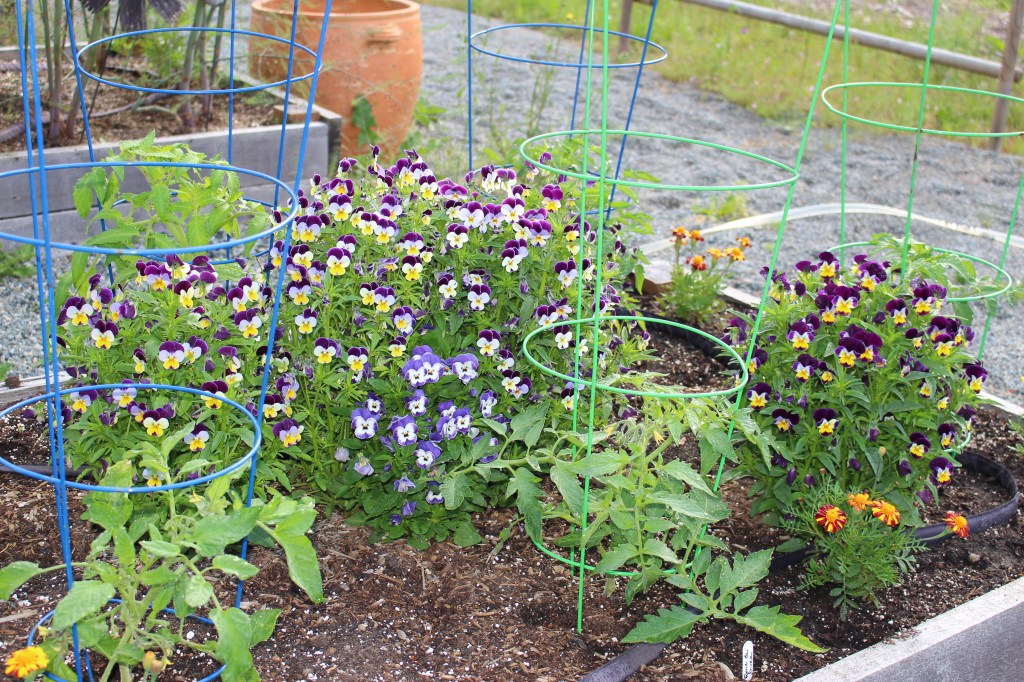
Friends of ours always used to say that they did not want to ‘waste’ good growing space on flowers in their potager/food garden. I found this a common theme when I first starting helping folks grow food.
When I talked to them about increased harvests that come with the pollinators, they slowly began adding flowers to their garden. They still kind of think more like farmers than homesteaders when it comes to growing food, but do now add a smattering of flowers.
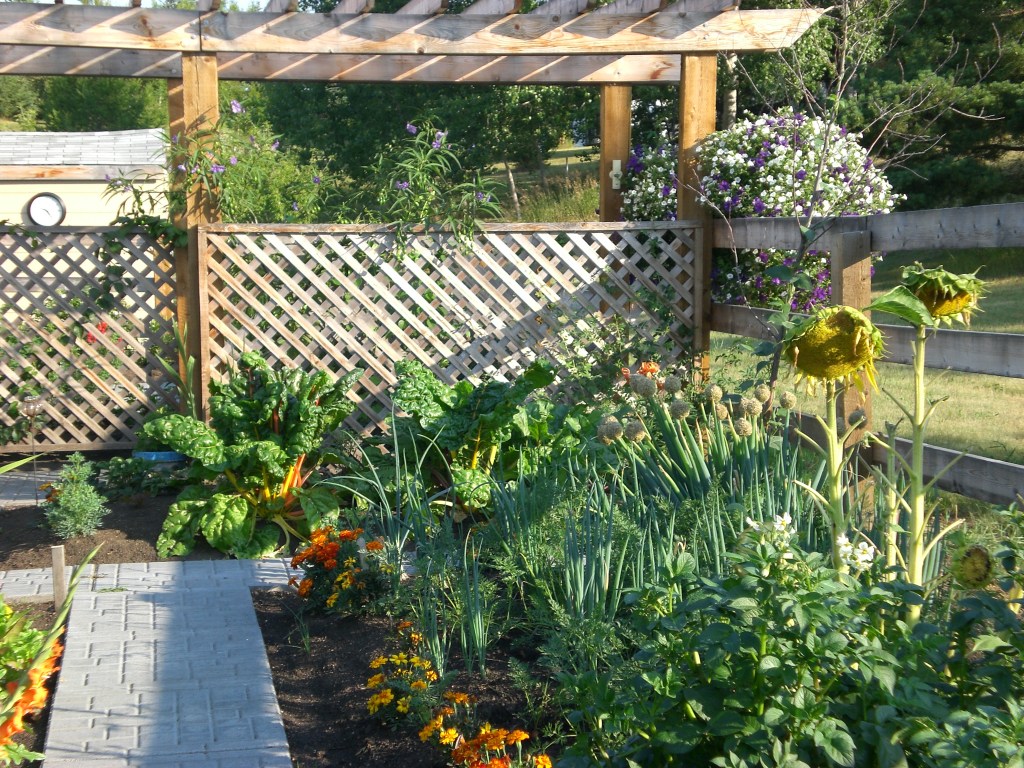
I started adding flowers accidently and, as it goes with most things, I learned a whole lot from that accident. I had such a large in ground garden (wide mounded beds) that I simply could not fill up with vegetables alone. I had planted up potatoes, peppers, tomatoes, chard, onions, corn, a huge dill patch, lettuces, all the things… and yet, still had plenty of open spaces.
So, I started tucking flowers in here and there. Adding borders of flowers. This is where my love of marigold borders began. Of course, I was hooked. I had pretty looking food beds with lots of colour, and bigger harvests came with the better pollination, too. I eventually learned about flowers attracting all sorts of beneficial insects that worked as organic pest control, too, but that all came with time.
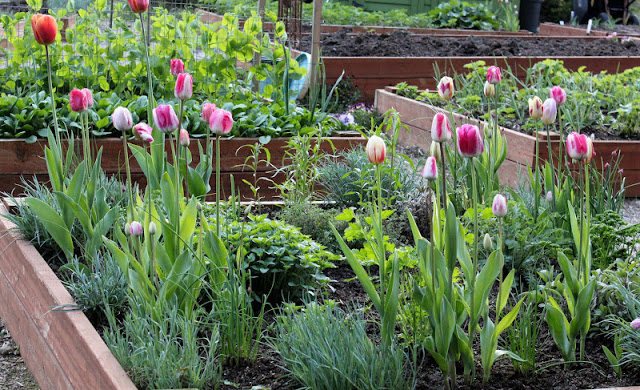
Things to think about…
- Try to have flowers through the seasons to feed the pollinators. From bulbs and flowering trees in early spring, to perennial and annual flowers from summer through fall.
- Keep it organic. No soap sprays, no chemicals on the lawn. Pests will be kept in check by the birds and beneficial insects that you attract to your gardens.
- Choose variety. Add tubular flowers, flowers made of clusters of little blooms, open faced daisy like flowers… something for everyone.
- Keep the flowers simple, when possible. Instead of flowers that are really poofy, pick simple flowers where the pollen is readily available to the pollinators. Many of the new, fancy looking flowers are sterile and will not be beneficial to your pollinators.
- Plant herbs, too. Pollinators love dill flowers, cilantro, borage, the flowers of oregano, marjoram, rosemary, and thyme.
- Bees and beneficial insects like white and purple flowers the very best.
- Choose native plants and/or local flowers.
Flower List
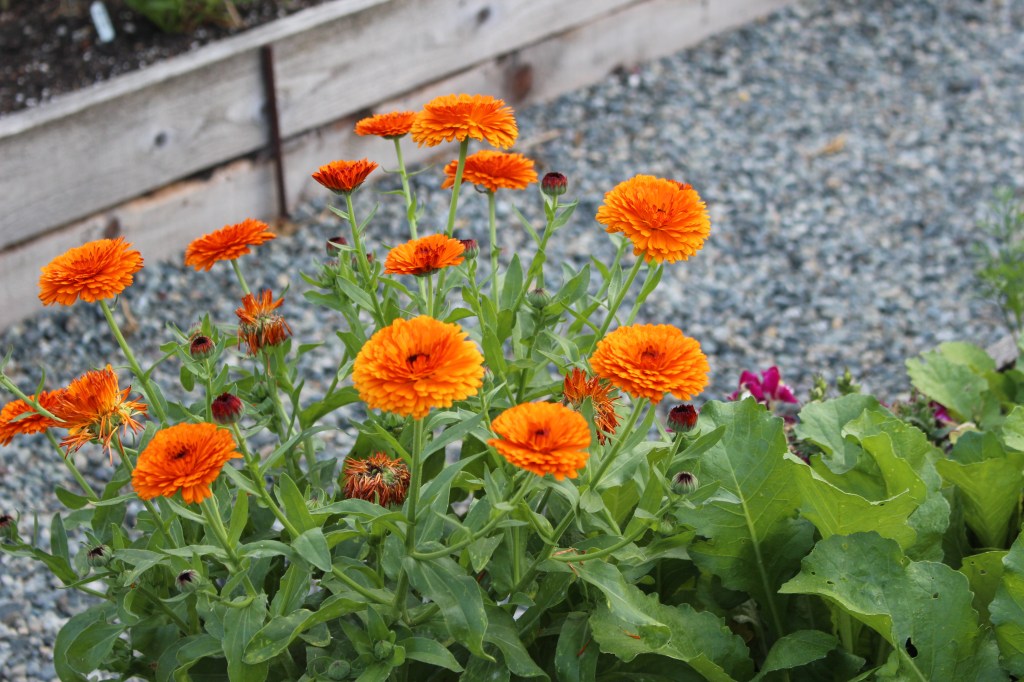
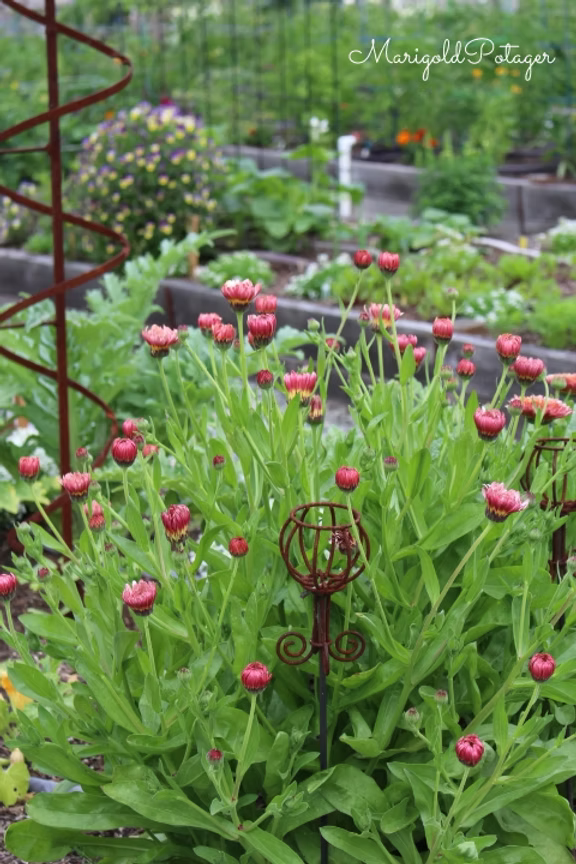
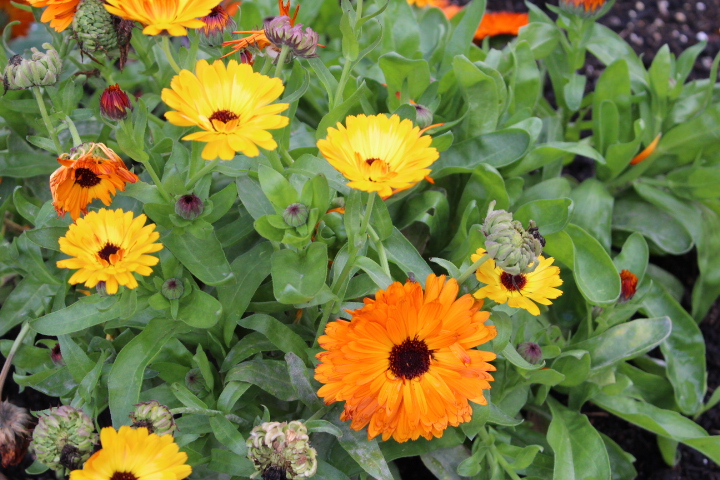
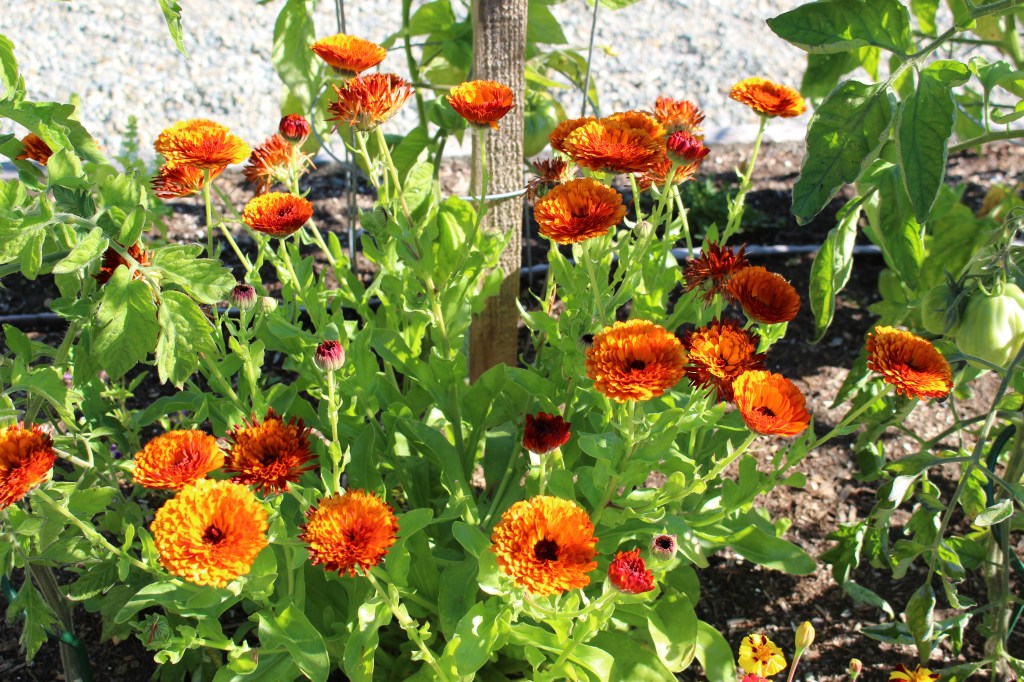
Calendula – Blooms from spring till frost. Bonus is that it self seeds readily so you usually only have to buy it once and then can transplant it from your garden to wherever you need it. I love growing marigolds in summer, but I let the calendula go like mad in spring and fall, as they thrive in cool temps while the marigolds do not. The petals are also useful additions to ointments, oils, soaps, and shampoos.
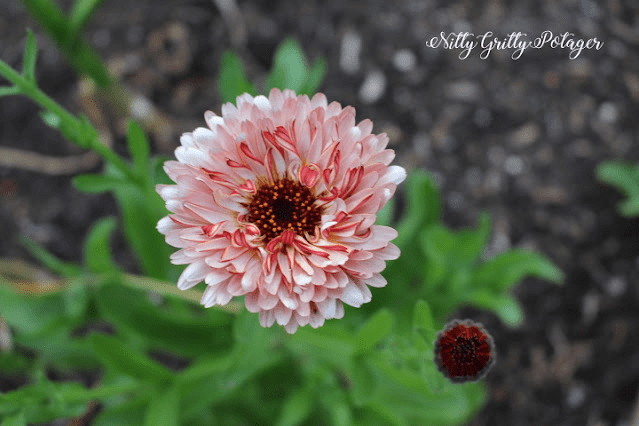
Calendula is usually sold in bright yellows and oranges but there is also a beautiful pink one available called Strawberry Blonde and a peachy pink one with bronze tips called Bronze Beauty. While you will not find the unique colours at your local greenhouse, calendula is super easy to grow from seed. Direct sow or prestart. Super easy and cool weather hardy. Oh, and the flowers close at night or on rainy days, are open in sunshine.
Attracts: Bees, butterflies, hoverflies and other beneficial insects. In addition to being an excellent plant for pollinators, calendula attracts beneficials like ladybugs, lacewings, and hoverflies for organic pest control.
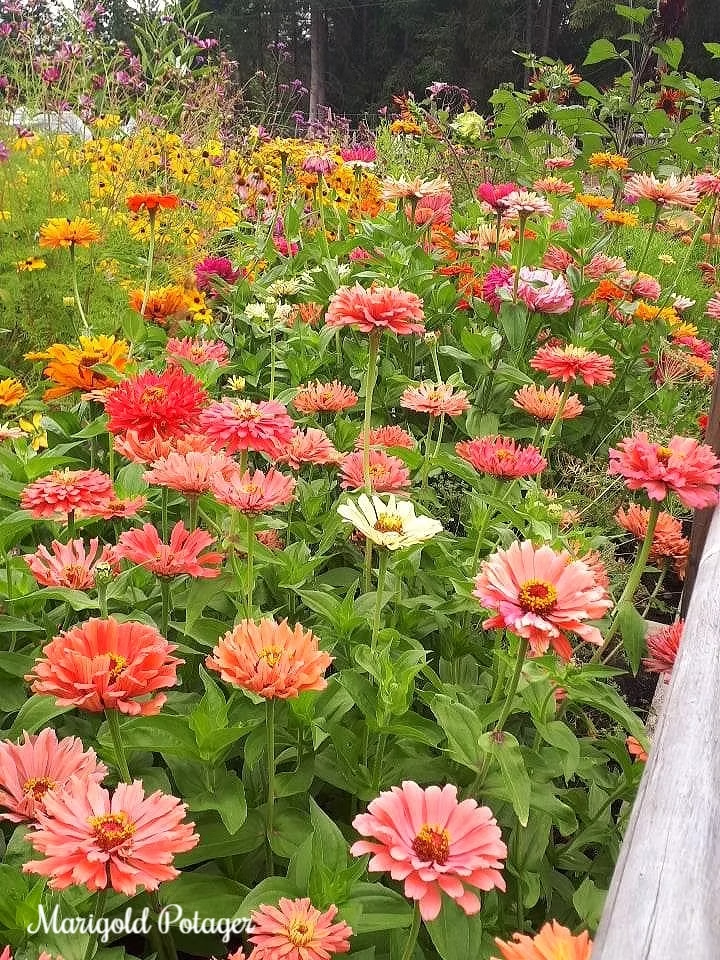
Zinnias – bloom from late spring through till frost, requiring very little deadheading. Can you believe it? Yet you can also harvest them for bouquets and they will just make more amazing branches full of blooms! Zinnias are super drought tolerant, work great in hot, sunny areas.
Attracts – Bees, butterflies, and hummingbirds.
The tall ones are best direct sown, can be tough to start indoors, though the shorter varieties start pretty easy indoors. Be careful with watering if starting indoors, they are very prone to powdery mildew. Direct sown zinnias will start to bloom in about 8 weeks. They are not frost tolerant. Sow the seeds a week before your last frost.
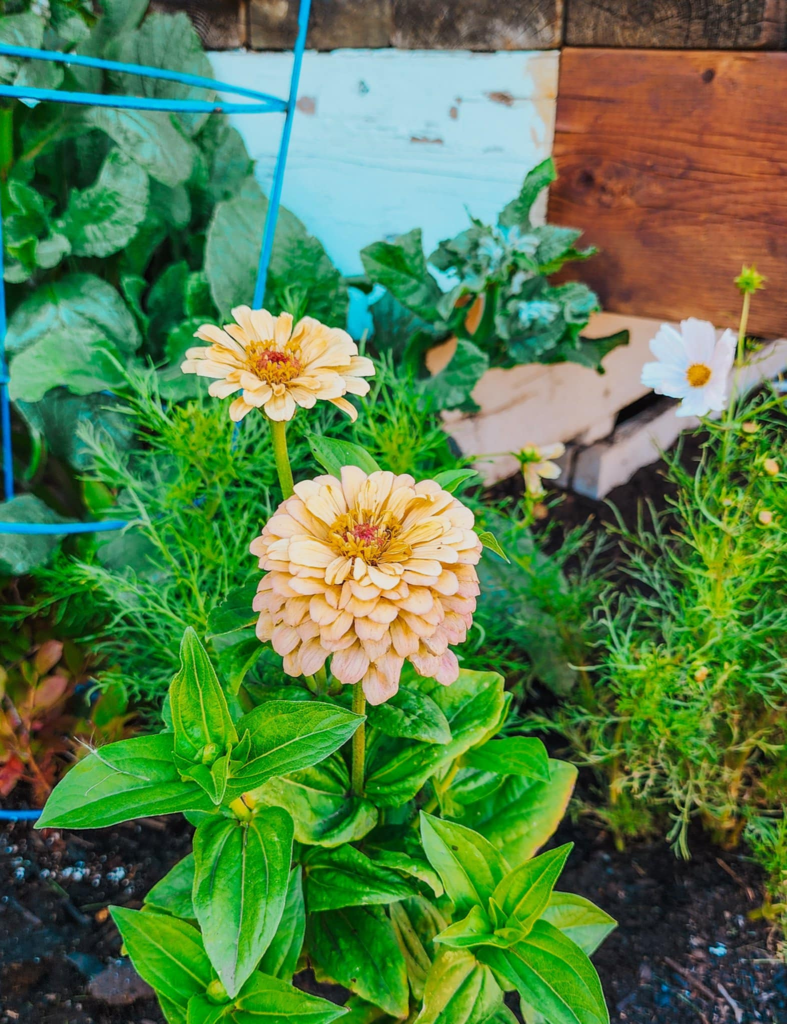
See how to grow zinnias here and how to save your zinnia seeds to plant out next year. Zinnias are my most favourite annual of all.
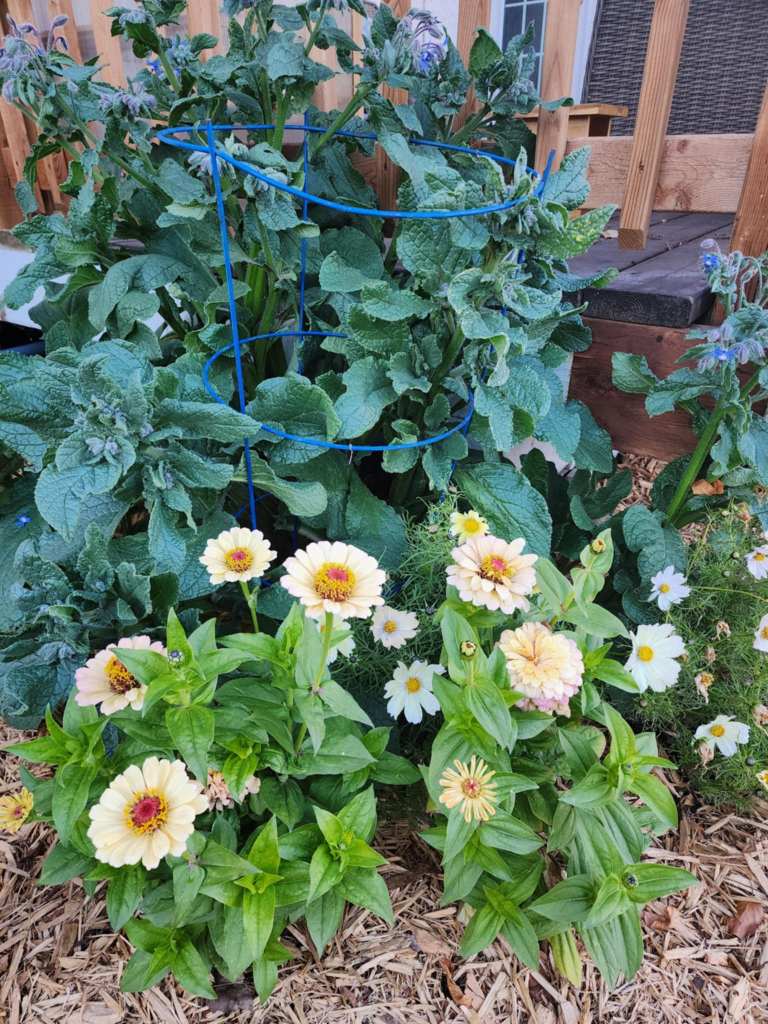
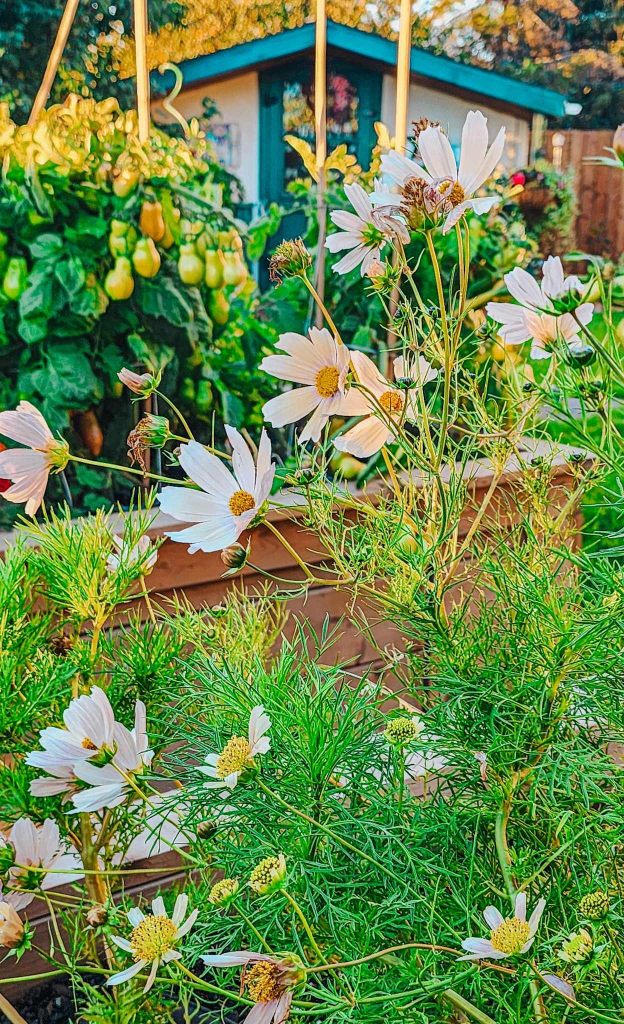
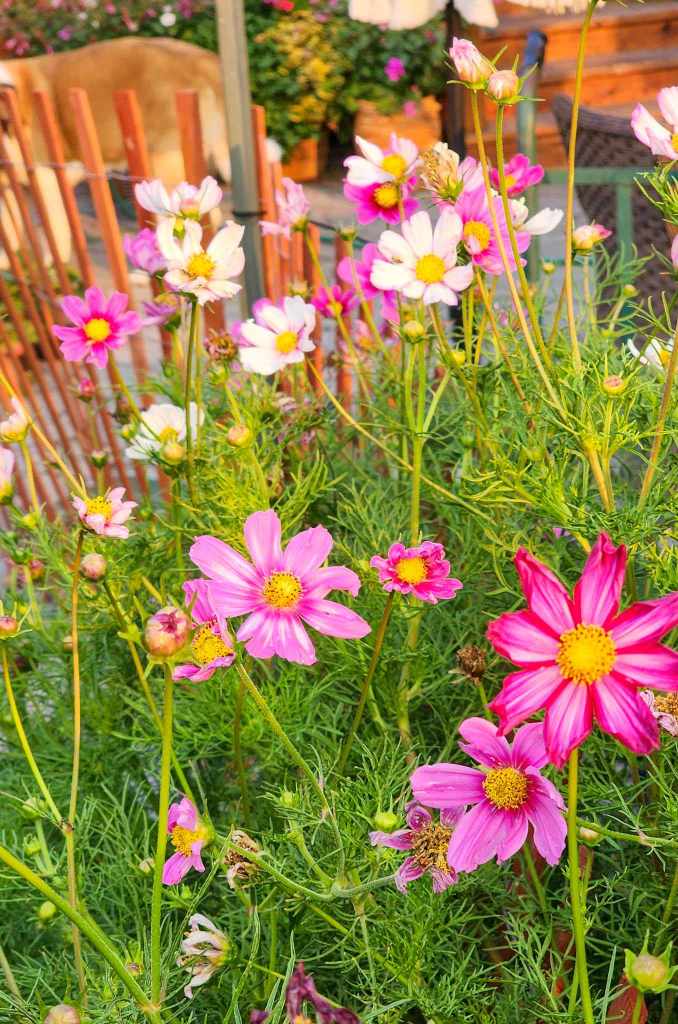
Cosmos – One of my must grow flowers. Come in whites, pinks, purples, reds, oranges, pretty much any colour you like! You can get short knee high varieties or 5 foot tall varieties! Lots to choose from for every garden and every situation. Bloom from late spring until frost.
Attract – Birds, bees, butterflies, moths, and even hummingbirds.
Easy to grow, just scatter the seeds on the soil in early spring, after the danger of frost has passed, and you will have flowers 8 weeks later. Drought-tolerant and likes poor soil! Do not feed.
See here for more information about growing cosmos.
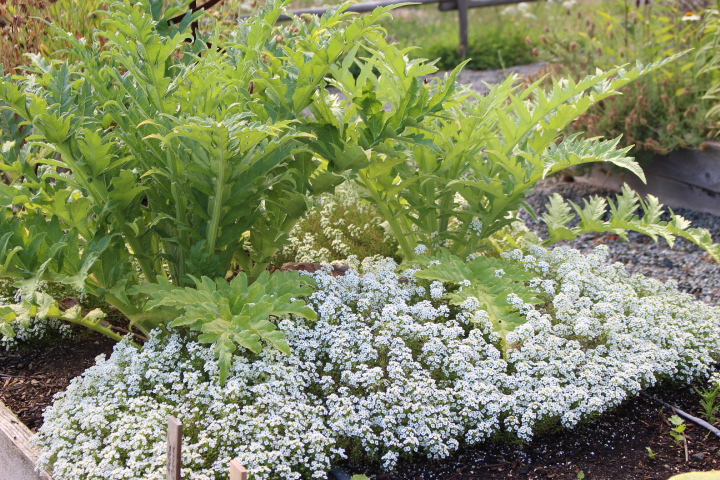
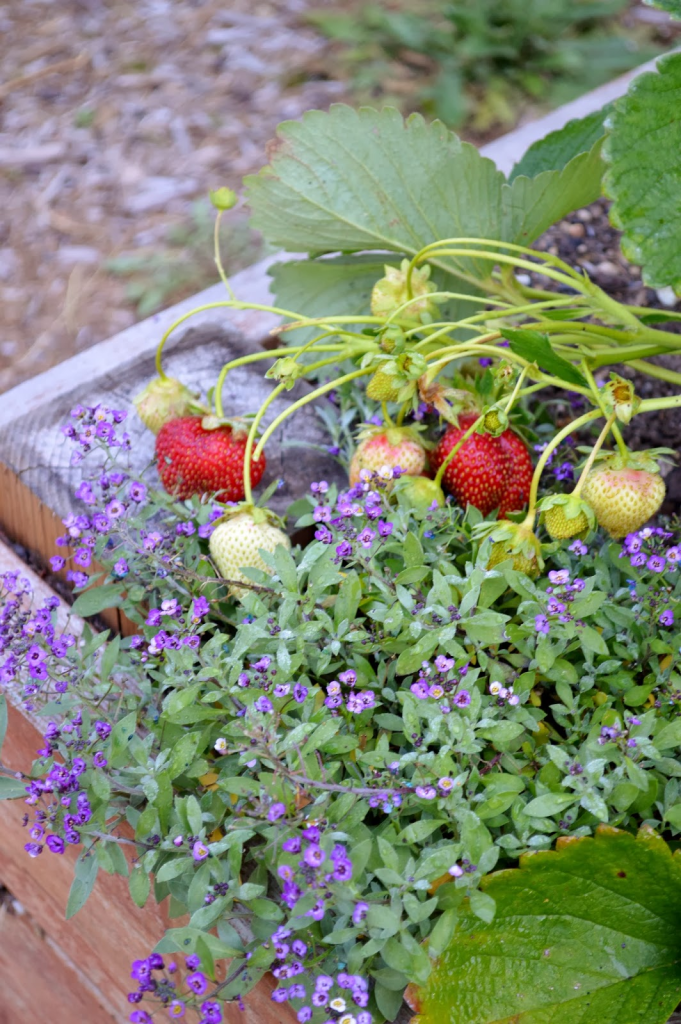
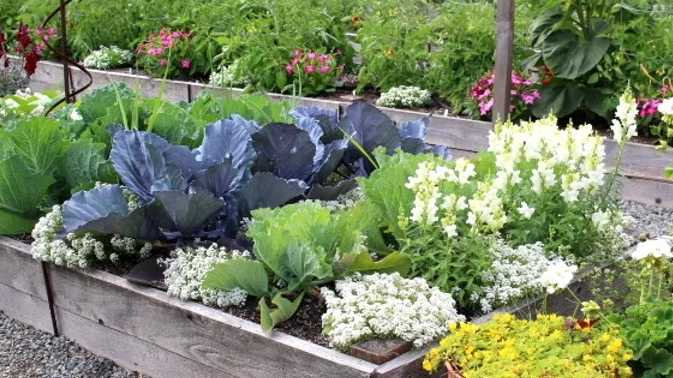
Sweet Alyssum – Is a draw for bees, hummingbirds, hoverflies, parasitoids, and ladybugs. These beneficial insects eat aphids and caterpillars, plus the eggs of many of your most annoying garden pests. Their sweet scent adds perfume to the garden while the pollen attracts pollinators to keep your garden growing and producing.
Alyssum sometimes self seeds so will come back year after year, is dainty and attractive in the garden. Plant it in all the bare spots in and around your garden to prevent weeds. It thrives in the heat as long as watered well, breaks up soil, and spreads readily. Has medicinal and protective uses, too.
White alyssum is the hardiest and the most attractive to the beneficial insects while the bees like the pale purple hues best.
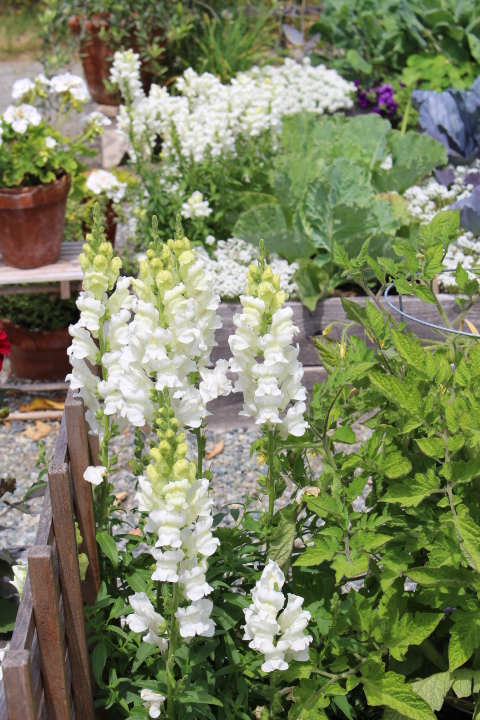
Snapdragons – These are a hummingbird and bumblebee favourite.
Sow the seeds right into the garden in spring, or prestart 6 weeks before your last frost date. They will sometimes self seed so you have free plants year after year.
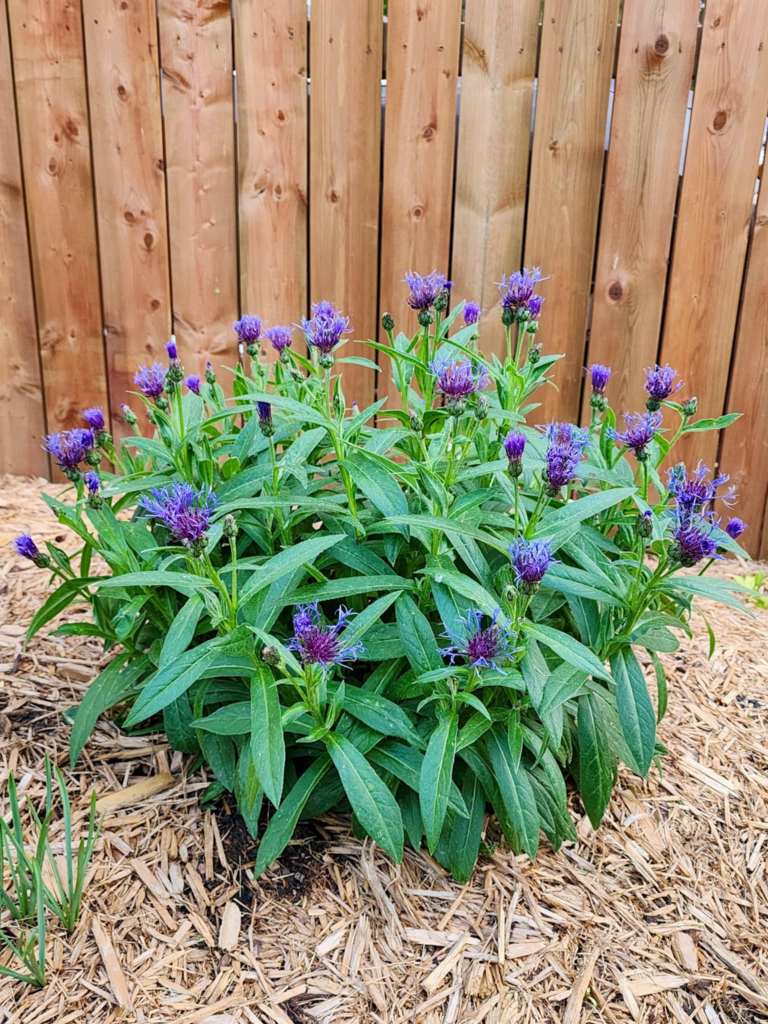
My Cornflowers aka Bachelor’s Buttons are always covered in bees. They also attract parasitoids (barachnid wasps) that eat the eggs and larva of cabbage moths and other caterpillars.
Self seeds readily so deadhead or pull the wee new plants.
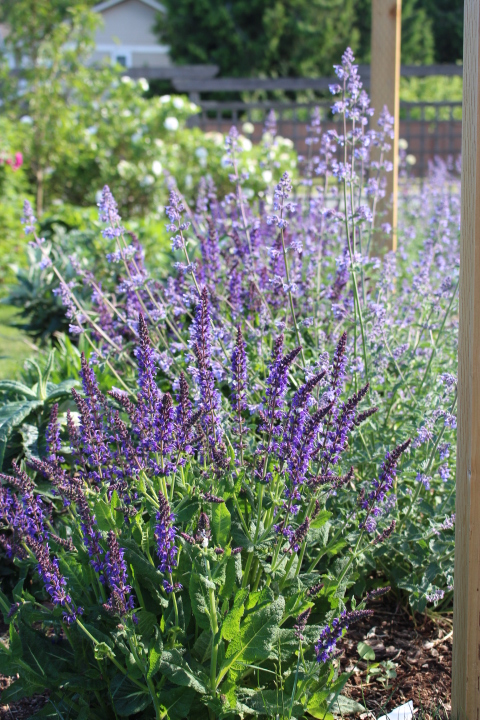
Salvia – both annual and perennial salvias are bee, butterfly, and hummingbird favourites. The perennials come in several heights, from short and compact, to taller and wilder looking. They can be blue (purple), white, or pink.
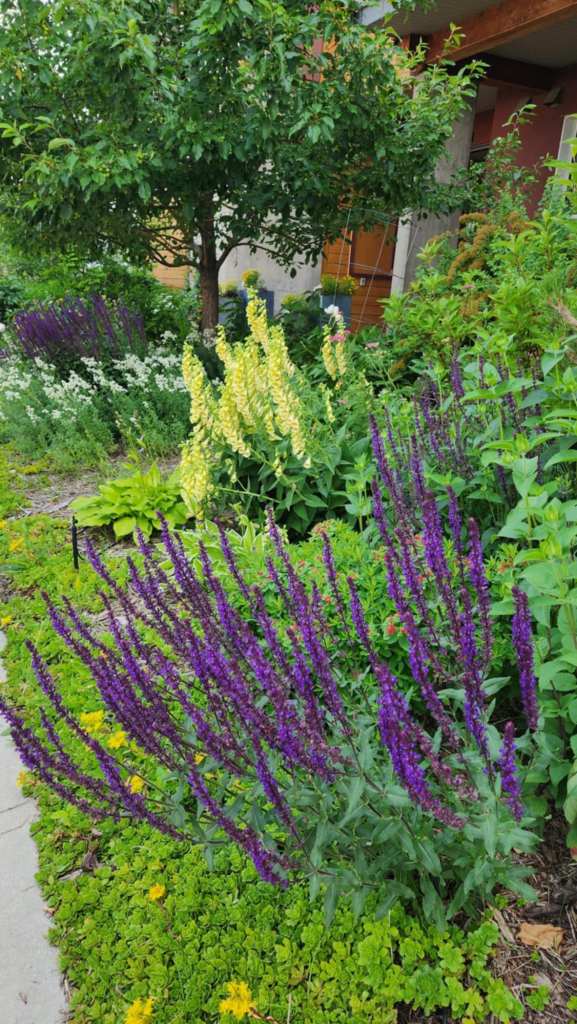
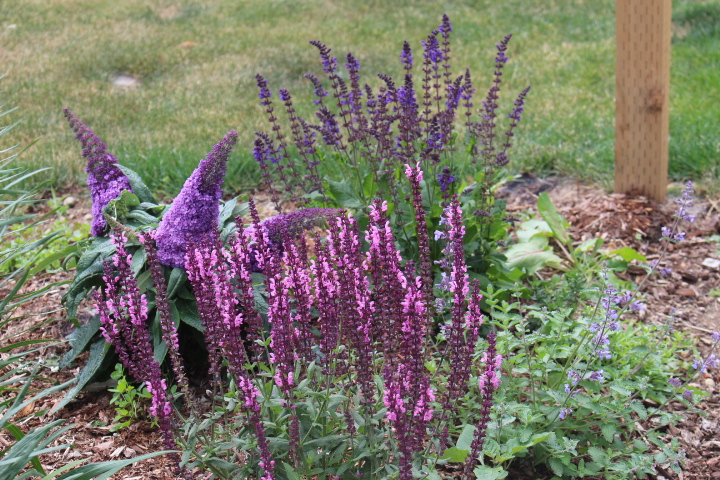
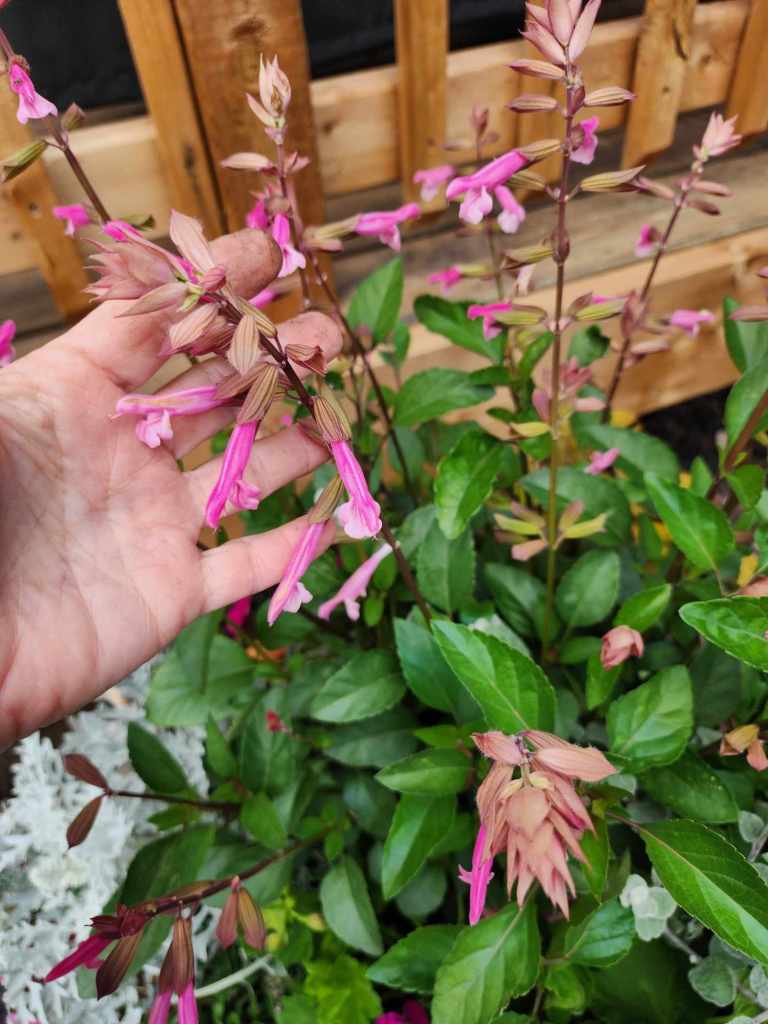
The annual salvias come in many different colours, heights, sizes of blooms, shapes of blooms. They really have so many kinds to choose from. This pink one (above)is one of my favourites as it grows about 2 feet tall, so makes a lovely thriller in a larger pot, but I also love Victoria Blue.
Salvia is also known as sage.
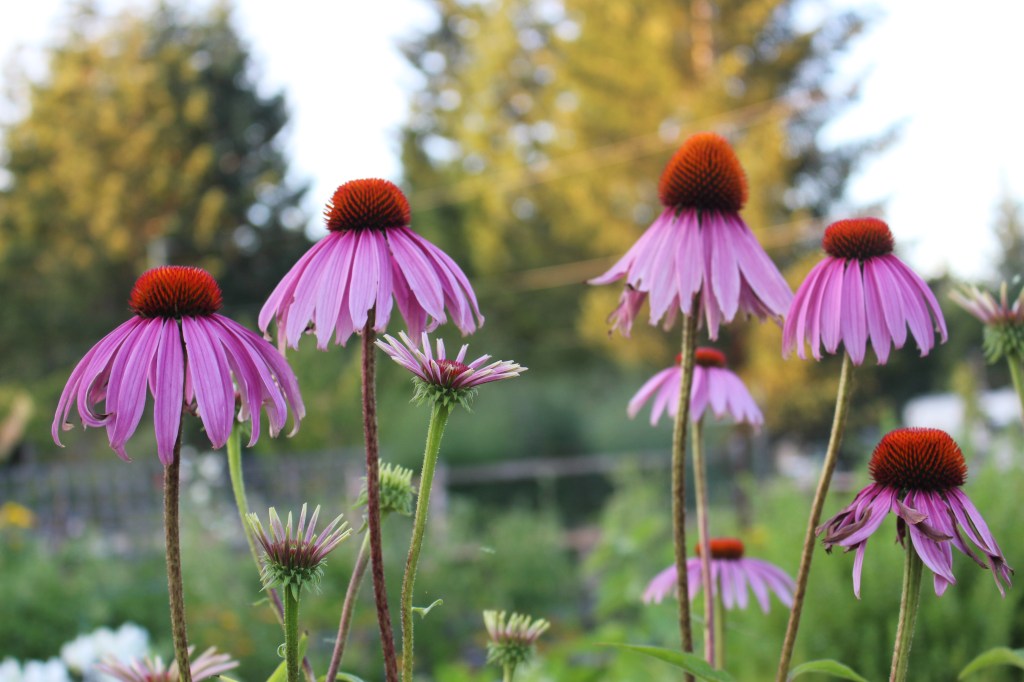
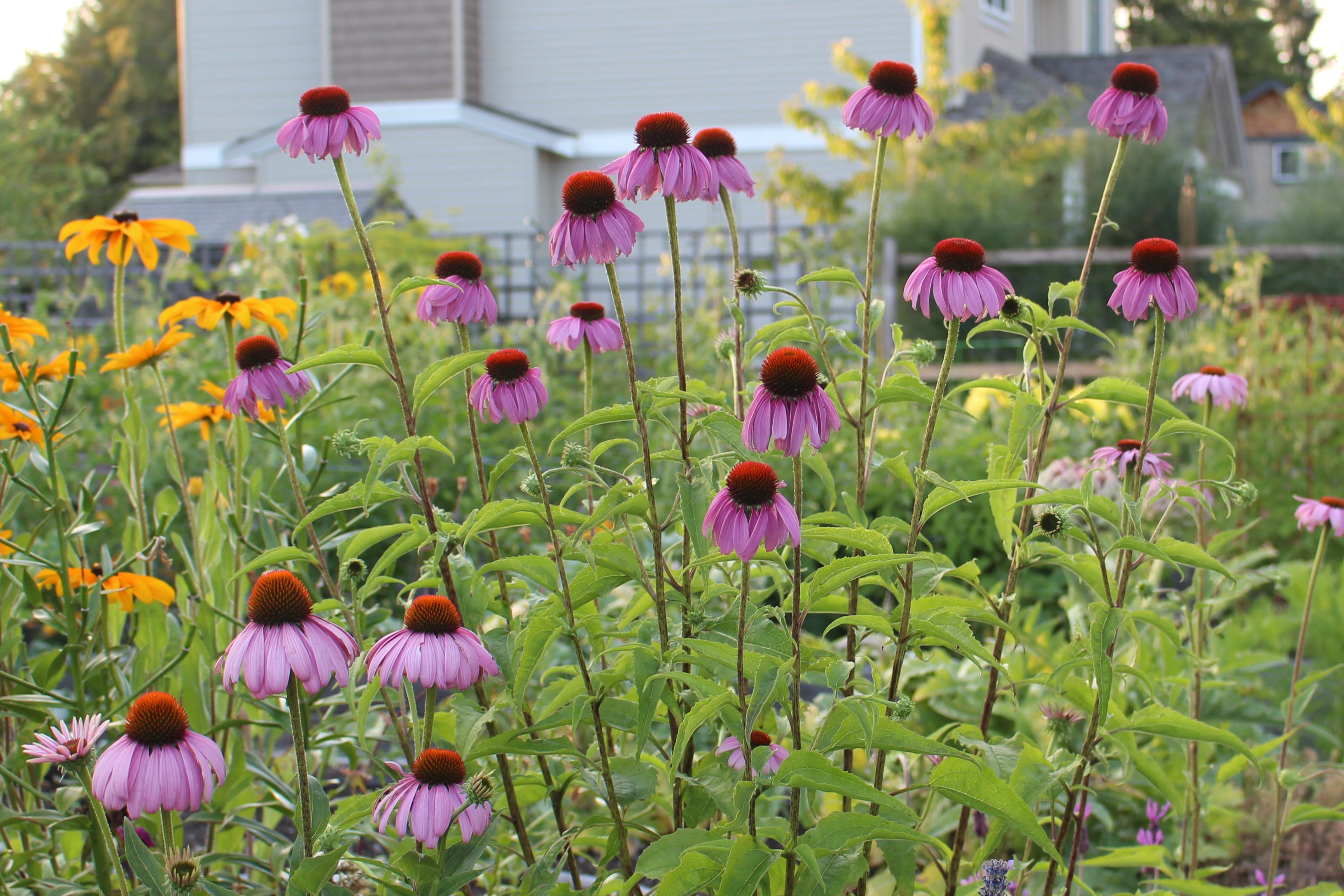
Echinacea aka Coneflowers – always a favourite of birds, bees, and butterflies.
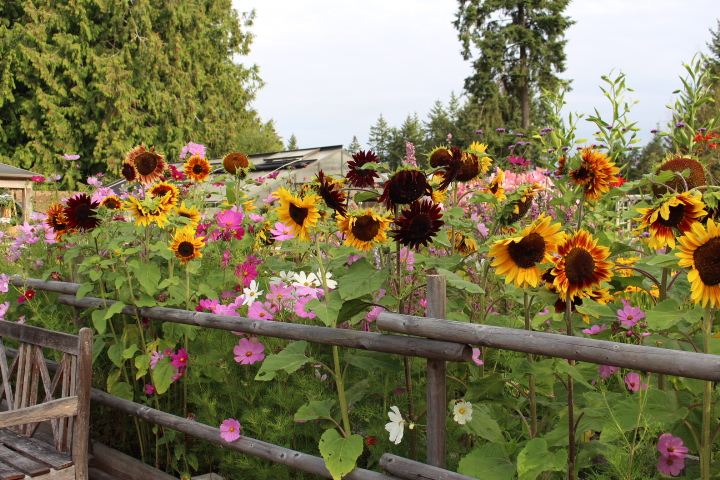
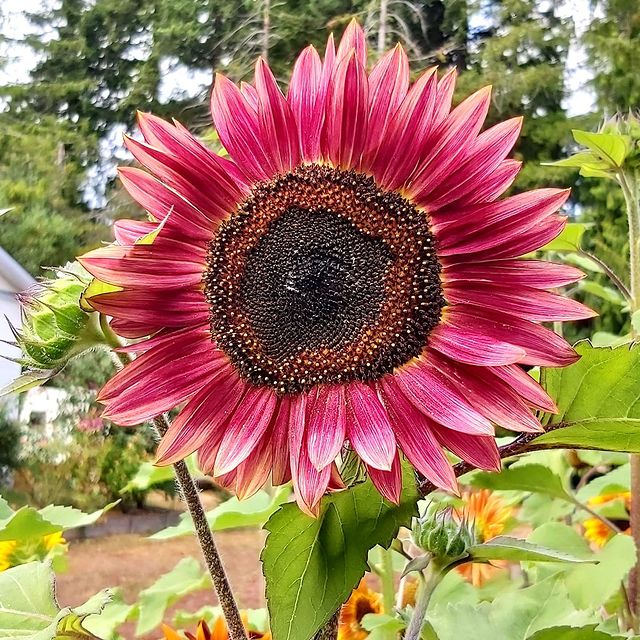
Sunflowers – bees love, love, love these! As do birds in the fall, when the seeds are ripe.
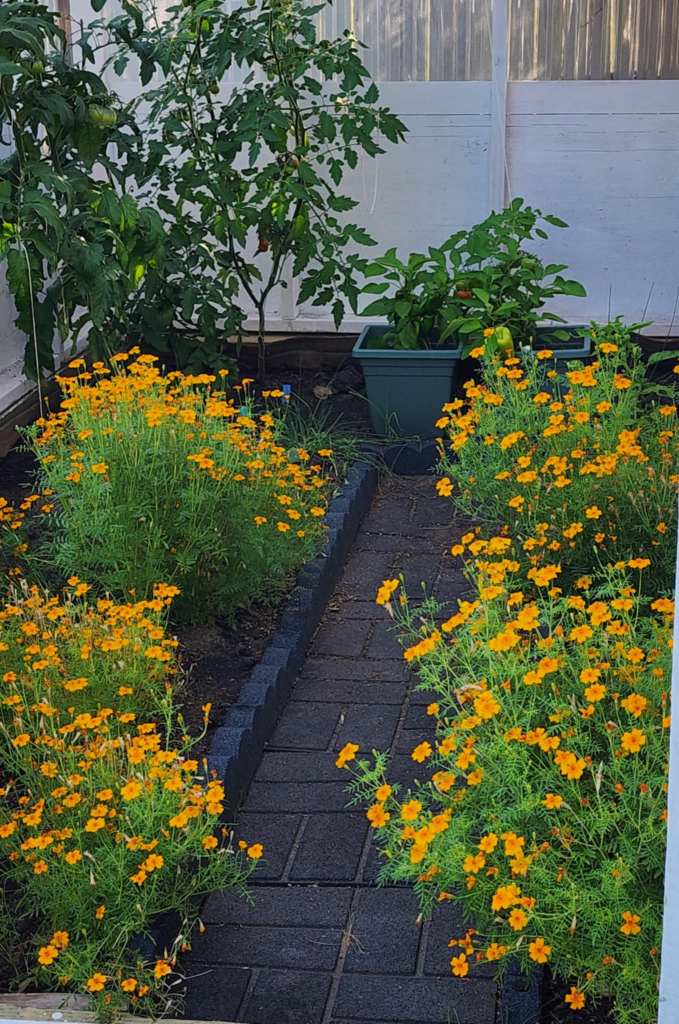
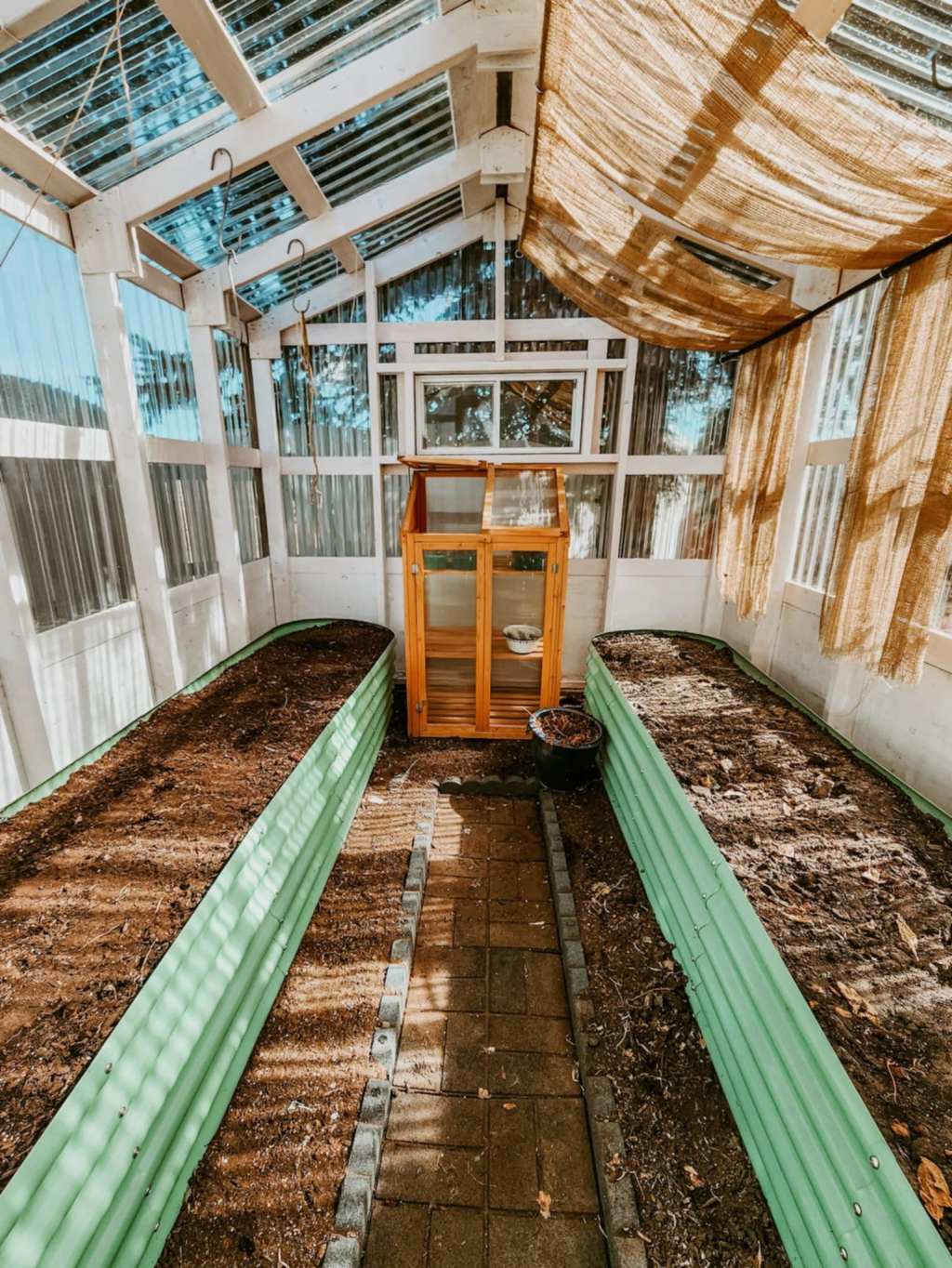
Marigolds/Tagetes – both the French and the Tangerine Gems, as above in my greenhouse, repel pests and attract pollinators. Perfect flower for your veggie garden and greenhouse.
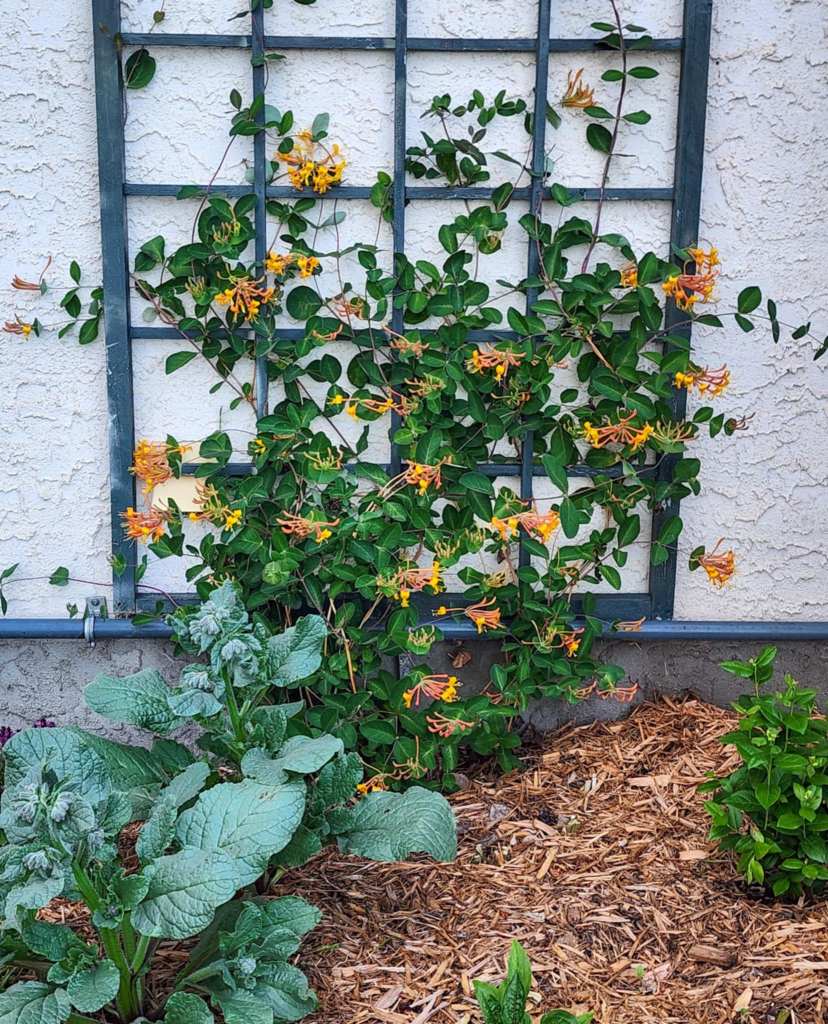
Honeysuckle Vine is a hummingbird favourite, but is also loved by bees and butterflies.
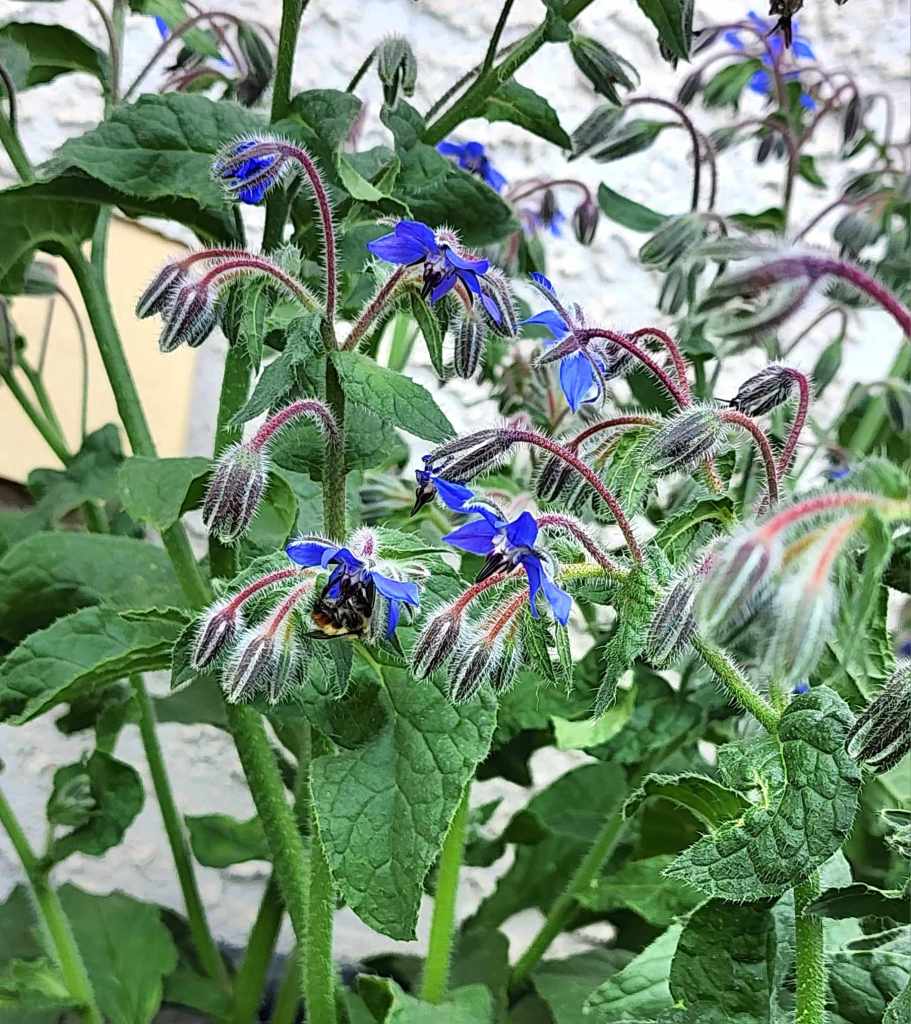
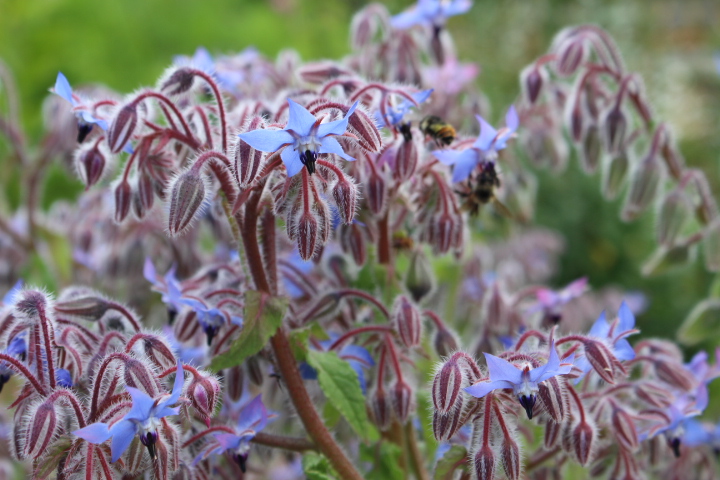
Borage – as you can see, bees love them. There is a saying that goes like this… Bees love to forage for borage. This is very, very true. They also appeal to predatory insects (pest annihilators), butterflies, and hoverflies.
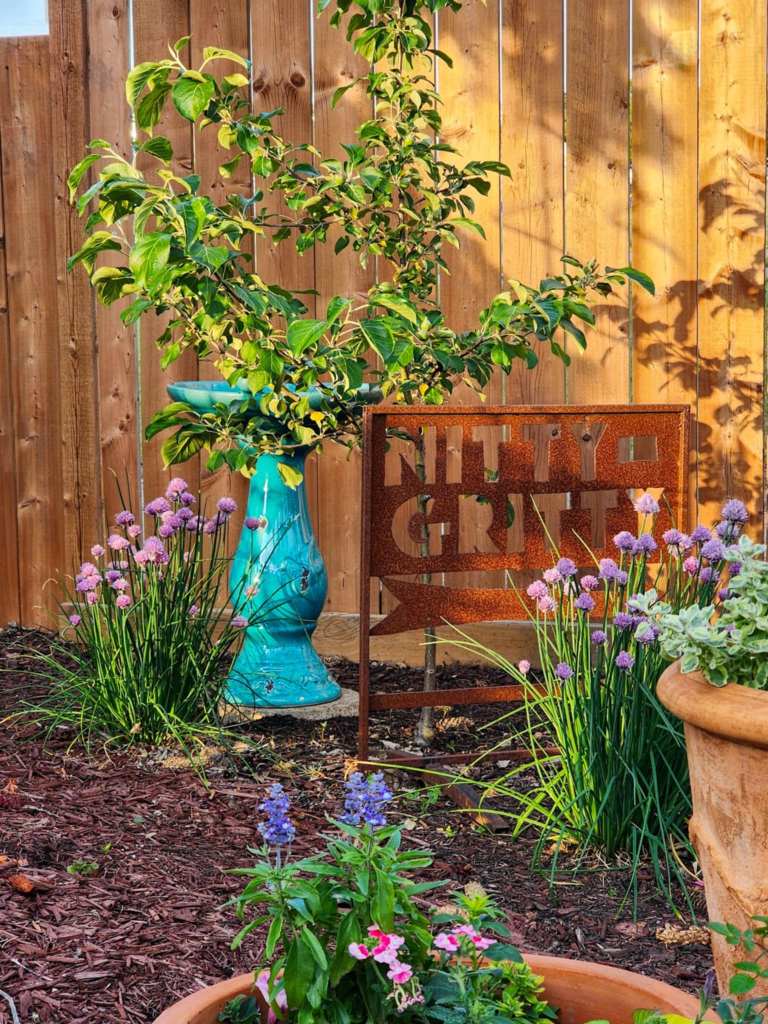
Chive blossoms – Bees love these!
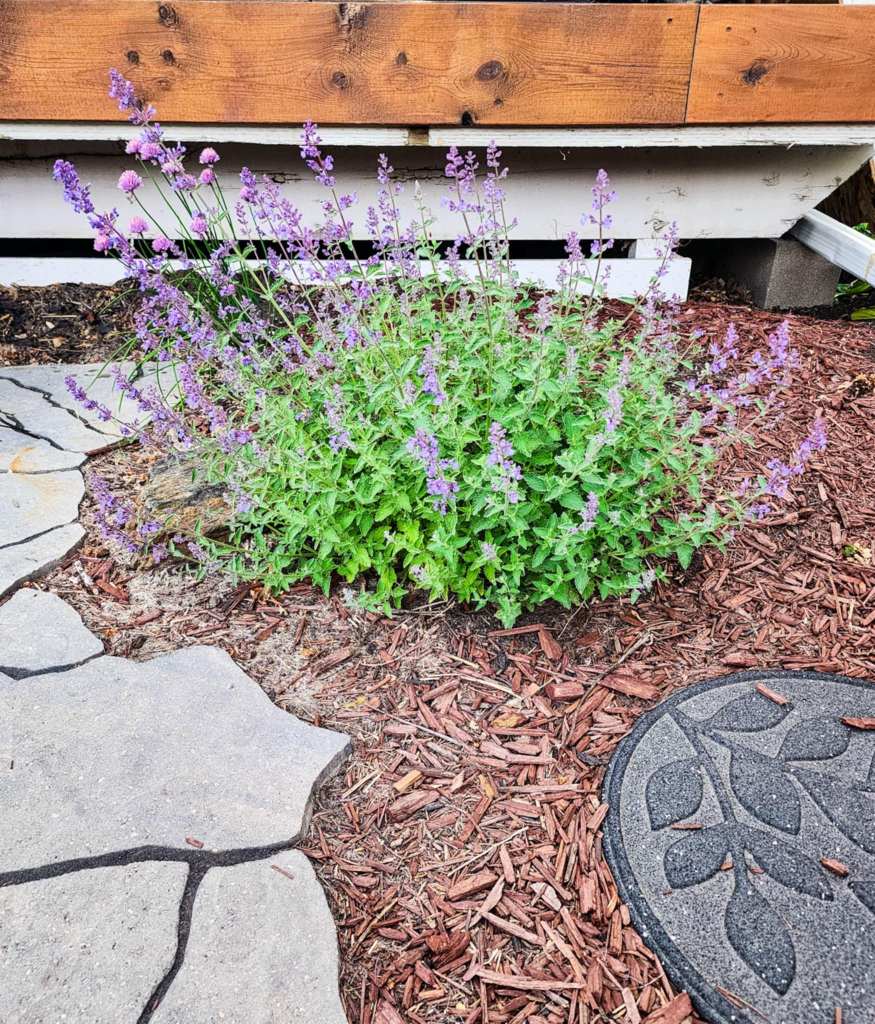
Catmint (nepeta) is a pollinator favourite!
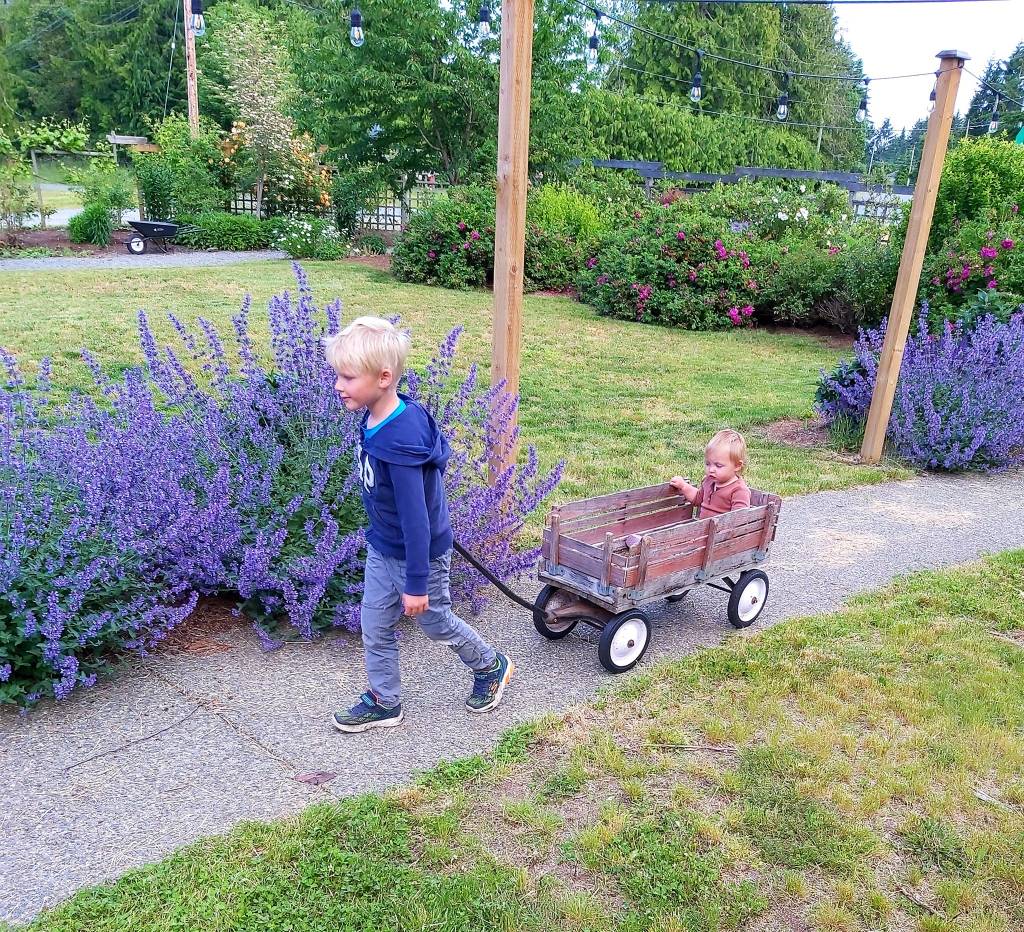
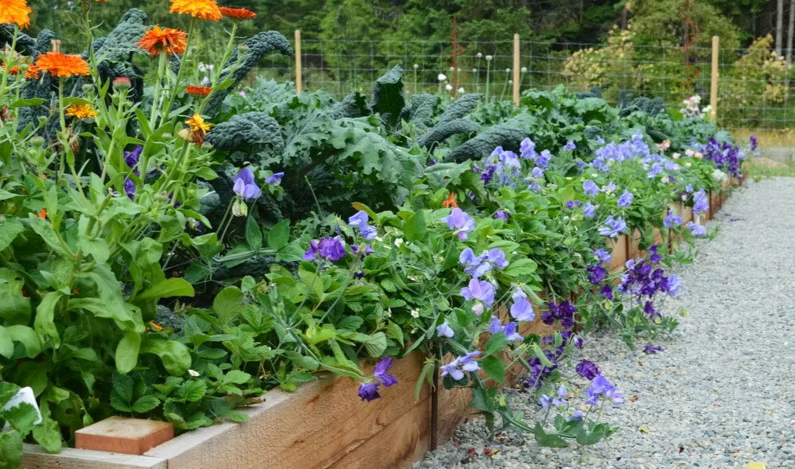
As you can see, the range of plants to attract and feed pollinators is long and varied. These are some of their very favourites, but there are so many more. Basically, I always say… if you plant it, they will come. Any flower that you plant will attract some type of beneficial to your yard and garden.


 The Marigold Potager - A Zone 3 Prairie Garden
Leave a comment