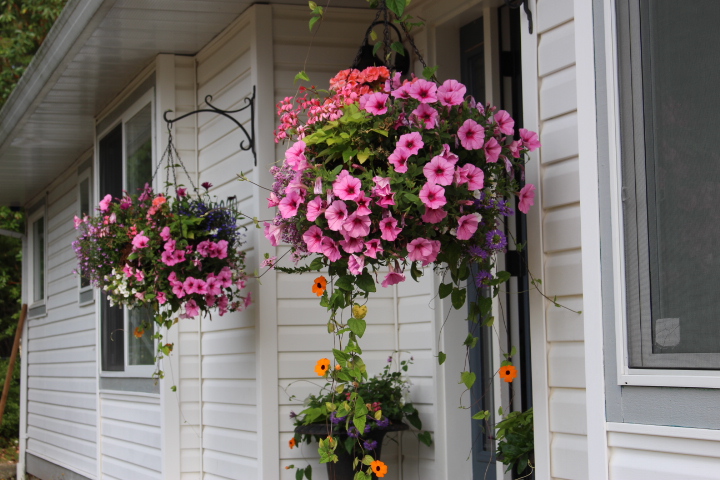
I held two hanging basket DIY workshops on the long weekend. As I shared my tips and tricks, I was asked to make a post with my favourite plants and all the little tricks for making stunning baskets, pots, and planters that keep on blooming all summer long.
I have been working in the hort industry for 34 years. Whew! Dare I even admit to that? Yes, it makes me old as sin ; ) Half of this time has been working in large greenhouses in central Alberta, the other half was owning and running my own greenhouse business in British Columbia. During this time, I have made a whole lot of baskets and planters.
So, here we go…
1. Choose A Good Quality Potting Soil
‘Quality makes a difference’
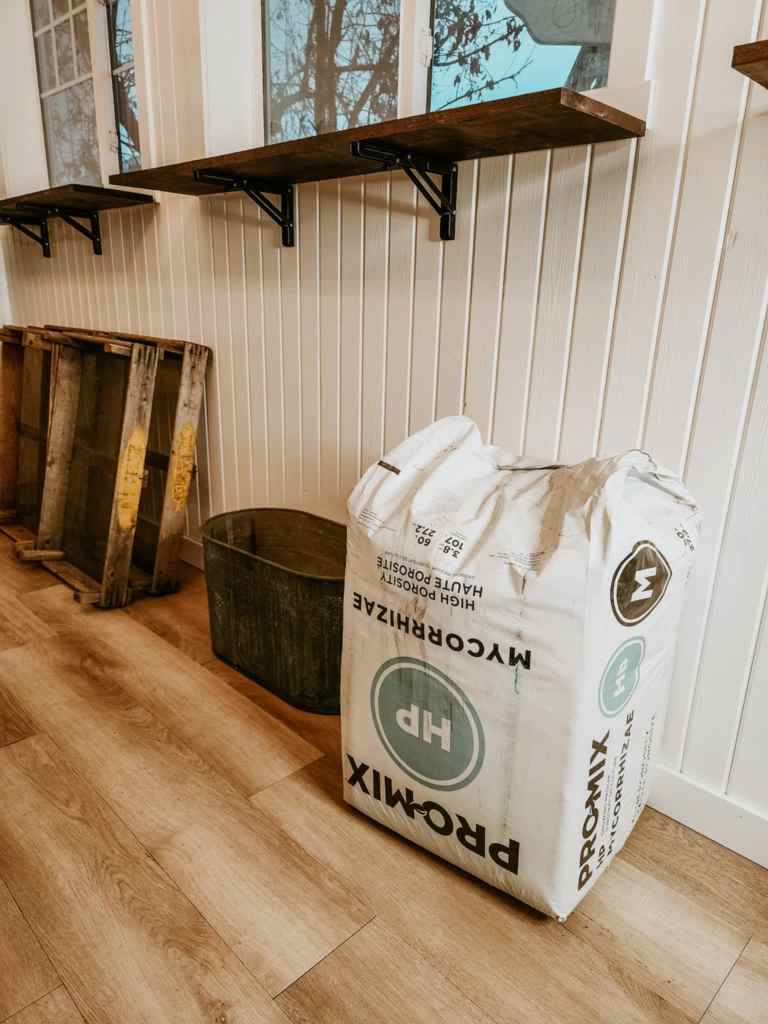
For anything that is not open to the ground, you want to use a soilless potting mix that is very porous. The porosity helps keep them light, for the soil not to compact, and makes it easy for the roots to spread throughout the basket/pot.
My favourites are Pro-Mix HP (the white bag) and Sunshine #4 as these are the soils we used at the greenhouse(s) and what commercial greenhouse growers use.
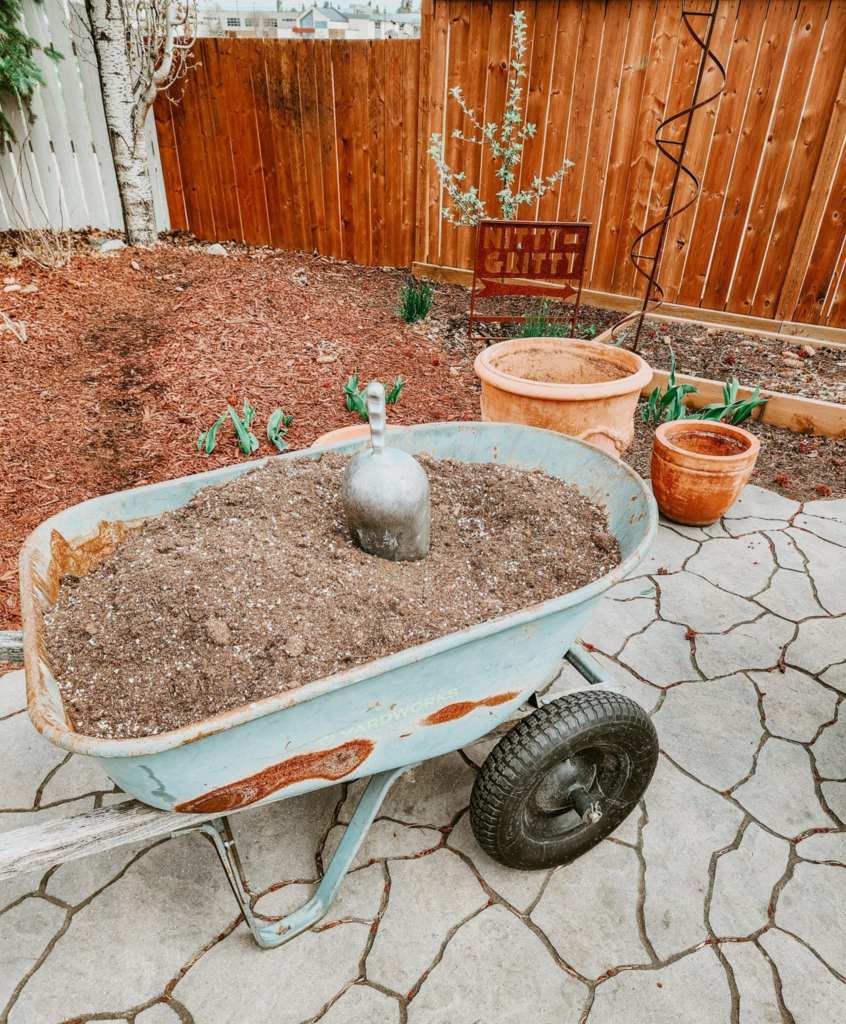
Mix in some compost or manure with your potting soil to help feed them as there are very few nutrients in the soilless potting mixes.
The ratio that I use is 5 parts potting soil to 2 parts compost, but it is easier to remember 2 parts to 1 part, and that is essentially the same.
2. Bigger Is Better
‘When it comes to hanging baskets and planter pots, bigger really is better’
The bigger they are, the less often you will have to water. There’s less chance of them drying out, resulting in dying flowers.
For baskets, I like 14, 16, or 18 inch. The deeper, the better, too.
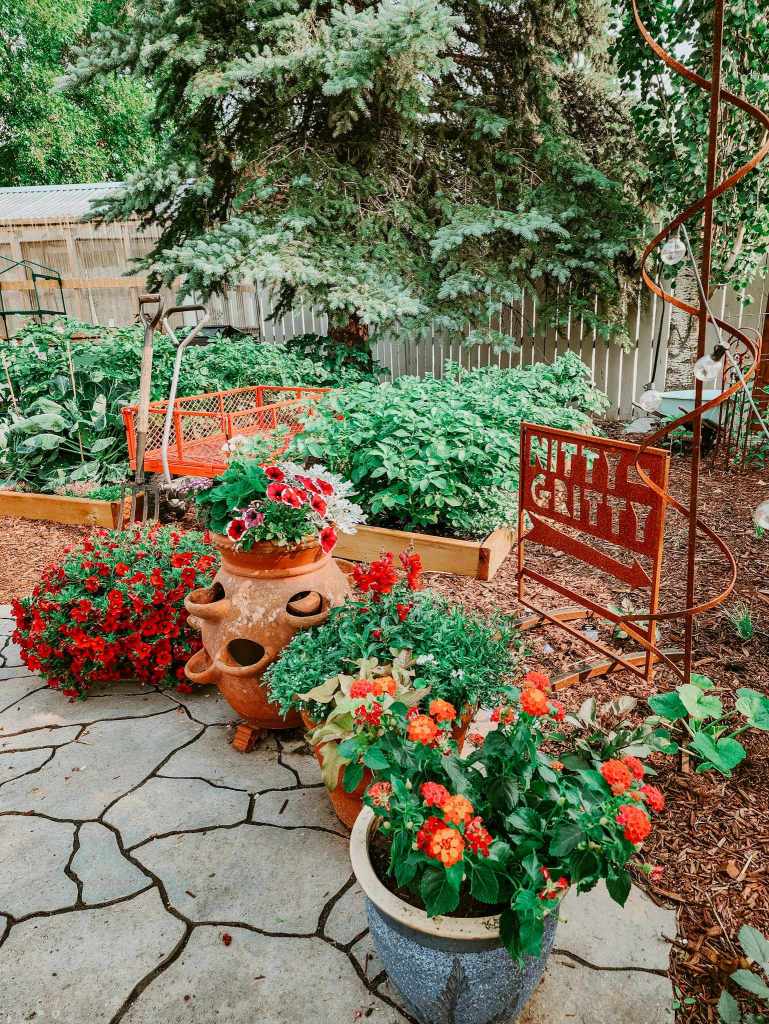
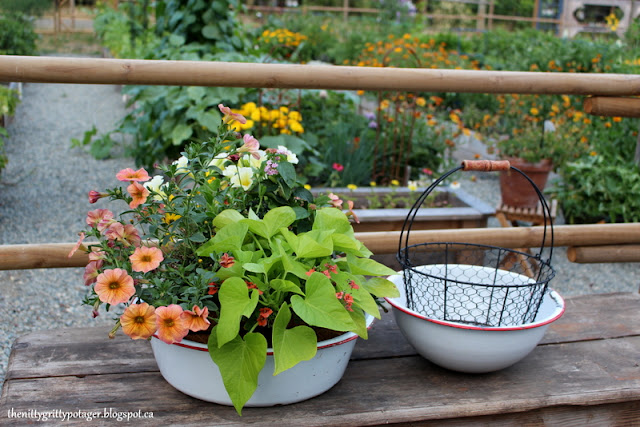
The 10’s and 12’s that you see in front of grocery stores and box stores, are so small that they will dry out super fast, will be hard to keep up with. However, if you get them at a good price, grab them! Pop them into a larger basket or pot with good potting soil and they will thrive and flower for you all season long. See the cali pot above.
Slow Down The Water
I love metal baskets with the coco/coir liner. They come in all sorts of sizes. As mentioned earlier, go as big as you can!
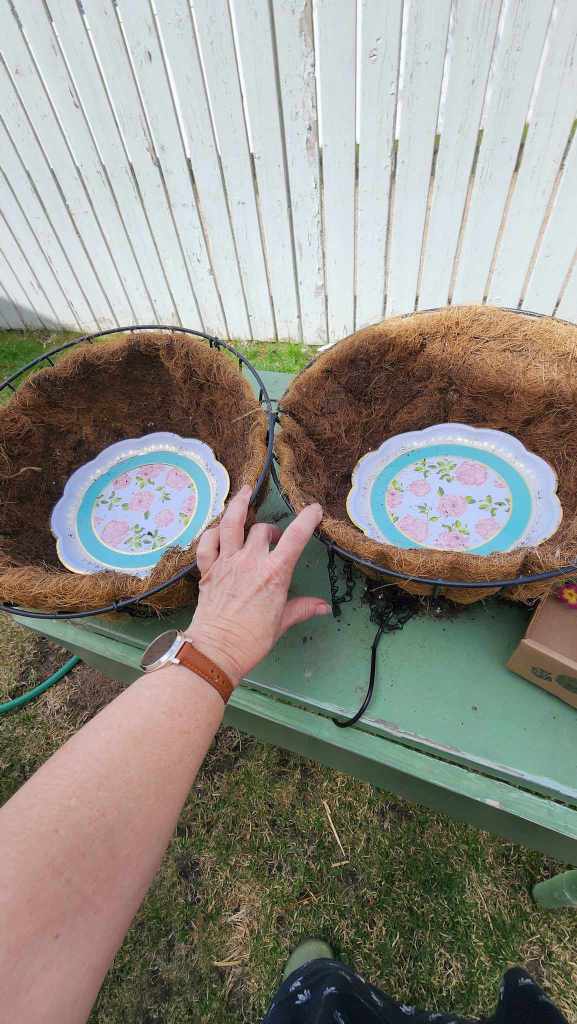
The only problem with these baskets is that the water tends to run right through them. I use a paper plate in the bottom of the basket to slow down the water. When the plants are young, with small roots, there is nothing in the way to soak up or slow down the water. These plates slow down the water and help to keep it in the soil long enough to really soak things down.
As the season progresses, the plate still slows down the water, plus the roots of the plants are bigger, so they take up more water as you apply it to the basket.
At the end of the season, when you dump out your basket, paper plate and all can go into the compost.
Some like to use the plastic liners that come with the plastic baskets, while others will use an old china mismatched plate from grandma, the dollar store, or thrift store, which can be reused year after year.
3. Feed The Soil Before You Plant
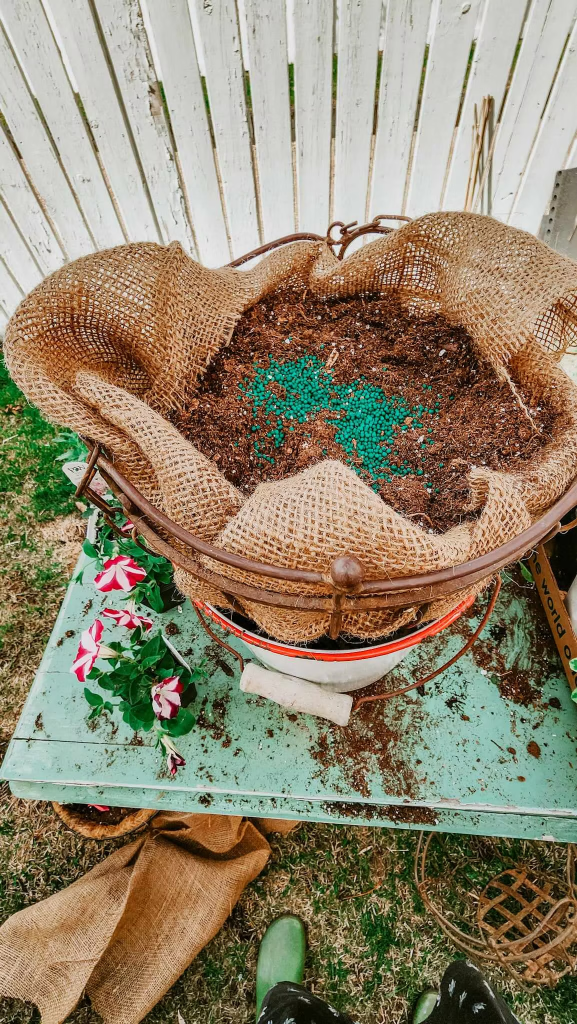
Top the soil in the basket with a tablespoon or two of slow release fertiliser. This (along with the manure) helps to keep the plants happy all summer, even if you forget to feed them now and again. Stir it into the surface of the soil.
Use a granular slow release fertiliser with a higher middle number to promote blooming, if you can find one. If not, a well balanced 20-20-02-20 (or similar numbers) will work just fine to keep them healthy.
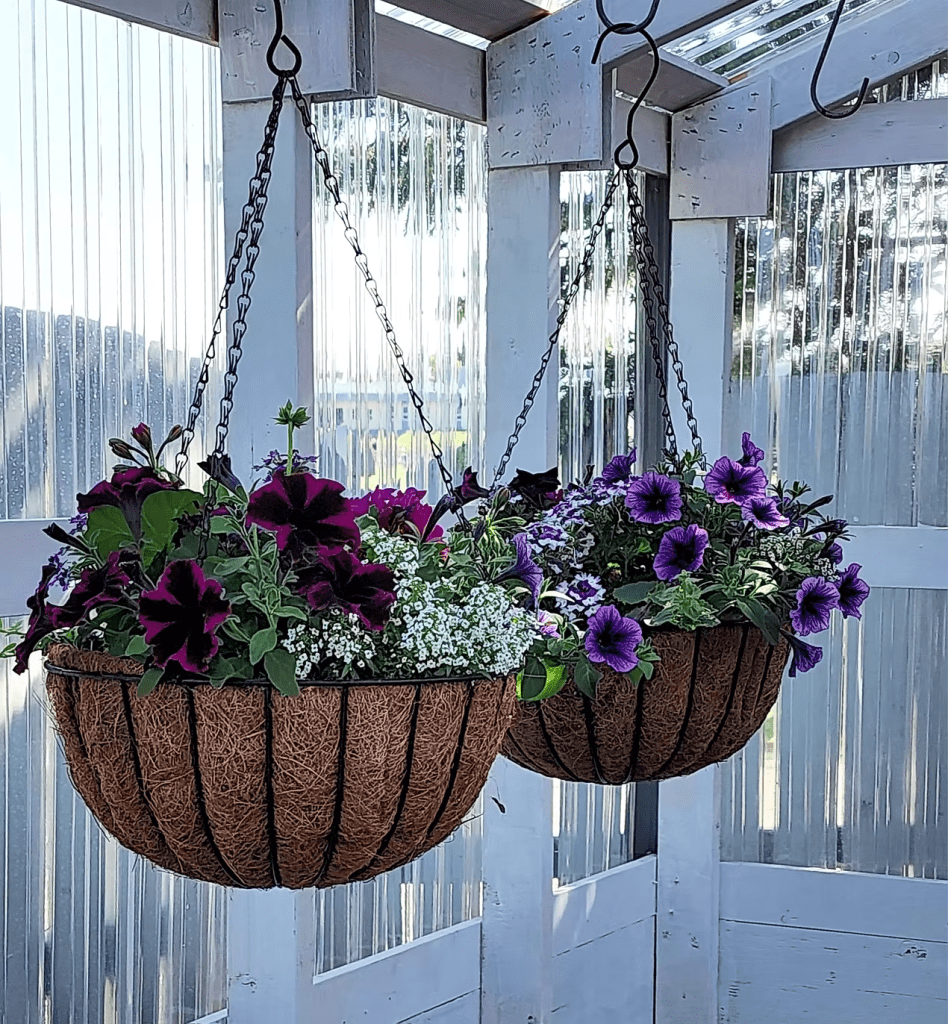
Plant up 12 to 14 inch pots with 6 or 7 plants. One in the center and 6 around them. Or, if you can also just plant the 6 in a circle, leaving out the center plant (the thriller).
Do not plant right at the edge. Instead, plant them 2 inches from the edge so they fill the basket, grow outwards and soon spill over the edges.
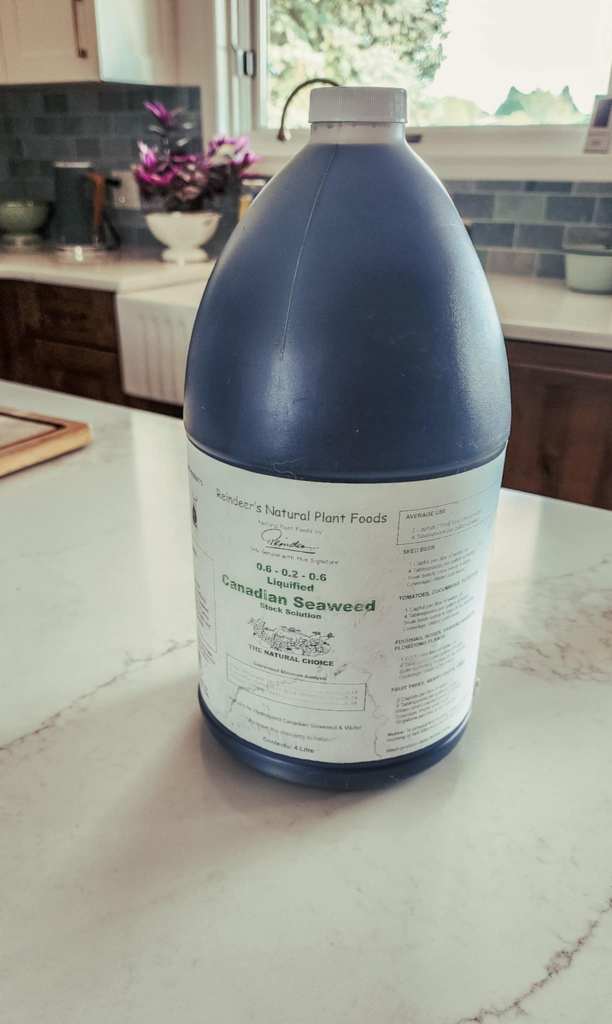
After planting, if you have some liquid seaweed/kelp, water your baskets with that to help them settle in and root out faster.
Seaweed is a natural, organic product that can be used to fertilise seedlings, foliar feed indoor and outdoor plants, and helps stimulate root and plant growth. It works with anything … veggies, flowers, trees, shrubs, bare root roses, asparagus roots or other bagged bare root plants.
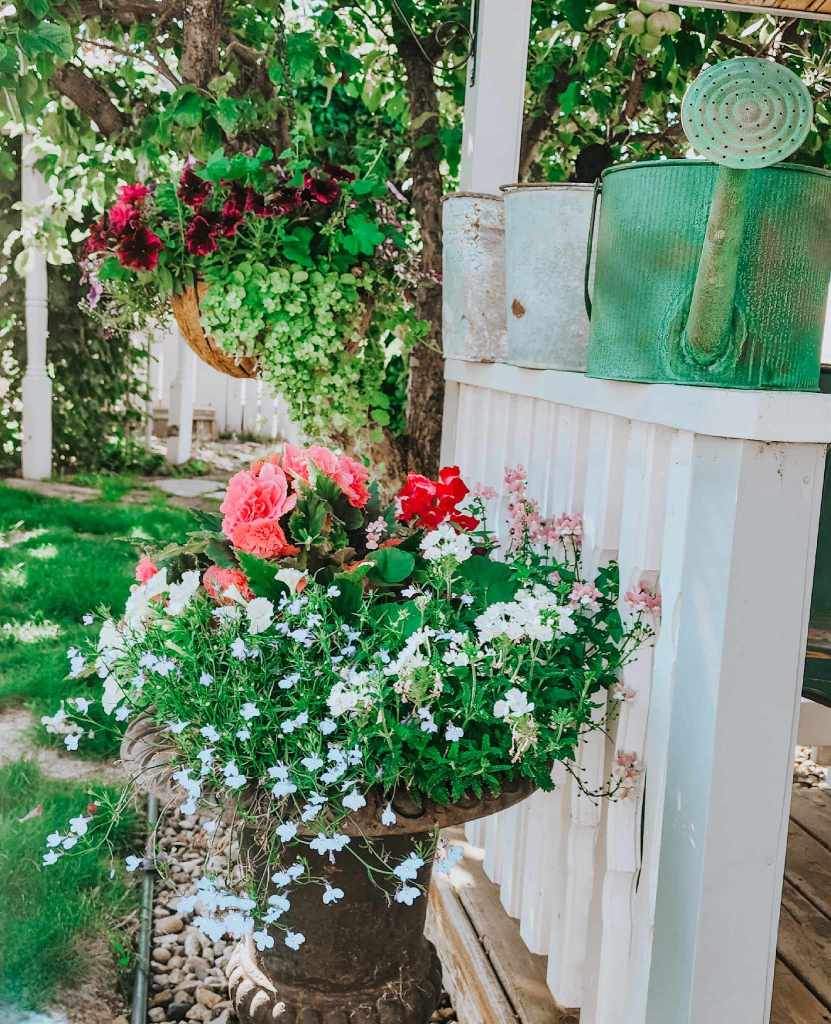
4. Choosing The Right Flowers
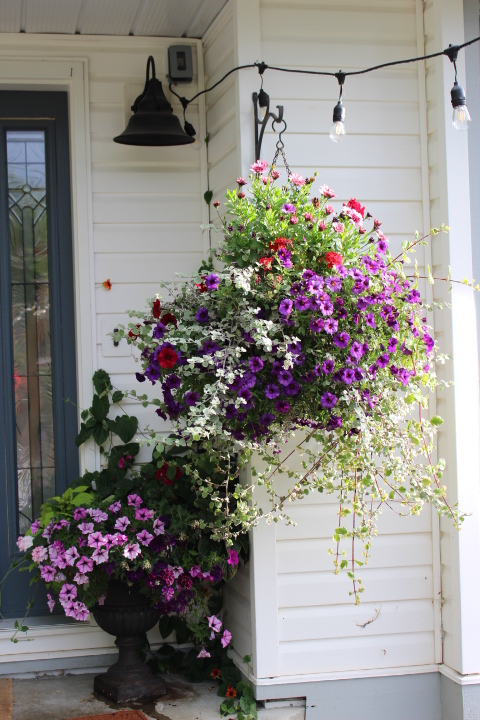
Plant with the thriller, filler, spiller method’
- Thrillers – choose something that will be taller, wider, bigger, stunning for the middle of the basket or pot.
- Fillers – plants that grow upright and fill in the top of the planter or basket, in and around the thriller.
- Spillers – trailing flowers or vines that spill over the sides of the pot.
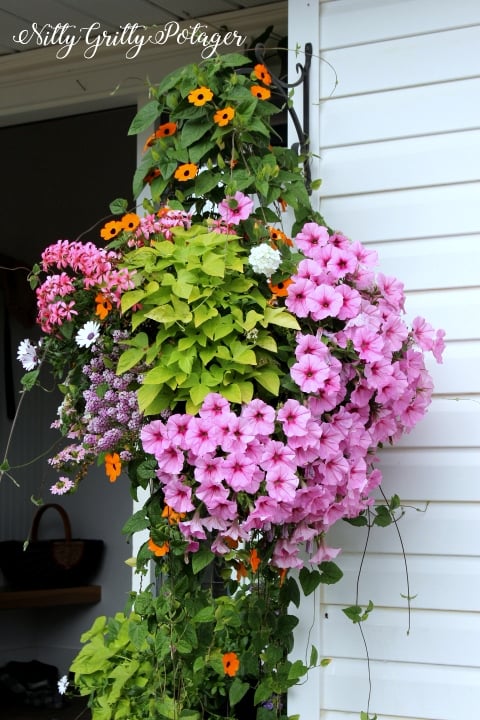
Thrillers for baskets …
- Geraniums (sun)
- Martha Washington Geraniums (fancy geraniums)
- Dusty Miller (sunshine)
- Ipomea (sweet potato vine)
- Begonias (shade)
- Coleus (shade)
- New Guinea Impatiens (shade)
- Fuchsia
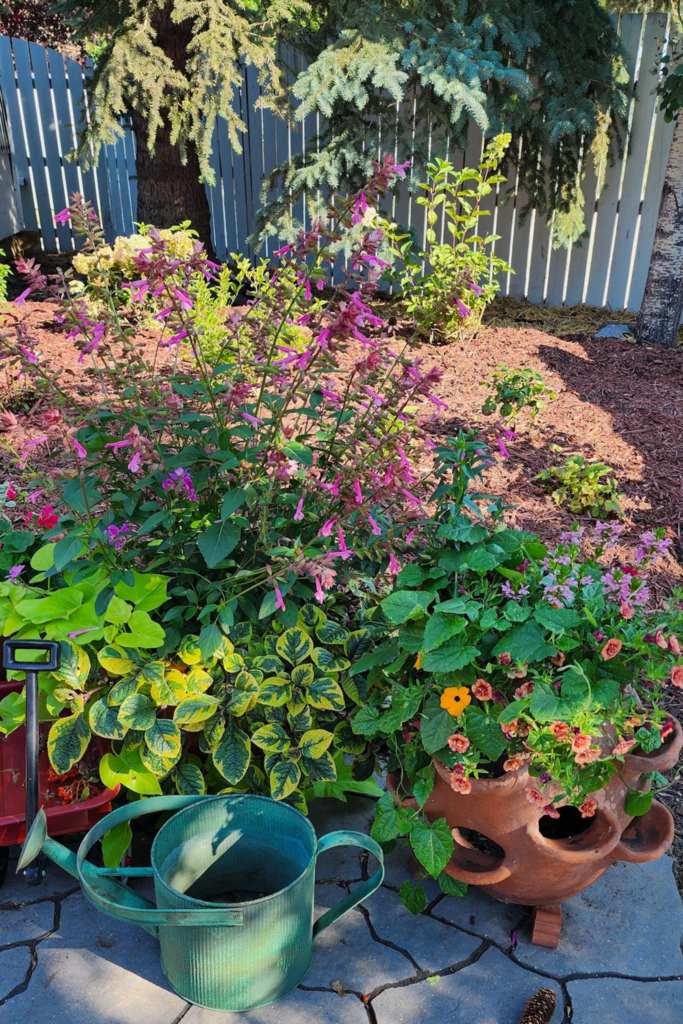
Thrillers for planters…
At the basket workshop, I told everyone how much I love these Pink Skyscraper Salvias. They start off in a small 2 inch basket stuffer pot, and turn into these amazing thriller plants that the hummingbirds just love.
There are other salvias, too, like Hot Lips, which are amazing. Note that if you choose Black& Blue, they will not bloom until late summer, though will grow tall and spikey.
- Canna Lilies
- Salvia Pink Skyscraper (in the photo above)
- Victoria Blue Salvia
- Hot Lips Salvia
- Geraniums
- Begonias
- Venti Passion Fruit Dahlia (or other pot dahlias)
- Angel Wing Begonias (if you like a tropical look)
- Rex Begonias (for that tropical look)
- Many will use some type of grass for the center, maybe a fountain grass or millet. It’s not my favourite, just because I feel it has been done and done and done, but if you love it, you do it!
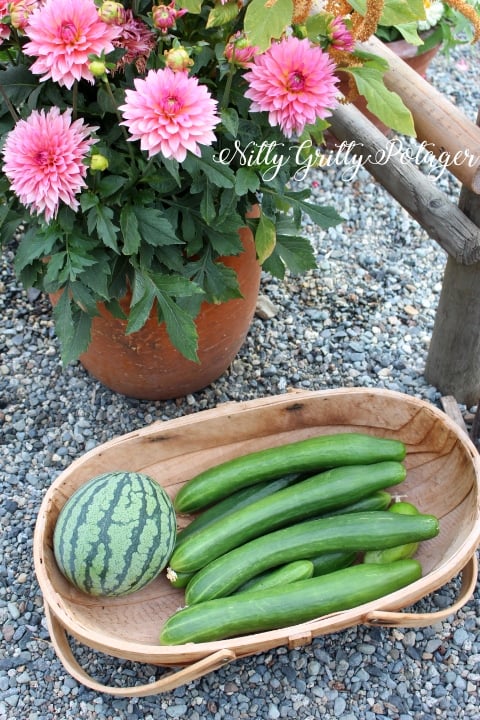
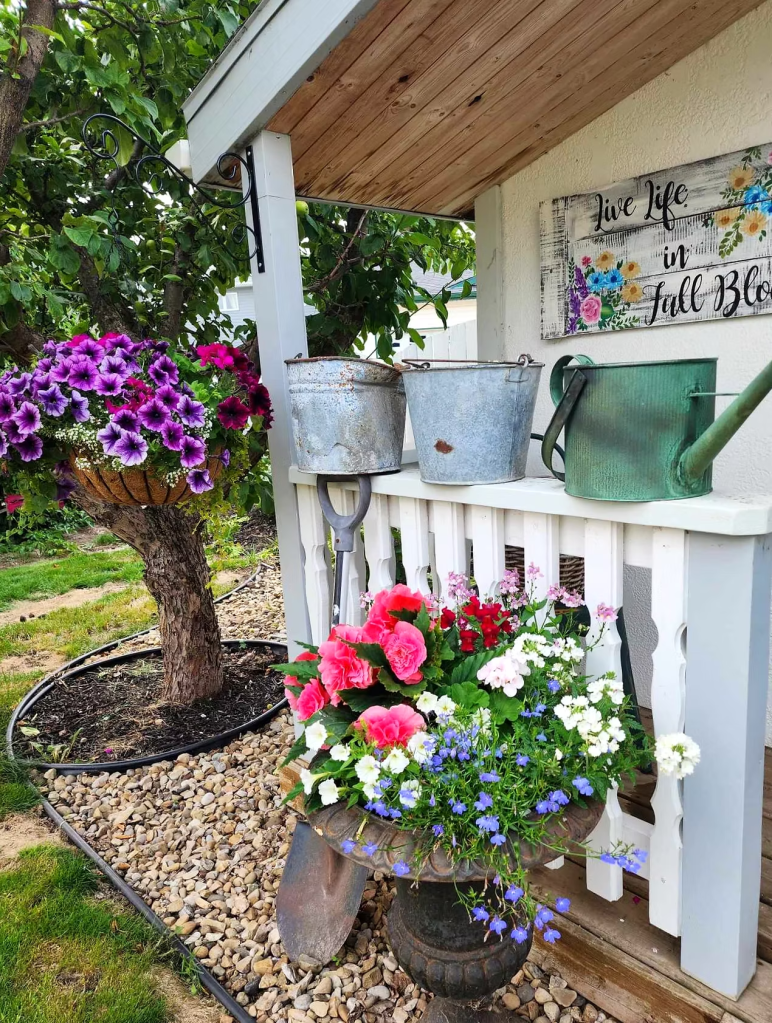
If the pots or baskets are on the smaller size, I forgo the thriller and plant it up with a few pots of the same plant (calibrachoas), or one larger plant (like the dahlia above), or 3 complementary ones (a trailing vine, a filler type flower, and a trailing flower – as in the strawberry pot planter above).
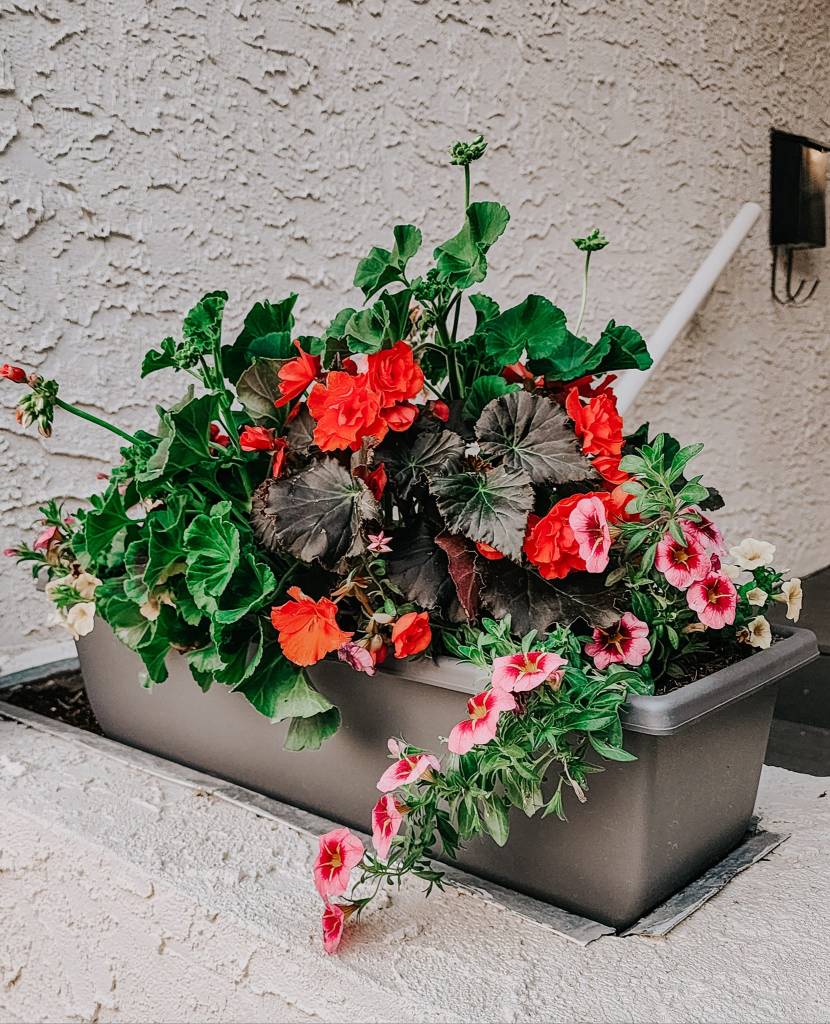
Filler plants that I love…
Fillers are plants that grow upwards and fill in all around the thriller. They are the plants that make the basket or planter look full and lush.
- Nemesia
- Sweet Alyssum
- Petunias (Super Cal’s, Sweetunia, or Supertunia)
- Upright ‘Techno’ Lobelia
- Osteospermum daisies
- Upright Verbena
- Diascia
- Bidens
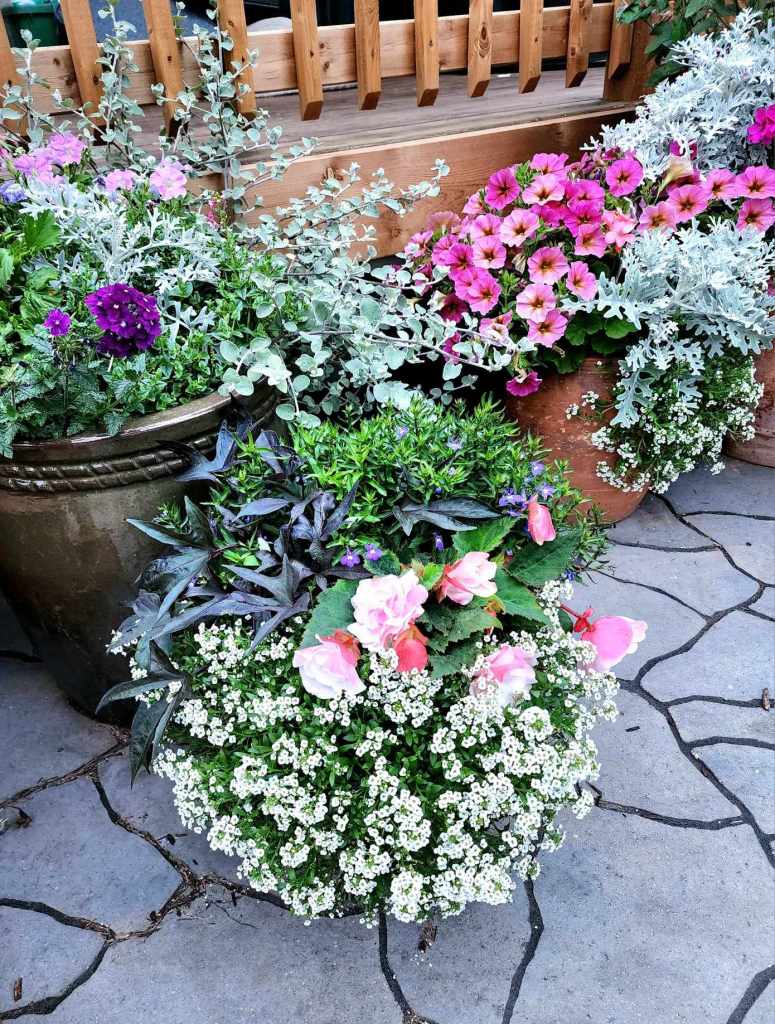
My Favourite Spillers
Spillers are vining plants that flow over the edges of the pot or basket.
Some flower, some are just foliage for interest. Some spill over by a lot and some just flow over by a little bit.
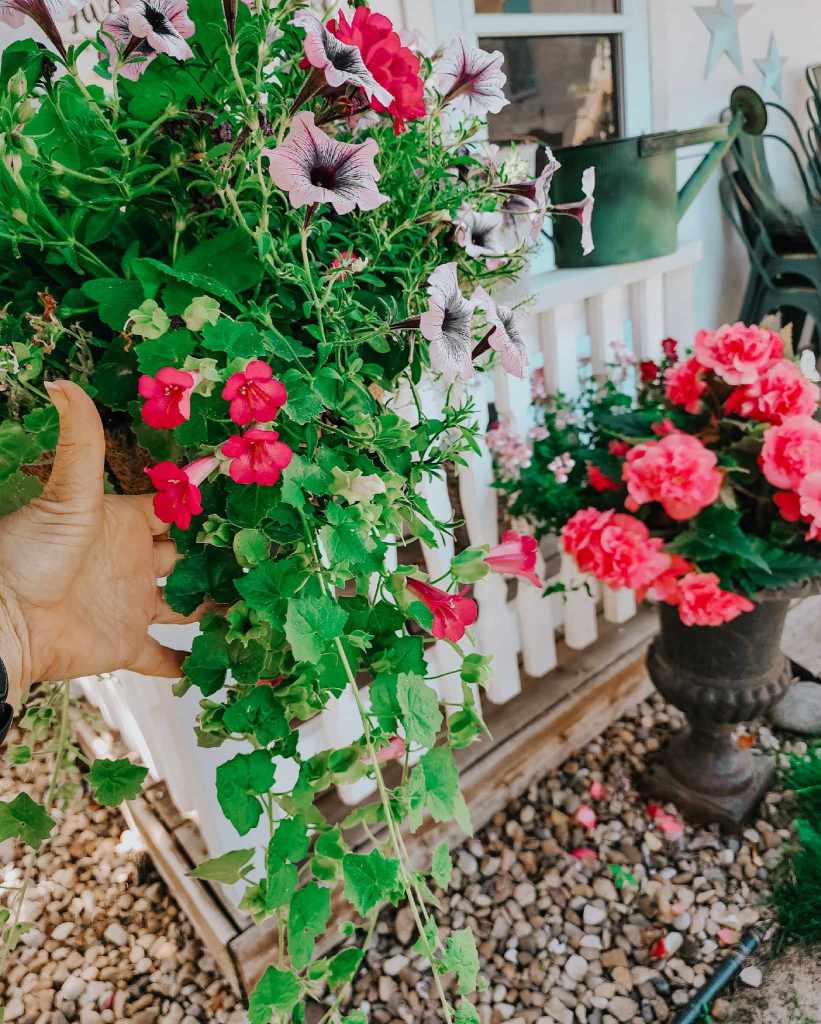
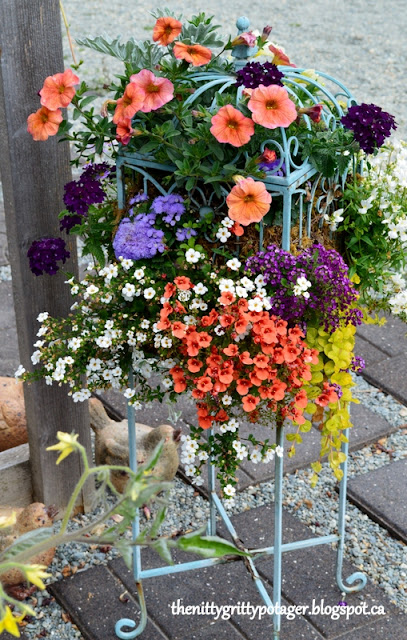
I love both but make sure to have something that is just a foliage plant as it really makes the flowers pop. I feel if you have all just flowers, while still amazing, nothing really pops out at you. If you add a foliage plant, it helps make the flowers the stars of the show… as with the dark ipomea in the planter above.
- Helichrysum (the licorice vine)
- Plectranthus
- German Ivy
- Swedish Ivy
- Silver Falls Dichondra
- Ipomea (sweet potato vine) Lime green or dark purple.
- Lobularia (trailing sweet alyssum)
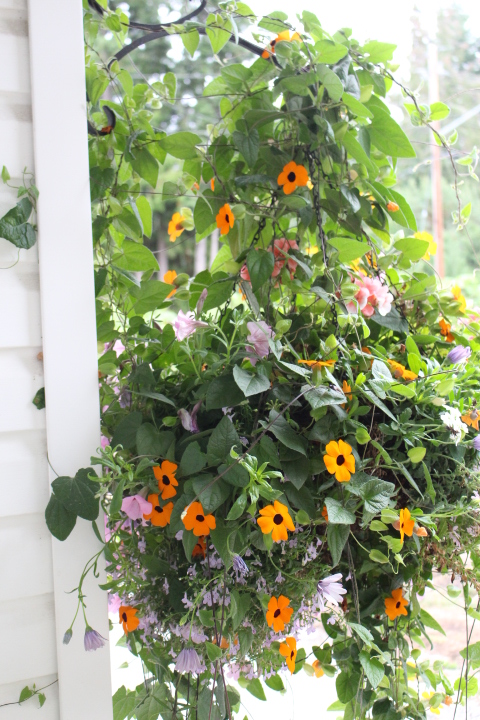
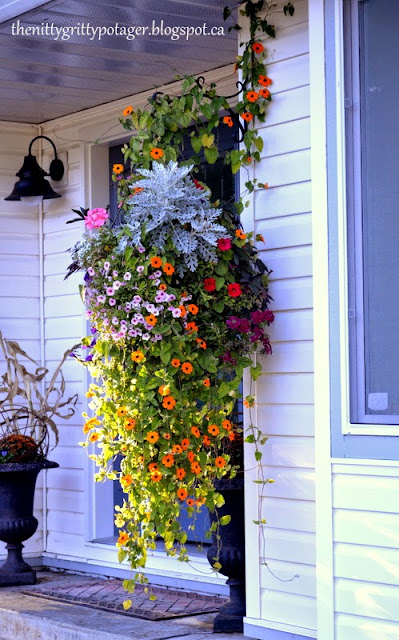
- Thunbergia (black eyed Susan vine – comes in pink, white, yellow, and orange)
- *Hot Lobelia. Yes, that is the name of this trailing lobelia. Read more about it below.
- Bacopa (comes in white, blush pink, and light blue) I love them all.
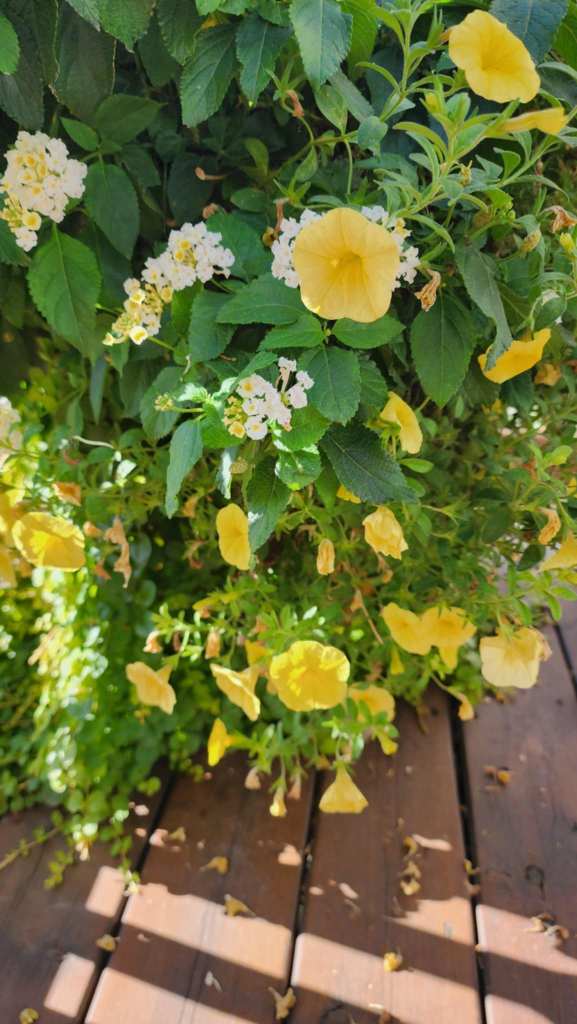
- Calibrachoa (million bells) so many colours now, and the doubles are super pretty!
- Trailing Verbena
- Ivy Geraniums (my favourite geranium of all)
- Wandering Dude (also called Purple Heart)
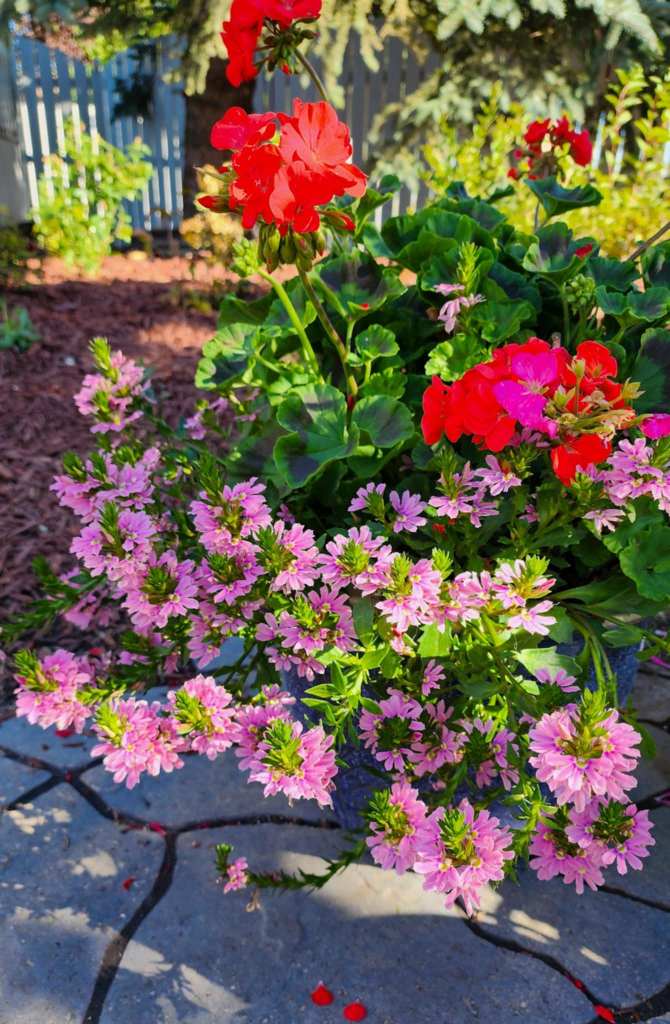
- Scaevola (fan flower) comes in pink, light blue, and white.
- Lofos! Comes in rose pink and white.
- Creeping Jenny
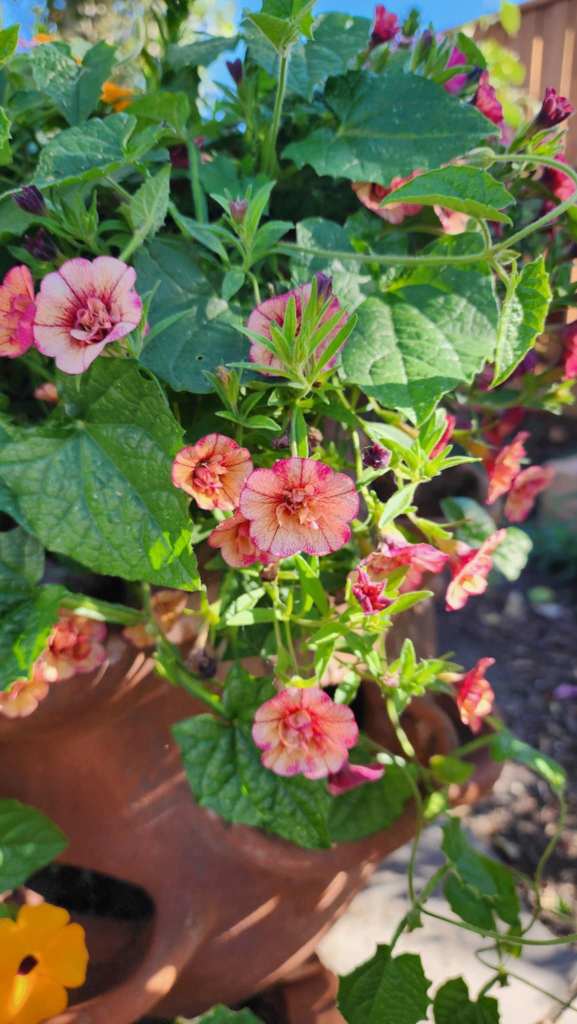
Tips You NEED To Know To Make Amazing Baskets & Planters
Lobelia – the plants in the 6 packs are best used in shade baskets or planters only. They will fry in the sun, becoming brown and straw like by July.
Six pack lobelias come in light blue, dark blue, pink, purple, white, blue with white center… so many colours. They also come in both trailing and upright varieties. They are amazing in basket as they are airy with loads of colour.
For lobelia that does not fry in the sun, you want to buy the ones in small basket stuffer pots. They are usually Proven Winners so are sold in a white pot. These lobelias are heat tolerant and will thrive all summer long without turning to straw.
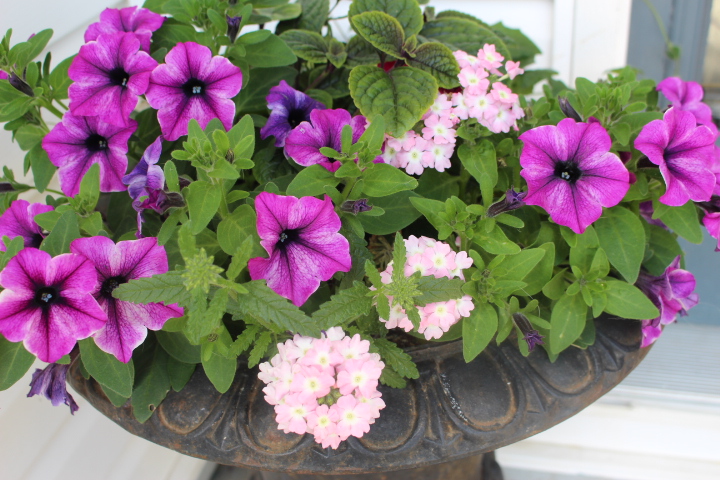
Petunias – The same applies to petunias. The petunias sold in 6 packs are grandma’s sticky petunias that need constant pinching and deadheading. Both the doubles and the singles. I would only use these in the garden to attract pollinators.
The super sized 6 packs are different. They are often used to sell Wave Petunias. You do not want Waves in your hanging baskets, but they work well in large planter pots.
To get the new, lovely petunias that mound or trail nicely, do not need deadheading, you want to get the ones sold in the small basket stuffer pots. They are going to be amazing for you. I like the SuperCal’s. They are a cross between a petunia and a calibrachoa, they bloom all summer long, need no deadheading, stay lovely all year!
There are many other lovely petunia varieties. If they are sold in the small basket stuffer pots, they are going to be amazing.
To deadhead these petunias, all you need to do is blast your basket (or planter) with a strong jet of water. This will get rid of any dead blossoms or leaves, hydrate your basket, plus blast of any bugs that might be trying to take hold.
5. Summer Time Care
Watering and feeding your baskets/planters regularly is the key to beautiful flowers’
- When you first plant up your baskets, they will not have big root systems, so will likely only need water every 3rd day, to start.
- As the flowers start to grow and make bigger roots, you will go up to every second day watering.
- Then, as summer progresses and you have lovely filled in baskets, they will need a daily watering.
- If you have small baskets, you may need to water both morning and evening.
My general rule of thumb is to water every second day in spring, once a day on an average summer day, and twice a day, both morning and night, if it is a 30 C day!
How To Water
I was watching a bookstore owner in Sydney By The Sea water his two baskets on either side of the door. They were the biggest, most amazing baskets I had ever seen… so I asked him what his secret was. Being an amazing gardener, of course he shared!
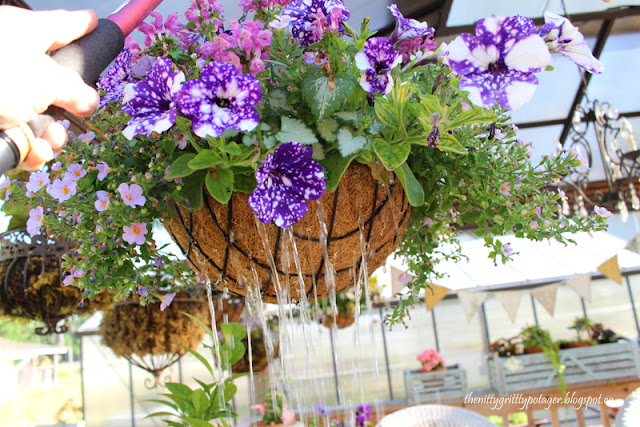
- Once a day, water your basket, from the middle, till the water is running from the bottom.
- Then change the setting on your watering wand to ‘jet’ and blast your basket from all sides with the strong jet of water to dislodge dead bits of foliage, spent blossoms, possible bugs, etc…
- Then water from the middle till running freely from the bottom again.
- Lastly, give the entire basket a nice spray with the spray setting of your watering wand to hydrate all the plants.
- You may need to water through the middle one more time if it has been really hot.
Do this and you will have stunning baskets and planters all summer long.
Fertilise Them Every Week or Two
To keep baskets and planters looking amazing, lush with lots of blooms, watering is not enough. You also need to feed them every week or two with a fertiliser that has a higher middle number, such as a 15-30-15.
The slow release fertilisers you put in help forgetful feeders keep baskets looking pretty, especially if re-applied in mid-summer…. but, if you want amazing baskets, you’ll need to use a water soluble feed occasionally, as well.
When the soil-less peat based potting soil dries out, it shrinks up into a tight ball that the water is unable to easily penetrate. The water simply runs down the sides of the dry soil clump and out the bottom.
If your basket/planter has missed a watering or three and your plants are drooping even though you have watered it well, you will need to rehydrate that dried up center of soil.
Place it into the shade, in a bucket, basin, or sink of water for 3 to 12 hours. Most plants will pop back after a good long soak. If you have some liquid seaweed (or kelp) at home, add some to the water. Remove any plants that did not pop back, replace, or leave that space and the others will soon fill it in (or pop in a nasturtium seed).


 The Marigold Potager - A Zone 3 Prairie Garden
Leave a comment