
What a difference a week makes. Everything has changed! We had beautiful double digit temperatures with lots of sunshine, which popped so many bulbs and flowers out of the ground, woke up the dormant trees and shrubs.
The cotoneasters are now full of leaves. In mere days. When we were out front pruning last week, they were still bare of leaves.
Our landscaper canceled on us last week so should be coming this week sometime. He will ‘keep me informed….’ That’s all I have to say about that….

The month of May is such a busy one for gardeners, I thought I would do a weekly list instead of a monthly one. My garden is in a zone 3, but much of this will be the same, regardless of where you live in Canada and the northern states.
This past week, while sunny and warm, was also extremely windy on some days. Luckily, we still were able to get a lot chipped off of last week’s list, but so much more to do yet.
Such a busy week again. Here are some of the things to do this week….
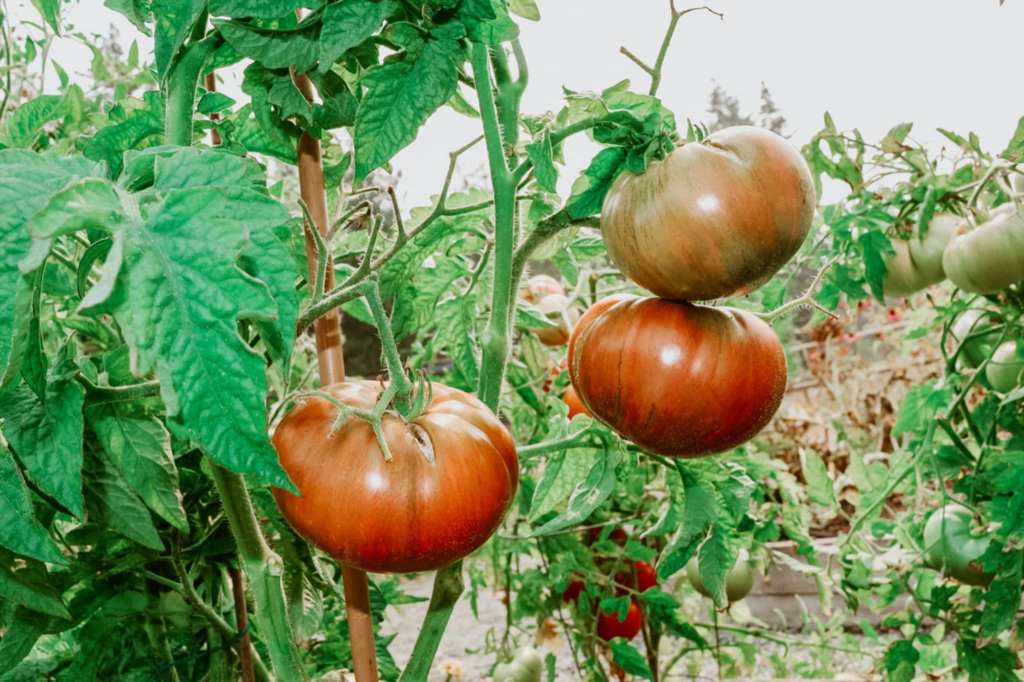
Vegetables…
Check your long term forecast. Most everywhere, you should be able to plant everything except your real heat lovers. That means everything except tomatoes, cucumbers, peppers and eggplants. I would wait on squash, too, but they are a bit hardier.
To plant out your tomatoes, you want to be plus 10°C (50°F) at night, or close to, and no risk of frost. We have one night with a chilly +2 degrees predicted next week so I am holding off, just in case.

- Fall sown seeds are coming up beautifully. Spinach, onions, lettuces coming up in the raised beds. Now that I know this works in raised beds here in my zone 3 garden, I will be doing more sowing this fall! In late October, in case you are wondering about timing. Put it in your daytimer so you don’t forget!
- If you got your beds fed with compost last week, it is time to start planting and laying out your weeping hoses.
- Before planting, run a hoe through the top inch or so of your soil. It will bring up any weeds that are germinating, plus cutworms and grubs that like to live in the top bit of soil.
- I have yet to plant my cool season crops (cauliflower, broccoli, onions, peas, cabbage, kale) but have just not yet had time. I mean, I know they will be fine, but they really need to go in asap!
- I toss the grubs on to the road/sidewalk for birds to eat as I cannot bring myself to squish them. If you have chickens, they love these fat, juicy bugs.
Lay out your weeping hoses or drip systems in preparation for your plants. I use the 25 footers in my 12″ long beds. The flat soakers work better than the round rubber ones do. Those round ones are apt to explode.
Small plants, when first planted in the beds, will require hand watering twice a week. Not daily! You want them to start putting down deep roots, so let them dry out lightly between each watering. Once they are actively growing, have good roots, you can start using the weeping hoses once or twice a week for 15 to 20 minutes.
Newly sown seeds need to be watered daily until they germinate. Once you see them popping out of the soil, you can cut back the watering to twice a week and then after they are up, actively growing, with good root systems, switch to your weeping hoses.

My garlic was coming up everywhere except where the leaves were, so I moved the leaves to another empty bed. I wanted to leave them on the garlic as mulch but it was keeping the ground too cool (holding in the winter cold) so they had to go.

So, I moved the leaves over to this bed instead. I have not yet decided whether to plant potatoes here, or flowers, or more tomatoes….
The leaves will work as mulch and will break down to feed the soil, with time. The dollar store trellises hold the leaves in place and keep the cat from going in there and doing her business. An easy, painless, cheap way to have an indoor/outdoor cat and a garden. Once stuff starts to grow, I put the trellises away till next year. She will not go in it when it is full of growing plants.

Don’t forget to harden off your seedlings (veggie or flower) before you bring them outside, or they will get sunburn. The leaves will go white and unlike us, they will not go back to ‘normal’. They will die, fall off, or need to be pinched off. To harden off your plants, put them outside in a shady spot on day 1, just a we bit of sun on day 2 (morning sun is the best), a bit more sun on day 3, etc… until they are able to go out into full sunshine. If you need to, you can push this along so that it only takes 3 days (like plants that are only going to get morning or part sun), but with others, you really want to stretch it out a bit longer.
If you were growing them in the greenhouse, they should adapt within a day or two.
Flowers and Such…
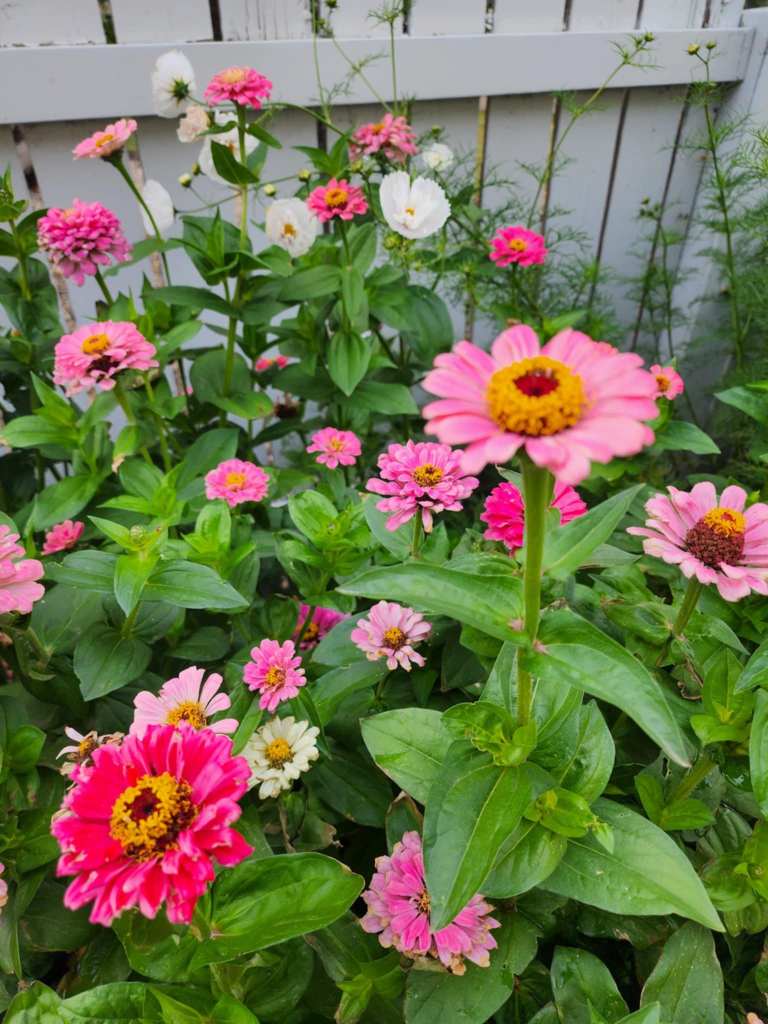
Flowers to Direct Sow
As with the vegetables, everything except the really tender plants can go out now. This means all but your dahlias, begonias, and impatiens.
Check your long term forecast, of course. If you see anything in the low single digits you may want to wait.
These guys can go in now : )
- Sunflowers
- Cosmos
- Zinnias
- Alyssum
See here for how to grow great zinnias from seed.
See here for how to grow great cosmos from seed.
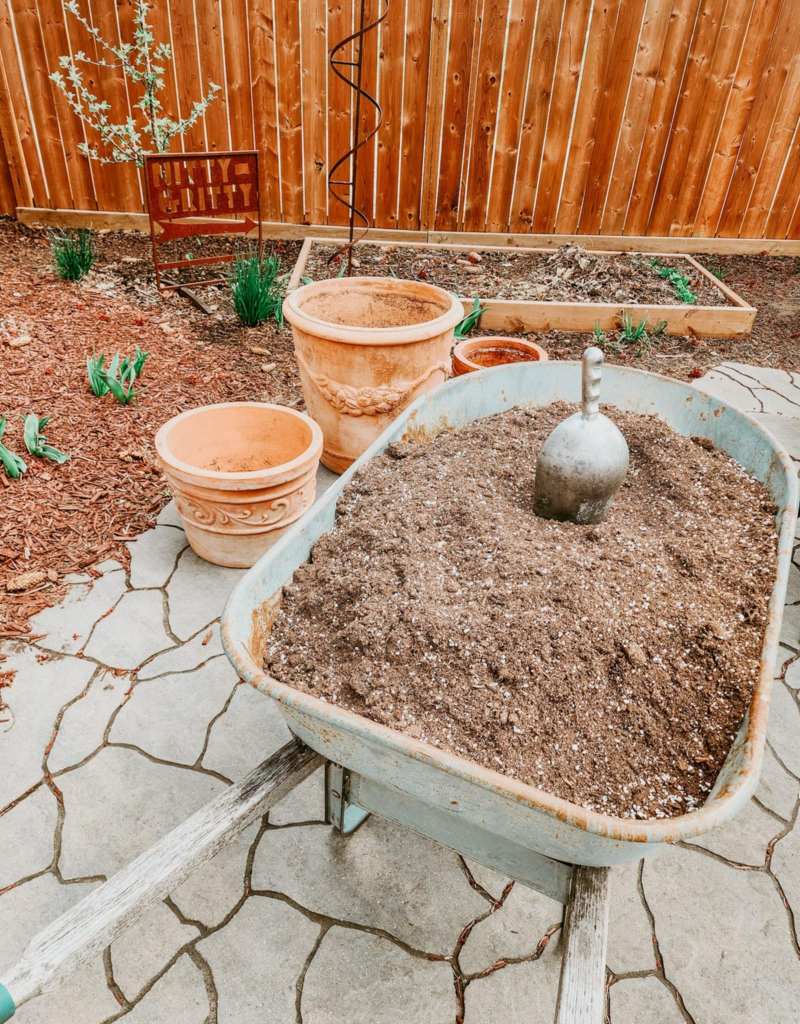
I have filled all my pots and planters, ready for their flowers, with a really good quality potting soil. I use my ‘secret recipe’ (shh, don’t tell anyone ; ) of 2 parts potting to 1 part compost or bagged manure. These will be planted up next weekend, on the long weekend, when I am also making all my hanging baskets.
They will be planted up with the thriller, filler, spiller method. The thriller (taller plant, more showy, or more flowery) goes in the middle on pots that can be viewed on all sides. If they are in a corner, against a wall, then you put the thriller centered at the back.
Alternate the filler and spiller plants. Fillers are mounding to fill in the pot or basket nicely (lobelia, nemesia, bidens, geraniums, dusty miller) and spillers are trailing flowers or vines (bacopa, licorice vine, thunbergia, trailing verbena, petunias, ipomea).

Keep an eye out for early season pests. There is usually a flush of aphids that comes through in late spring. That is followed by thrips, leafhoppers, maggots, cabbage worms, and more aphids later on. There really is no end to the bug season.
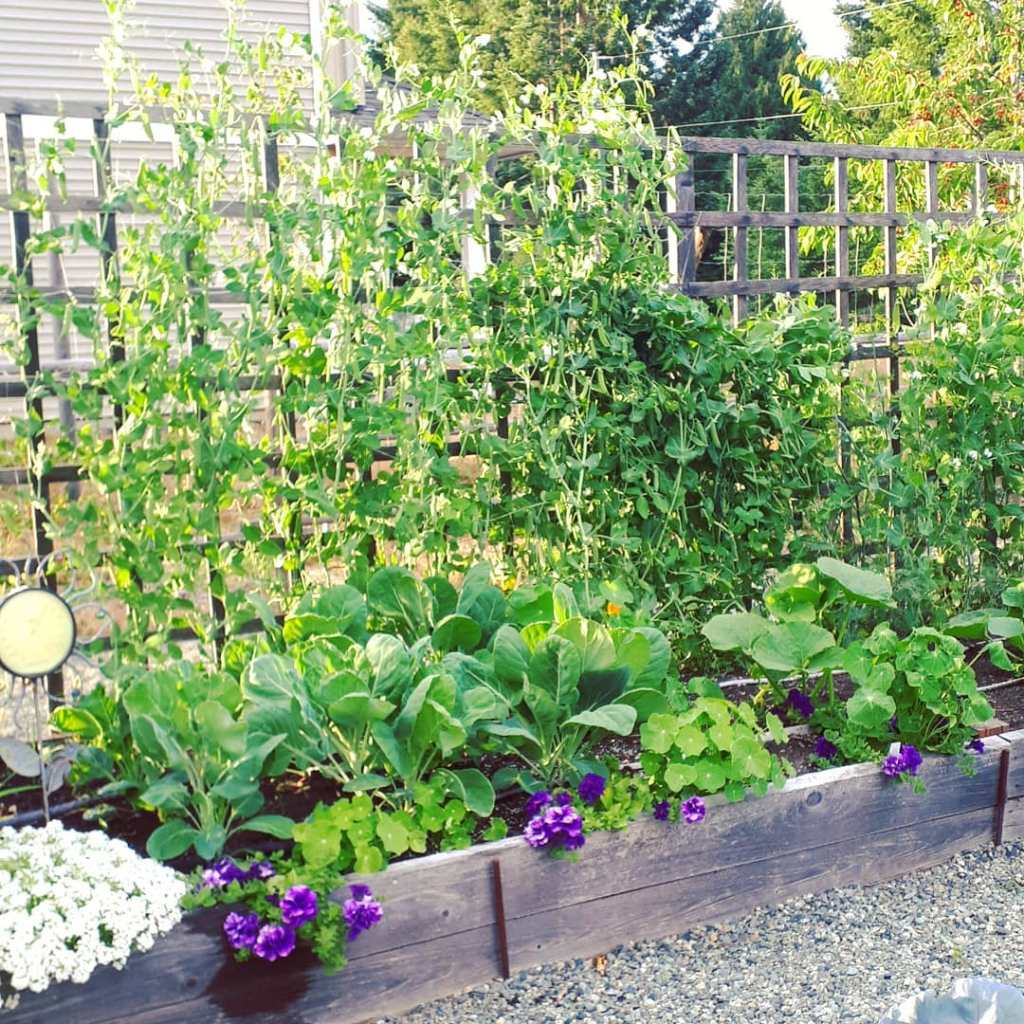
Plant for the pollinators. Add flowers to your food garden to attract bees and pollinators, plus predatory insects to eat any bad bugs that come your way.
These predatory beneficial insects eat pests) and birds. Birds will feed the bugs to their babies. They need lots of bugs so please do not spray or use weed and feed on your lawns.
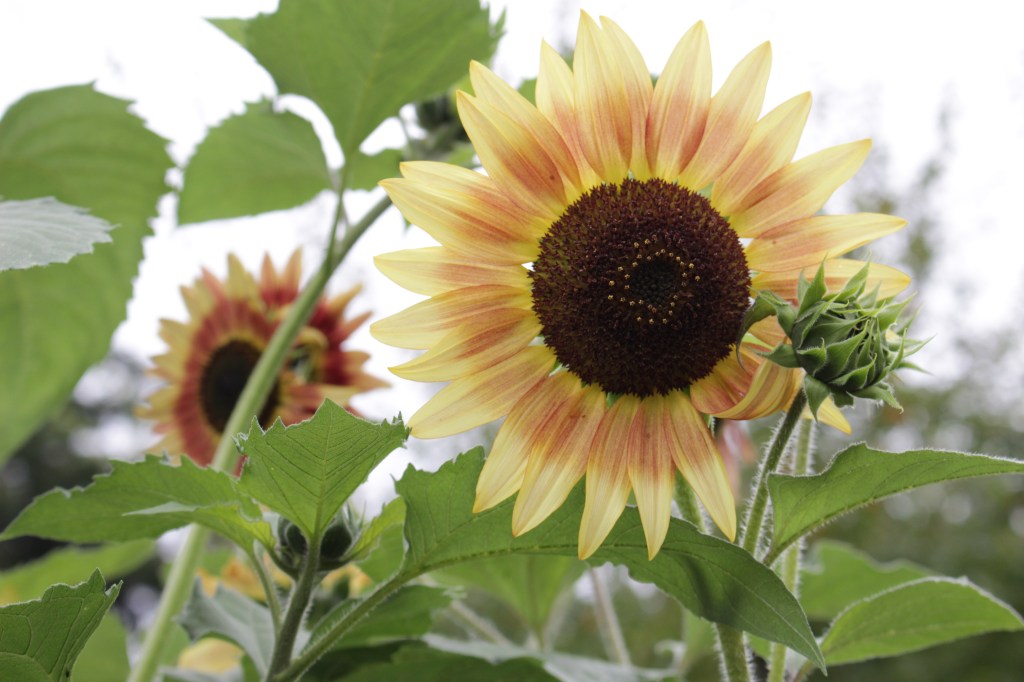
Annual flowers will flower all season long for the bees… plant alyssum, zinnias, sunflowers, cosmos, calendula, verbena, salvia, marigolds. Always choose open flowered ones, when possible, as they are more attractive to the bees and hummingbirds.
Culinary herbs such as sage, thyme, borage, lavender, mint, chives, dill, coriander, basil, rosemary, will attract the pollinators to your food garden and let some of them go to flower.
Yard & Other

Prune your raspberries. Here you can clearly see which canes to take down to the ground and which ones to leave.
- The ones that are brown, peeling, may be gray, and have the raspberry caps still on them, those are done. they will not fruit again. Take them out.
- The canes with leaves on them but no caps are the ones that will fruit this year for you.
- The lovely pale new canes that you see coming up in the middle will fruit next year.
If you have not yet pruned your shrubs, you still have a little bit of time to do so. Roses, ninebarks, hydrangeas, forsythia, etc… do not do your lilacs until they have finished blooming or will be cutting off next year’s blooms, too.
Now that everything is leafing out, I have been around pruning off the dead tips and branches from my new, little shrubs that were planted up late last summer. This is winter damage that happens to young, new plants. When you take off the dead and damaged bits, the shrub will thank you by flushing out with new growth. As long as the dead bits stay on your wee shrub, it will linger and not thrive.
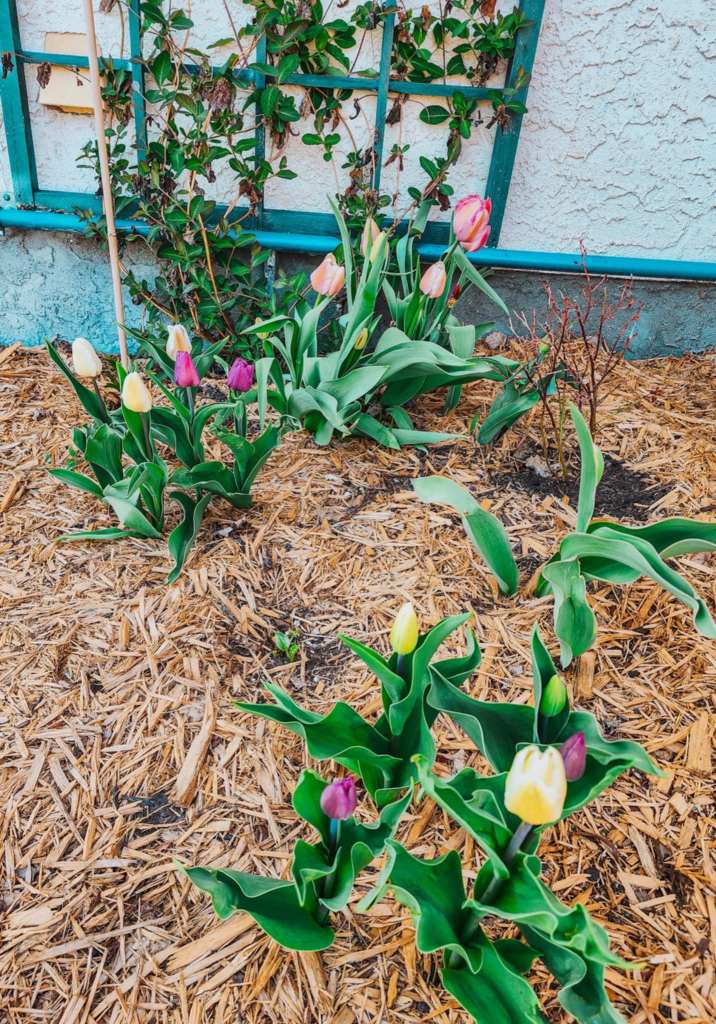
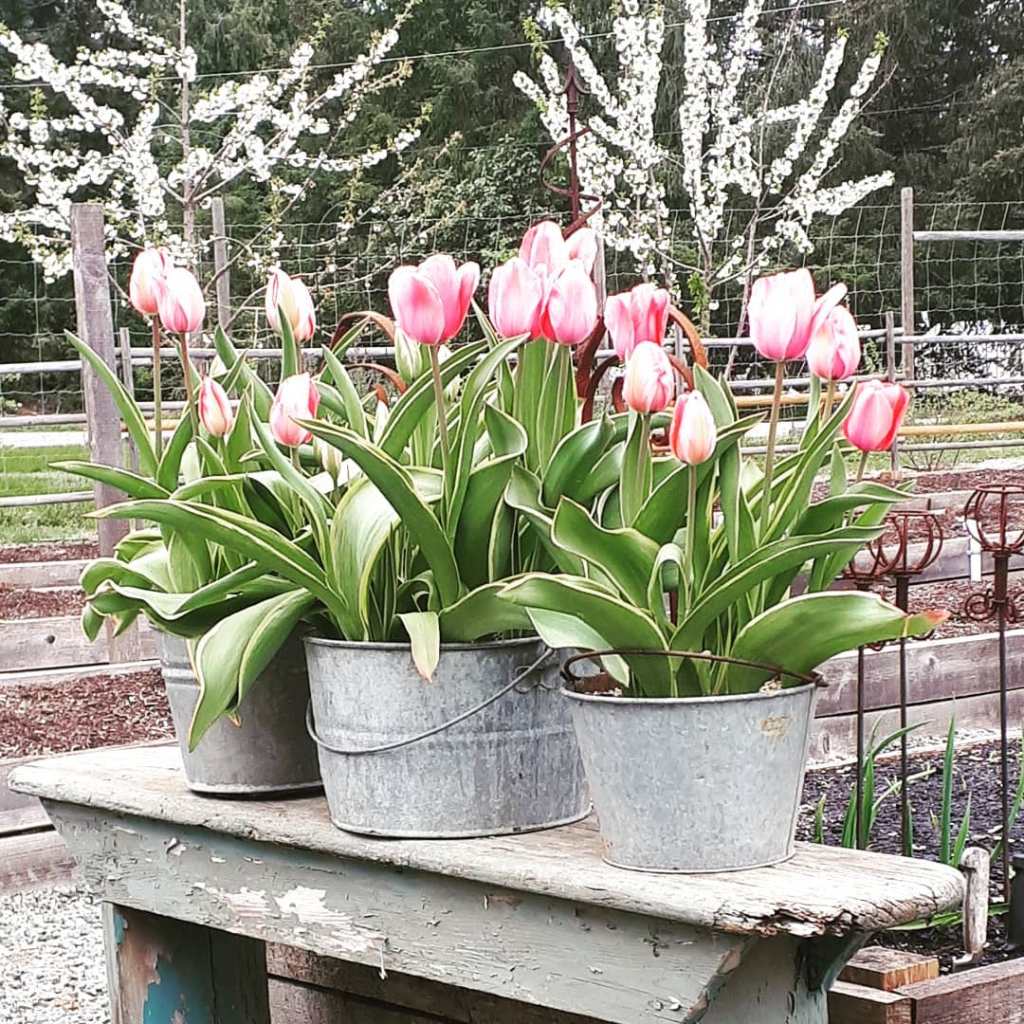
Remove dead tips and leaves from vining plants, too, such as the honeysuckle above. This was taken before I pruned, while my focus was just on the lovely tulips. It has since been pruned and looks amazing.
The small shrub is my blueberry just coming to life, and perennials are starting to pop through the ground so I have moved the mulch to allow warmth and sunshine to get at the soil around them.
Oh, just in case you are wondering… nothing grows well under a dryer vent, as you see in the picture there. That vent is no longer in use! We moved our dryer and they rerouted the vent to the other side of the house. So, now we just have a vent that goes nowhere.. but also does not blow damp heat on plants year round.
You can prune off anything dead, damaged, or diseased at any time of year. Gone is best.

Put up traps for coddling moths. This is the time to save your apples and pears from worm damage.

This is the time to be out there weeding! While they are little and easy to pull out by the roots.
Mulch your beds. Even ugly mulch, like I have in the bed above, is better than no mulch! It will rot down to feed the soil and be replaced by nicer mulch in a year or two.
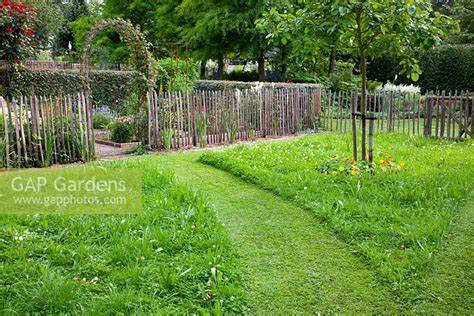
Take part in No-Mow May. It gives your pollinators and beneficial insects food and habitat for the next few weeks, till everything else is up, growing, thriving, and flowering…. and honestly, it looks pretty charming, too.
Do your over-seeding, top dressing, and lawn fertilising now, too. The new pre-emergent weed killers are safe to use. They keep weed seeds from germinating in a way that is safe for the insects, kids and pets, and our planet. Do not use if you are over seeding though, or your grass seeds will also not germinate.

That is what I am working on this week… sowing, planting, weeding. I have purchased perennial flowers and new shrubs for the front yard so am ready once the landscaper removes the sod and digs up the old spreading junipers.
If you are wondering what plants I chose.. I went with lots of salvia and thrifts as they are hardy and great for the pollinators. Still on the look out for the geraniums and campanula. Read more about how I chose my plants in the Sunday Ramblings a few weeks back, from the seminars.
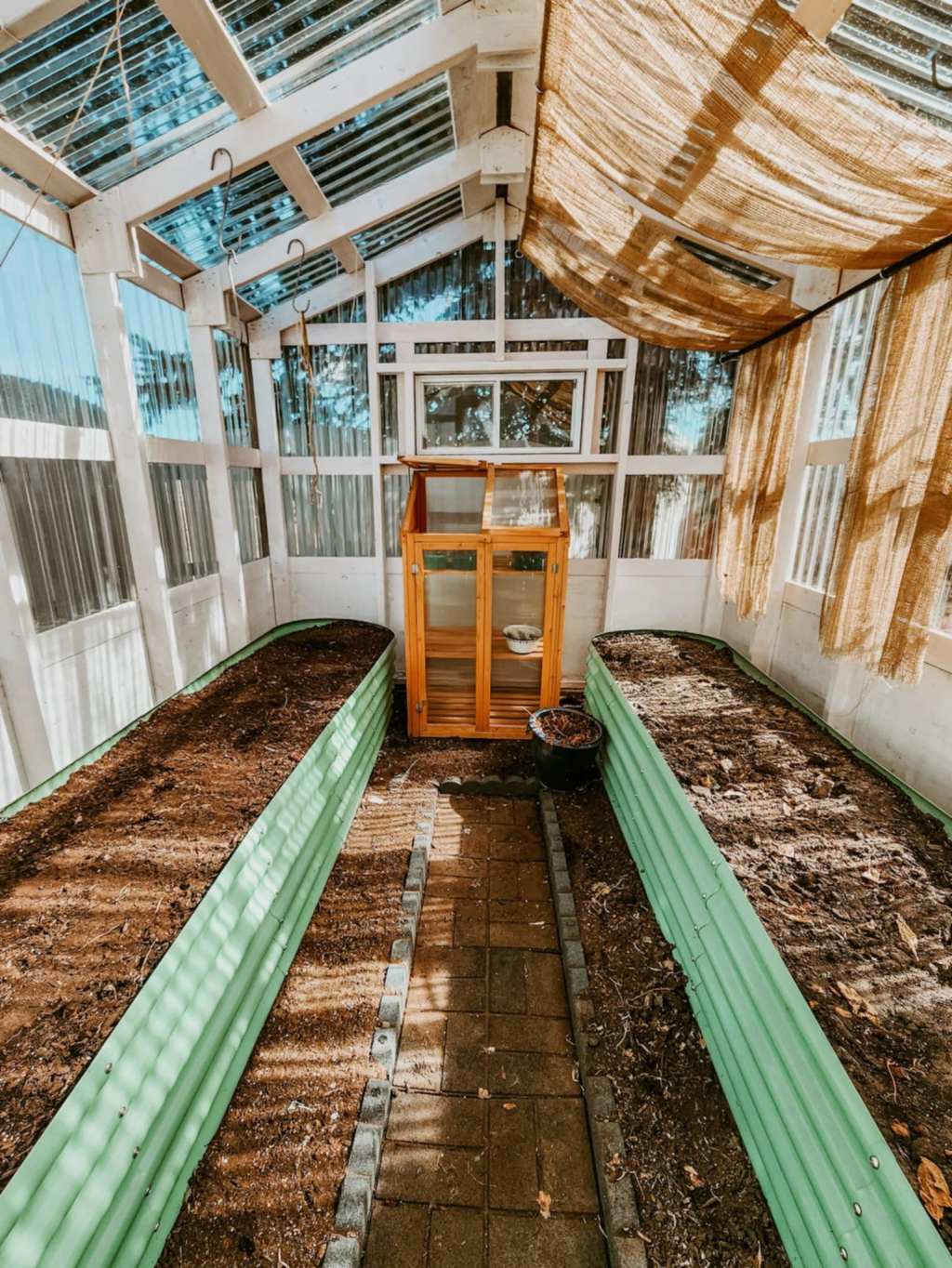
I have just purchased two new, dark green, metal, raised beds. They are 3 feet wide and 6 feet long. I am putting them along our back fence where the soil is really, really poor. It is hard as rock. I think the former owners put sand in it to break up the clay… and you all know what happens then, eh? It turns into concrete. So, instead of just mounding the compost on top of the ground, we’re putting it in raised beds to keep things contained, look nicer, and the dog won’t run through them.
So, there is that to add to the mix, too. Will be a busy week as we try to feed all the plants and beds with compost, plant the beds, pot up the flowers.

If you are local, I have these workshops coming up over the next 3 weeks, running till the end of the month : ) If you are part of a homeschool group, I can put on a hands on, how to sow, plant, and grow vegetables workshop during a weekday afternoon. Give me a shout.


 The Marigold Potager - A Zone 3 Prairie Garden
Leave a comment