
Cosmos are just about the easiest flowers of all annuals to grow. They are hardy, do not need rich soil, self seed, are not prone to many problems or pests. This is all great news as they are also the prettiest of flowers with their delicate petals on tall stems, and frond like foliage.
The flowers are magnets for birds, bees, and butterflies, as well as the beneficial insects (lacewings, parasitic wasps, tachinid flies, hoverflies) that feed on the pest insects and pollinate your food garden.
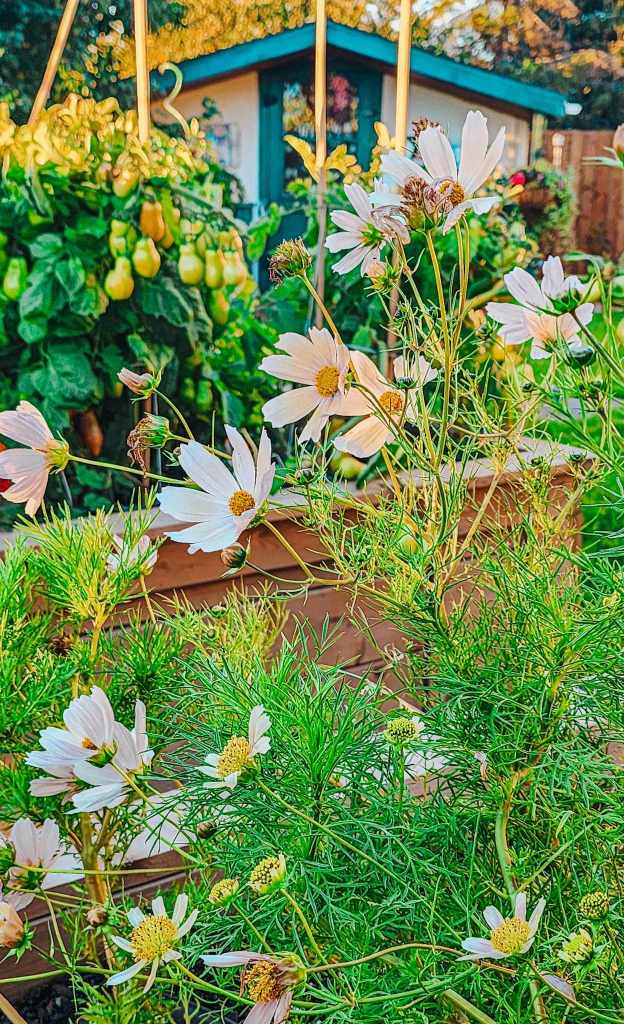
Cosmos can easily get as tall as 6 feet, though can also be a dwarf variety for pots and border plantings. See the very bottom bit for varieties and heights.
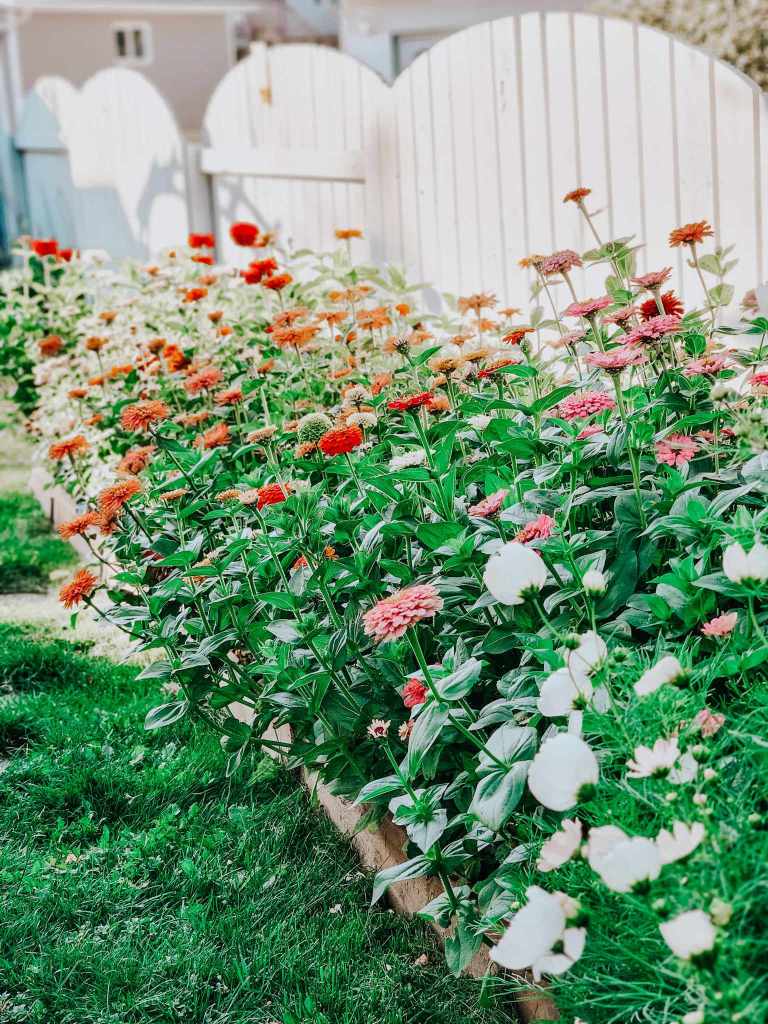
Growing Cosmos
To direct sow cosmos, the directions always say to sow after your average last frost date. This is probably sound advice though I have always sown mine a week or two before. On Vancouver Island, in a zone 7, my last frost date was April 28th but I would sow the seeds on any dry day from mid to late April, whenever the garden soil was workable.
Here on the prairies, in a zone 3 with a last frost date of May 20 ish, I sow anytime in May that we have conducive weather.
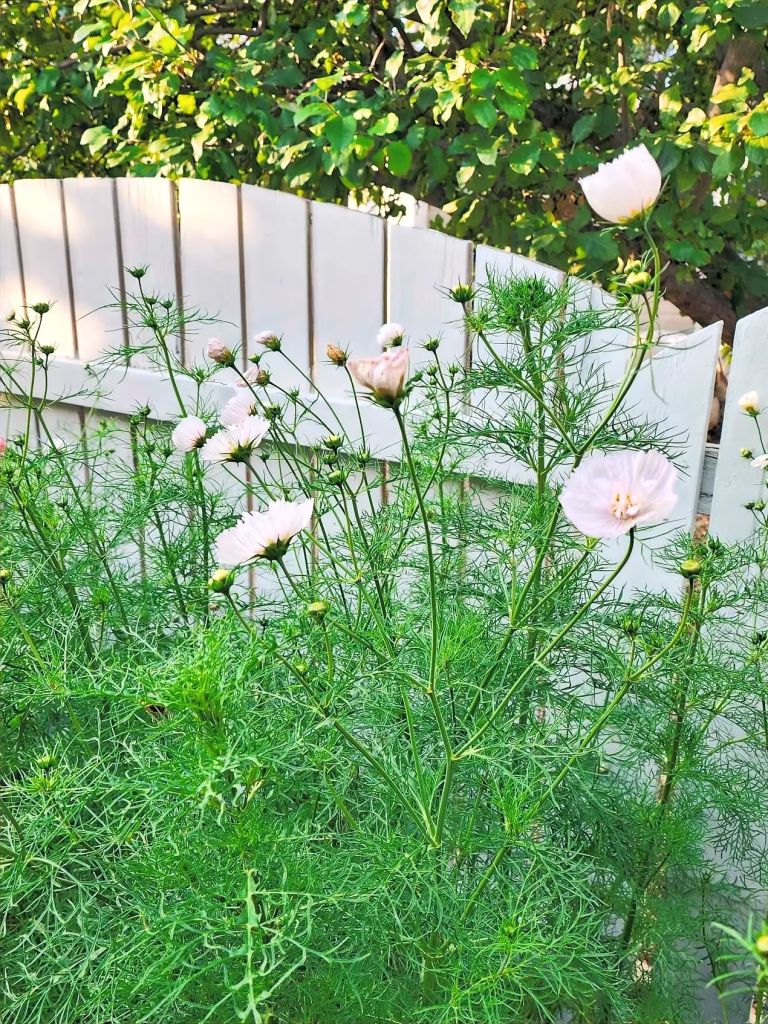
Direct sowing is the easiest way to grow cosmos, though they can be started indoors to get a head start. To direct sow…
- Choose a full sun, or mostly all sun location. They do not need amazingly rich soil, will grow well in just average soil. In fact, if the soil is too rich, they will be more foliage than flowers.
- Run the hoe through the bed to knock down any weeds that are growing or germinating. I like the Winged Weeder (also called a triangle hoe) as it just slices underneath the surface of the soil, unroots and knocks out weeds without digging into my garden bed.
- Rake the soil to level it out.
- Sprinkle the seeds on the surface of the soil. Push the seed slightly into the soil with your finger, making sure the seeds are 3 to 6 inches apart. The seeds should be just covered with soil so it is about 1/4 inch underneath the surface.
- You can also sprinkle some soil or compost over top of the seeds rather than poking them in.
- Tamp the seeds into place with the back of the rake.
- Water them in. Water daily till the seeds have germinated, then you can cut back to a couple of times a week. Seeds will germinate in 7 to 14 days.
- As they grow, thin out the seeds so they are well spaced out at 6 to 12 inches apart. You can easily move the seedlings to another spot, just make sure you water them right away so the roots are damp in the new spot.
- Once they are well established water only as needed, no more than once a week. If you are in drought conditions, cosmos (and zinnias) are the flowers for you. They do not require a lot of water to give you spectacular results.
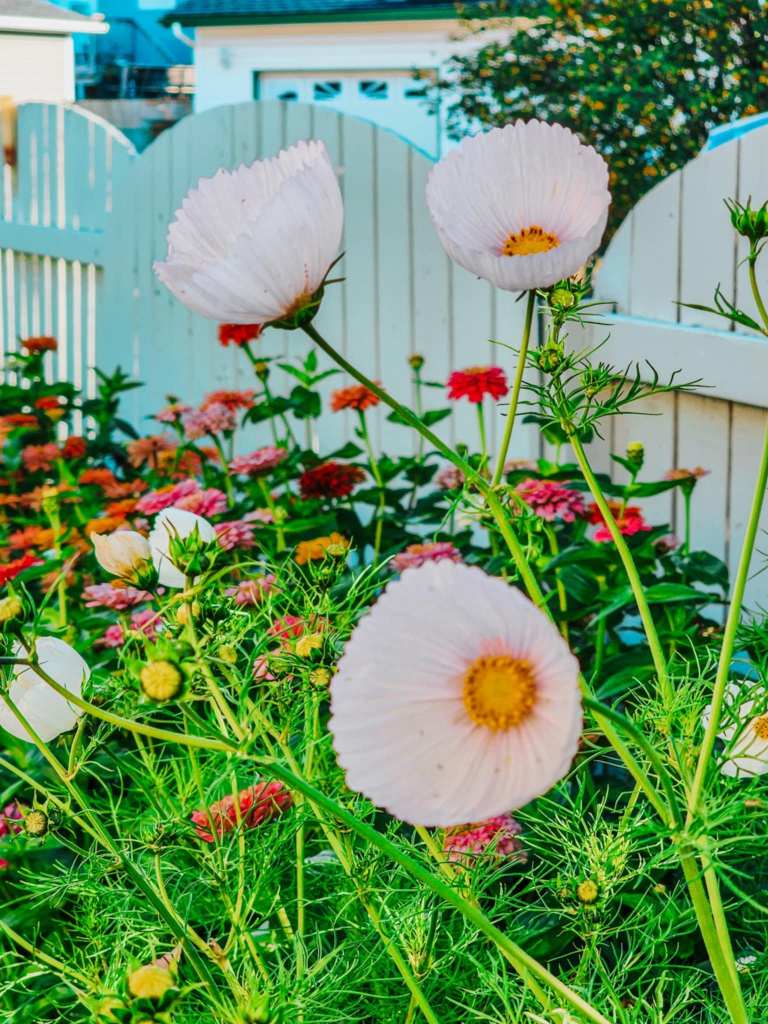
Do not fertilise or overwater. They thrive in hot and dry.
Growing them along a fence is a good idea for the support.
Deadhead regularly to promote branching and more flowering.
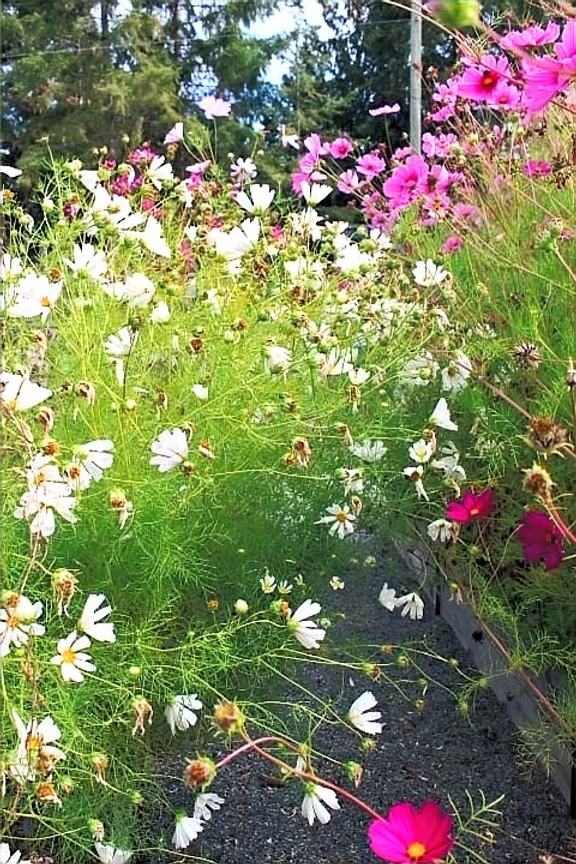
If you want them to self seed, allow the flowers to go to seed in autumn.
To bring the flowers in as cut flowers, you want to pick them in the morning, after they have just opened. Strip off the bottom leaves, anything that will sit in water to keep the water fresh and keep them blooming longer. The flowers should last a week in the vase.
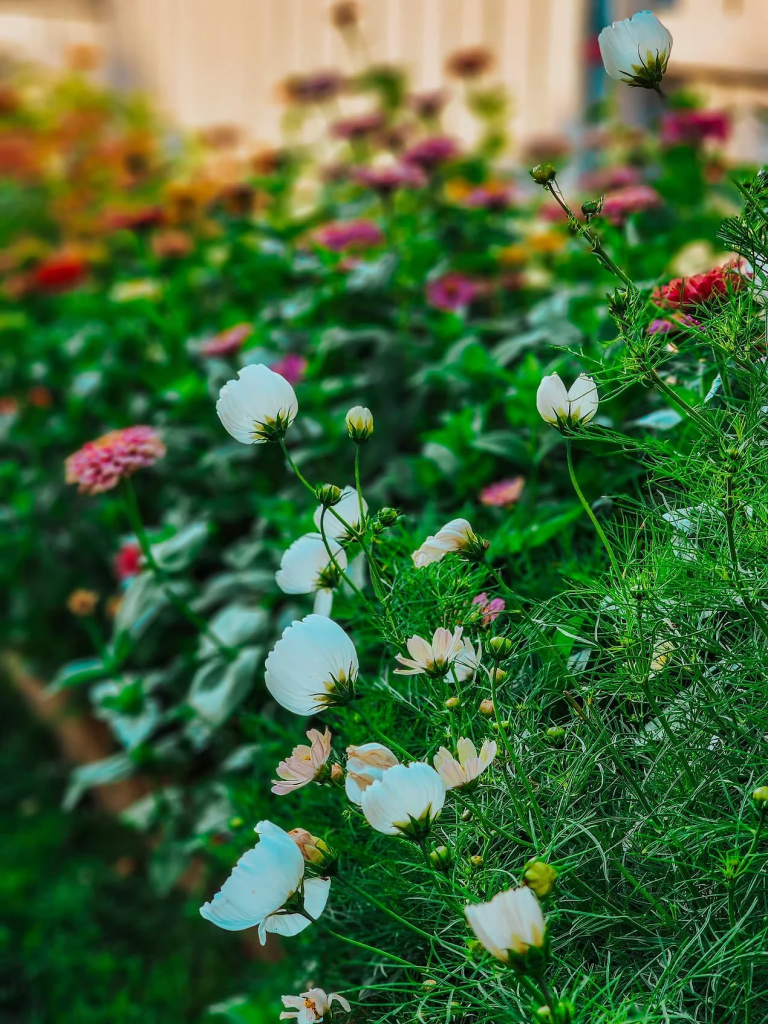
Some of My Favourite Types of Cosmos
- Apricot Lemonade – 2 to 2.5 feet tall. Apricot coloured petals with lilac undertones.
- Apricotta – 3 to 4 feet tall, slightly ruffled edges, shades of blush, apricot, and rose.
- Candystripe – 6 feet tall, white petals with pink edges.
- Cupcake White – 2 to 3 feet tall, look like frilly cupcake liners.
- Cupcake Blush – 2 to 3 feet tall, look like pink frilly cupcake liners.
- Psyche White – 2 to 4 feet tall, frilly double white petals
- Rose Bon Bon – 2 to 4 feet tall, frilly, multi-layered, poufy pink flowers.
- Veloute – 2 feet tall. Dark velvet red flowers, others are white with red stripes, and variations of the colours mixed on the same stem.
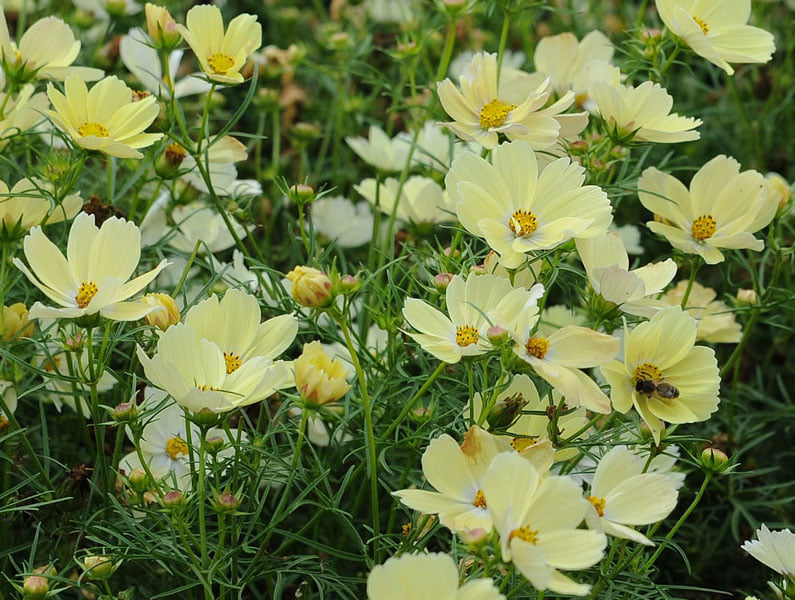
- Xanthos – dwarf stems, pale yellow to creamy white blossoms.
- Xsenia – 2 feet tall, terracotta with rose pink undertones.
These are just some of the newest varieties, ones that I surely do love, but the seashells and old fashioned colourful ones never ever go out of style!


 The Marigold Potager - A Zone 3 Prairie Garden
Leave a comment