
Here are the common issues that you may notice when growing tomatoes, and how to deal with them. I have not added the wilts to this list as they tend to be early season issues, this post deals with common mid to late summer issues.
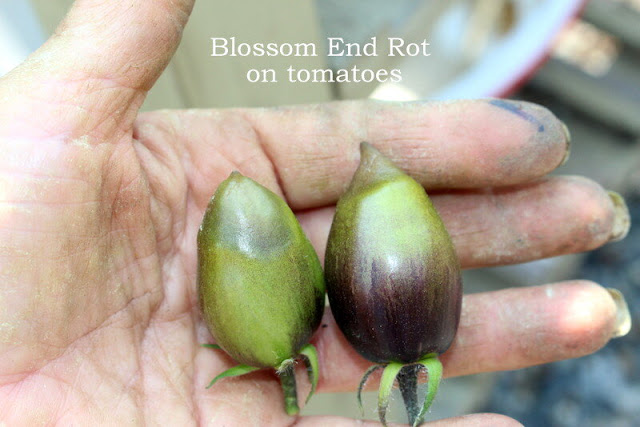
Blossom End Rot – The most asked question about tomatoes throughout the growing season is about Blossom End Rot, when the end of the tomato turns black or brown and scabby looking.
This is actually not a tomato disease, but is an environmental issue brought on by a lack of calcium to the plant. This lack is not caused by an actual soil deficiency, but rather by some kind of stress to the plant… It may be from the weather conditions being too wet or too dry, too cool or too hot. It can also be caused by drought, low soil pH, or too much fertiliser.
The paste aka Roma style tomato is most apt to get BER. Others may also get it but the pastes are most susceptible.
How to fix BER? Despite the popular myth, you cannot fix the problem by adding eggshells or milk powder. It takes the eggshells over a year to break down and amend the soil. Sorry! I know that myth keeps making it’s rounds on the internet, but it is simply not true. However, you can fix the problem by changing conditions accordingly.
Having a drought? Try to water regularly, not letting them run too dry or too wet, adopt a regular watering schedule.
Are you watering too often (most common reason)? Start deep watering twice a week instead.
Feeding them too much high nitrogen fertiliser? Stop fertilising or switch to a veggie fertiliser. Tomato fertilisers will have the right amount of nitrogen, and often also contain a bit of calcium, too. The best times to feed tomatoes is in the beginning for a few weeks after they have been transplanted and are starting to grow, and then again for a few weeks time when they are flowering and fruiting (like right now : )
Often you will find that the weather improves, the plant adjusts, and the BER goes away on it’s own. If it persists throughout the growing season , check your pH to see if it is too low. Acidic soil can make it difficult for your plants to access the calcium in the soil. If you need to raise the pH, add lime in the fall so that it has time to make a difference for next year’s planting, it takes many months to change the soil pH.
Potted tomatoes are more prone to BER than garden grown tomatoes, as they cannot send roots down further underground to seek water and are solely dependent on you. Water every second or third day, depending on the size of the pot, less often in the beginning and then more often as the plant grows and the roots fill the pot. Feed potted plants weekly with a good liquid tomato food or liquid seaweed. Toss a bit of Epsom salts on top of the soil once a month.
Some varieties are more prone to BER than others. Paste tomatoes are very susceptible.
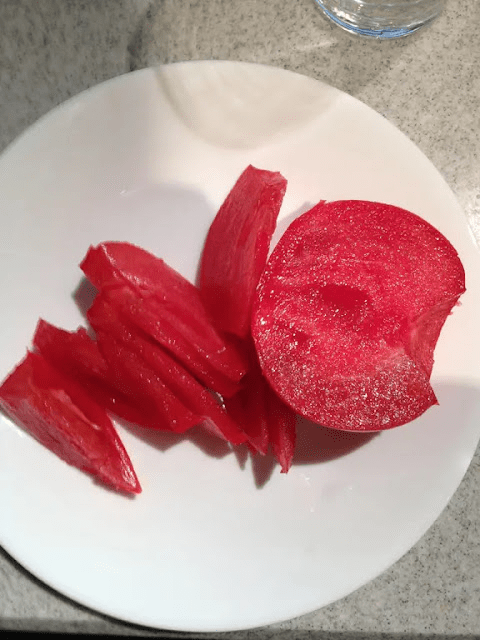
Mealy tomatoes – tomatoes have a grainy, gritty kind of texture. They are safe to eat but the texture is really off-putting and the taste is not yummy, these tomatoes are probably best used for saucing.
Mealiness is caused by stressors like over-watering, high temps, cool temps, or the nitrogen being off in your garden. When there is a combination of high heat and perhaps watering more often than usual, you may find yourself with some mushy, grainy tomatoes.
Cure – What can you do about it? Water less often but deeply to keep the sugars from turning to starch and supply shade, if possible.
Not all tomatoes will go starchy so if you have a variety that keeps on giving you mealy tomatoes even after you make adjustments, probably best to drop that one from your grow-list in the future.
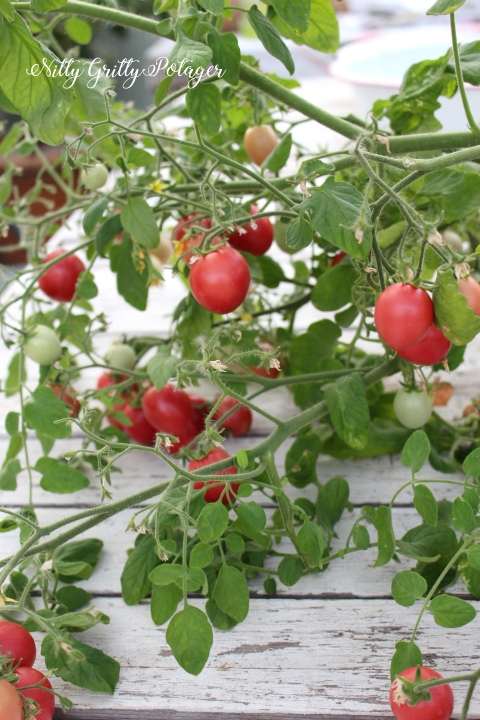
Thick Skins – Tomatoes with really thick or tough skins. When you chew and the tomato itself is yummy but the skin has to be spit out as it is so thick and hard to chew.
It is not the tomato variety, don’t blame the poor tomato, it is mother nature yet again. Thick skins are caused by excessive high temps, dry weather, and too much sun.
While this environmental issue can affect all sorts of tomatoes, but we mostly tend to notice it most on cherries and grapes as they are the ones that we just pop into our mouths.
Some tomatoes were bred to have thicker skins for pest resistance, shipping, pastes for more pectin for canning, or the lobed tomatoes for stuffing but in general, most of the tomatoes we grow for fresh eating are not meant to have these thick skins.
Cure? If possible, grow your tomatoes where they get some relief from the hot and dry, so maybe the side of the house where you have about 6 or 7 hours of the hot sunshine? Or an east facing bed when the sun is less intense, under a structure like a pergola or gazebo, or even in the greenhouse under the cover of shade cloth. Grow tumbler types in a hanging basket under the gazebo or pergola where they get more dappled light or less intense hours of sunshine.
Oddly enough, heirloom tomatoes tend to be less apt to have these thick skins which is part of why they are less suitable for shipping, sold less often in grocery stores.
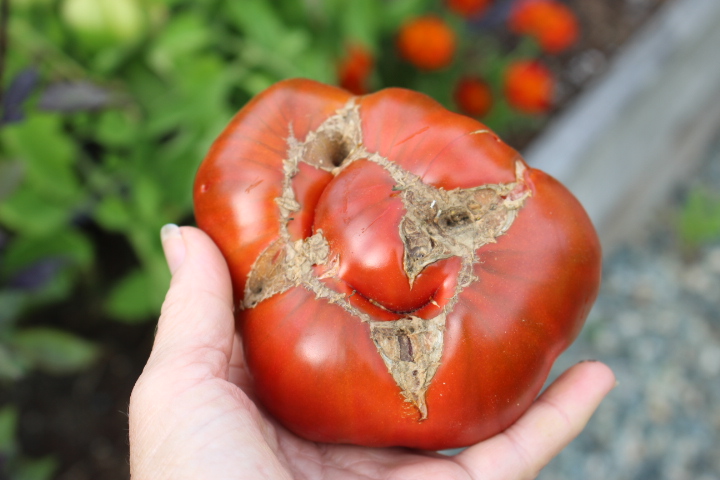
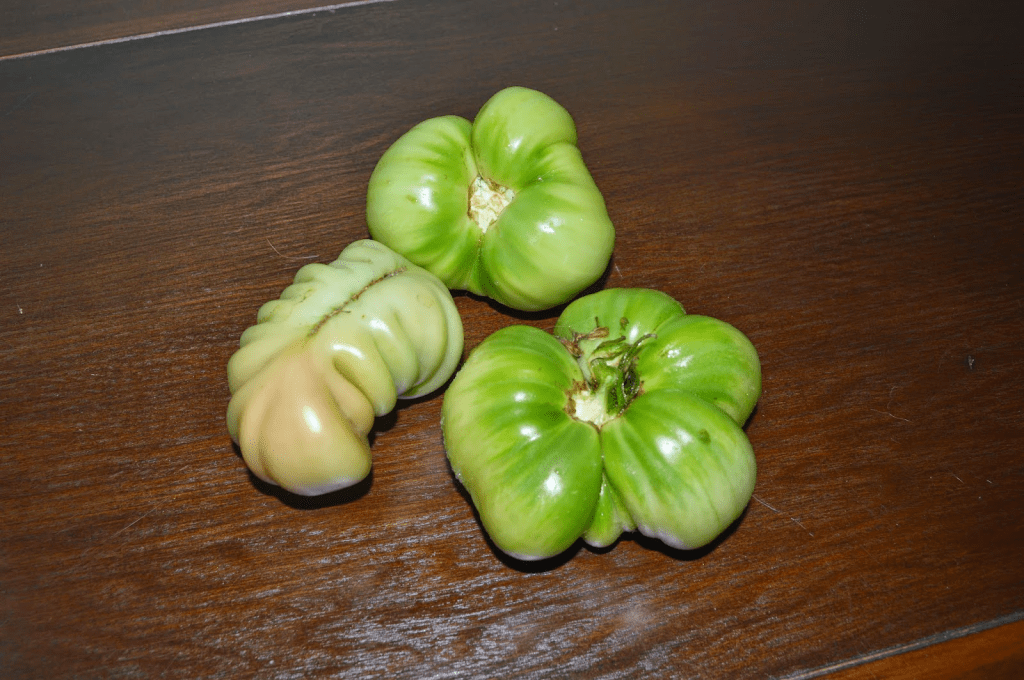
Cat-Facing – Cat Facing = miss-shapen fruits with scarring and indentations.
If your tomatoes are lumpy or look like they have been fused together, that is nothing that you did wrong, is just poor pollination.
At the time that your tomato was being pollinated, in early summer, many weeks ago, the weather was either too hot, too cool, too wet, or too dry. This causes lumpy tomatoes. Not to worry, the ones that were pollinated later, will be completely normal.
If the air temps are cool, less than 10 C, during pollination, it may disrupt the pollination of the fruit.
It is a problem that occurs with the cooler temperatures and is more common in heirloom varieties than in hybrids.
Beefsteak tomatoes are the most prone to this cat-facing but slicers may do it, as well. The tomatoes are still edible, just a little bit wonky.
Zippering – Zippering on tomato is the presence of a long, thin brown tissue resembling a zipper, which usually runs from the stem end to the blossom end.
Zippering, just like cat-facing happens if the air is humid, the weather is too wet or cool when pollination of the tomato flower is happening.
It is not harmful, is still perfectly edible, just not the prettiest.
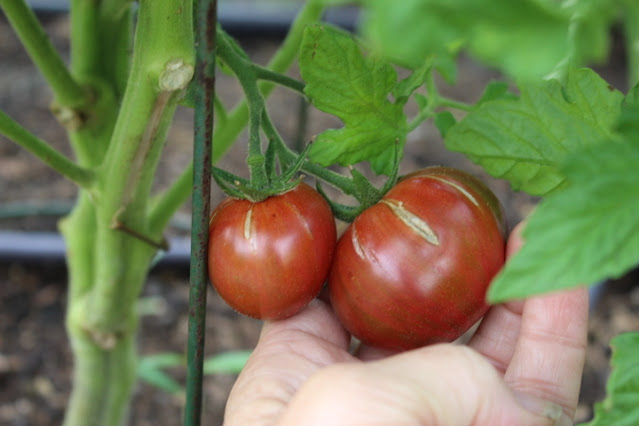
Cracking – Circular cracks or vertical cracks on your tomatoes.
Cracks that go in circles around the top of your tomato, or down the sides from the stem, mean a big fluctuation of moisture happened in your garden.
This often happens when conditions have been dry and warm and then suddenly Mother Nature provides you with a big, lovely rainfall. The tomatoes grow so quickly that their skins cannot keep up with the swelling flesh and so they crack.
This can also happen if you water very heavily after days of being dry, or forget to turn off the water for several hours, etc. I have been known to do that (hence why unless otherwise stated, these pictures are all from my own garden.
As long as the cracks have sealed over and do not have black or brown growth (mould) on them, they are still edible. Cut off the cracked bits and discard. Do not eat if there is any doubt about mould, as is the case with the tomato below.
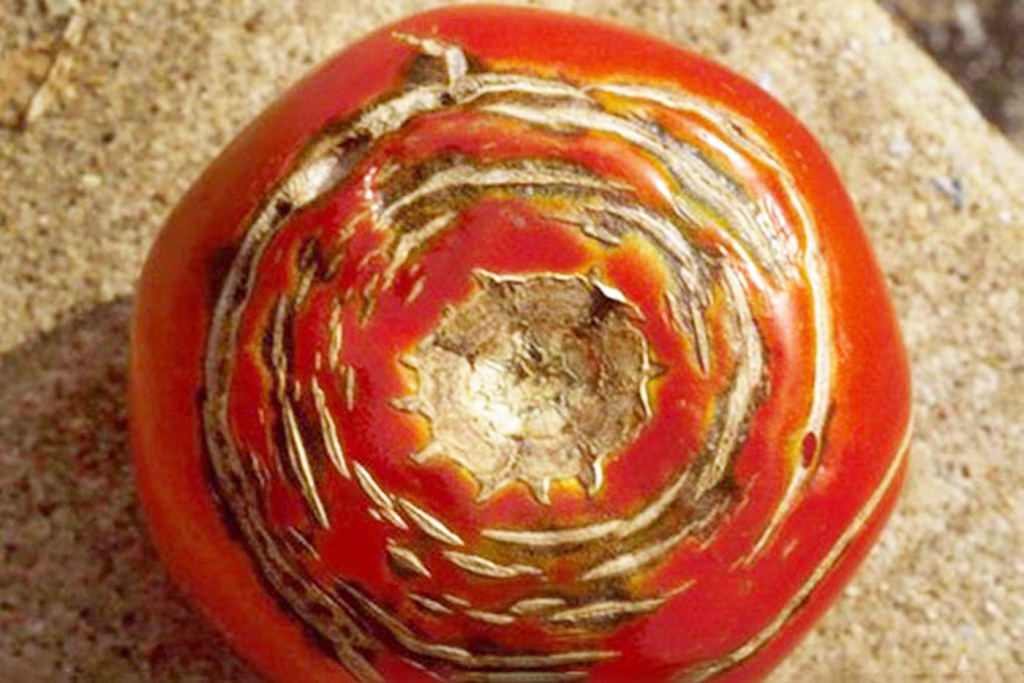
The cracks may go in circles around the top of the tomato or down the sides of the tomato.
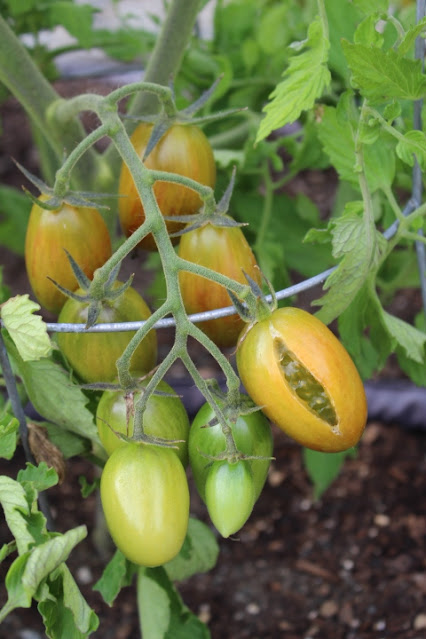
Splitting – Your tomatoes suddenly have a split in them that goes right through to the flesh.
Splitting, like cracking is also caused by a sudden good rainfall or a really heavy watering.
Tomatoes that split right open are prone to problems like bugs, mould, or bacteria settling in, so I would not eat these guys. The ones with the skin cracks that sealed over are fine, but anything split open to the pulp inside is not safe to eat.
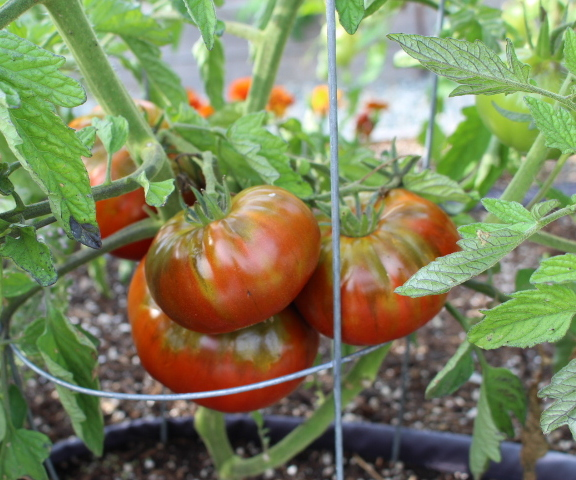
Green Shoulders – The tomato is ripe everywhere else but the top remains green and hard.
Green shoulders are caused by extended periods of hot and dry weather, or too much sun exposure. They will not soften up no matter how long you leave them on the vine.
Cut off the green shoulders and enjoy the rest of the yummy tomato.
Cure – Offer shade by placing other taller potted plants in front of them, or shade cloth, etc.. Also, when you are pruning your tomatoes, do not remove too much foliage as the leaves offer some shade and relief from the sun.
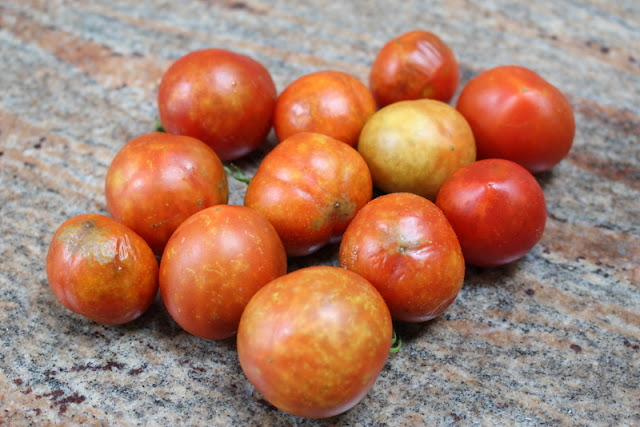
Mushy and stippled looking tomatoes – This is stink bug damage. Shield shaped stink bugs will go after just about any fruit, flower or veggie, and will make them go mouldy, or mushy, or twisted, always inedible.
The bugs stipple the tomatoes as they suck out the juices, which turns the tomatoes all soft and they may even begin to rot on the vine. They are not edible, toss them in the compost bin.
Cure – Spray stink bugs with Safer’s insecticidal soap if you only have a few. Pick them and drown in a bucket of soapy water if you have a lot of them.
Plant lemon balm, thyme, parsley, sweet alyssum, daisies, and zinnias to entice parasitic wasps and tachinid flies to your food garden. They are your best defense against these nasty pests. Other beneficial insects will also help to control the numbers, so plant a good variety of both herbs and annual flowers in amongst your vegetables.
Do a really good garden clean up in fall so that the stink bugs are not left to overwinter in your potager. The Rescue company is said to have a stink bug trap that will lure them away from your garden, but I have no idea where you get them. Check with your local greenhouse/garden center.
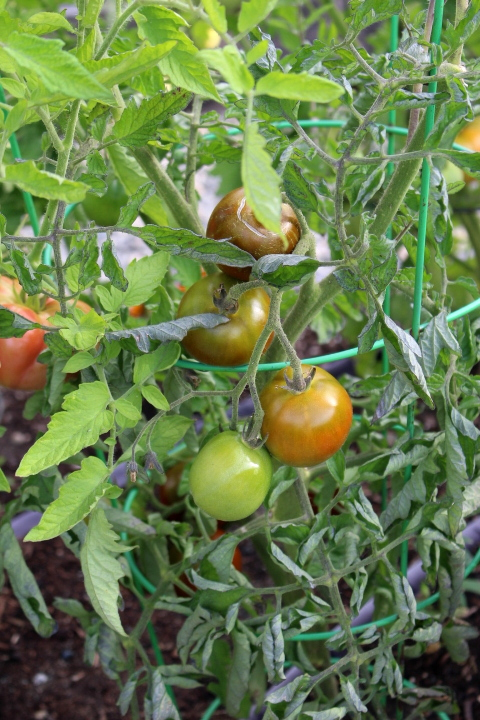
Curled foliage – Tomato leaves are curling inwards.
Leaves will curl in on themselves in an effort to save water, lose less moisture in times of hot weather. This will happen if the soil is too dry when the hot weather comes, or if you have drying high winds or dusty winds along with high temperatures.
The curling means that there is not enough moisture in the roots to bring water to all the leaves, so they curl upwards to prevent further water loss from happening. This can also happen if the tomato is growing in too small of a pot and going too hot and dry.
Sadly, once the leaves have curled in on themselves, they will not right themselves, will stay like that all summer. Not very instagrammable ; ) Any new foliage will usually be fine, flat and fresh looking , but the old leaves will remain curled.
Leaf curl, however, is not anything to worry about, except maybe serves as a summer long reminder to water deeply and regularly.
As one wise gardener said… not to worry, you are growing tomatoes, not leaves : )
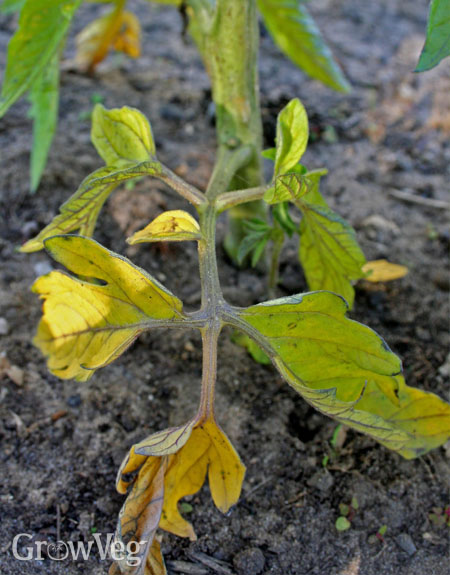
Leaves turning yellow – Generally caused by a nutritional deficiency or poor soil, unless you also have wilt, brown spots or lesions.
This is not a reason to worry too much, unless your entire tomato plant has these yellow leaves. If it is just the bottom ones, remove those ones and feed your tomato plant.
Bottom leaves will yellow or brown as they age as they are the oldest leaves. This is not a cause for concern.
This may also be due to the weather. If it has been too cold or too wet for a prolonged amount of time, your plant will begin to struggle with getting enough nutrients.
Cure – Feed your plants with a good organic tomato food, an all purpose fertiliser, or liquid seaweed. Use water soluble or liquid feeds for the fastest results, can be watered in or applied as a foliar feed (sprayed right on the leaves).
Feed potted tomato plants weekly throughout the summer with a water soluble fertiliser as mentioned above. Also, toss a tablespoon or two of Epsom salts on top of the soil once a month for a shot of magnesium. Potted plants will quickly use up the nutrients in the pot, even if you added manure at planting time, and so will need to be fed regularly to thrive.
Side dress around the tomatoes with compost or manure both in pots and in the garden.
Prevention – Feed your soil annually to feed your plants. Add compost or manure to garden beds each fall as you do garden clean up. This will add nitrogen and nutrients to the soil and feed the teeming soil life that keeps your veggies growing healthily in summer. If needed, also add organic granular fertiliser to the bed, similar to Gaia Green 4-4-4 (a Canadian company).
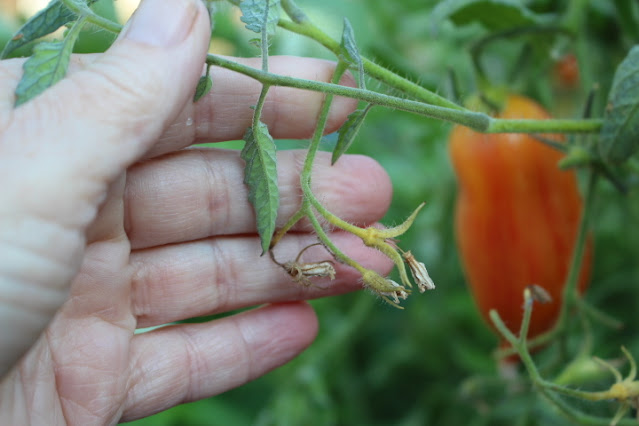
Blossom drop, sterile flowers, green tomatoes that just won’t ripen
Temps are too high for the plants to thrive. Tomatoes prefer to be in the mid 20’s Celsius (60’s-70’s Fahrenheit) to grow, flower and fruit well. When temperatures are too high, flowers may shrivel and fall off the vines, or may become sterile and not form into fruits.
You may also notice in times of hot and dry weather that your tomatoes are taking a very long time to ripen.
Cure – Give your tomatoes a shake when you go by them. This will help to move the pollen. In hot or very humid and hot weather, the pollen tends to get sticky so pollination does not occur without some help.
If they are outside, is very hard to change the temps to make a difference unless you are able to offer them some kind of shade. However, what you can do is make sure that your tomatoes are watered regularly and deeply, well fed with a good tomato food or all purpose fertiliser, and well pollinated.
Attract bees, birds, and beneficial insects to your garden with lots of flowers and a water source that you freshen daily.
In the greenhouse – hose down the floor a few times a day to help bring down the temperature, provide good ventilation with open doors and vents, run a fan in the greenhouse to move the air around, and install shade cloth to provide shade, or plant tall plants in front of the greenhouse.
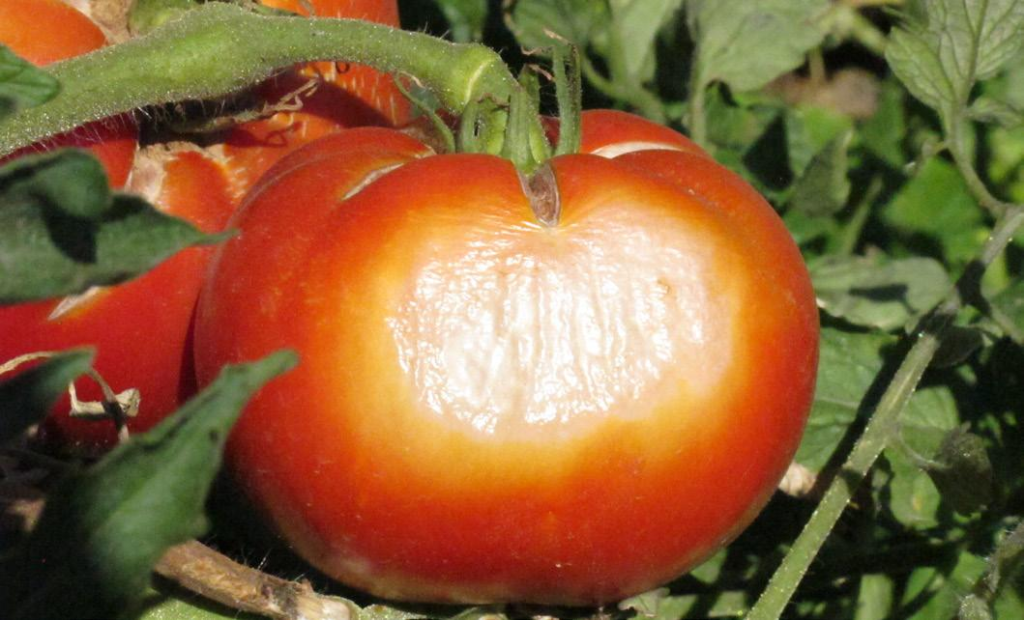
Sunscald/Sunburn – A white spot on your tomato.
This is most common in greenhouses, if the tomato is really close to the side of the wall or touching it.
However, it can also happen in the garden if too many leaves have been pruned off of the vine, offering the tomatoes no protection from the sun. Sunscald changes the flavour of the tomato, making it inedible. Toss into the compost bin.
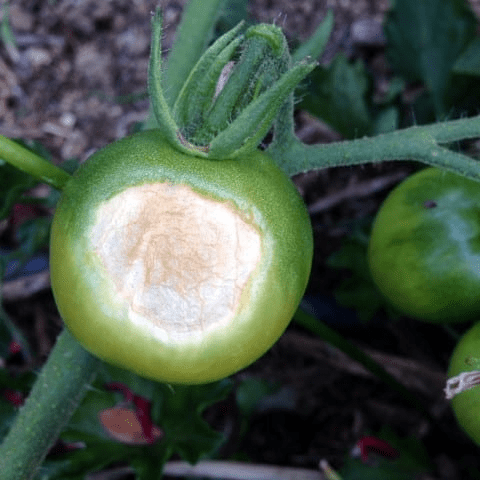
Prevention – keep fruits further back from the greenhouse walls, especially if they are glass, use shade cloth. Do not over-prune your vines, leave on the foliage to provide protection from the heat of the sun.
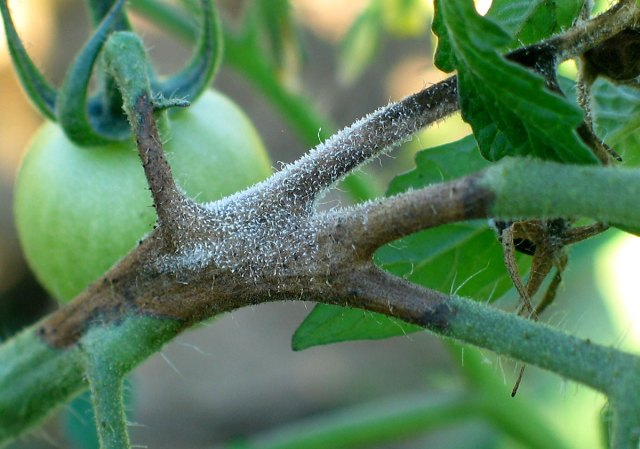
Late Blight is a fungal disease that can wipe out your tomato patch in a matter of 2 or 3 days.
And of course, the worst of them all… Late Blight.
Late blight is a huge concern on the wet west coast in September when the fall rains begin, or as the humidity rises, but less so here on the dry prairies.
It is a fungal spore spread by wind and rain. It flourishes in warm, humid conditions. Late blight will wipe out your entire tomato patch in a matter of just days.
Cure – There is no cure. If you saved seeds from the tomato plant and it later comes down with blight, do not keep those seeds as they may be carrying the blight and bring it back to your garden next year.
Remove the blighted plants from your garden immediately to prevent spread.
Prevention – Plant tomatoes 18 to 24 inches apart for good air flow between the plants, this is one of the very best ways to prevent any fungal issues from beginning and then spreading through your tomatoes.
Water early in the day, never in the evening. Do not wet the foliage, always water at ground level with weeping hoses or a drip system.
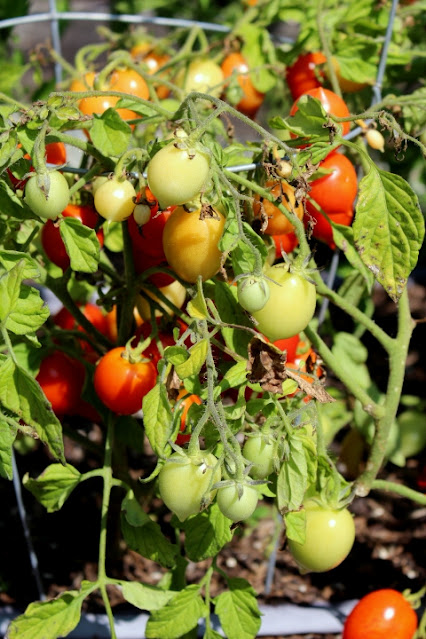
Tomatoes in mid to late summer in general – You may find that some of your tomato plants are starting to look like the one above – a bit of brown leaves, drying blossoms, a tired looking plant.
While some of your tomato plants are still lush and green, growing wonderfully, others may begin to look a little bit tired and peaky. Both are completely normal for end of the summer and tired looking leaves are nothing to worry about.
If you have brown lesions forming on the stems, speckled leaves or tomatoes, something more dangerous looking, then you need to be on the look out for blight or viral issues and remove them right away. However, if your plant looks just looks a bit peaky, this is not unusual for this time of year.
For any tomato plants that are still making lots of fruits, generally these will be indeterminate types, make sure to water well and feed weekly. Do not water the foliage as that will spread fungal diseases, water at ground level only.
Cure – Remove any foliage that is touching the ground or very brown/yellow. Remove any fruits that are not right, have any of the issues mentioned above.
If they are slow to ripen, you can ‘top’ the plants. By snapping off the tops of the leaders, the tomato will put it’s energy into ripening the existing tomatoes rather than making more.
For determinate plants that are pretty much done for the season, keep watering them well until the fruits are harvested and then remove the plants from the garden. Once they are done, they are done.
Read more about indeterminate, semi-determinate, and determinate varieties here.
Read How To Grow Tomatoes here.


 The Marigold Potager - A Zone 3 Prairie Garden
Leave a comment