
Updated for 2025.
Happy November, garden friends! We have had our first bit of snow. It wasn’t a lot, but some of it is still sticking to the ground. I’m fairly certain the rest will melt away on our next sunny day.
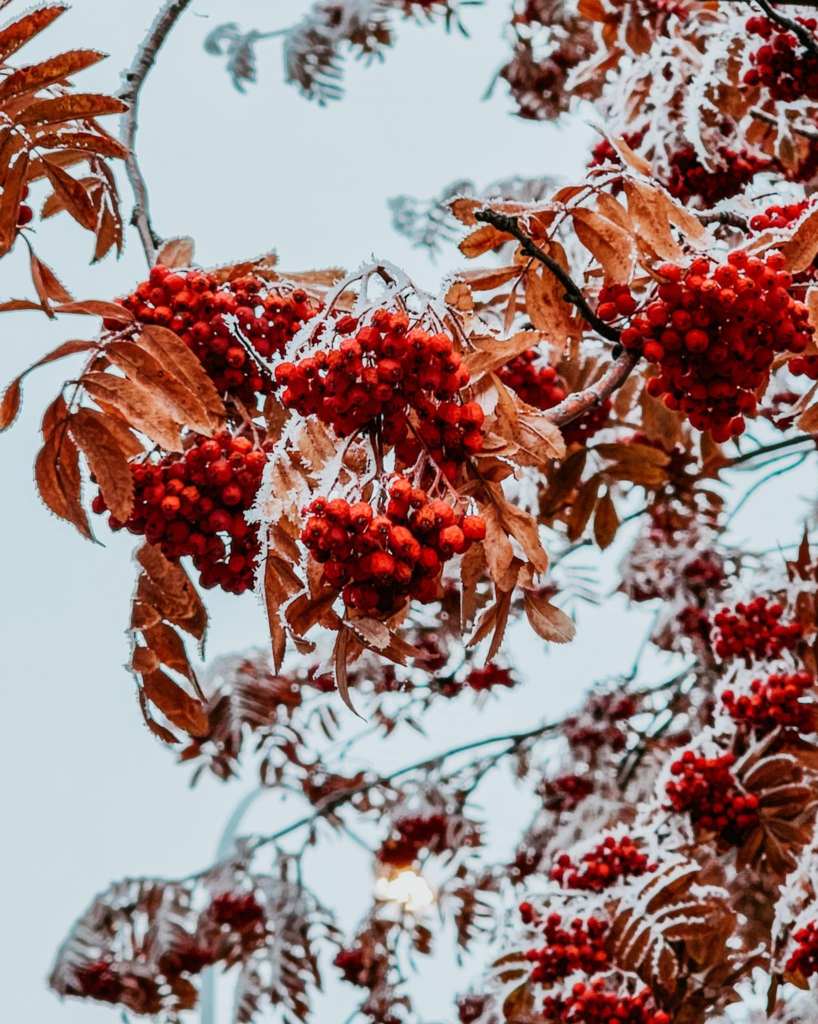
We’ve had a few foggy days lately and single digit temps (30’s F), which has the trees and shrubs covered in the loveliest hoar frost. If you’re going to have nippy temps, it is more tolerable when everything looks so pretty.
I’m getting ready to hunker in for the winter and start crafting for the holidays. Before that though, there’s a few things yet to deal with in the garden.
Think Ahead & Decorate
It’s time to take down fall and Hallowe’en decor, think ahead for the holiday season. If you are in warmer climates, this is a good time to pick up little evergreen trees (lemon cypress or junipers), heather, cyclamens, wintergreen, sedums, moss, and maybe some hellebores, twigs and colourful branches.

For those of us in colder zones, we really need to think ahead and prep before the soil freezes solid in our planter pots! If need be, you can pour boiling water in your potting soil to thaw it out.
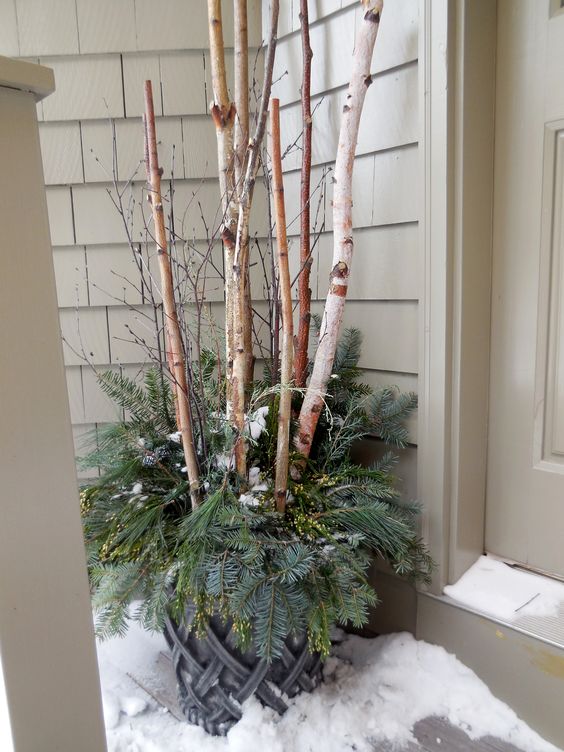
I am taking the dead birch twigs from my Hallowe’en decor and thinking I may spray paint them white (silver or gold) before I push the stems into my black urns and cover them with twinkle lights. Keeping the decor simple this year. This look works for the holiday season, but also looks good throughout winter.
If you have branches from birches, alders, poplars, aspens that you can use, the would be lovely either au naturel or spray painted.
If you like greenery for winter and the holiday season, you can also take cuttings from your pine trees, spruces, junipers. Ask neighbours if you can trim a bit off their evergreens to add some variety in the colour and texture of your greenery. Stick the stems firmly into your pots now so that you can decorate them with bows, lights, balls, whatever you like as we get closer to the holidays.
Add some red or gold twigged dogwood branches for colour and interest, red rose hips, pink snowberry twigs. Faux berries and sticks can be used year after year, if you do not have them in your garden. Here are a bunch of ideas to check out.

Feed The Birds
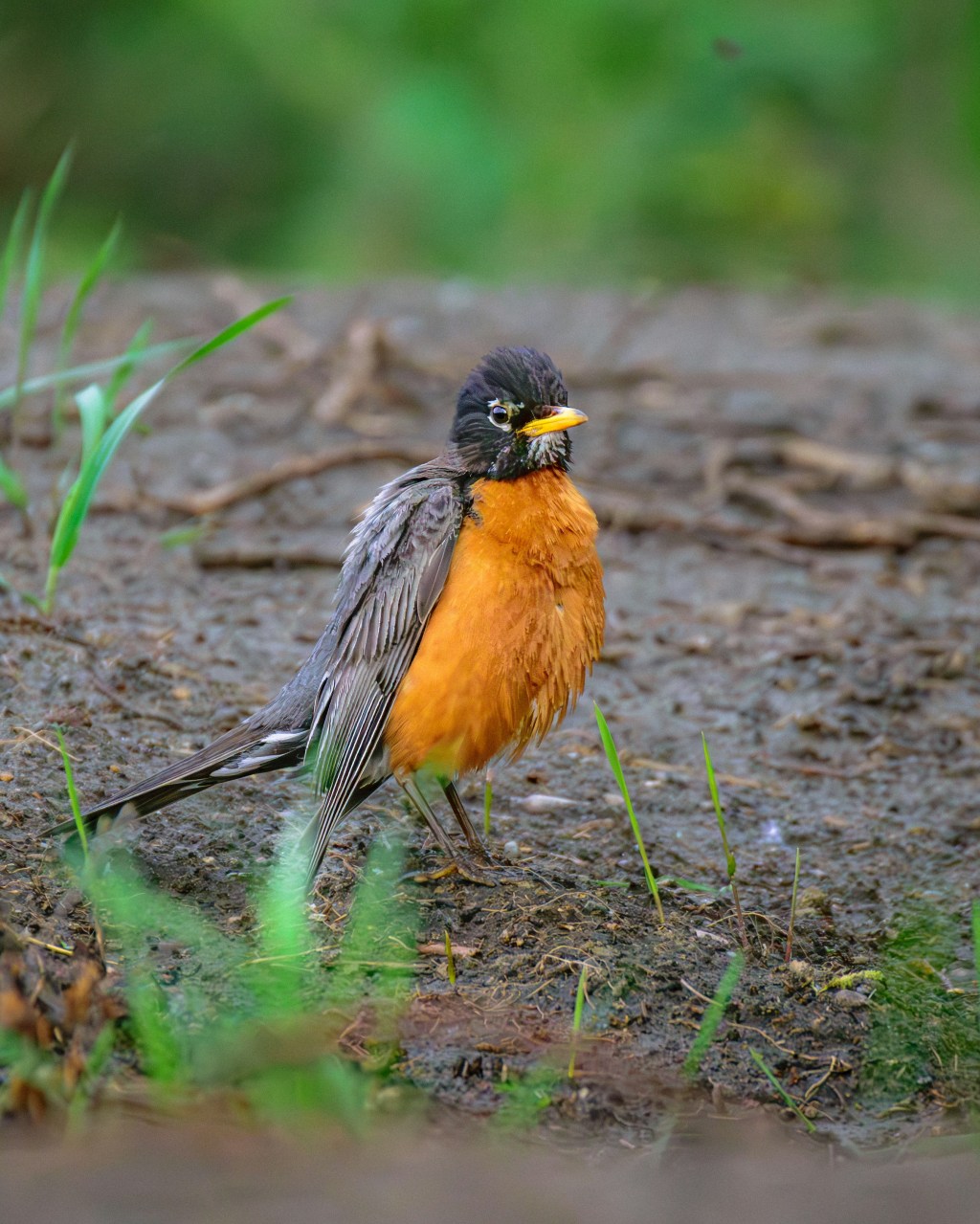
This is the time to think about putting out birdfeeders for the little birds and suet for the woodpeckers, sap suckers, and even the little birds.
I hang sunflower heads from small nails on the fence for the birds. They peck at the seeds, dropping some to the ground to germinate in summer. I rarely have to plant sunflowers more than once, unless I want something new ; )
Margaret Roach (A Way To Garden) says that she broadcast sows a few handfuls of seeds in October and November, near where she will hang her feeders to attract the little birds, like juncos, chickadees, sparrows, chickadees. And, yes, she says that her resident squirrels also enjoy this process. She recommends a feeder like this one to thwart the squirrels from the feeder.
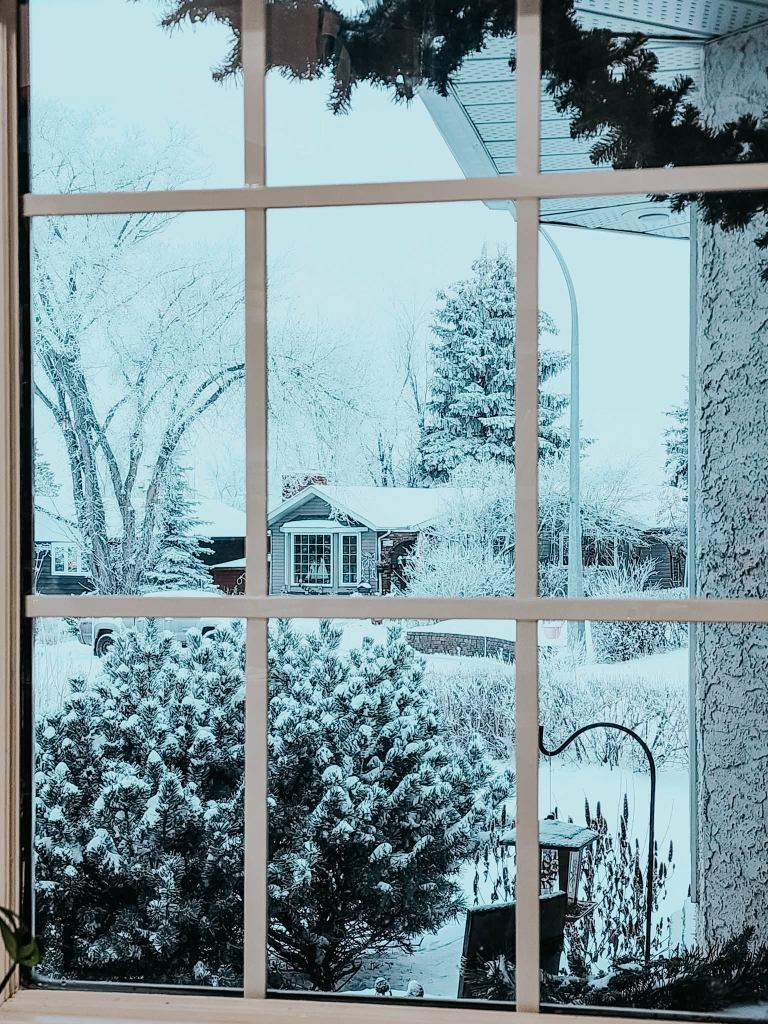
I just picked up a cute bird feeder for the little birds out front, hanging it from a shepherd’s hook. Picked up the food and everything at the local Home Depot.
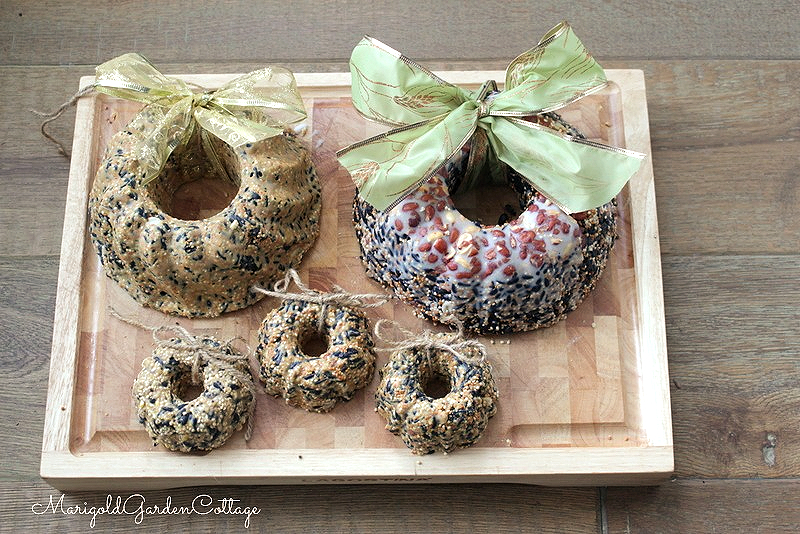
I also make a couple of my own suet wreaths, and find that birds of all sizes love these all natural wreaths. No gelatins, no flour, no weird things that birds would not eat in the wild. Even the birds that prefer to eat
The Recipe…
- 1 to 1.5 cups of suet
- 1 cup of peanut butter
- 1 cup of cornmeal
- 4 cups of high-quality birdseed
- Melt your suet in a large pot at a low heat.
- Add the peanut butter, stir till it is all melted.
- Add the seeds and cornmeal, stir till well coated so that it sets well.
- Put the mix into a bundt cake pan to make it look fancy. Let harden in pan overnight, can also be placed into the fridge or freezer to set up faster.
- I use jute garden twine to hang it on the fence, shepherd’s hook, or tree, and may add a bow for the holiday season.

I tend to make one per month for the coldest months of the year.

Yard Clean Up
Many of our trees are still hanging on to their leaves, so there is still be raking to do once the rest of this snow melts away. By now, I am sure you are tired of hearing about leaving the leaves. So, I will just add this…
Get them off walkways, driveways, and the lawn. If you still need to mow the lawn one more time, use your lawnmower without the bag to mulch the leaves into the lawn, rather than leaving them in a thick layer on the grass.
Rake the leaves into garden beds, around trees and shrubs, in the raspberry patch and flower beds. Layer them on your garlic bed. If you prefer to use a leaf blower, choose an electric one for less fumes and pollution.
I do not use the leaves in my food growing beds as I do not want pests overwintering in those beds to eat my tender little seedlings in spring(grubs, cutworms, aphids, whiteflies, pillbugs, etc…) If you have had a few good freezes already, those bugs are already in their little hidey holes. Feel free to add the leaves to your veggie plot, if you like.
If you live in a milder rainy zone, you may still have to worry about slugs and snails. This is why Charles Dowding (from the rainy UK) recommends using finished organic matter of compost or manure to your gardens.
Don’t worry if the leaf pile is a foot or two high, it will sink down in just a few days time.
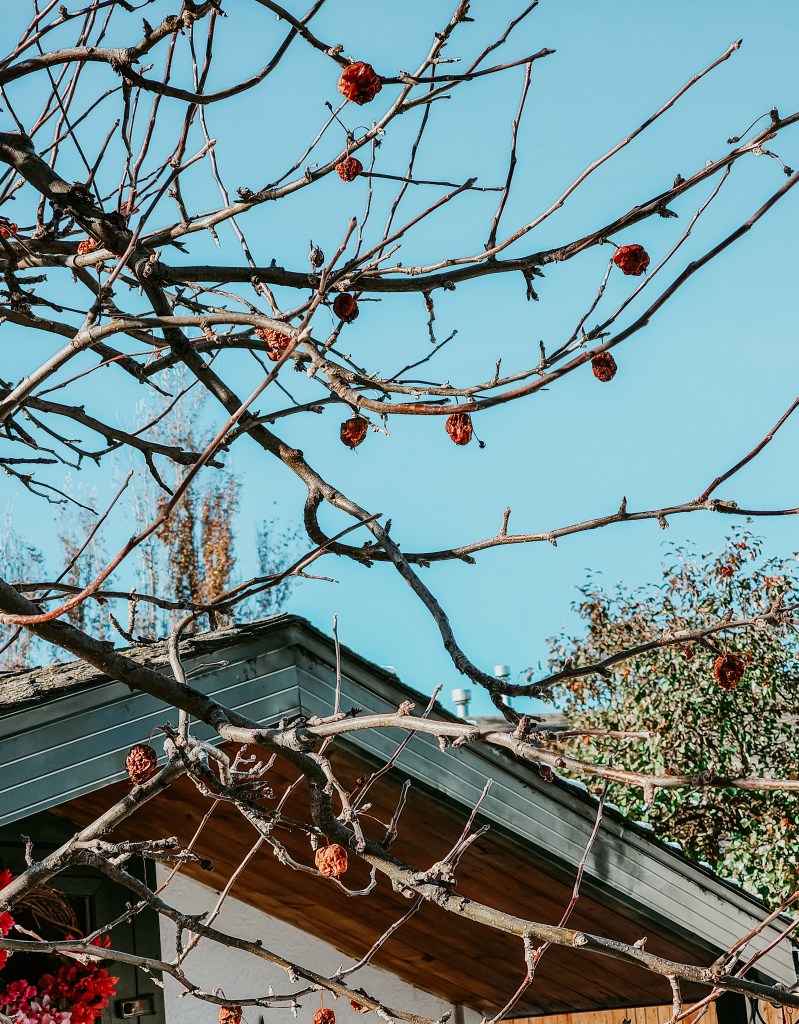
Prune out really long stems on your rose bushes, as they will break with heavy snows or rains.
Prune out dead, damaged, or diseased branches or stems on your trees and shrubs. Suckers can also be pruned out now, but leave the rest till late winter.
Clean up fallen apples and fruits. With the rise of coddling moths and apple maggots, picking up all the fallen fruits is crucial, as well as any hanging on the tree (that you can reach).

Purchase Holiday Bulbs
Flowering bulbs add colour and joy for Christmas, and are great hostess gift ideas for the holidays. Now is the time to purchase them and get them started.
- Amaryllis can be planted in soil or forced in a tall, glass vase, as above.
- Paperwhites can be placed on top of small stones in a vase with a bit of water.
- Hyacinths can be planted in soil or grown in water, as above.
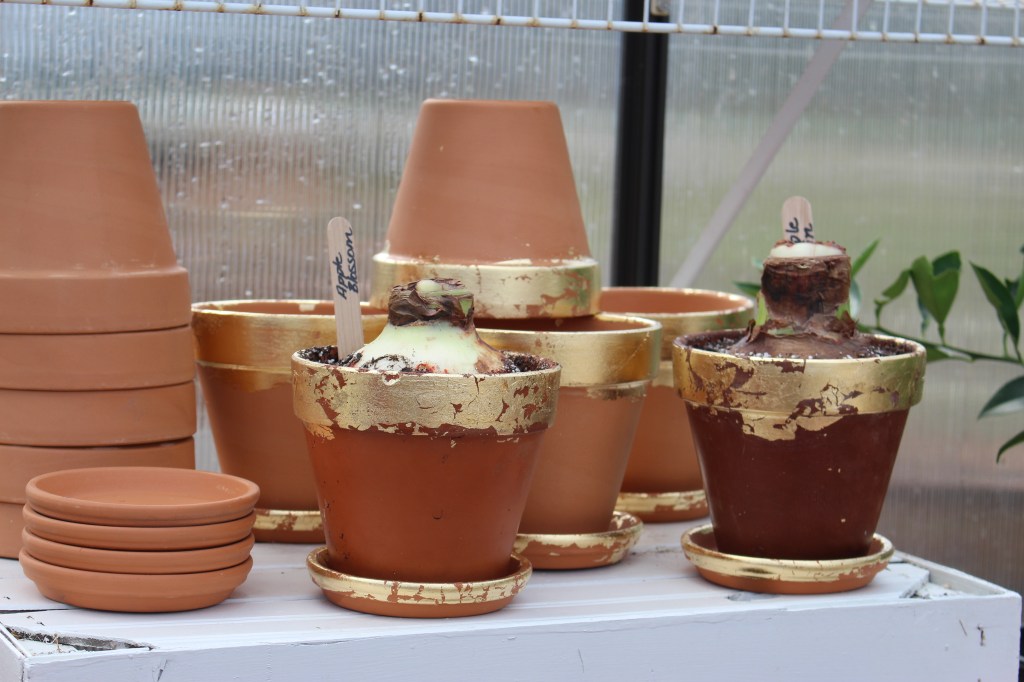
To plant Amaryllis in soil, leave the top third of the bulb above soil level. Adding a 12″ tall, pretty twig to the pot will help to keep the blooms straight and tall, thus giving the tall blooms more stability as they get heavy with blooms.
If you want to add moss to cover the soil, make sure to not over-water as moss retains moisture. Please, remember that a lot of what you see on Pinterest is about staging, looking pretty, not practicality and real life ; )

Christmas flowering bulbs of all kinds can be grown in a vase or a bowl, with the bulbs nestled into small pebbles with water just to the bottom of the bulb(s). Paper whites are very pretty, but strongly scented. Hyacinths come in a variety of colours, look so pretty growing in a vase. Be careful with the bulbs as they can cause itching or hives. Amaryllis are best grown in a bit taller vase as they get top heavy with all the blooms.
Sow/Order Seeds
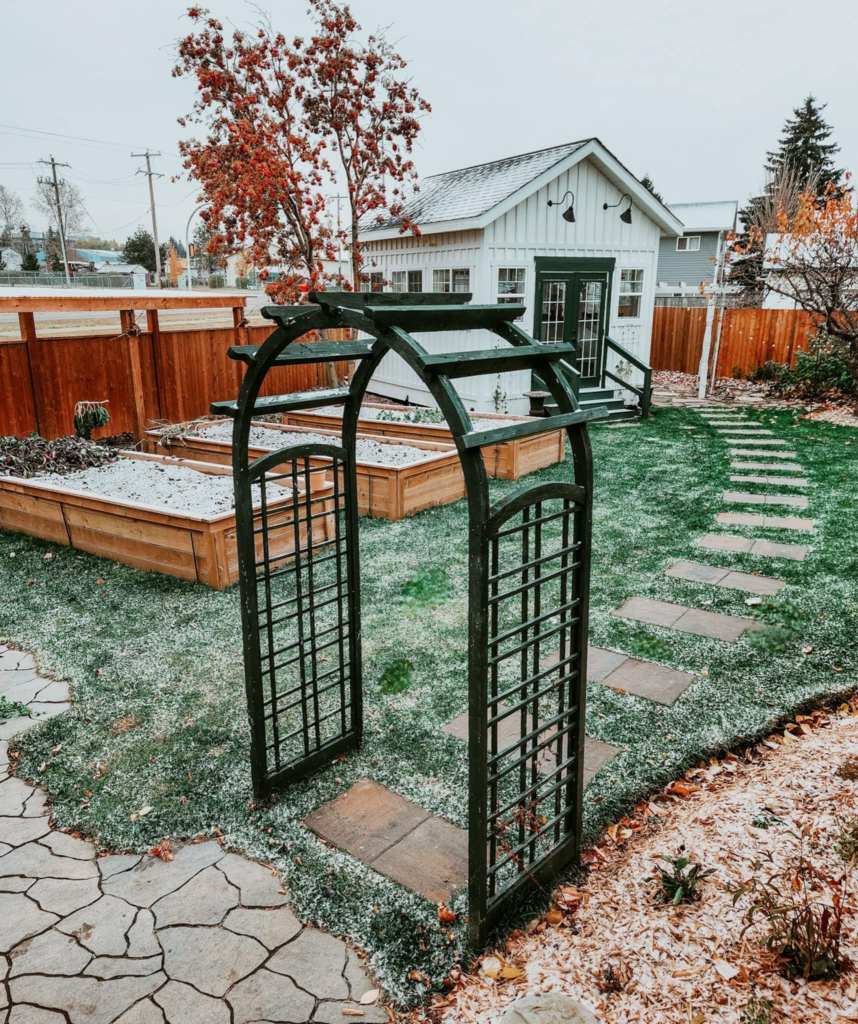
As soon as the snow melts from these beds, I will be sowing a few rows of carrots, beets, and green onions, or bulbing onions in my raised beds, and lettuces in the beds beside the house where the snow is early to melt away in spring.
I have grown the fall sown lettuce and carrots sown before, they both work well. The onions and beets are a trial as recommended by other gardeners in Zone 3 growing groups, and by Lois Hole (Holes’ Greenhouses in St Albert) in her Northern Vegetable Grower book. Give them all a try. Nothing to lose but a couple of minutes and a few seeds, but everything to gain.

Rest, Relax, Journal, Plan, Dream
Take a well earned break from your gardening chores. Start planning in your journal for next year, make a list of seeds you want to purchase, seed companies to buy them from, anything that strikes your fancy as you dream about your 2025 garden.

Happy November ~ Tanja


 The Marigold Potager - A Zone 3 Prairie Garden
Leave a comment